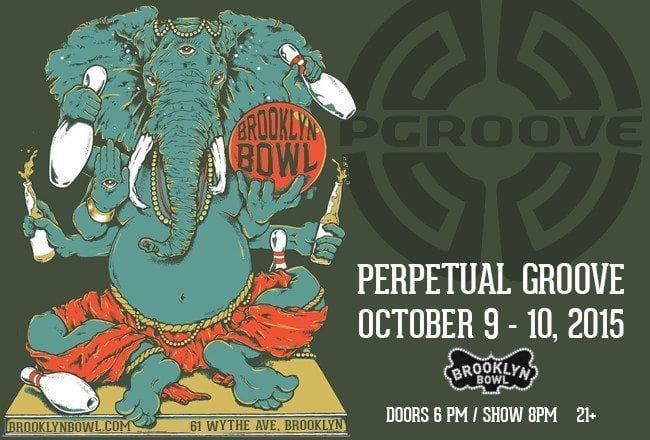
NYS Music would like to welcome back Perpetual Groove, a name that jammers sadly said their goodbyes to after an indefinite hiatus began following their April 5, 2013 show. They head to Brooklyn Bowl on their reunion tour.
Their 2015 comeback shows in at the State Theatre in Petersburg, FL on July 31 and Aug. 1 have only been followed by an Aug. 29 show at the Pisgah Brewery in North Carolina and a two-day set at the Resonance Arts and Music Festival in Ohio on Sept. 25 and Sept. 26.
The Brooklyn Bowl shows on Friday Oct. 9 and Saturday Oct. 10 are their only northeast shows scheduled for 2015, so make sure you purchase your tickets in advance. And if you needed another twist of your arm, the McLovins will be opening Friday night’s show and The Hip Abduction will be opening Saturday.
Tickets: $17 advance / $20 day of show. Doors: 6 p.m. Show: 8 p.m. 21+
Recently at Club Metronome in Burlington, musical worlds collided when Phish drummer Jon Fishman collaborated with members of Cattle Decapitation, King Parrot, Black Crown Initiate and Dark Sermon, merging for a performance under the name Garbage Dick.
A photo posted by Derek Engemann (@derekfuneral) on
While we await video of this odd performance, go see Cattle Decapitation on tour with Cannibal Corpse as they play several shows across New York state this month including:
DrFameus proved himself a chameleon of sound, opening for Particle at the Westcott Theater Sept. 23. Allen Aucoin’s one-manned music machine fluctuated from synth and high hat driven 80’s dance to more lazy and free-flowing experimental jazz, pulling samples from Fergie’s “London Bridge” among other unexpected sources. Producing a beat reminiscent of the bass heavy pulsations in Die Antwoord’s “I Fink U Freeky” kept the crowd alert, as they made efforts to sift out other familiar rhythms and samples.
Aucoin’s laptop acted as an instrument as much as the drum kit set up before him. Frequently looking over at the small screen to his left, pressing buttons perfectly in time with the music, he was effectively conducting a mini techno orchestra. “Cold Step” commenced with haunting piano effects, showcasing the DJ-drummer hybrid in a swarm of heavy energetic percussive and techno sounds. At the end of Aucoin’s set, a gentleman brandishing a solid black guitar case sauntered across the room, having plenty of space to breakdown and boogie with the crowd not exceeding thirty spectators.
The Particle crew followed on stage, delivering a slew of zippy electro grooves. Guitarist Ben Combe, with body pivoted forward, scrunched facial expressions and fingers scrambling across the fretboard, plainly indicated his full mental immersion. Keyboardist Steve Molitz demonstrated his own enthusiasm, purposefully pressing specific keys while giving raised eyebrows to the crowd as if to say, “How do you like this?” His effects often produced sounds synonymous to the grand majesty of Manheim Steamroller’s epic instrumental holiday ballads.
Clay Parnell (bass/vocals) and drummer Allen Aucoin rounded out the four-man crew. With their powers combined, the band performed a collection of songs that were as distinctive as a litter of Dalmatian puppies. Their music activated the perfect environment for listeners to zone out but still manage to feel stimulated with high-speed instrumentals and enthusiasm exuding from the musicians.
When you take some of the best hardcore, metal, and hip hop and throw them into Reading, PA over a course of two days? You get The East Coast Tsunami Festival. It was beautiful and chaotic that packs a punch to the mouth and ears that gets stuck in your system for days. That occurred to me when Wu-Tang Clan headlined the Santander Arena on Friday, September 25 and Life Of Agony finished everything off the next night over at The Reverb.
Let me take an opportunity to get the negative out of the way first. And it occurred on day one: sound issues. Never in all my years of attending concerts did I see so many sound issues that kept recurring for EVERY act that played on stage. People paid good, hard earned money to see their idols perform, and for the sound staff over at the Santander Arena should be ashamed of themselves. Countless times, microphones were either turned off or not working, ruining every performance. I give props to all the performers that just continued and not let it get to them. When Body Count was on stage, frontman Ice T was not having it and had to start one of their songs over. It was just obnoxious.
Day 1:
The main headliners were Wu Tang Clan, Mobb Deep, and Body Count. The beautiful thing about day one was the variety of fans of every ethnicity, age, and culture gathered for the same purpose. There was mainly hip hop acts, but there was a few hardcore bands and of course Body Count is a mixture of both. Overall a brilliant bill for that night and the floor / pit area was packed.
Early in the night….the two bands whom I never seen who really stood out to me was Strength For A Reason, because they had the most sound issues than any other band but they handled themselves so well and Wisdom In Chains really made the crowd go bananas. Never seen a band have so much fun on stage yet they kept the atmosphere so brutal. They definitely made a fan out of me that night.I was also really impressed with Gillie The Kid. It was hip hop in it’s finest form. He really knew how to connect with the people on the floor during his performance and his hooks, freestyle, and rhymes were just a blast to behold.
I was absolute ecstatic to finally see Body Count, I felt awful that I missed them during their run last year at Mayhem Festival, so to me, they were the main attraction. I was also fortunate enough to meet lead guitarist Ernie C before the show, who was such a nice person and a pleasure to meet. The thing that’s so fascinating about Body Count is the chemistry and timing they share on stage, now I was not old enough or lucky enough to have seen the original lineup over twenty years ago, but the current lineup of Body Count still give the old songs justice. They kept their setlist faithful by opening with “Necessary Evil” and “Bowels Of The Devil.” Ice T, who isn’t afraid to speak his mind or show his sense of humor really ripped into masculinity and society before going into “Manslaughter.” But the song that stood out the most was the classic and iconic “There Goes The Neighborhood.” Drummer Ill Will was just insane behind the kit. The spirit of Beat Master V lives on through Ill Will because his timing and speed was just off the chain and that song really showcased that. And what better way to end their ten song set with the controversial anthem “Cop Killer.” If Ice T can manage to find more time for Body Count, a headlining tour must happen.
Mobb Deep took the stage after Body Count and delivered a knockout punch to the crowd. Now I am not familiar with Mobb Deep’s catalogue, so I can’t honestly tell you much about their setlist, but I can tell you that it was a stellar performance, and even though it was already past midnight, the crowd was at their peak and Mobb Deep owned the crowd.
Wu-Tang Clan closed out the night and it was one of their better performances that I have seen with them. Each member got their moment on stage, they played a massive set that included not only from the early Wu Tang catalogue like “C.R.E.A.M.” and “Bring The Ruckus” but even some solo material such as Raekwon’s “Criminology”, Ghostface Killah’s “Black Jesus”, and GZA’s “Liquid Swords.” And of course there was plenty of Ol’ Dirty Bastard tributes and highlights during their set. But hands down, the member that stood out the most was Method Man. Meth is clearly a born performer, entertainer, and is one hell of a lyricist. And the crowd was also treated to some freestyles from Masta Killa and GZA. Another big highlight was the group even had a showcase from DJ Mathematics who went bezerk on the turn tables and really wowed the crowd. In conclusion, Wu-Tang clearly is still bringing their A-game and showing no signs of aging. I would expect great things in the near future from the Wu.
Day 2:
The Reverb did an excellent job hosting day two of East Coast Tsunami. It was a really long day and all the bands were clutch, but there was one band that dared to be different. Murphy’s Law totally changed the entire atmosphere of the night. They were bold enough to use humor, go into the crowd, share a few drinks and just be goofy. It was totally refreshing, because all day it was all hardcore bands. Serious hardcore. And as soon as Murphy’s Law hit the stage everything changed. It was also cool to see a saxophonist in a hardcore band. That’s not something you see everyday. Later into the night Doyle hit the stage bringing his spookfest into the club. Also…seeing Doyle made me want to hit the gym. That man is in ridiculous good shape for a man his age. And it was also amusing to see him blowing bubbles from his chewing gum as he is playing his guitar.
After an amazing set from Walls Of Jericho,Madball put on the performance of a lifetime by wiping the floor with everyone. The pits were fierce and the bodies were continuously flying off the stage and into the crowd. Opening with “Demonstrating My Style” they played all the songs you would expect such as “Set It Off” and “Black And Blue.” Freddy Cricien is one hell of a frontman…I honestly don’t know where he gets the energy to perform at such a high level throughout the whole set. As for the band, you can tell they were having fun with each other and with the crowd as well. Madball is living proof that hardcore still lives.
The night closed with a special performance with Life Of Agony, who was the ultimate cherry on the brutal sundae that was East Coast Tsunami Fest. Not disappointing what so ever, most of their set consisted of River Runs Red. Opening with the title track off that album, along with “This Time”, and the always catchy “Method Of Groove.” Mina Caputo proves she’s the ultimate frontwoman for the band, and still sings the songs the way they were meant to be heard. Joey Z was an absolute fiend on the guitar and where ever he and the band went, the crowd responded. This was such a treat to behold to see all four original members tearing it up. It would be crime of the century if don’t play more shows around the east coast. The highlight of the show would have to be “Bad Seed.” Never have I seen so much stage diving going on during a show. I was almost worried for the bands safety, but clearly they loved it. Appropriately, they ended the night with ”Underground.” There is nowhere to go but up for this band. This is why they closed the entire two day festival, Life Of Agony is in a class of their own right now.
To sum this all up, East Coast Tsunami was a wave of brutality that every music lover should experience. What could make it better? Perhaps, a three day festival in the future? Only time will tell.
Fans of reggae can feast their ears on the smorgasbord of regional talent performing at the Westcott Theater on Saturday, October 10. Alex Gideon, Thunder Body and Grayak each have a spot to give the audience a taste of their latest musical workings before John Brown’s Body takes the stage as the final act of the evening.
Alex Gideon, guitarist and vocalist from New York-based reggae/funk band The Fat Peace will be stepping on stage as a solo act, relying on his guitar and vocal skills while looping in other instruments and sound effects. Gideon has experimented with a collection of covers while also producing his own original songs.
Thunder Body, a Rochester-based reggae group, has continued to grow over the past few years, expanding its identity far beyond the reggae designation, incorporating ingredients of jazz and soul into an eclectic stew of energy. Matthew O’Brian, former front man of Giant Panda Guerilla Dub Squad leads the troop with vocals and percussion. With his drum kit uniquely positioned to the front of the stage, O’Brian mixes up the traditional musician arrangement, a visual metaphor representing their drive toward differentiation. Supported by Rachel Orke (also former GPGDS member) on analog keyboards and melodica, Dennis Mariano and Sam Snyder on guitar, Jeremiah Pacheco on bass and Brian Blatt with miscellaneous instrumentation, they spread messages of love both for humanity and mother earth, which are entwined in their encouraging lyrics.
Grayak is the beloved reggae/bluegrass/folk brainchild of guitarist and vocalist Phil Grajko. The band, rooted in Syracuse, also features sister Hannah Grajko (vocals), Brendan Gosson (fiddle and mandolin), Blake Propst (upright bass) and Tyler Dattmore (drums). The current lineup is a recent amalgamation of musicians that have begun performing together in increased frequency, branching out geographically to enrich their fan base. Grayak’s song lyrics explore the beauty and influence of the mysterious workings of the universe, intermixed with occasional subtle references to the zombie apocalypse.
Veterans of the national reggae scene, John Brown’s Body, an influence and inspiration for many of the musicians sharing the stage that night, will grace the theater, pulling from nearly a dozen albums of material compiled since their inception in the mid ‘90s. Elliot Martin (lead vocals), Tommy Benedetti (drums), Dan Africano (bass), Jay Spaker (guitar) Jon “JP” Petronzio (keys), Scott Flynn / Alex Asher (trombone), Drew Sayers (saxophone) and Sam Dechenne (trumpet) comprise this flock of future roots revolutionaries. They evoke a lion-like pride of tight-knit, well-rehearsed sound and thought provoking lyrics seeking to engage and empower listeners.
Frankie Ballard recently celebrated his third #1 hit with his latest single “Young & Crazy.” He may be one of country music’s brightest up and coming stars, but that didn’t keep him from traveling deep into the NEPA back roads to Meshoppen, PA to the Kiwanis Wyoming County Fair.
Ballard was The Fair’s main stage act and many of his die-hard fans traveled hours to catch his performance because it was one of his last headlining shows of the year.
The crowd may have been smaller than anticipated but their energy made it feel like there were 10 times the amount there. Ballard started his set with a cover of the song he wrote with Big & Rich called “I Came To Git Down.” He kept the momentum going with fan favorite “Drinky Drink” which flowed well into the title track of his latest album “Sunshine & Whiskey.”
Ballard changed the pace of the set when he gave his drummer, Ross Webb a break and hopped onto the drum kit and let his guitarist Eddie Robinson take the lead vocals with a cover of The Wallflowers’ “One Headlight”. He kept the covers coming with an incredible rendition of Johnny Cash’s “A Boy Named Sue.” This had both Ballard and the crowd jumping up and down.
Ballard told the audience that even though he has been touring non-stop he still has managed to work on his next album. He was so excited about the new record he decided to share a new song called “Sweet Time”. The crowd may not of known the lyrics but they all seemed to agree that they liked the new track.
Ballard rounded out his set with “Tell Me You Get Lonely” and with his first #1 song “Helluva Life”.
But the crowd wasn’t done with him so he came back out to close his set with another new song called “L.A. Woman”.
Frankie Ballard will continue to tour with Florida Georgia Line throughout the fall then he will head out on the road with Randy Houser’s first arena headlining tour in November.
Jubilee Riots (formerly known as Enter the Haggis) made a return trip to Saranac as part of the brewery’s Saranac Thursday Concert Series on July 23. Hailing from the greater Toronto area, Jubilee Riots have made it a tradition to perform at Saranac the Thursday prior to the Great American Irish Festival in nearby Frankfort. While the band wasn’t performing this year’s Irish Fest, its traditional set on the brewery stage attracted many Enter the Haggis/Jubilee Riots faithful.
Jubilee Riots is a band that is constantly working, constantly thinking, always thinking of its fans. The last three albums recorded have all been funded through crowd sourcing. There aren’t many working bands today that can say they’ve been able to produce three straight albums funded exclusively by their fan base. The band’s most recent release, Penny Black, is the first under its new moniker, Jubilee Riots. The first video from this release is an entertaining gospel-like animated take on the song “Trying Times”.
The band began as Enter the Haggis in Toronto in 1996, playing a mix of Celtic and modern rock music. It toured the Celtic festival circuit extensively, building a sizable and loyal fan base along the way. Over the course of seven studio albums, two live albums, a performance on Regis and Kathie Lee and a live DVD filmed for PBS, the band’s sound transitioned to where the Celtic sound was becoming less prominent. The Celtic core was still there but listening to each successive album revealed an evolution to a more mainstream northern roots rock sound. To get a true feel for this transformation, one must listen to the catalog from its beginning to the present release. Doing so reveals a band that has matured in songwriting style and musicianship while still maintaining the feel good presence of the original Haggis sound.
Eventually, a change in the style of music, prompted the band to consider a name change. This was something that didn’t come easily to a band with an already established and enthusiastic fan base. However, as piper/trumpeter Craig Downie, the only original member of the Enter the Haggis, mentioned in the press release announcing the name change, “We toured and recorded as Enter The Haggis for a long time, but that name no longer represents the music that we’re making.”
On Sept. 8, 2014, it became official. Going forward, Enter the Haggis would now be known as Jubilee Riots. The final show as Enter the Haggis occurred at the Westcott Theatre in Syracuse on Oct. 11, 2014. A show that was billed as Exit the Haggis. To celebrate the one year anniversary of that show, the band is returning to the Westcott Theatre in Syracuse for a show on Oct. 9.
Prior to the recent Saranac show, NYSMusic sat down in the 1888 Tavern with lead singer/violinist/man of many hats, Brian Buchanan, bassist/vocalist Mark Abraham and drummer/percussionist Bruce McCarthy to discuss the band’s direction, crowd funding, technology, the writing process, a little hockey and what thought goes into changing a band’s name midstream. Original member Craig Downie and guitarist Trevor Lewington round out the band’s lineup.
NYSM (to Brian): You’re a Leafs fan, have you seen the news today that they hired Lou Lamoriello as the new GM?
Brian: I hope you’re joking. ARE YOU SERIOUS? WOW! (gives a background on Lamoriello’s background building the New Jersey Devils franchise)
NYSM: He’s got a Utica tie-in as well. He used to be the GM when the Devils had a team here.
Brian: Wow, what a weird combination of people. You’ve got Brendan Shanahan as President, Babcock as coach and Lamoriello as GM. That’s pretty powerful stuff.
NYSM: Speaking of change, how are you guys doing with the name change? You’re not the first established band to do it. The Who did it. They were The Detours and The High Numbers. The Beatles did it. They were once The Quarrymen. So you’re in good company.
Brian: It’s a challenge. We knew it was gonna be a challenge. We didn’t make the decision because we thought it would be the easiest business decision in the world. But, also our fans have really been supportive and have been behind us. I think some people are still really confused, saying “I’ll call myself a Haggis Head til the day I die,” and that’s absolutely fine with us. So in some ways it was kind of an artistic decision more than anything else and it still feels good and it feels like it was the right decision to make…”
[Interrupted by a fan looking for a selfie with the band, handled very deftly by Brian “Good times. Good times.”]
NYSM: Obviously you have a huge loyal fan base. When you started doing crowd funding for your albums, it took you, what, eleven hours to reach your goal?
Brian: The first one, yeah. This last one was just about as good too. And we raised about the same amount of money. It’s incredible. Over three records, we’ve raised over $150,000 from the fans, financing the records, the promotion of the records.
NYSM: So you’re not beholden to a record company…
Brian: No, and there’s not a lot of bands out there that can say that. The crowd funding thing is getting a lot more mainstream and a lot more popular, but you still need the fan base to step up. And I know lots of bands who are objectively bigger names than we are who can’t get crowd funding campaigns off the ground. Because they just don’t have that kind of personal loyalty.
NYSM: Well you guys kinda did that through the ground roots anyway, traveling around, meeting your fans, engaging them…
Brian: True, every fan we have is one we’ve played for and shaken hands with. It’s definitely been one fan at a time.
NYSM: You guys are an easy band to like anyway. You’re so cordial to deal with, taking selfies with fans in the middle of interviews…
Brian: We’re Canadian…(laughter)
Bruce: That’s what we’re constantly telling one another too, “Man, you’re a really easy guy.”
NYSM: You guys are all kinda separated now? As far as where you live?
Brian: I live in Philly now. Three of the guys are still in Ontario. From where Trevor lives to where Craig lives is like four hours and then Bruce is kind of in the middle and Mark’s in Maine. We’re definitely spreading out further and further as time goes on.
NYSM: Of course it’s a lot easier now with technology for you to collaborate, as we were saying, with Dropbox and Skype and Google Docs, your Patreon thing…
[Patreon is a crowd funding platform that Brian uses to release music and blogs that he otherwise wouldn’t do within the context of the band, with the eventual hopes of putting together his own traditional fiddle album, covers album or “bizarre and overwrought theatre-pop.”]
Brian: There are so many avenues to generating interest and as a nice by-product, generating income, but even as a band, even though we’re spread out as far as we are,when we were getting ready to put together the last album, we set up a Dropbox account. Trevor and I or anyone else, could record a demo and stick it in Dropbox and the rest of the guys could open it up and listen to it and add their comments. We did all the lyrics and artwork through Google Docs and people could add their thank yous and change lyrics and do everything through there and keep everything updated. The tools that are available for free now are mind-blowing. You think back twenty years ago, the things that we take for granted now as a band; tools that we use every day that didn’t exist. Things that would have taken a team of people to do. You’d have to lick 20,000 envelopes. Now I can spend 20 minutes writing an email and get the same reach.
Bruce: We have a WiFi hub in the van that we use to broadcast. It broke and we haven’t had it fixed yet so we had to grab one of those tourism books and that was the beginning of us driving around just trying to find a hotel; which is how the band used to do things once upon a time before Priceline and Hotwire and all that. It was a sobering experience.
Brian: The fact that we have internet accessibility in the van, when you’re on the road for twelve hours in the van, it’s not twelve wasted hours. We can actually get a lot of work done. You can be interacting with the fans. We’ll do live streaming conversations with the fans while we’re on the actual road.
NYSM: So when you do record, you said you just kind of drop things into Dropbox. Do you still get together in an actual studio to do the recording or is it mainly all Dropbox then putting it all together?
Brian: Even if we did use that, it would be the roughest of rough demos. Then, for the last couple of records, we got together at Bruce’s house. He’s got a studio in his basement. So we’ll do comprehensive demos there to nail down a playlist and then book a professional studio for a month to finalize everything. It’s a nice luxury to be able to do that. My girlfriend’s band, they’ve been trying to put together an album for over a year, because they all have jobs. They all go to school. So they try to find a weekend here or there where they can get into a studio. We have a nice luxury to be able to do it this way.
NYSM: On to your latest album, Penny Black; it’s kind of fan-based project where you asked fans to submit letters and the best thing about it, again, going back to the technology thing, you kind of reversed things. The submissions had to be hand-written and sent via snail mail in order to be considered.
Brian: Analog!
Mark: It was probably close to 500 letters. I still used technology to scan them in and put them on Google Docs. It was cool because I got to read all of them.
Bruce: It was sort of very convoluted that way we set it up, just to end up scanning the stuff anyway.
Brian: We did a video and sent out emails telling people to write us letters by hand, which they would mail to us so that we could scan them into Google Docs then use them to write the album. (laughter)
NYSM: So, why mail? Why that way?
Brian: We just liked the idea of seeing people’s stories in their own handwriting.
Bruce: Well it’s also the whole Penny Black idea.
Brian: The Penny Black was the first mass-produced postage stamp, so we just liked the old idea of people taking the time and writing a letter and really thinking about writing a letter and not just instant messenger. Writing it out in your own words and sending it to somebody. I’ve talked to a few people who said they wrote multiple drafts before sending them. When you’re doing it by hand, ya know, that’s a commitment.
Bruce: Some of them were like ten pages long, double-sided, small print…
Brian: Some of them were anonymous, some put their names to them.
NYSM: So when you looked at some of them, could you tell right away who it was writing?
Brian: Oh yeah, sure. Definitely.
Bruce: Some pretty intimate stuff too. A lot of people signed their names. That’s a lot of trust. We know who these people are.
Brian: These people are bearing their souls and it was pretty heavy at times. They said they’ve never told their story to anybody so it was kind of therapeutic. Then they’ll come up to us after the show and say, “I was the one who wrote such-and-such letter” and you say to them, “I’ve never met you before but I feel like I know a whole lot about you now.”
NYSM: I think that just speaks volumes about how you feel about your fans. You actually kind of put it back on them. It was an album for them.
Brian: Oh yeah, absolutely. That was the whole idea. We meet so many people from so many different walks of life. The best stories are people stories. Everybody you meet has one story you can write a song about. And if they don’t, you can write a song about that.
NYSM: So you had 500 or so letters, do you have enough for another Penny Black in you?
Brian: We could easily write another album. I don’t know if we will but it’s possible. A lot the songs weren’t inspired by just one letter. There were certain themes that emerged; losing a loved one, meeting the love of your life, some coming-of-age story…
NYSM: The release you guys put out when you announced the name change, I think it was Craig who said, “The name just doesn’t fit what we’re doing now.” Kind of de-categorizing yourself in a way, where you’re not pigeon-holing yourself into being just an Irish-style band. We’re not just doing Irish songs, we’re starting to broaden and become un-categorizable, if that’s a word. Is that an accurate description?
Brian: Yup, definitely. We got to the point where we felt the name Enter the Haggis was a perfectly appropriate and suitable name for about 15-20% of the music that we were playing. And, sort of extension of that was the worry that the name was sort of limiting the audience to about that 15-20% of the people who would like what we do. The name is a great name for a certain style of music but it puts a picture in people’s heads before they even hear a note of what kind of music it’s going to be. And you only have so many opportunities to get people’s attention these days.
Ya know, if I hated metal and I heard the name Cradle of Filth, I would never even put the record on. But maybe years later I’d find out that I was completely wrong about that band and the type of music they were playing. It’s always kind of been in the back of our heads that our name might be limiting our exposure to people who wouldn’t even give us a chance based on the idea that they wouldn’t like it before they even heard it.
You hope that people would be open-minded. We’re competing with so much these days, it’s hard enough to even get people to listen to just thirty seconds of a song and if you’re already having to break through a barrier before you even get to that point, then it’s that much harder.
Bruce: Also, 80 percent of the band is different.
NYSM: Right, Craig’s the only original member of Enter the Haggis left, correct?
Bruce: Right. That original, if you want to call it, that Enter the Haggis sound, we don’t play any of those songs. Not a single one. It just got to the point where we still play plenty of Enter the Haggis songs and they still make up the majority of our set. It just got to the point where that first incarnation of the band, Craig was the only remaining member of that and we don’t play any of those songs. I’ve never even heard most of those songs. So it just got to a point where it kind of didn’t make sense. That duality that didn’t kind of meet anywhere in the middle where it was reconcilable.
Brian: We’ve had the luxury of being able to grow up as a band, learning what kind of band that we want to be and we’ve done it in the public eye. I liken it almost to a child actor who became really popular who became known for a certain thing and as they get older and start getting serious, branching out to different things, it’s difficult for them because if you go on YouTube and search their name, all they see is that sit-com, that catch phrase. It’s really hard for them to break away from that and do different things because everybody likens them to that original thing. That’s kind of what a band name is like.
If you go on YouTube and search “Enter the Haggis,” the way YouTube works, the oldest videos are the ones that have been watched the most times and those are what show up at the top of the search. You’ll find videos of ours that are 9-10 years old and that’s not representative of where we are now. We’re not ashamed of our legacy, but we’re definitely competing against it.
Bruce: You know what’s interesting though? Since changing the name and kind of getting a little distance from it, I think we’ve all gotten more interested in the Celtic stuff. More so than we have been in some time. It’s kind of like when you feel you have to do something, it’s an obligation, whereas if you have a choice to do something. You tend to enjoy it more. It’s two very different things. We’re starting to embrace that Celtic element of the past, even a little bit more than we had in the past five years or so.
Brian: Subconsciously, I think we were feeling the pressure as Enter the Haggis to constantly prove that we weren’t just that type of band. So we were almost pressured to move away from it. Who knows what will come next? Maybe we’ll release a trad album. (laughter)
NYSM: Do you have new venues you’ve been playing that you like, that maybe are attracting new fans?
Mark: There are a lot of people who have discovered us since the name change that didn’t even know of us before. I don’t think it was so much changing venues though.
Brian: We’ve had more radio play from this record than we’ve had before. We hit number nine on the U.S. Billboard Heat Seekers chart when the album was released, which we’ve never done before. We finally got played on the biggest rock radio station in Canada, which has never happened before. It was in a like a next big thing type of contest, which we could only enter because they didn’t know we’ve been around for fifteen years.
Bruce: I think you said it was “like” a next big thing contest. It was literally called “The Next Big Thing.” (laughter)
Following our interview, Jubilee Riots went on to perform before one of the largest Saranac Thursday crowds of the summer to long-time, dedicated fans as well as those who had never heard them before. By the end of its second set, the band had the Utica crowd dancing along. It was a night much like what was discussed in the interview. Many there had never heard the band in their previous incarnation and were won over. Such is the life of this hard-working Canadian band.
Jubilee Riots are kicking off its fall tour at the Westcott Theatre in Syracuse with a recording release show on Oct. 9. The band is releasing the historic “Exit the Haggis” from last fall’s Westcott show that night as well as performing. Julia Weldon is the opening act.
Jubilee Riots fall tour dates:
10/9/15 – The Westcott Theatre – Syracuse, NY
10/10/15 – The Town Crier – Beacon, NY
11/5/15 – Flower City Station – Rochester, NY
11/6/15 – The Putnam Den – Saratoga Springs, NY
11/13/15 – Infinity Hall – Norfolk, CT
11/14/15 – Higher Ground – South Burlington, VT
11/20/15 – The Strand Theatre – Rockland, ME
11/21/15 – Stone Mountain Arts Center – Brownfield, ME
11/27/15 – World Cafe – The Queen – Wilmington, DE
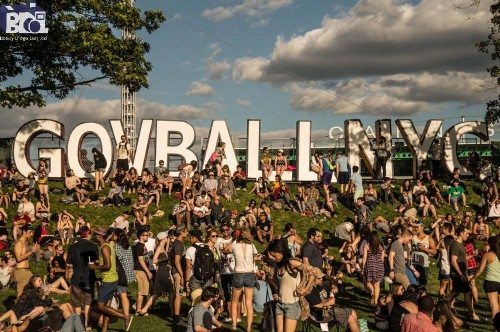
In the ongoing development of NYC Festivals news, it was announced recently that key Queens leaders have joined together in support of the proposed Panorama Music Festival, slated to take place a few weeks after Governors Ball. Taking place at the Flushing Meadows-Corona Park (site of the 1939 and 1964 World’s Fairs), the festival is promising to be a big boost for the local community.
Congressman Joseph Crowley (Jackson Heights), and City Councilmembers Julissa Ferreras (Corona), Karen Koslowitz (Forest Hills) and Petter Koo (Flushing) have all made statements favoring the Panorama festival, citing its potential for an economic boost. “The Panorama Music Festival will provide a fantastic opportunity for Queens to take its rightful place as a New York City showcase,” Crowley stated in a press release from Goldenvoice, the festival promoter.
The press release issued by Goldenvoice, a plan is outlined for its commitment to being a sustainable partner for the park with Panorama. The festival plans to offer a three-day medical clinic for local residents (with a capacity of 1,500). Portions of ticket sales will be donated to a newly formed Flushing Meadows-Corona Park Alliance, and the local businesses expect to fair well with the influx of festival goers.
No official date for Panorama has been set yet, although rumors point to mid-June, just a few weeks after and only about seven miles from Governors Ball.
UPDATE 11/3/2015
The New York City summer festival situation is starting to look more like the Triwizard Tournament from Harry Potter. This week the New York Post reported that Madison Square Garden is now seeking permission for a major festival in Queens around the same time as AEG Live has proposed their Panorama festival NYS Music first reported below. Unlike AEG Live’s festival, MSG would keep their festival planning in NY hands. However, this would still pose a risk to the independently-run Governors Ball festival, whose organizers have launched a petition for Mayor DiBlasio to reconsider AEG’s proposal. Founders Entertainment, the NYC-based organizers of Governors Ball and Farmborough on Randall’s Island have not yet commented on MSG’s entry into the festival circuit.
Original posting:
New York City has seen a rise in the music festival scene in recent years, most notably with the Electric Zoo festival and the increasingly popular Governors Ball festival held on Randall’s Island.
Recently the promoters of Coachella, AEG Live, have been eyeing a location for a major festival opposite the East River from Manhattan in Flushing Meadows, Queens – Corona Park to be more specific. It would be one of the borough’s largest events since the 1964 World’s Fair. The organizers of the festival are showing they are ambitious, already in preliminary talks with artists who could be on the lineup.
A second major alternative festival in NYC would be a welcome addition. Governors Ball has been sold out in advance of the festival for the past few years, showing that the interest and demand for a weekend of live music is strong and even growing. As most major events do, the new festival would likely help the local economy out but could come with concerns for short-term headaches arising from festival traffic and other municipal demands.
Governors Ball, which has only been around since 2011, has claimed a stronghold in the festival scene with solid lineups spanning alternative and indie genres. Ticket demand for GovBall show that it shouldn’t be competing with what would be a similar festival taking place not too far away on the western end of Long Island. The only problem: This new festival, tentatively dubbed Panorama, may occur two weeks after Governors Ball (which has taken root to the first weekend in June) and could draw attendance away from the independently-run festival.
Founders Entertainment, which runs Governors Ball and the newer FarmBorough festival, is an independent music and brand promoter based out of NYC. AEG Live is a global sporting and music entertainment promoter based out of Los Angeles, second in scale to Live Nation.
The former Albany home of sports bar and adult arcade Jillian’s from 1999 to 2012 was purchased last month by two locally established bar and restaurant owners who have a vision of turning the space into a bar and music hall on the first floor, with a dance club upstairs.
The 34,000-square foot building at 59 North Pearl St. is located not far from the Palace Theatre and the Times Union Center, and it’s right in the middle of many bars and clubs in Albany’s downtown area.
Chris Pratt and Alessio Depoli own the Pearl Street Pub, Barrel Saloon, The Capital American Eatery and Public House in Albany. The duo bought the Jillian’s building for just $855,000, a big discount from the more than $2 million the former owner, New York Business Development Corp., had reportedly been seeking. The NYBDC is a nonprofit that uses its sway to work with banks to help local economic growth by facilitating deals. In 2010, it acquired the building for $2.3 million.
“We see this as an investment in downtown Albany,” Pratt told the Times Union last month. “The building cost far less than (Spillenger) paid for it, and it hasn’t deteriorated very much at all.”
He also said that he has had offers to make similar moves in Schenectady and Troy, but he cited Albany’s recent growth as the reason he chose the city.
Pratt added that he will need to invest more than $100,000 into the building’s infrastructure, and he’s hopeful he can have the doors opened before the end of the year.
The building has a few apartments on the top floor. Pratt said he’s looking into making the basement, where the arcade used to be, into a fully functional workout center.
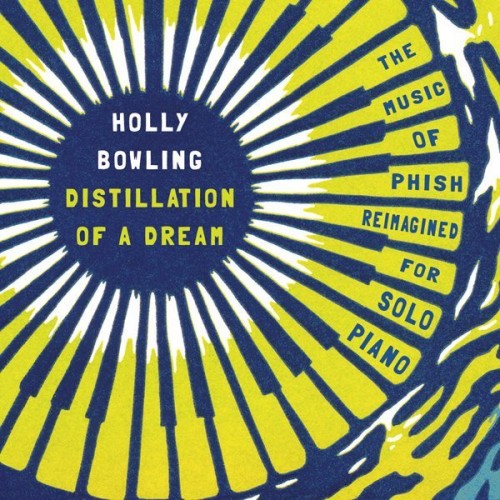
Listening to tribute albums of your favorite band can be hit or miss, but it’s almost always an interesting experience. Holly Bowling’sDistillation of a Dream is no different. She took an assortment of Phish songs, listened to them and transcribed them by ear for solo piano. This album is different from past Phish tribute albums, such as the bluegrass or string quartet tributes, in that it consists of a single musician on a single instrument. The sound and feel are very different.
The aural skill required to take on the task of transcribing not only studio versions of songs featured on the first disc of Distillation of a Dream, but also the complex jams in the three live songs Bowling recorded for the second disc, is commendable. She does justice to the variety of songs she chose for the album. While many fans might already be familiar with her rendition of the “Tahoe Tweezer,” it’s worth giving a listen to the other songs. The album starts off a bit rough with “My Friend, My Friend,” but improves immediately with “The Horse > Silent in the Morning.” Some of the songs seemed to be odd choices for solo piano, such as “Wingsuit” or “A Song I Heard the Ocean Sing”. But those turned out to be some of best songs on the album. There are moments when some of the songs seem unrehearsed. There are moments with small imperfections. Some of these imperfections, like pauses that don’t fit with the song, detract from the music, while others, like slight variations in the tempo, bring that organic feeling of Phish.
Overall, Distillation of a Dream is a solid, creative tribute to Phish. The album reflects the difference between studio Phish as heard on disc one, and live Phish as heard on disc two. However, it is almost as though the first disc feels like a warmup to the more complex second disc. Bowling’s musicality, experience and talent are in full display on this album. The creativity and effort put into the re-creation of these Phish songs and jams make for a fun and interesting listen.
 The Brooklyn Bowl shows on Friday Oct. 9 and Saturday Oct. 10 are their only northeast shows scheduled for 2015, so make sure you purchase your tickets in advance. And if you needed another twist of your arm, the McLovins will be opening Friday night’s show and The Hip Abduction will be opening Saturday.




 Listening to tribute albums of your favorite band can be hit or miss, but it’s almost always an interesting experience.