November 20 marked the release date of the much anticipated album by EDM artist Space Jesus. The album Close Encounters is okay with a few redeeming songs on the album and as a whole it did not stand out as unique. “HydraBadMan” is one of the better songs on the compilation as Jasha Tull was able to manipulate bass that felt eerie and all encompassing. However dissecting the rest the “HydraBadMan” minus the bass, it felt unauthentic – a feeling reflected in the whole album. The song “The Sultan” felt easily calculated and lacking personal voice. The album does not stand up with the multitudes of other compellingly abstract music that tries to merge Middle Eastern influences into contemporary music of America. Consider the Source for example is a band that does a stunning job of that. Some characteristics of sounds were hinted at but not well represented.
Space Jesus, Close Encounters
The album does demonstrate that the artist has knowledge of this hip-hop style where the bass in smoothed out and slowed down to create what we know as dubstep. The frequencies in the track “Sycamore” are nice and I think that is one of the songs where the whole sound came together. Each entity in “Sycamore” relies on the other for strength and pivot point. This could be a fascinating album if you are looking into electronic music and wanted an album that features a variety of different sounds. However what is lacking here in the CloseEncounters album is connection from track to track. There is no story being told or any sort of desire to transcend the confines of four minutes. The concept of the album is using it as a means of birthing a beast, creating an entity or exploring flow. The experience of listening to a good album for the first, second and third time should be like bearing witness to an inspiration that the musician had a genuine interest in serving out. Yet no relationship could be found between the music and the feelings that were supposed to be alluded by Space Jesus.
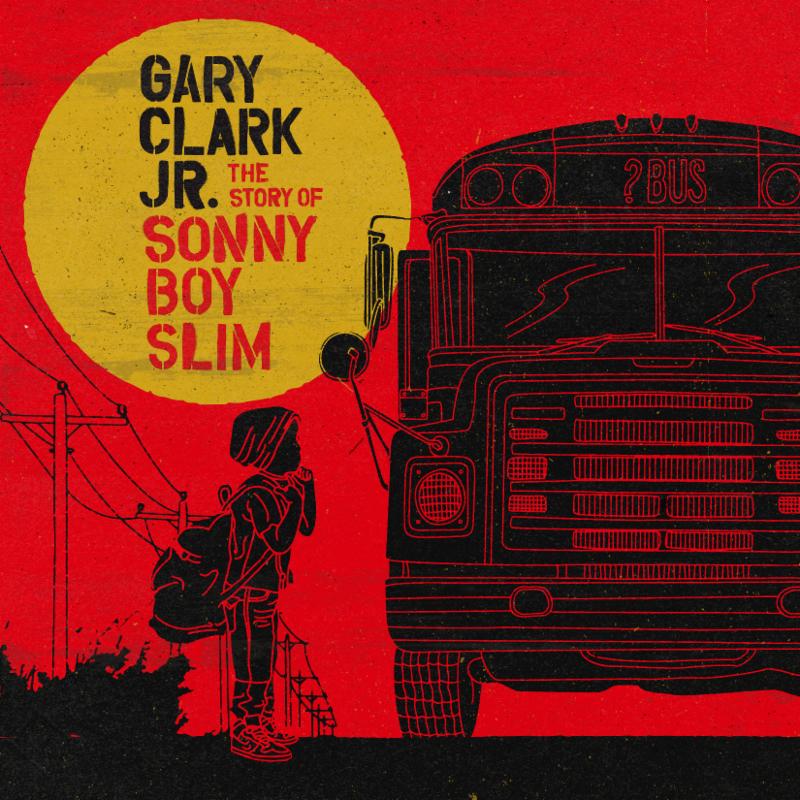
In his recently released sophomore studio album, The Story of Sonny Boy Slim, Texas blues man Gary Clark, Jr. shows the world the true extent of his versatility. With a mix of blues, funk, and soul, Clark proves, more than we’ve seen from him so far, his ability to produce a multifaceted sound.
The album’s second single, “Grinder,” prominently features screaming guitar solos wrought with a Hendrix influence. On the other hand, “Star” and “Cold Blooded” dial back on the licks and show off a funk-soul combo reminiscent of Stevie Wonder and Curtis Mayfield. Clark brings “Church” in a direction we’ve had yet to see from him: Clark, his guitar, and his harmonica combine to create a beautifully written acoustic track with just the right mix of gospel and soul.
Clark has always shown a natural ability to mix modern soul themes in with more traditional blues themes, but perfects this ability in The Story of Sonny Boy Slim. For example, “Wings” and “Can’t Sleep” contain lyrics appealing to the listener interested in a more modern “party” sound, a la John Legend, but also incorporate classic funk and blues guitar.
The Story of Sonny Boy Slim is an album that can be enjoyed by young and old due to its masterful fusion of classic blues with neo-soul. In addition to the fact that Clark produced the album, true music lovers can appreciate that he also played many of the instruments. As the album is surely his best studio work so far, fans can look forward to a very bright future for Gary Clark, Jr.
Sister songwriters Alison and Zoë have assembled a handful of heartfelt folk songs for their debut Ep Home Is… The five song collection released Aug. 19, exudes a nostalgic sentimentality fit to be wrapped in brown paper and tenderly tied together with twine. Their music is less about perfecting instrumentation or inventing a new sound, instead focusing on shaping a familiarity and sharing honest, human stories to connect with listeners. The album was recorded, mixed, & mastered by Jeremy Johnson at Subcat Studios. Ryan B. Curtis cultivated the design and layout of the album cover and CD art, using a photo provided by Elisha Stasko.
Alison and Zoë’s songs act as melodic vehicles, taking the listener on a journey of relatable experience. As is often the case with traditional folk music, various elemental strands are weaved into their lyrics, rooted in the sisters’ adventures or borrowed from other folk songs gathered during their travels through Ireland and Great Britain. The album is an audible patchwork quilt of memories.
“Following That Star” showcases Alison’s rich, sturdy voice with support from Zoë’s delicate harmonizations, accompanied by simple guitar picking. Alison sings: “Our father’s mother said one day she’d get discovered/ And you know they say she sang just like me/ But she crossed to the other side and so she passed it down the line/ Now generations live vicariously through me.” The song centers on the theme of following a star, where the star could be a metaphor for a life path or the intuition to help guide someone down a particular life path. This metaphor would ring true for Alison and Zoë, whose song writing has become an intimately important foothold grounding them to their own individual yet entwined life paths.
The title track “Home Is…” begins with a straightforward guitar rhythm before both sisters chime in. They harmonize about singing together on a train, adding a meta layer to a song seeking to interpret the concept of home. Their lyrics suggest home not as a structural entity, but rather a feeling that can manifest through engaging with others, even in faraway landscapes. “This Song I Wrote” offers the notion of music as a healing mechanism. Alison and Zoë sing in unison: “I saved my marriage with this song I wrote/ I plucked the words out of my chest and I said darlin’ that’s the best I can do for you/ Then we got drunk on honesty and we fell back towards each other/ Remembering all the ways we fell in love in the first place.” The tender lyrics dance through a spectrum of emotions, intimately touching on feelings of love and heartache so accessibly that any listener can identify in some way.
Key Tracks: Following That Star, Home Is…, This Song I Wrote
The past year has been a great year for music. In addition to the great albums released by New York artists, there have been some excellent albums released around the world. The NYS Music team picked their favorite albums of 2015. This is just a sampling of those albums.
Courtney Barnett released her critically acclaimed debut Sometimes I Sit and Think, and Sometimes I Just Sit back in March. The 27 year old Australian singer/songwriter has received nothing but praise. Will Hermes, reviewing it for NPR, says:
Barnett’s facility for wordplay and compressed narrative has more in common with great rappers than pop songwriters, and her debut is the best rock record I’ve heard this year. She’s a poet of panic attacks and short attention spans and the kind of heartbreak that always seems to be following right in your blind spot.
In his five-star review for The Guardian, Everett True writes “listening to most – if not all – of Sometimes I Sit and Think, and Sometimes I Just Sit is a richly rewarding experience, one that increases with each listen.” Rolling Stone’s Jon Dolan gave the album 4.5 stars and said “wherever Barnett ends up, we’re going to want to go with her.”
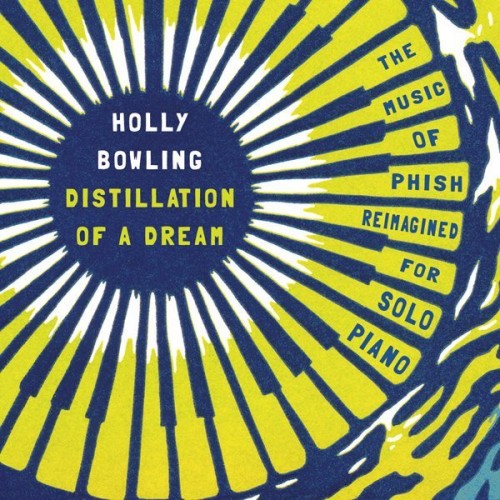
Holly Bowling has been getting the attention of Phish fans around the nation with her solo piano covers of their repertoire, the most well-know of which being the “Tahoe Tweezer.” The release of her crowd-funded album, Distillation of a Dream, was much anticipated. Bringing a fresh look at the music of Phish, it’s no wonder everyone who gave it a listen fell instantly in love. The first disc of the double album offers her interpretation of studio tracks, while the second disc covers live jams as performed by Phish. Bowling “does justice to the variety of songs she chose for the album.” Reviewing the album, I wrote:
Overall, Distillation of a Dream is a solid, creative tribute to Phish. The album reflects the difference between studio Phish as heard on disc one, and live Phish as heard on disc two. Bowling’s musicality, experience and talent are in full display on this album. The creativity and effort put into the re-creation of these Phish songs and jams make for a fun and interesting listen.
The NYS Music team has voted and these are what we chose as the best albums released in 2015 by New York artists. Turkuaz’s Digitonium, Lettuce’sCrush and Consider the Source’s World War Trio Parts II & III each received multiple votes from the staff.
Turkuaz’s Digitonium is “the future of retro pop funk.” Turkuaz has been quite busy lately, having recently completed an extensive fall tour that spanned the continental U.S. Featuring great tracks like “Nightswimming,” “Percy Thrills the Moon Dog” and “Doktor Jazz,” the album is “the ideal listen for any pre-party or when you are just ready to share in the groove.”
The 23 track album is a mature testament to the bands growing sound that continues to push the boundaries of funk with heavy ’80s influences. The album is full of instrumental segues of experimental melodies that set the stage for evolutionary funk tunes with classic, raw Turkuaz energy. Digitonium is built upon layers of exploratory themes, characters and repetitive lyrics that get the listener to pause, rewind and think outside the album.
The latest release from Lettuce, Crush, is the first album in three years from the seasoned funk band. Jeremiah Shea calls it their “most aggressive, ambitious, and funkiest album to date.” With highlights, such as “Phyllis,” “Trilogy” and “Pockets of Change,” this is a must-hear album.
If you’ve never had the opportunity to dive into some Lettuce head first, now might be a better time than ever. Crush is the convergence of road tested and polished material, musical exploration, deep pockets of groove, and a band that is simply on top of their game. With a discography full of hits, this album somehow stands above them all.
Sticking to the funk theme of the other albums is Consider the Source and their latest effort, World War Trio Parts II & III, the follow-up double album to last year’s World War Trio Part I. In reviewing the album, Shea says “If pop music is reading at an elementary level, World War Trio Part II + III, is at least a 400 level college course.” The Middle Eastern sci-fi psychedelic funk fusion trio has been quite active in recent years. This album was no small undertaking. Of its 20 tracks, “This Dubious Honor,” “Up to, But Not to Exceed… Whoa,” “I’ll fight for the Imp” and “You are Disappearing.”
Never before though has the band done it this masterfully and with such vision. This isn’t just food for thought, but a feast, with such lush sonic depth that can’t simply be explored in one pass. This is music that commands focus in a time when fans are more flippant than ever. You could say the band is fighting a natural progression, but I applaud the effort and what they force a willing listener to listen to. The continuity between songs is beautifully orchestrated and only possible with an overall delivery being kept in perspective from the onset.
Nashville-based indie-pop trio Yankee Blood released their debut EP last month titled Honey. The Yankees, as they sometimes call themselves, are comprised of Kelly Ruth (singer/bassist), Adam Verone (drummer) and James Karp (guitarist). Seiji Itaru Inouye provides additional guitars and Juliana Richer Daily supplies vocal harmonies on the album. Honey was produced, mixed and engineered by David Brubaker at Studio 215, and mastered by Mark Trewella of Full Circle Mastering.
Airy vocals and ethereal harmonizations supported by bluesy, mellow guitar and drums, open the first song, “Sioux City.” Ruth poses an existential quandary floating through the minds of younger generations questioning their role in society. This notion is drawn out with the lyrics, “When you were 23 you said that you wanted to move to Sioux City, where everything’s pretty/ You said Ma don’t you miss me, I’ve gone to where I can see the sunset clearly/And everyone’s friendly to the new girl in town.” The song alludes to that idealistic mentality of many fledgling twenty-somethings seeking to explore the world and embark on adventure. Like viscous honey oozing down a smooth surface, the lyrics postulate, “Well you’ve always been chasing that dream of the beautiful scenes you’d clip out of magazines.”
“Reckless” offers eighties-inspired synth pulsating like lazy ripples, chased by Ruth’s femme power lyrics. She expresses, “I’ve been told I need a man to put me in my place/Every time one comes around he can’t keep with my pace/God made me the reckless kind.” Yet the next song, “Beekeeper,” with simple jazzy guitar evoking a daydream quality, expresses a desire for companionship through the lyrics, “Like bees to the queen, like tea to honey/I want someone to love.” Put together these songs personify a fiercely independent woman hard pressed to find a mate well matched for her fiery spirit. Honey will resonate with those who have been faced with the uncertainties of love and finding purpose.
Gowanus is a New York City canal. Gowanus is a New York City neighborhood. And, Gowanus is a New York City band.
Gowanus, the band, recently released their 2nd album, Before the Devil Knows Your Dead. Members Duke Kurick (guitar), Alan Maginn (keys/vocals), Matt Domser (bass) and Brandon McClaskey (drums) rejoined Dean Baltulonis, producer of their 2012 release And to the Lost, at his Wild Arctic Studio in Portsmouth, NH. Clocking in at just under an hour, the eight tracks, written over the course of 2013 and 2014, take the listener along some surprising twists and turns.
Devil makes a somewhat unceremonious entrance with “Hughene Jackman,” an organ-driven instrumental that sounds like it was lifted straight from the early 90’s jamband scene. Not bad, but covering some well-worn territory. Keep the record playing though, because it gets better the deeper you dive. This is just the set-up before they knock you down.
“You Don’t Know” starts as a slow-building, high-flying guitar epic with electronic spooky undertones, until, after 5 whole minutes, it jumps the tracks and suddenly is trudging knee-deep in reggae. You’ll be checking to make sure the track hadn’t changed for at least the first couple listens. “How to Climb a Moving Mountain” emerges smoothly from there, sounding like the soundtrack to a protagonist’s eventual self-discovery.
Gowanus provides a one-two-three punch that forms the meatiest portion of the album. After conditioning the listener for long instrumentals, “Probably Not,” a fist-pumping anti-love rock ballad, is literally the piece of rock holding the albums’ more adventurous tracks together. “Blank” is another longer instrumental that takes another surprising turn, from a straight-ahead rocker to a closing section that sounds like the music from a super-secret level from Super Mario Brothers. It’s the level you purposefully never complete, so that you can just sit back and enjoy the jams, while Mario stands tapping his toe, waiting patiently for you to make a move. Completing the album’s strongest portion, “Prestige Worldwide” mixes elements of Black Sabbath and Funkadelic, showing off the band’s heavier side.
On album-closing “The Cage,” they again wait until well after the 5-minute mark to drop into the vocals, before finishing off with a infectiously fun romp that surely must highlight their live shows.
Speaking of which, Gowanus has one upcoming date on the calendar, a New Year’s Eve gig at the Rock Shop in Brooklyn.
Before the Devil Knows Your Dead is available now at the band’s Bandcamp page.
Boston-based death-funk trio lespecial released their first, full-length studio album titled Omnisquid on November 20. It invites listeners to follow on a sonic voyage of nautical proportions. lespecial is Luke Bemand (bass, vocals, synth) Rory Dolan (drums, percussion, sampler) and Jonathan Grusauskas (guitar, vocals, sampler, synth).
The album tells a story of extra-terrestrial beings commandeering the minds of giant squids which rise from the ocean to wreak havoc and destruction upon the populace. This storyline plays out through a heavy soundscape with, at times, playful, nautical inspired riffs and beats that make the listener feel like they’re in an underwater dancehall. lespecial has created a world with this album and it’s oceanic inspirations are evident.
The first track on the album, “Fruit Wolf Dance,” opens with a haunting, aquatic groove building into a driving onslaught of the trio’s instrumental talents. This driving force has moments of respite allowing for each instrument to shine yet remain cohesive. Halfway through, the track takes a turn showcasing their electronic sample proficiency with bubble-like pops and the live-trap drumming lespecial has become known for. The live-trap and sample sounds coalesce into the heavier tone found earlier in the song making for a seamless display of the genre bending this band is capable of. Bemand has stated previously that this album is a return to their musical roots, showcasing “a heavier vibe throughout.”
The second number, “Squid Rising,” introduces the listener to the story of the giant squids with noticeable seafaring compositions and Bemand’s thick basslines amidst the recordings of news reports of the squid’s destruction. Following up the tale’s intro is the title track, “Omnisquid,” a frenetic serenade of layered guitar riffs and polyrhythmic drumming. “Optimus Prime Slot” features some industrial-heavy drum programming by fellow Boston-based music-maker, Rob Uslan aka Supersillyus, and make for an excellent juxtapose to Grusauskas’ pinching guitar riffs and eerie vocals.
“Sugaboi” is a jamtronica laden track, again displaying the bands diverse and ample capability of playing different styles which they seem to be poking fun at with the overlay of a recording stating “see there’s some question about my identity/ let me put it to ya this way/ I’m not sure who I am.” Possibly answering that question is the following, “Leaps Evil,” where Dolan’s drumming keeps an excellent, relentless pace amongst Grusauskas’ soaring vocals and Bemand’s standout bass riffs. “Ships in the Night” feels like a reprieve from the repetitive build and crash that previous tracks include, giving way to the album’s first pre-release single, “New Fish.” Sliding bass and a wonky guitar vibe swell to a powerful, double-bass filled barrage fading out unrelenting. Like “Leaps Evil,” “Pressed for Time” conveys lespecial’s distinct command of differentiating time signatures and penchant for high-pitched vocal harmonies.
Closing out the journey is the track “Absolutely Stunning,” recounting a fisherman’s tale of what he may or may not have seen. There’s a very cinematic, “end-of-times” vibe to this track with the addition of a cello arrangement by Julian Lenz. The cello amplifies another build and release to the heaviness that lespecial has been touting the whole album. Whilst weaving a tale of cephalopods taken over by aliens, Omnisquid most definitely exemplifies a return to form of contrasting time signatures and dark, heavy grooves. If you’re in need of a cinematic auditory experience, lespecial’s first full length has it.
All songs on the album were written and performed by lespecial and all tracks recorded and mixed by Andrew Greacen at More Sound Recording Studio in Syracuse, NY except “Ships in the Night,” recorded and mixed at the Music Cellar in Millerton NY, and the Morrison Gallery in Kent, CT. All of the tracks were mastered by Jocko at More Sound Recording Studio in Syracuse, NY.
Becoming a highly successful jam band is not an easy task. Very few smart, thought-provoking, improvisational rooted groups have found themselves on the path to becoming a top-tier act in the music industry. In a musical world where bands like Phish and the Grateful Dead prove that you can stay true to your artistry and build a fan base, while acts like the Dave Matthews Band and Blues Traveler showcase a more commercial success side, Twiddle seems to be a band that is on everyone’s radar. And their third studio album and second fan-funded record PLUMP Chapter One, a double-disc set, is scheduled for dual releases.
Launched in January of 2015, Twiddle’s dedicated fan base pledged the $20,000 PLUMP Kickstarter goal in less than 24 hours. And even after the goal was reached, backers continued to elect into the campaign’s rewards raising more than $40,000 by the project’s end.
PLUMP–Chapter One is a slightly departed yet highly fulfilling venture for the Vermont-based quartet. The band’s two previous studio albums were mainly composed of clever, intermingled lyrical hooks displaced among lengthy jams and instrumental tracks. The band has stepped away from that style to offer a more developed and produced sound. Only one song on the record clocks in at longer than six minutes. But what the album lacks in extended jam, it succeeds in showcasing Twiddle’s prowess as well-rounded songwriters.
This first installment is overly ripe with earworms and radio friendly pop hooks, none of which should be a surprise to Twiddle fans, as the album contains not one previously unheard tune. If you want to understand why so many new listeners have latched onto the band over recent years, PLUMP–Chapter One exemplifies that attachment at its roots.
Twiddle (L to R) Brook Jordan, Mihali Savoulidis, Ryan Dempsey, Zdenek Gubb
With this selection of songs, Twiddle highlights their socially conscious yet personally hopeful resonance that their followers love. Lyrically, the album is easy to swallow; it’s the tones of personal and social self-discovery that is neither preachy or melancholic. Even in more intense tracks like “Polluted Beauty” and “Indigo Tigger,” deeper, prophetic messages hide among sweet grooves and grunge-inspired edge.
The record’s opening track “Complacent Race” sets the stage for the album’s lyrical flow that reads like a beautifully written manifesto. The song, which has only been played live during a solo performance from lead guitarist and vocalist Mihali Savoulidis, is probably the most ominous of PLUMP–Chapter One’s 11 tracks. Even the initial burst of horns heralds in Savoulidis’ slight contempt, “Drowning in hypocrisy/Doubting our democracy/Still fighting for equality/So you can live the way you please.”
At the album’s most lyrically stern moments, it’s Twiddle’s brand of musical fusion that drives the sheer optimism behind the music. The four-piece outfit masterfully weaves up-tempo reggae fluidity with deep funk-driven bass lines and quirky keys to create the perfect backdrop for their variety of lyrical directness. PLUMP–Chapter One is overflowing with tales of hope, frustration, humanitarian desire and self-awareness. Savoulidis has no problem revealing his life’s truths in songs like “Lost in the Cold,” “Amydst the Myst” or even the well-veiled love song “Five.”
“Lost in the Cold,” a meaningful and personal exorcism, takes on a new life through PLUMP. Lyrically, it’s the courage that comes at the end of hitting rock bottom; Savoulidis perfectly captures what it’s like to be tortured by life’s complexities and the fear of moving beyond them. For fans of the song’s live version, the added horns and sleek production of the track may feel like a slight overreach. But the PLUMP version of “LITC” is a shining example of how Twiddle’s music has the ability to take on a bigger, more complex sound. And it’s more than likely a glimpse into the direction that the band sees its music heading.
“Syncopated Healing,” the band’s upbeat, music-loving anthem, serves as a solicitous reminder that the heart of Twiddle’s music and fanbase is a desire to heal through music. Lyrics like “Relax and dream one day at a time/Let the beauty of the music start to heal your life,” is an example of the mantra-like cadence to which Twiddle excels. Housed right in the middle of the album, the track is a feel-good song that showcases the perfect blend of sing-along lyrics and danceable music. It also holds one of the few illustrations into the band’s jam capability, with a minor but beautifully finished guitar solo from Savoulidis.
Highlighting the album is “Every Soul,” which features Todd Stoops (RAQ, Oktopus). The funky yet seamless track is truly a showpiece for bassist Zdenek Gubb who drives a steady and unstoppable bass line throughout the song that stops only for a musical showdown between Gubb, Stoops and keyboardist Ryan Dempsey. While Stoops lays down his signature sound of wonk and wobble throughout the song, Dempsey counters with classical key work that sounds both studied and whimsical. Behind the kit, drummer Brook Jordan creates a supernatural disco-style rhythm that serves as the foundation for the highly intoxicating and powerful song. It’s a sound that Twiddle explores often in the live improvisational formula, but doesn’t reveal often in the studio form—a sign that the band has plenty of diversity in its arsenal and room to grow musically.
Saxophonist Kenny Brooks (Alphabet Soup, RatDog) makes a guest appearance on “Be There.” The song is an ideal vehicle for Brooks’ warm and charming sound, and the heartfelt track is reminiscent of the vibe created in early Dave Matthews/LeeRoi Moore collaborations. However, the beauty of “Be There” gets slightly lost in its placement, as the tender moment is sandwiched between two of the album’s heavier hitting tracks.
PLUMP–Chapter One reveals much growth for the band. Dempsey places well-manicured piano rifts and keys throughout the album that create a silky, romantic appeal to some of the record’s quieter moments. Without the jam vehicle, Dempsey is forced to use his classical training to make a statement. And Savoulidis makes much better use of his distinctive vocal tone. Unlike the band’s two-disc set Live, recorded from the famed Vermont club Nectar’s, this latest compilation isn’t scattered with unforgiving vocal runs or muffled lyrics. Perhaps it’s merely the growth provided by studio tracking versus the ability to experiment through live performance, or the realization that if you have something worth saying, you probably want to make sure it can be heard. Regardless, Savoulidis hits notes with laser-point precision and delivers lyrics with crystal-clear distinction.
One of the biggest misses for the album is the vocal exploration between Savoulidis and Jordan. Although Jordan has his own vocal vehicle on the folkish “Dusk til Dawn,” there are only minor moments of harmony between the band’s two main vocalists. Jordan’s smooth and milky tone has the opportunity to complement Savoulidis’ smoky and raspier vocal quality. However, even on tracks where harmonies are present like “White Light” and “Polluted Beauty,” the pairing isn’t emphasized enough to truly hear it.
While a track list has yet to be announced for Plump–Chapter Two, it can be expected that the album will drop sometime in spring 2016. And this is leaving online fan groups abuzz with the possibilities. Will Chapter 2 showcase Twiddle’s more instrumental and improvisational side? Will their previously unrecorded jam-worthy songs like “Gatsby the Great” or “Zazu’s Flight” find their way on the second disc? Will they showcase a more playful side through songs like “Cabbage Face,” “Mamunes the Faun” or “Brown Chicken Brown Cow”?
What Plump–Chapter One proves, at least on the surface, is that Twiddle doesn’t want to remain a second-tier festival group. The record’s polished finish is intended to attract listeners that may stumble upon the album, while the songs demonstrate that Twiddle has an ear to create hits that resonate with the community it represents. But as Twiddle continues to find success and its fanbase grows, can the group continue to create music that intrigues new listeners without compromising the band’s musical integrity and its supportive community? Plump seems to be poised to place Twiddle directly in the path to find out.
PLUMP–Chapter One officially drops on iTunes, CD Baby and Spotify Streaming on Dec. 11.
Key Tracks: “Every Soul,” “Lost in the Cold,” “Syncopated Healing”
Back in July, two giant stadiums, one in Santa Clara, CA and the other in Chicago, IL, held five shows between them in honor of the 50th anniversary of the Grateful Dead. When fans arrived for the Fare Thee Well shows, they were welcomed to soothing sounds that filled the air before the show started. Set break and post-show also played this same music to fans as they were heading from their seats to grab a drink, meet with friends or leave the stadium for the evening. Fans were curious as to where this music was originating, as it had never been heard before. Touches of Grateful Dead notes were hinted at throughout, but it was never an exact replica or clear match to being the Grateful Dead. However, the music had a familiar touch about it, but it could not be pinpointed. Who was behind this magical music?
Not long after the reunion run ended, it came to light that Neal Casal was the man behind the music between sets at the reunion shows. Casal, best known as the guitar player for the Chris Robinson Brotherhood, was approached by Justin Kreutzmann to assist with the musical side of the production during the breaks. Casal got together with three other musicians, bassist Dan Horne, drummer Mark Levy, and keyboardist Adam MacDougall, to create the music that would soon become a part of the Grateful Dead history forever. Over the course of a few days, the group put together over four and a half hours of “walk in music” for the reunion shows. The album, Interludes For the Dead, contains the music that grew out of these magical recording sessions over a short period of time. Though the music was originally created specifically for use at the reunion shows, due to an overwhelming demand by fans, it has been put together and released in album form.
When the tracks were being created, it was all done free-form, as the musicians flowed to where their hearts brought them musically. What they created was simply magical. Never anticipating the music being released to the public, the artists pushed some songs to over 25 minutes in length, which tests the boundaries of fitting on one side of a vinyl album. The longest song, “Farewell Franklins,” clocks in at 25:05 minutes.
The flow of the music throughout this album maintains the same continuous mystical aura, as the notes hint and touch upon slight rhythms of Grateful Dead tunes. In addition, some songs follow the same themes of particular Grateful Dead tunes. For example, “Scarlottas Magnolias” has obvious hints of “Scarlet Begonias,” and “Scarlet Wheel” touches upon “The Wheel.” In addition, some tracks are named for specific people or stories. “Gilbert’s Groove” is named after Gilbert Shelton, the artist behind the cover artwork for The Grateful Dead’s Shakedown Street album. “Hallucinate a Solution” was named for a quote Phil Lesh said before going onstage one evening during a Phil and Friends show. Casal had been performing with him, and a discussion came up regarding a difficult transition between two songs. Lesh’s solution was to “hallucinate a solution,” hence the song named in his honor.
Overall, the album that was never to be is crammed with mysterious tones that overlap transcendental notes and waves of creative bliss from beginning to end. This unexpected release easily hits the heart of fans of all genres, as it clearly falls into a category all its own. Allowing the music to flow from the heart, without the added pressure of producing an album from the get go, is what makes this album beautiful. A delight to the eardrums, each tune offers up gorgeously fluid sounds that take listeners on a journey of pleasurable surprises as the tracks drift from one to the next.
Each track is completely different, yet similar, with the low key grooves that are maintained. “Hallucinate A Solution” is chock full of hip beats, while “Gilberts Groove” brings it down with a funky vibe. Jazzy edges are sliced into “Kaseys Bones,” while the mood takes a 180 with a mystical “Space Wheel.” The longest track, “Farewell Franklins,” picks up the beat with a soulful organ and crisp guitar chords that join arm in arm. The album closes with the shortest tune, “Mountains of the Moon,” at just over five minutes in length. This spacey jam takes listeners on a trippy ride through quiet tones intertwined with cosmic hues, sculpting a perfect ending to this remarkably harmonious recording.
Overall, Interludes For the Dead takes listeners from soulful jazz lines to funky, psychedelic punches and everything in between. The free style jamming the musicians put into each track takes you on a magical ride through riffs that soothe the soul, relax the mind and provide endless colorful vibrations of energy. This is perfect music for any occasion, whether a long car ride, stretching to yoga or trying to calm from a hard day’s work. This is the album that belongs on everyone’s playlist. This will soon become one of your top albums played again and again.
Key Tracks: Hallucinate A Solution, Farewell Franklins, Saturdays Children

 The album’s second single, “Grinder,” prominently features screaming guitar solos wrought with a

![12 Jacket (Gatefold - Two Pocket) [GD30OB2-N]](https://dev.nysmusic.com/wp-content/uploads/2015/12/turkuaz-digitonium-500x500.jpg)

 Nashville-based indie-pop trio
  Becoming a highly successful jam band is not an easy task. Very few smart, thought-provoking, improvisational rooted groups have found themselves on the path to becoming a top-tier act in the music industry. In a musical world where bands like Phish and the