Pink Talking Fish, hailing from New England, is one of the most interesting tribute bands out there today, combining the music of Pink Floyd, Talking Heads and Phish into one. NYS Music recently had the opportunity to speak to Dave Brunyak, the guitarist for Pink Talking Fish, to discuss his thoughts on the music scene in general. He’s made a few waves on the festival circuit and we were interested to find out more about him.
Sarah Bourque (SB): Tell us a little bit about yourself and how you got into Pink Talking Fish.
Dave Brunyak (DB): I’ve been playing guitar since I was 14 years old so that makes about 20 years this year. I’ve been writing music and playing in my own original bands for a long time. In 2010, I started a Phish tribute band called the Phreaks. We had a four-year run and had a lot of great shows. Built up a pretty nice fan base in New England. At the end of last year, Eric Gould (bassist for Pink Talking Fish) came to Electric Haze in Worcester and saw me and Zach [Burwick] our drummer at a Phreaks show and decided that we were the best fit. He talked us into doing a few shows and we never turned back.
(SB): At Disc Jam you smashed your guitar on stage Pete Townsend style, which is pretty badass. What prompted that?
(DB): It was something I’d never done before. I’m always looking for something interesting to do to make the show a little bit more special than the one before it, but it’s fair to say that people, in their lives, go through peaks and valleys, experiences and emotions. At that particular time, I was in the valley, so it was something to help me turn the corner and get out a little bit of stress.

(SB): At Buffalove, you soloed on top of a speaker tower. Were you in the same kind of mindset at that time ?
(DB): Smashing the guitar set a precedent. People are looking for me to do the next crazy thing so we dragged a few speakers out on the stage just to give me something to climb on. It’s fun to do something a little bit out of the ordinary that people don’t expect. I have no idea what the next thing is going to be but it will be awesome.
(SB): It seems like you play your guitar pretty hard and have a few extras on stage because of broken strings. Is it common that you just play your guitar hard?
(DB): It’s a combination of my style of playing and the way my guitar is built, and using a heavy pick. One day I will have a guitar tech who will fix some of these things for me at a show but, for now, I just bring a few extra guitars to the shows.
(SB): How do you balance your music obligations with every other part of your life? Finding the time to practice, come up with new ideas? Where’s the balance come from?
(DB): It’s not easy. I’m lucky that the Pink Talking Fish business and itinerary is designed very efficiently and streamlined. I know where I need to be, and what I need to do, well in advance. For instance, in the Phreaks, I was wearing all the hats. I was doing the booking, the promoting, the websites, the posters, learning the tunes, teaching the tunes. Now that I’m in Pink Talking Fish, it’s liberating, actually, because I can just be a performer and just worry about playing the tunes, and playing them well. As hectic as it seems to be all over the country, playing the music and traveling, it’s actually a little bit easier than what I was doing before.
(SB): Let’s talk about Chicago. During Pink Talking Fish’s pre-show on the 4th of July, you were miracled a ticket to a Fare Thee Well show. What’s the story behind that?
(DB): The miracle, in the sense of the term, wasn’t that it came from a stranger. Actually, it was a friend that I had invited who came all the way from central Massachusetts. I didn’t even know that he had a spare ticket. He came in and watched the show. In between songs, said “hey, I gotta get outta here, do you need a ticket?” He handed it to me, gave me a salute and said, “see you in there.” I didn’t actually go in. There was a special lady I brought with me who I thought would enjoy it more than me. I love the Grateful Dead and it’s a big part of my musical vocabulary, but I’m more of a Phish guy. The girl that I brought with me is a Dead head through and through, so I gave it to her and she went in and had a good time. I went to a bar down the street and watched it on webcast.
(SB): How did you enjoy the PTF are Dead shows in Chicago? What vibe did you get from people who came?
(DB): Since I’ve been playing Trey [Anastasio, of Phish] for four or five years now, that material comes pretty easy to me. The cerebral kind of precise playing that comes along with that role. Embracing Jerry [Garcia]’s flavor was a little bit difficult for me. It’s something I didn’t have as much experience with. In the vein of Trey being in the Jerry role, I was kind of embracing the same feel. I found that everybody seemed to be really accepting and embraced the topic. We came off with some great mashup ideas that really hit home. We did this Tennessee Jed > Ocelot transition that is just crushing it. We did a Rock and Roll > Casey Jones thing, where the transitions in between made it a lot more fun, and I think that’s what brought a twist, or a little more level of interest, from the Deadheads. I don’t think they would have expected us to do something like that. Everybody really enjoyed it. I enjoyed playing for everyone and I’m happy that I got the opportunity to do it.
(SB): Did you get to meet a lot of the fans and introduce yourselves during your shows in Chicago?
(DB): When our shows were over, people were there for the Grateful Dead. That was the focus. After our shows, people were moving and had destinations in mind and that’s really what the vibe was like. I wasn’t going out there so much to chat and mingle but more to immerse myself in the moment. It may have been the best weekend of my life. I’m not sure yet.
(SB): What’s your take on playing clubs versus festivals. What’s the dynamics between the two that stand out?
(DB): They’re all awesome. It’s a different dynamic when you’re playing a club or theater show. It’s very focused because you’re the center of attention. Everyone there has come to see you. It’s a controlled environment. You get to do your sound checks and really dial everything in nice and play for a longer period of time. The exposure you get to new audiences is really beneficial.
The festival scene, though, has it’s own merits. It’s an exciting experience. There’s really so much energy in the air and you’ve got to help and get your stuff up there really fast. You’re playing, in most cases, to huge crowds. The response you get from hitting the nail on the head can be really, really exciting. They’re both great. They’re both different. We just need to be able to flex and roll with the punches and make it all work for us.

(SB): You just played at Jerry Jam, a really small festival that celebrated their 20th anniversary. How did you enjoy the festival that was all about the celebration of Jerry Garcia and the Grateful Dead?
(DB): It was definitely my first time there and I was really impressed with the venue, with the rolling hills, and the natural amphitheater style of a venue. I think people there were really excited because it was an anniversary party so it had a little bit of an extra oomph to it. Everybody there was in a good mood. I only got to spend the day there. I got to walk around and meet some people and play some acoustic songs on my guitar afterwards. All in all, it was just a wonderful experience.
(SB): What’s next for you? Do you have any side projects in the works?
(DB): That’s a good question. When I spoke to Eric [Gould] at the beginning of the year, we talked about what was going to happen this year with the intensity of travel and what we were going to try to accomplish. I told him that I was going to lay aside most everything, musically speaking, to give Pink Talking Fish everything that I could. So far it’s paying off and the dividends are huge. I think we are on a great path to success and it’s only going to be better next year.
Eventually, I would like to get back into writing my own music and performing it. It’s been a long time since I’ve written music. I’ve got a catalog of 200 songs from my original band and I’ve got it all charted down and I can go back play them. I have recordings. I listen to them and stroll down memory lane. Right now, I’m really just excited to see what Pink Talking Fish can do and giving it my all.
I’m really into country music. It’s something I just got turned on to in the past year. I’m in a country project called Heartland Radio with my friend, Dustin Snyder, and I’m trying to fit that in here, there and everywhere doing acoustic country songs. It comes as a shock to a lot of my friends. On the radio today, I really think the best guitar playing you can hear in contemporary music is in country. It’s great to listen to and it also gives a chance for my mind to rest. Playing Pink Floyd and Talking Heads and Phish is very cerebral and I have to think about it, analyze it and be very precise. With country stuff, I just let it be what it is and it gives me a chance to just relax. So it’s a nice little change of pace.
(SB): Is this original stuff or covers?
(DB): No, this is still all covers. It’s interesting because I went to Berklee in Boston and graduated at the top of my class in songwriting, and music ed too. Songwriting is like an engine. It needs to be well lubricated and running. You need to keep it active for it to be as efficient and productive as you want it to be. I still come up with great ideas but I’m just cataloging for now to turn into songs later. Like I said, I need to be able to put a lot of time and energy in to make that engine run. That’s just not something I can do right now.
(SB): Is there anything else that you would like to tell your fans out there?
(DB): I am very grateful for them showing up and seeing me play. Pink Talking Fish is a really wonderful experience. I look forward to seeing meeting as many of you out there as I can.
For more information on Pink Talking Fish, and tour dates, please visit their website. For more information regarding Dave’s side project, Heartland Radio, please visit their Facebook page.
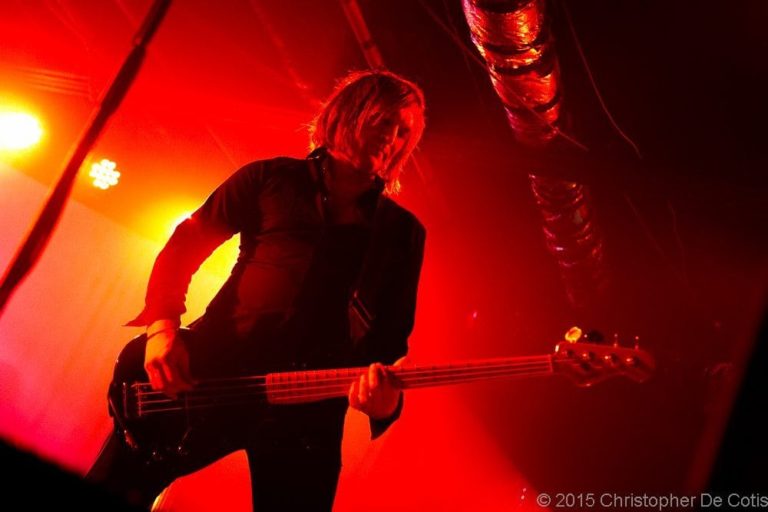 I don’t know what it was about this melancholy post punk shoe gaze rock. There was no onstage chemistry between the band members, who barely seemed to look in the direction of the others while they played their instruments quite masterfully, but I didn’t come to see Paul Banks play guitar and sing, I wanted to see what kind of performance the group would give in a live setting. Live performances of studio songs led to a textbook no frills show where we heard the hits and little else to write home about.
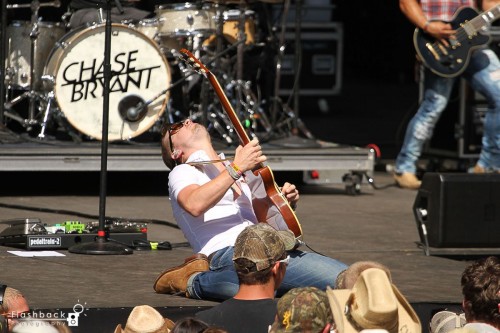
 With Paisley on the stage, sporting a white cowboy hat and a black T-shirt, the focus was entirely on the music. Beginning with his very first song, in which he opened with his 2014 hit “River Bank”, a guitar solo was included in nearly every song. Paisley’s West Virginia roots are evident in his bluegrass style of string plucking, but there was also a certain classic rock influence on his playing. His solos featured rifts up and down the fret board, and he could slide in a way that would make even Steve Miller proud. Between the bluegrass plucking in his right hand and the brilliant fretwork in his left hand, Paisley had remarkable dexterity with all ten fingers, something nearly unparalleled in today’s music scene. His vocal ability isn’t anything spectacular, but his guitar ability was impressive enough on its own merits to make up for it.
 instream modern country concert it was. The string playing by everyone on stage was fantastic.
 Moore showed a strong vocal ability on a few songs, particularly in his 2011 hit “If Heaven Wasn’t So Far Away,” which he dedicated to the American troops around the world, but much of his performance was disappointing. Starkly contrasting Paisley, he was sub-par on the guitar,and at times it felt like the six-string was a prop instead of an instrument. I’m sorry, but if your ass faces the crowd more than your mouth, I’m not convinced that you’re worried about the music as much as you should be.
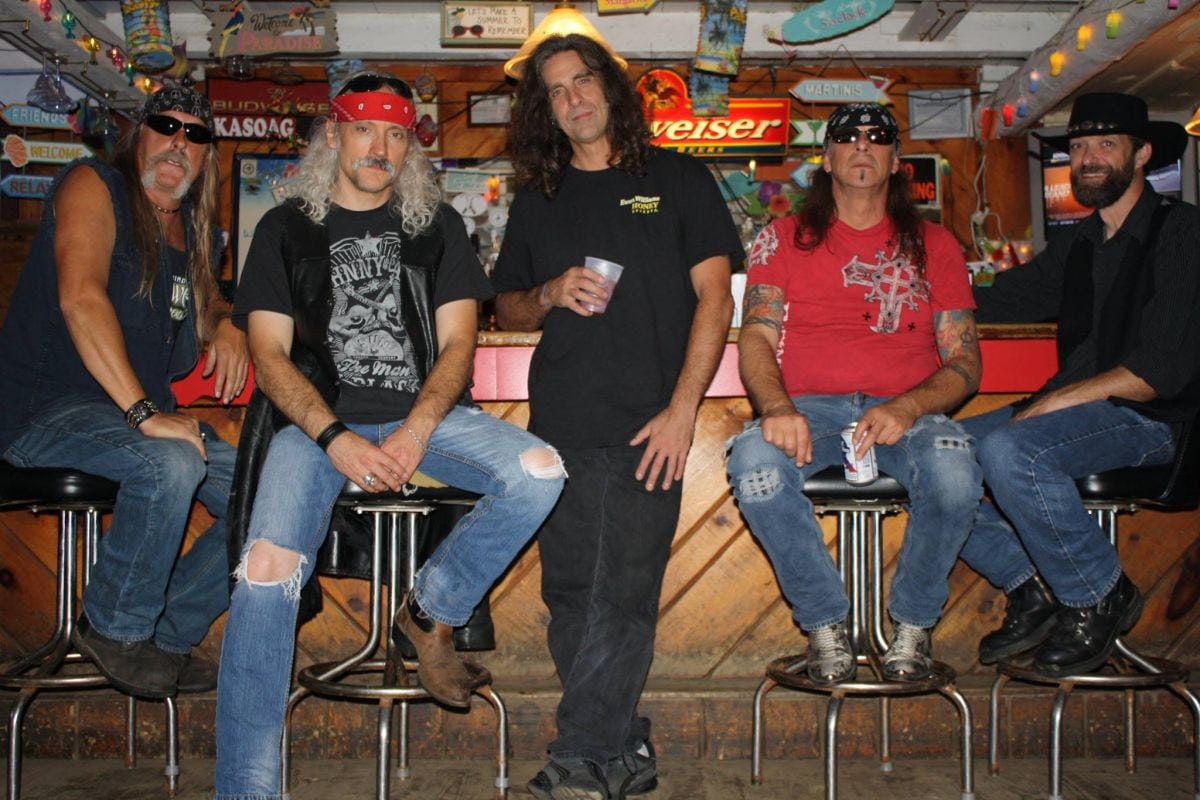
 “Shot To Hell” (K/J), brings a bit of Allman Brothers Band here with the acoustic rhythm brought up, the slide and the piano. The MT is still present as Kaplan re-takes the lead and the harmonies really come through with the help of Fioramanti in the equation, a percussion shake too. Brown-Paul’s (B-P) first piece, “You’re The One” is also his first lead singing role, his voice is softer and smoother, it is just right for this true sad country tune. Gary Burns’ lilting steel guitar licks behind the tremble of B-P’s vocal, Jewett gets a little country majestic and you could wring the sweet out of the backing vocals. “Tonight We Ride” TWR is a (K/J) plus Alan Macomber and Mike Brown piece from their former band, Mad Jack, as is the next one, ‘Desperation Road’ DR. ‘TWR’ is a nice up-tempo love song, more country flavored with a updated guitar solo and a Allman Brothers bridge. It’s got the right swing and sway, DR has it too while of course the topic matter is 180 degree spin. DR opens in a dark mood, Westfall paces with a marching snare, but quickly turns its cheek, Brown-Paul leads to Jewett mid-song as they stretch it out with a couple of great solos. Lamb is running steady on the bottom as Kaplan tells the tale of redemption from his soul and heart. Cool outro too.
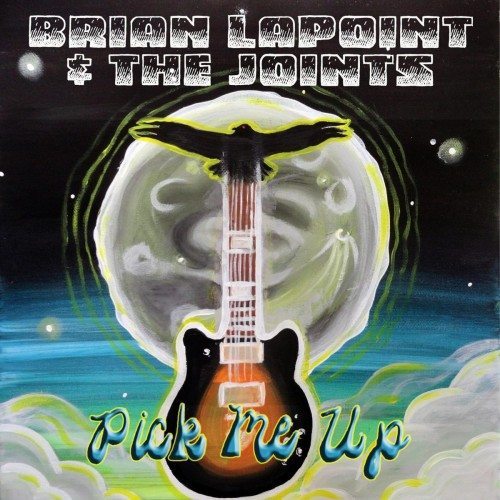 The music of Brian LaPoint & the Joints seems to go quite well with summertime. It’s the type of music you can throw on and let play out over a summer night of hanging about and enjoying the simple treasures in life. It has strong lyrics with strong female and male singing to accompany all the tracks.