Tag: Yusuf

  • The Yusuf/Cat Stevens Peace Train Pulls Into Boston

    A frigid and blustery Boston night was braved by a sold out crowd, many who had waited 38 years for Cat Stevens‘ (now known as Yusuf) return to the performing stage. In support of his 2014 studio LP Tell Em I’m Gone, Yusuf is currently playing a limited number of engagements across the US. His second appearance of six dates in the states took place in Boston on Dec. 7, exceeding any and all expectations for the talented and sometimes controversial artist.

    Peace Train

    The intimate and ornate Wang Theatre was the setting for a two-set, 105 minute performance composed of Steven’s most beloved classics as well as samples of Yusuf’s contemporary dusty desert blues compositions. The tour moniker, Peace Train…Late Again was reflected in the stage set, which was constructed of a broken down train station that changed mood and vibe based on the song performed.

    The concert illustrated the elder Yusuf as an artist willing to reveal and explore all aspects of the Cat Stevens catalog that made him famous, in addition to the expanding song list of current Yusuf compositions. The first hour-long set of the concert settled into mellow dual acoustic guitar groove opening with ‘The Wind’, the same number that opened Cat Steven’s last US tour in 1976. Similarly to 1976, long time Yusuf friend and musical colleague Alun Davies was included on acoustic guitar. In addition to Davies, Yusuf was joined by keyboardist Pete Adams, bassist Stefan Fuhr, Drummer Kwame Yeboah and additional guitarists Matt Sweeney who sat in on tracks from the new LP and Eric Appopoulay.

    The first half of the concert drifted between familiarity and discovery with Cat Stevens classic tracks and deep cuts intermingled with Yusuf’s poignant new material. Regardless of the composition, the songs and stories are all developed from the same earth spring of inspiration, the musical and spiritual journey of Cat Stevens. Yusuf reclaimed his early hit ‘The First Cut Is the Deepest’ for his own in a sing along performance featured early in the show. Highlights of the opening set included a rousing reading of Catch Bull at Four’s ‘Sitting’ that rivaled the original reading, a rare and floral ‘All Kinds of Roses’ off of 2009’s Roadsinger and an always relevant reading of ‘Where Do the Children Play’ that received rapturous applause and soulful accompaniment from the crowd.

    Yusuf’s voice was a perfectly preserved specimen for the duration of the evening. It’s strength somewhat diminished by time, but its resonance and emotion deepening with every performance. A deft pairing of the old and the new displaying this current vocal approach found Cat Stevens first single ‘I Love My Dog’ given a jazzy reading before followed with 2014’s ‘Cat and the Dog Trap’, in my opinion the most beautiful song both lyrically and instrumentally on the new LP.

    The opening set then closed with a collaborative ‘If You Want To Sing Out’ from the 1971 Harold and Maude soundtrack that left the crowd smiling and highly anticipating the second set.

    The second set began dark and the train station turned twilight and dim. The Peace Train was drawing near, the band was armed with electric instruments and break into a funky and strident cover of ‘Big Boss Man’ that enunciated the tastefulness and collaborative interest displayed by Yusuf’s touring band.

    Yusuf then introduced ‘Eddie Vedder’s favorite song’ before playing an intimate and definitive version of ‘Trouble” off of 1970’s Mona Bone Jakon, an inspired choice. ‘Oh Very Young’ followed and received a standing ovation after a flawless rendition illustrating Yusuf’s acceptance of his Cat Stevens legacy as well as the joy it brings him by playing the music. The set now revealed the big songs, the songs that cemented Yusuf’s career then and now. ‘Moonshadow’ was played by the full band in a triumphant arrangement, ‘Wild World,’ ‘Father and Son’ and the long-awaited ‘Peace Train’ were played with infectious joy and virtuosity. Intermingled with these well-known and sought after classics were the impressive tracks off of the new LP including a soaring reading of Edgar Winter’s ‘Dying to Live’ and the gritty ‘Editing Floor Blues’.

    The second half of the performance gave everyone exactly what they had come to see, whether a child of the 60’s, an aging hippy, or a recent passenger on the ‘Peace Train’, there was a song or a message for everyone. Each of the Cat Stevens songs performed felt fresh, their arrangements rediscovered, their melodic nuances fully explored. A celebratory reunion of an artist with his long-lost musical children was taking place on the performing stage.

    The hardcore Cat fans were sated throughout the set, first when Yusuf amazingly quoted multiple movements from the 1973 opus ‘The Foreigner Suite’ and then again with the encore choice of ‘Sad Lisa’ which brought the house down in its unique spot as a closing encore number. The set first concluded with the aforementioned Cat Stevens signature readings of ‘Peace Train’ and ‘Father and Son’, songs that defined an era as well as inspiring the beliefs and relationships that developed during the two songs popularity.

    Then for the encore Yusuf and band returned with a welcome appearance of ‘Miles from Nowhere’ which made for a Tea for the Tillerman double encore when followed by the spooky beautiful piano based ‘Sad Lisa’. Again, Yusuf sang with precision and grace, offering a broad smile after a slight vocal hiccup during ‘Miles from Nowhere’. The small miscue illustrated a fantastic moment, revealing Yusuf’s new musical joy, and his sincere appreciation for his fans and followers who had waited so long to see him again.

    We can only hope that the success and musical developments that have occurred on Yusuf/Cat Stevens’ recent Peace Train…Late Again tour are enough to keep him performing and creating into the near future. The performance at the Wang Center on Dec. 7, 2014 was worth the wait, it offered inspired lyrical stories, instrumental magic and a message of peace by an artist who has rediscovered his place in the world of popular music.
  • Hearing Aide: Yusuf/Cat Stevens ‘Tell Em I’m Gone’

    Legendary and sometimes controversial troubadour Yusuf Islam, also known as Cat Stevens, will be releasing a new collection of music on October 27. Tell Em I’m Gone is a record split between inspirational new originals and influential cover songs hailing from Yusuf’s musical past. Tell Em I’m Gone is Yusuf’s first full length since 2009’s Roadsinger an intimate and noteworthy return to form for the famed singer/songwriter. Stevens, who changed his name and redirected his faith in the late 1970’s began to feel the pull of his acoustic guitar early in the new millennium after an absence of over twenty years. After reconciling his religious beliefs with the strange world of popular music, Yusuf realized his ruminations and melodies were still needed and wanted by his fans and admirers.

    Tell Em I'm Gone
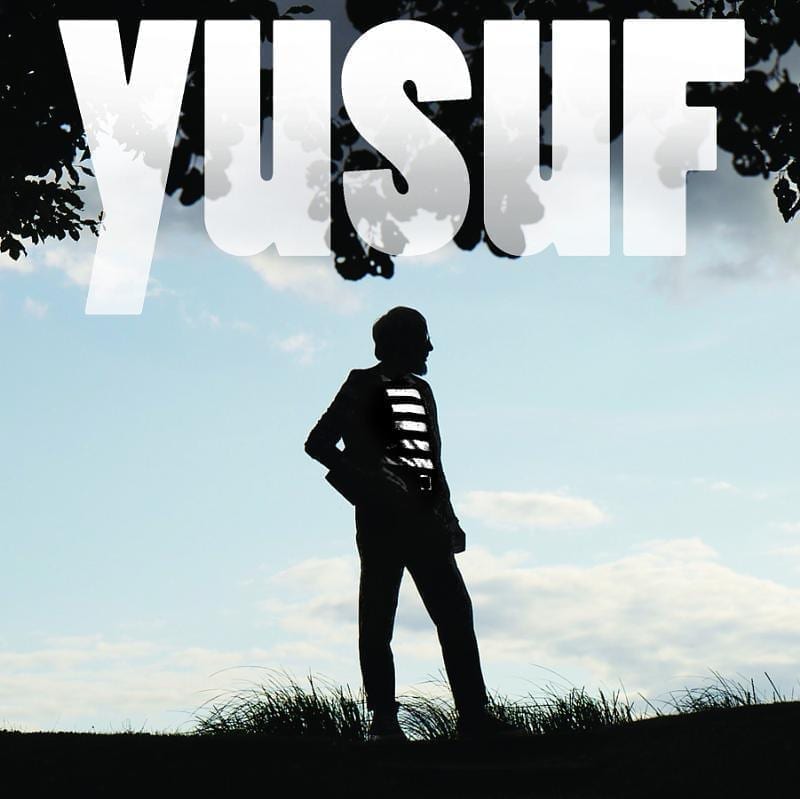
    “Tell Em I’m Gone” cover art

    This current collection of songs is not only a spectacular return to Yusuf’s popular form of the 1970’s, but a return to his formative ‘pre-Cat Stevens’ influences and loves that helped to shape the artist we are able to witness today. Somewhat obscured beneath the numerous ornate melodies and smooth recitations of his popular catalog lies a gritty edge of R&B, blues and ethnic influences. Digging his sandy boots into the soils of his past Yusuf reveals the roots of his influences through graceful reimaginings of traditional songs and cover tunes. Intermingled with profound new compositions and a number of friends and guests, Tell Em I’m Gone is a fresh gust of inspiration to blow across a sometime barren landscape of new music.

    Co-produced by the contemporary and famed Rick Rubin and mixed by long time musical collaborator Paul Samwell-Smith, Yusuf is consistent in his approach to keep one foot in the past and one firmly in the future. What started originally as an album of blues covers developed into a complete LP of originals and favorite songs. Most if not all of the album was laid down live in the studio with a minimum of overdubs adding to its lively and organic approach.

    The album delicately balances originals and cover songs with a five to five split between the ten tracks. The collection opens on the crystalline weaving guitars of Yusuf and special guest guitarist Richard Thompson. Yusuf’s voice sounds as if it has emerged from a sealed and submerged time capsule, hardly aged, as emotive as it has ever been. ‘I Was Raised In Babylon’ is an original Yusuf composition, sparse and spooky, a flexing commentary on truth and faith.

    The first covers of the collection follow, first with Yusuf’s reading of the blues standard ‘Big Boss Man’. Hearty Fender Rhodes and knee knocking percussion lock into a tribal version that retains the original melody, but updates the arrangement with a roots funk attitude. Blues legend Charlie Musselwhite also lends well-timed silver harp blasts to the track. Alternately the following ‘You Are My Sunshine’s’ classic melody is distorted by Yusuf’s dusty Southern blues arrangement which is then tastefully augmented by award-winning and Sahara Desert roaming musicians Tinariwen. The third cover in a row is of Edgar Winter’s powerful early 1970’s ballad ‘Dying to Live’. True to its original arrangement the song is a fitting statement for the often misunderstood Yusuf and a vocal highlight of the album thus far.

    Yusuf original, ‘Editing Floor Blues’ is next and is a gruff blues collage, its texture created by gravely alternating guitars and straight-faced serious verbal exclamations. The song is a conglomerate of blues changes, but originally twisted to fit Cat Stevens new-found aesthetic. This aesthetic sometimes reminds me of Dylan’s 1997 Time Out of Mind in attitude and fearless expressed musical truth. The urgent vocals and autobiographical lyrics recall an updated version of Cat Stevens 1970 track ‘Pop Star’ and is a major highlight of the first half of the recording.

    ‘Editing Floor Blues’ segues perfectly into ‘Cat and the Dog Trap’ another new Yusuf original that contains obvious lyrical connotations to the troubles of Yusuf’s not so distant past. The songs circular picked central lick and Spring green melody is one of the most powerful Yusuf has produced since his return to music. All of the instruments excepting bass are played by Yusuf allowing for his trademark compositional hallmarks and aural fingerprints to be left all over the glass.

    ‘Gold Digger’ follows next, unique in its construction, catchy in its intent. The song snaps its fingers with a jazzy swing, cartoon like in its simplicity, but containing a more serious underlying attitude in the panoramic world view of the words. The song is a well placed anomaly in the context of the album even featuring vocals hailing from the South African Vocal Choir.

    An imposing version of Procol Harum’s ‘The Devil Came from Kansas’ comes next and emanates triumphantly with big chords and a striding groove. Dropping like a coin in a slot the song falls into a bobbing groove and adds another unique take on one of Yusuf’s favorite songs.

    The title track of the LP, ‘Tell Em’ I’m Gone’ is placed next to last and encapsulates the vibe of the collection with a muddy thump and recitation of the traditional ‘Take This Hammer’ melody. The band Tinariwen joins again for claps, vocalizations and percussion assistance. Similarly to Yusuf’s contemporary Paul Simon’s excursions into World music influenced recordings, Yusuf has successfully assimilated various musical influences into the creation of this particular record as played out on the title track.

    Yusuf has a history going back to his Cat Stevens recordings of closing his albums with poignant and inspiring compositions. ‘Lilywhite’ on 1970’s Mona Bone Jakon, ‘Peace Train’ on 1971’s Teaser and the Firecat and ‘Never’ from his final Cat Stevens album, Back To Earth. Here the song ‘Doors’ takes on the same position and reveals a collection of opposing images used to conjure a feeling of hopefulness and freedom. The arrangement is scented with a unique gospel flair and reaches an orchestrated climax that swirls with inspirational Hammond flourishes and peaks with Yusuf’s reassuring vocals.

    Yusuf’s new collection of music, Tell Em’ I’m Gone, is not a well recorded piece of nostalgia. It is the work of man comfortable with his life, faith and the musical legacy that he is responsible for. Yusuf still has music in his heart; both his own, as well as the music of his idols and influences. The music he has developed elicits a feeling of self-awareness, freedom, comfort and peace. Though the title of Yusuf’s new album is Tell Em’ I’m Gone, I assure you he is right where he is supposed to be.

    Key Tracks: Editing Floor Blues, Cat and the Dog Trap, Tell Em’ I’m Gone