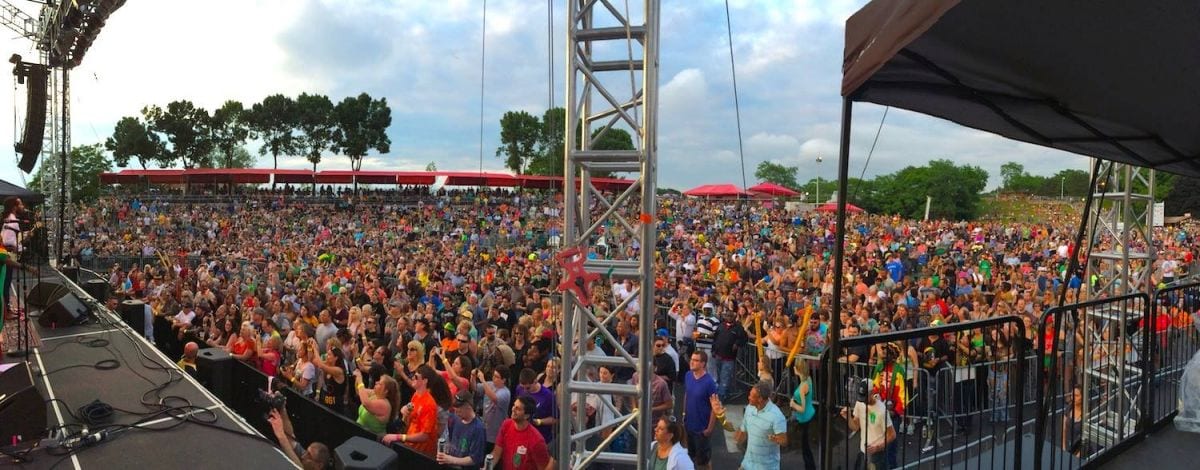
Holding court above the Niagara River Gorge, Artpark in Lewiston, NY on June 25th was an idyllic setting for an evening of roots reggae featuring Ziggy Marley and his band, with Steel Pulse in support. A way laid back crowd was chilled out by the lush surroundings and a noticeably heavy ganja haze. After a smoky and celebratory set by Steel Pulse, the humid and heavy Summer evening brought an ambient island vibe created by the performed reggae ‘riddims’ and perfect weather.
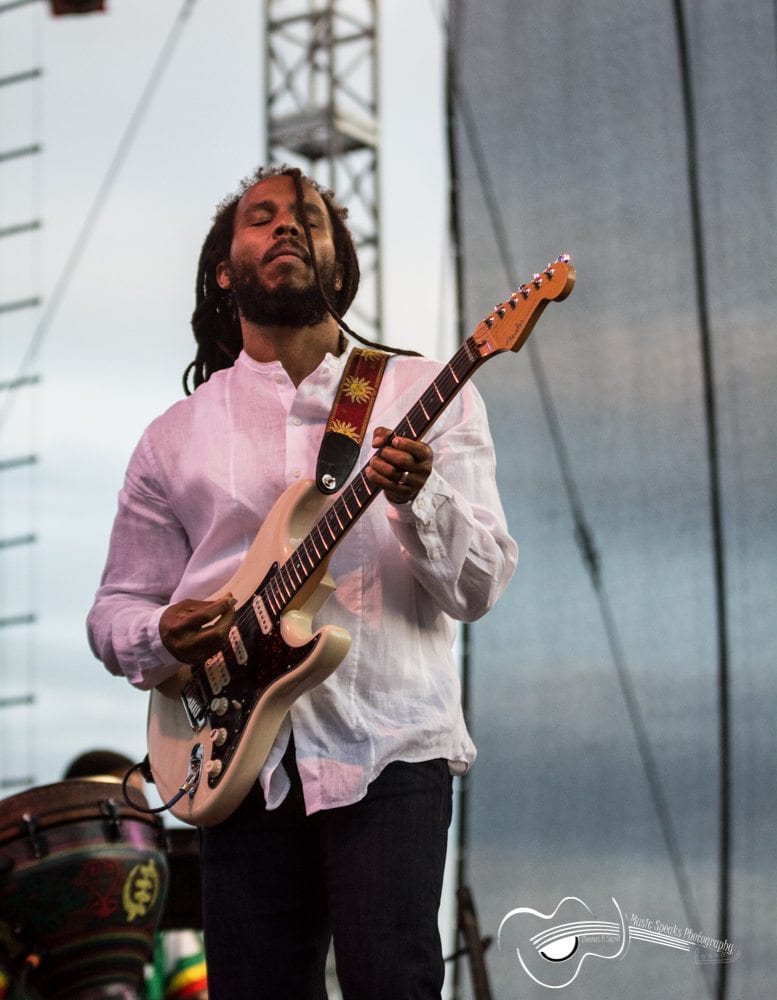
Ziggy and his bridge bolt tight backing group set the thematic tone for the evening with the opening song “Love Is My Religion”. Prior to its beginning, Marley, head tilted back in a meditative stance, encouraged the assembled crowd to “Rebel with Love”. Marley often preceded his songs with a quote from their lyrics and a short rumination on their content. The collected crowd of Rastamen, college kids, Deadheads and happy families all slipped into a similar groove as Marley’s band played the crowd into a mellow mood.
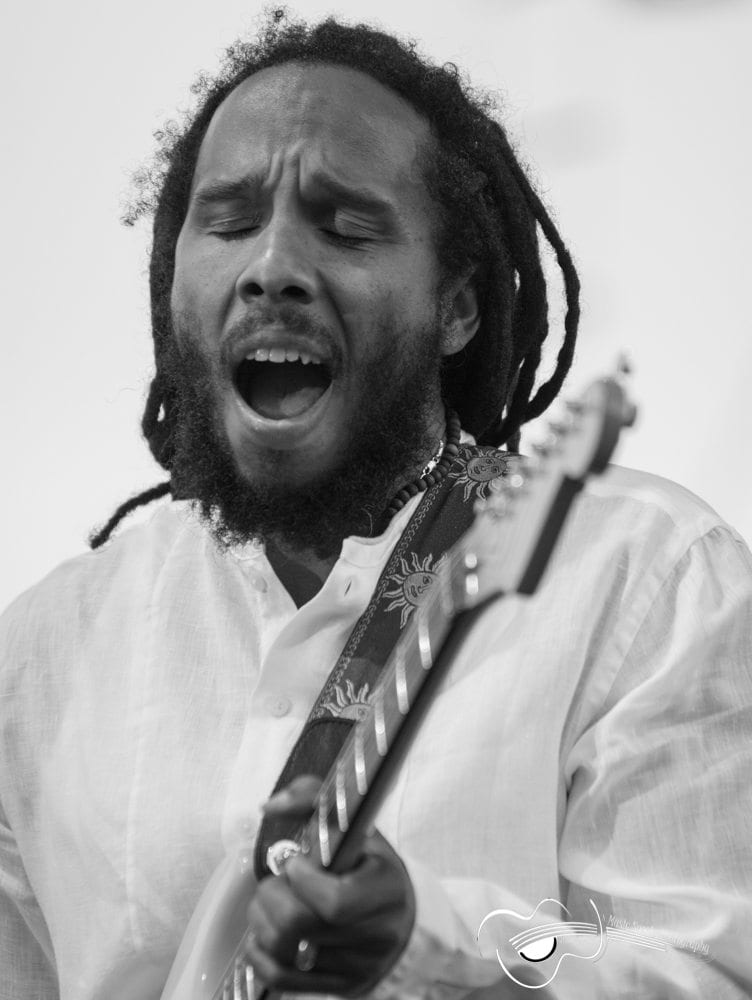
“Wild and Free” followed, Marley’s paean to marijuana, which Marley sang with great conviction, eyes shut, hand rising toward the collapsing sky. Marley stood at center stage in a flowing white top acting as a didactic freedom fighting Rasta, spreading his musical gospel message to the gathered masses. The group assembled around him, organically throbbing their way through dancehall, ska, rock, club beats and one drop, deftly and with attitude throughout the evening. Marley’s keyboardist also added some ‘toasting’ to the tracks, the Jamaican act of a DeeJay talking or rapping over undulating rhythms.
Marley likens his live concerts to fully formed stories told through the narrative of the individual songs. This evening was comprised of many essential chapters, each musical piece a solitary element constructing the fully fleshed out picture of the performance. The band premiered a nice chunk of the recent Fly Rasta release to great effect, the newer songs taking on additional unrealized details in their live renditions while nestled comfortably next to Marley’s previous work. The set also contained past Ziggy Marley glories played in addition to ‘Melody Makers’ favorites which had the crowd joining in with their own lyrical voices.
The show started to hover above the ground when Marley decided to reach into his late father’s catalog of music for an ‘irie’ performance of “Lively Up Yourself”, one of a few of the elder Marley’s songs performed over the course of the evening, in addition to “One Love” and a penetrating, “So Much Trouble In the World”. During “Lively Up Yourself”, Marley gave a musical shout out to his famed Father with a, ‘Big Papa told ya so’ lyrical quote followed by great applause. These musical appreciations to his Father were so tasteful and natural, they fit perfectly into the natural flow of the show, unlike other ‘tributes’ to Bob Marley which often come off as contrived.
As the concert continued and a veil of darkness dropped over the venue, the jamming got deeper and the dancing heated up; the reggae became more fluid and the rhythms more playful. Artpark was transformed into a sweaty dancehall maelstrom of love, dance, and Rasta vibes. All that was missing from the night were multiple bottles of Red Stripe being imbibed and some steamy sand.
“Black Cat” became a show highlight with Marley allowing his band to stretch out on the track, with his guitarists illustrating their improvisational authority. Similarly to his studio releases, Marley’s music takes on a plethora of insular, as well as pastoral and rural, themes, hence its huge web of influence and attraction to fans from all walks of life. Marley has accepted and taken on the role of disseminating his father’s developed message of love, peace, and freedom for the world as well as creating his own uniquely ‘Ziggy’ message.
The stand out and title track of the new LP Fly Rasta signaled the beginning of the end as it was fittingly slotted to start the encore. Its message and imagery of flight not only applies to Rasta, but to all of those who respect the strength and love created and spread by reggae music. Its fundamental theme of finding yourself, respecting others, and of ‘One Love’ illustrates neither prejudice nor favorites. Marley’s ideal is that anyone and everyone can find the Rasta magic through the acceptance and enjoyment of reggae.
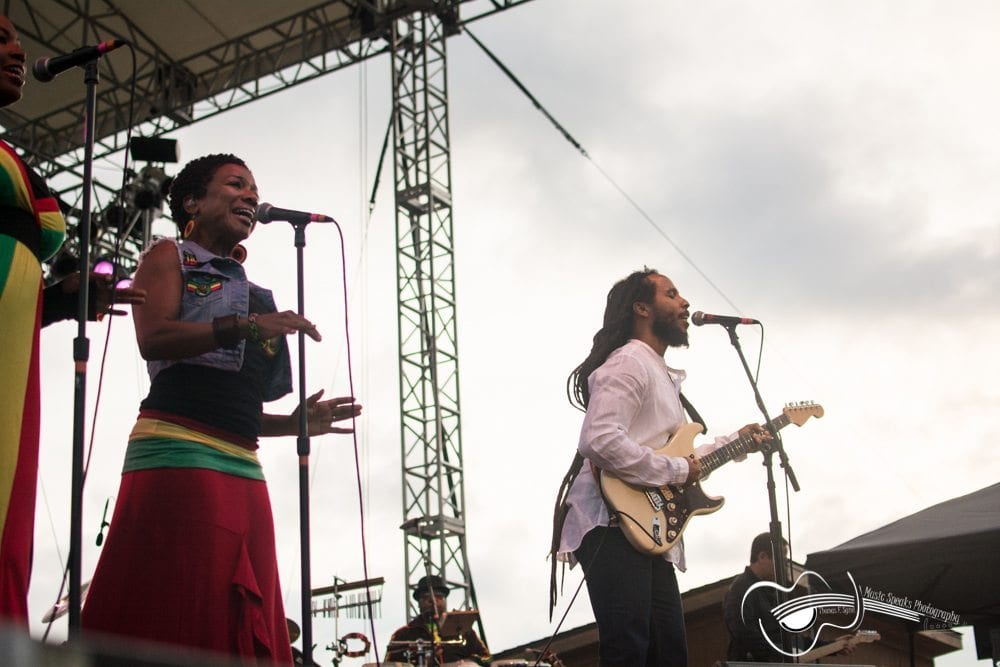
Ziggy Marley at Artpark was the type of concert one longs to be able to witness. Low on pushy crowds, obnoxious drunks and poor sound, this particular performance contained everything a fan could hope for when taking an excursion for live music, quality musicians, positive messages and a collaborative experience between band and crowd alike.
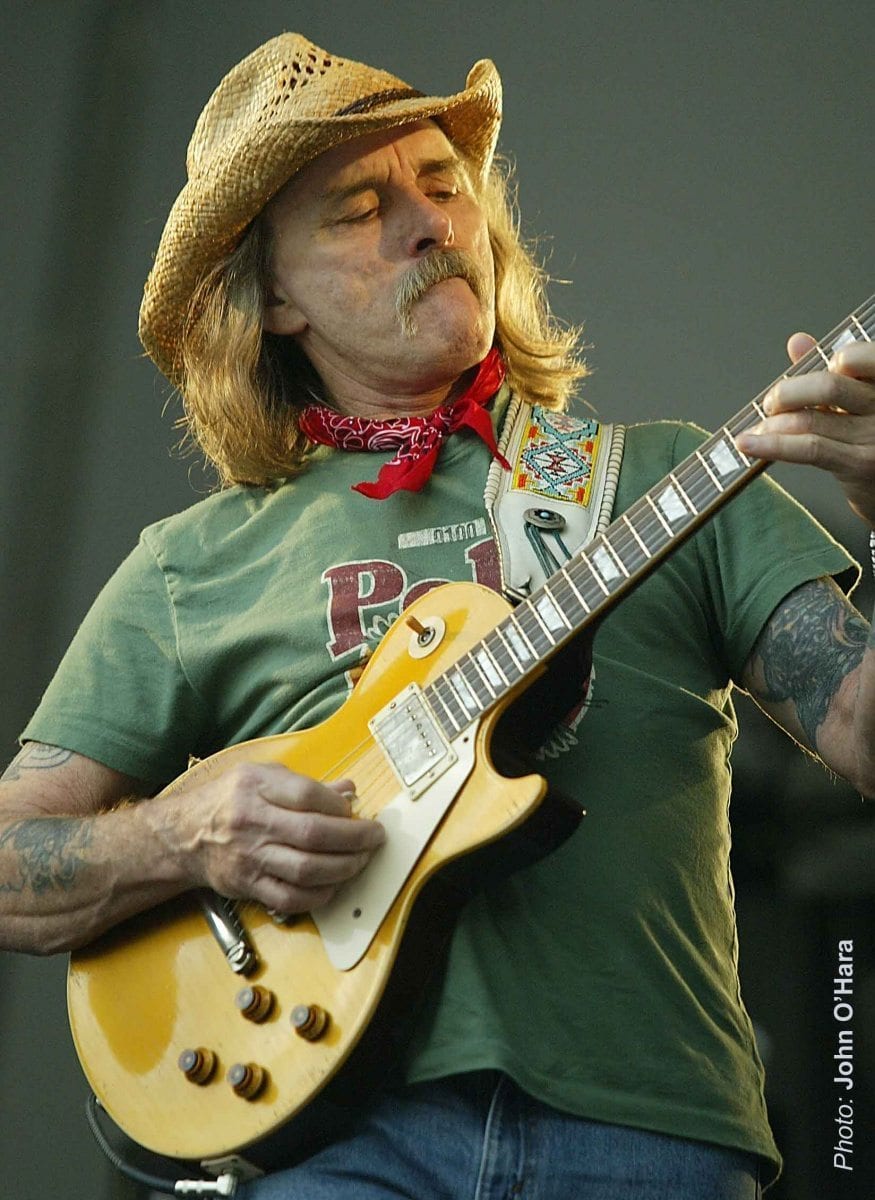 Celebrating their 24th festival this year,
 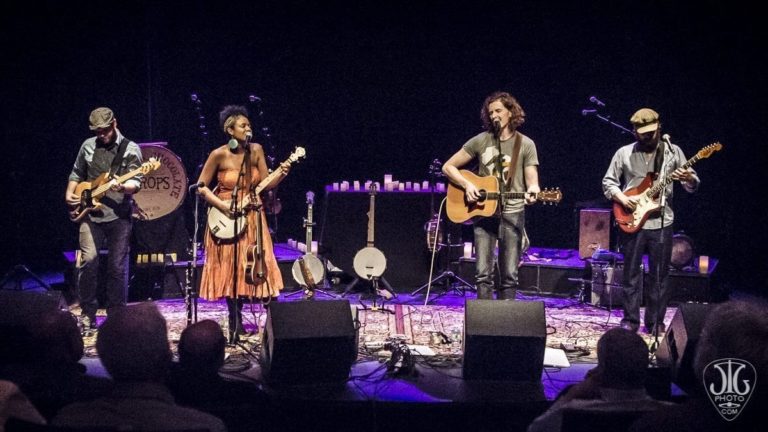 Birds of Chicago opened the night with a six song set of folk-country that was mellow yet had a steady beat. Performing for the first time in Albany, Allison Russell sang with a June Carter-esque voice and vibe, playing banjo and clarinet on “Wild Horses”. Making jokes about her heritage (Scottish-Grenadian-Canadian) and nodding to her husband JT Nero (who has an incredible range in his voice) who is also Scottish, noted that this only complicates their daughter’s extensive heterogeneous background even more. “Sans Souci”, a pre-zydeco French influenced tune was a highlight of the set, and with the guitarist using his pedal with a gentle touch, he carefully poured each note out carefully, turning what may have been a 45’ speed song to that of a 33’. The finale, “Fever” gave the audience a fake-out, where an initially chill and happy song turned into a foot-stomping rager. A perfect complement to the main act this evening, Birds of Chicago stood out with a sound that was as unique as their band members.
 The Garden State troubadours sauntered onstage shortly after 9:00 pm and kicked things off with ‘Saddle of the Sun’, a selection from the group’s second album Bird in a House. This song and the ‘Chasin’ a Rainbow’ which followed saw Railroad Earth in its default setting, so to speak, with acoustic guitar, mandolin, fiddle and upright bass all up front and center. This combination seemed to give the music its deepest and fullest sound of the night which allowed the band to maneuver in a lot of different directions all night. Bassist Andrew Altman then switched over to an electric bass which still kept the rhythm, but certainly gave it a little bit more rock and roll feel on songs like ‘Lovin’ You’ and ‘Hunting Song’; the latter saw instrumentalist extraordinaire Andy Goessling join Todd Sheaffer on acoustic guitar. This middle portion of the first set featured intricate interplay between band members but also seemed to temper some of the high energy that was present early on. This was fixed with a fine version of ‘Crossing the Gap’ which gave a nod to the band’s home state and “crossing the river from the Jersey side”. For set closer, the band treated everyone to a stellar version of ‘Head’ which was highlighted by phenomenal solos and interplay between John Skehan on mandolin and fiddle master Tim Carbone. By the end of this classic hit, the entire dance floor was dancing and screaming along in harmony with the refrain before things came to a momentary end.