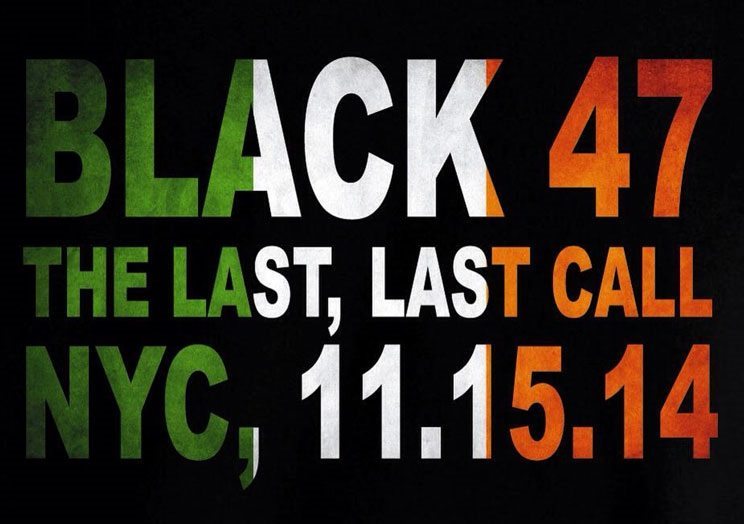
The hustle and bustle of Times Square was weaving in and around 42nd and 8th as usual for a Saturday night as The Bronx invaded Midtown at one floor below street level for a night filled with the heartiest crock of Irish rock around. New York City’s Black 47 pulled out all the stops at B.B. King’s Blues Club & Grill on November 15 for their final performance ever, marking over 2,400 shows for the band’s 25-year career (that’s more shows than the Grateful Dead played in 30 years). The band wouldn’t let the last guitar chord ring without first thanking their fans with a performance that would help bring proper closure to what has meant a lot to many of them over the years.
In one way, the night was like any other Black 47 show – good friends, intimate venue, pints flowing, and plenty of happy dancing feet. Surely the band could have sold out a larger venue but that would have taken away from the experience of a Black 47 show (and for the record, this show sold out early in September, more than two months beforehand). As frontman Larry Kirwan told early in the fall, he sees the band’s legacy as being known for doing what they want and as a band for the moment. They kept true to their style and flow by having a fantastic music club bursting at the seams with friends and memories rather than a concert hall where people wouldn’t be as connected with each other.
Larry Kirwan
Speaking of friends, many of Black 47’s guest musicians from over the years and past band members joined them on stage throughout the evening. Mary Courtney, a traditional Irish singer and musician, appeared early in the evening. Joining the band later was Bronx-based musician and long-time member of the Saturday Night Live band Christine “The Beehive Queen” Ohlman (who, after singing on “Blood Wedding,” had to beeline back to the SNL set for the show’s taping). To much applause Larry Kirwan’s partner in crime in the founding of Black 47, Chris Byrne (who left the band in 2000 to focus on other music projects) came back to the stage twice to sing with the band. Also joining the band on stage throughout the night were Rory Kirwan (Larry’s son), Irish dancer Jake James, substitute piper Andrew Sharp (who filled in for Mulvanerty on some weeknight gigs), Rob “The Ginz” Graziano, good friend and occasional fill-in bass player. Even two of the band’s dedicated behind-the-scenes guys “Staten Island” Tom Marlow and P2 joined the band on stage for a few choruses of “Gloria” during the encore – more on that shortly.
It seems that after 25 years it must be one heck of a mind-bender to plan the final, ultimate set list. Regardless of whatever roshambo and coin-tossing that may have gone on to cut songs or leave songs on the set list (even right up until the show with last-minute changes), the final selection was solid and well-suited for the over two-hour sendoff and captured a bit of every flavor of the band’s catalog.
For those familiar with Black 47, they know that the live experience with the band is hard to top, especially with the musicianship on stage. This shone strong through the entire set as the band flaunted its talent even more so than usual for this final show; the guys took the opportunity to stretch their arms as a group one last time. The core of the band was solid as always and the horns/pipes were as on top of their game as they could be. While there is a lot more that can be said about this, two particular crowd-invoking moments came from Geoff Blythe’s soaring notes on the ballads “Fanatic Heart” and “Mychal,” a song honoring FDNY chaplain Mychal Judge who lost his life in the 9/11 attacks.
Then there were moments that were just plain fun. A lot of dancing was had throughout the night, particularly during a set of reels early on (something the band does live and only has recorded on their Live In New York City album, bootlegs aside.) During “Rockin’ the Bronx” Joe “Bearclaw” Burcaw turned his bass amp up a little to pound out some licks rivaling that of Stanley Clarke as Fred Parcells (trombone), Geoffrey Blythe (sax), Joseph Mulvanerty (uilleann pipes) and Tom Hamlin (drums) joined in for a free-form jam before Kirwan returned to the stage to get the audience singing along with one more chorus on the song. Like a midnight showing of Rocky Horror Picture Show with rice thrown during the wedding scene, cigarettes rained on the stage during the opening of “40 Shades of Blue” at the line of selling a soul for a cigarette outside of CBGB. Not to mention the band’s sense of humor between songs which kept spirits high.
A lot of Black 47’s music has carried at least some sort of wide range of emotions with it. Perhaps the most profound moment was during the band’s powerful political song “James Connolly,” a repertoire-defining song about the great Irish labor organizer. The passionate crowd raised fists of solidarity in the air as a banner of Connolly unfurled on stage next to a Starry Plough flag. A few people in the audience were so eager to raise a flag of their own that they passed it up on stage to be held up. Other moments commanded respect during the songs, such as “Mychal,” as the room fell near dead silent – a scene that seems to be witnessed less and less frequently at shows these days.
Before it was all over, the set was closed with “Funky Céili,” the band’s song that got extended MTV airplay in 1993 and opened the encore with “Maria’s Wedding,” the song Black 47 played on their first network TV appearance with David Letterman in the same year. Finally, the flood gates opened for an all-out jam on “Gloria” leading into a chorus of “I Fought The Law” with just about everyone in the place singing along. All of the guests who could stick around to the end of the gig came back out for one more old-fashioned rock ‘n roll jam. Thought they did not end the show with their own material, it was certainly a positive, high energy rock ‘n roll way to wrap up 25 years.
As a last tip of the hat to the crowd, Bearclaw, Mulvanerty, and Graziano sang an a capella “Happy Trails” while friends in the audience shared one last hug over Black 47 some others quickly flocked to a line to say hello to Kirwan after the show. It was a bittersweet moment as the stage went silent and the din of the crowd was all that remained.
Many fans have taken to the “25 Years of Black 47” fan-run group on Facebook sharing memories about their first Black 47 shows and have been sharing numerous photos and videos from their final few shows.
The gigs may be over, but the music lives on. Long live Black 47!
Setlist: Green Suede Shoes, The Big Fellah, Livin’ In America (with Mary Courtney, vocals, and Jake James), The Reels (with Jake James), Three Little Birds / Desperate, Danny Boy, Culchie Prince, Fanatic Heart, Rockin’ the Bronx, Five Points (with Andrew Sharp, flute, and Jake James), Fire of Freedom (with Rory Kirwan, vocals), Mychal, Walk All The Days (with Chris Byrne, vocals), Blood Wedding (with Christine Ohlmann, vocals), James Connolly (with Jake James, bodhrán), 40 Shades of Blue, Funky Céili
Encore: Maria’s Wedding, Gloria / I Fought The Law
*links are to full-length video from the show
Be sure to follow Black 47’s YouTube page for more full-length videos from their final performances as they are posted.
(Video Credits: Lee Harwig for “Gloria” and Rory’s rap during “Fire of Freedom”; Mike O’Connor for “Funky Céili” and “40 Shades of Blue;” and Joey “Knobs” Juntunen/Dan “Bojo” Boujoulian for “Livin’ In America,” “Fire of Freedom,” and “Walk All The Days.” )
Many bands come and go throughout the years: some lasting briefly as a sort of novelty, some with long and hearty careers who only later drift away into touring to a tune of nostalgia, and everywhere in between. Sometimes the “going” part of that is mired by tensions in the band or some other misfortune but there are other times when a band simply won’t stand for apprehension in their ending and know when the time is right. This past year we saw Mötley Crüe sign an agreement to cease touring, therefore retiring as a band while the Crüe are still friends and the tours are strong as opposed to raising Devil’s horns from rocking chairs and adding new meaning to their song “Kickstart My Heart.”
Our story here takes us to Black 47, a band representing a ventricle of the NYC music scene. A bit more modest than crashing arenas but by no means lacking a fire, Black 47 has earned respect by their authenticity – doing things their own way, how they want, and on their own terms. After 25 years the band felt it right to disband this year while they are at a zenith with tight sounds and great vibes. The band will soon have come-and-gone but not before first bringing closure for themselves and their fans with an aggressive tour wrapping up next month and two new albums, Last Call (new material) and Rise Up!, a collection of some of the band’s protest songs.
Prior to their set at the Hudson Valley Irish Festival in Peekskill, NY, frontman Larry Kirwan joined ‘s Steve Malinski on the banks of the Hudson to share some of his insights to the band’s 25-year run and some of what has set Black 47 apart in the music scene.
Larry Kirwan (middle) singing “Living in America” with friend Mary Courtney (left) and bandmate Joe “Bearclaw” Burcaw (right) at the 2014 Hudson Valley Irish Fest in Peekskill, NY
Steve Malinski: You’ve got a pretty busy day with two gigs, so thanks for taking a few minutes here before your set.
Larry Kirwan: It’s a pleasure. What a beautiful setting here, right by the water.
SM: The big question on your fans’ minds when you announced last fall that you would be disbanding this year is why now, and why not in say, five years? What fell into place to make the decision come now?
LK: Well, I actually had the decision come to me on stage in Buffalo exactly a year ago and the band was just sounding so good then. I’d always wondered how Black 47 would break up, and when we were on our way back from Buffalo I was thinking, “maybe this is the time to go, when you’re sounding good and everything is together still.” We decided to do one last album of original songs, Last Call, and to go out playing new stuff too. So it all just kind of came together and it seemed like the right time to do it. I’m not even sure what I’m going to do, but I didn’t exactly know what I was going to do before Black 47 either, so we’ll see.
SM: What’s the emotion like with the band now that your final show is quickly approaching?
LK: You know, I think everyone is a little nervous about it. It’s pretty momentous to play with the same guys for 25 years – we’re so close as friends, there are no problems internally in the band. But yeah we’re all a little nervous, apprehensive. But the amount of love we’re getting from people all over the country as we travel around is great and people have been telling us how much the band meant to them and what particular songs meant to them, what particular CDs got them through rough times or whatever. So there’s a lot of emotion out there. But this is it, November 15.
SM: Yeah, and when I met Bearclaw [bass] at your Garcia’s gig in Port Chester he mentioned this year is like the nail in the coffin for Black 47. Do you think though that you guys might get the itch to come back and do a sort of low-key show in a few years, just for fun?
LK: No, I don’t think so. It’s better to just do it and finish so your brain is free to think about what’s next. If we were thinking of that, the why break up at all, you know? We have a big following. We could keep playing but it just feels right to go at this point. I don’t see that we would get back together again.
SM: So with it being a done deal, what’s next for everyone? Have they figured that out yet?
LK: Y’know, I don’t think so. We’ve been too busy to figure anything out with the number of gigs we’re doing and the new CD we have, Rise Up, the collection of political songs, and the amount of interviews you have to do for each gig nowadays. I’ve just been really busy. I know what I’m doing immediately after – I’m going to Ireland for a week. I think I’ll start doing solo gigs in February or March. But I want to clear my head from the whole music scene because I manage the band too, so it’s a huge space in my head I gotta keep. I do a number of other things but Black 47 has always been my number one priority. So, just in a certain sense, not having that “to-do” is like having a vacation at this point. I don’t think I’ve taken a vacation in 25 years! Even when I am on vacation it’s always there – thinking about writing a new song or I have this-or-that to do. It’s been 25 years of non-stop going for me. I don’t get home from a gig and it’s over – it keeps going on.
SM: Last Call is an album that seems like it was recorded as a sort of going away present for your fans. Did you have any special intents behind the album, or did you approach it as simply the next recorded collection of new Black 47 material?
LK: Yeah I did. I thought it would be a really good idea to make it more from a musical point of view rather than from a lyrical or song point of view, so I got the guys a lot more involved with the arrangements and allowed the band to stretch out musically because we do that on stage all the time. But sometimes in the studio you’re trying to make things concise for radio play, although there’s no real radio play anymore for anyone, anywhere. So there was that. I also wanted to capture… I’ve been writing a history of Irish music because I’ve seen it and I was dealing a lot with different sounds and I really wanted to capture a New York sound. We’ve always been known as a New York band, and there was a whole sound in New York in the late 60’s and early 70’s and I wanted to tap back in to that particular type of sound. So there were a numbre of different things on my agenda as a producer. But, whether that worked or not, I’m not sure!
SM: One of the tracks, “The Night the Showbands Died,” struck me as the most profound, given the emotion and the way the music and lyrics worked together. What was your motivation behind that song – did you have a connection to The Miami Showband?
LK: Yeah, I did. Fran O’Toole, the lead singer, wasn’t exactly a friend but I knew him and he was very encouraging to me starting off in music. It was just a real shock. Steven Travers, who I’ve been in touch with over the years, was in the band too. He told me about the different things that were happening. There was a British officer who showed up at that point, so it did seem like there was a collusion going on that the Loyalists and British for whatever reason wanted to kill a band. Up until then showbands and musicians had been off-limits for anyone on either side. So that night kind of ended the showband era too – although it was ending already that sort of put the nail in the coffin. Showbands worked five to six nights a week and once they couldn’t go into the north of Ireland anymore, then it was the end of the showbands; the end of a whole scene. I also wanted to capture a little bit of a David Bowie sound because Bowie’s early stuff had influenced me a lot. Yeah, it’s a tough song – it really gets into you when you’re playing it because you’re talking about people you knew who died and didn’t need to die. I think it kind of sums up a certain way the whole Troubles in the north of Ireland – how people who are not political (and the Miami Showband were totally non-political) get caught up in something and get swept away in the same way committed people do.
SM: In the last 25 years you’ve played something around 2,000 or 2,500 shows. Are there any that stick out as particularly memorable (or bad)?
LK: Many of them are memorable. You know, we never allowed a show to be bad. We’re often under rough circumstances but the band is just so committed to the music and to having that moment… There’s always a moment in a Black 47 show when things click. It’s almost like sex – it’s orgasmic at that point. So you’re always waiting for that to happen. Let’s face it, musicians don’t have pensions or 401(k)’s or anything like that so everything you’re going to get from a performance you’re going to get at that moment. So, there’s always been that angle. You know, I suppose something else that stands out is playing with famous people – Neil Young at Farm Aid and Willie Nelson, and Johnny Cash. But the one that strikes me the most was this one that was crowded at Paddy Reilly’s which is a small bar that we started off playing at. When I first wrote “James Connolly” and the feeling from that song… It was the first time we were doing it, we didn’t really know it. Paddy Reilly’s is always rowdy. So as we went on with the song it got deadly quiet and when we finished the song there was total silence and everyone knew something had happened because that was the first time we had introduced the middle part with the dialog in it. We all knew something great had happened. The song is still a classic Black 47 one. So, there’s big gigs, and small ones where there’s bound to have something memorable happen – they’re more important to me than the big ones.
SM: Are there any notable people, in music or otherwise, that you’ve met or worked with who have had an influence on you?
LK: Joe Strummer was a huge fan of the band which was amazing to me because I was a huge fan of The Clash. One night at the same place (Paddy Reilly’s) I was playing and had my eyes closed while playing a solo. I couldn’t get the solo right so I kept doing it over and over and you could do that in Black 47. Songs don’t have to be a certain length or whatever. I finally opened my eyes, kinda got it right finally, and Joe Strummer was the same distance as you are to me [a few feet] looking at my fingers and it was like… Joe Strummer?! I almost fell over backwards. So we became friends and he was very instrumental in getting Black 47 some of the gigs out of the Irish pubs. We had wanted to keep it in the Irish pubs and have people come to us rather than go through the CBGB system, which I’ve been through many times before. But Strummer was saying “You have to play this place, you have to play that place” and he would go to those places and say “here’s these guys” and I would be turning him down all the time. Finally the guy from Wetlands, which was a great club in New York, said to me “for God’s sake just do the gig to get Strummer off my back!” Then I said “oh, Strummer’s doing this!” Everyone was calling us for gigs and it was because of Strummer.
SM: One that that’s different about Black 47 is that you have a totally open policy on photography and recording, even more liberal than a band like the Grateful Dead. What’s your philosophy on that?
LK: Well, every show is different. We do a different set every night so we just felt that if you want to capture it (we’re not going to capture it), then why can’t you do it? We’ve spread all over the world that way too. A friend of mine was walking over the Charles Bridge in Prague one day and he heard “Funky Ceili” playing live from some gig we were doing and someone had sent him a tape of it – it was on a cassette. So the music spreads that way too. But we always just felt that, you know, why not? Music in a certain sense is free and what we do hope is that, if someone does tape, they go back and buy a CD or whatever to get more of a pure sound. Also, the CDs keep the band going because the merch is just so important for any band. So I’d advise your readers that if you really want to support a band that they buy one of their CDs because that will make up for a budget shortfall that the band might have. That’s the best way to support live music.
SM: What’s your hope for people to take away from Black 47 once it’s all done?
LK: That we were a band for the moment and we did it exactly the way we wanted to. We never bowed down in any sense to commercialism. We just played exactly what we wanted to play. We fought the good fight I think, dealing with the British problem in the north of Ireland, being for the troops and totally against the Iraq War when no one else was. So we made all the stands. I always thought we were on the sides of the angels and we did it even though it cost us gigs all the time because we were outspoken. Certain places didn’t want us because they thought there would be protests against us or whatever. So we just did it our way. And, I think we have chronicled New York in particular and the US and Ireland over the last 25 years. If you want to know what was going on, you could just go to the Black 47 songs and you’ll know what we were thinking at that particular point in time.
SM: As a follow-up to that, with being so outspoken on political and social issues, have you met a lot of resistance?
LK: Oh man, physical resistance, yeah. Physical, mental, everything. Financial. The Iraq War between 2003 and 2006 was a nightmare for Black 47 because we had the songs from the Iraq album and every night we would do them and people would get up and walk out or smash CDs or stick their finger in the air and complain to the venues. But I always felt that it is patriotic to resist your government if you think the government is doing the wrong thing rather than just go along with it. That to me is nationalism, where patriotism is standing up for what you think is right even if it is not the popular view and Black 47 – that’s how we’ve done it. We probably would have had a little more success if we were more middle of the road, but we didn’t choose to be. I think Black 47 will become a bigger band when the band is finished actually because we stood for certain things and now it’s up to other people to do that. I don’t really see many bands coming in and doing that. So, I think there will be a nostalgia there. Well, not nostalgia but people will be interested in the band after we’ve gone, even more so than before. We’ve had plenty of attention.
SM: Well, after all that you’re still here 25 years later!
LK: Yeah, and that’s amazing to me because I never thought about that. I think one of the things I’m looking forward to is to let some of the memories come back in because for me, I’ve been at the center of this vortex – of this storm almost – of Black 47 for 25 years. There’s never been a moment down, always been very much stormy. Creatively it’s always been great which is a storm in your head too. So I think I’m going to take a couple of months and just let the whole thing sift in. I’m writing this history of Irish music and the last chapter will be this ending of Black 47.
Black 47 bowing one last time for Connolly’s in NYC, September 27, 2014
SM: One last parting though. If there was one Black 47 song, or album, that you could lock away in a time capsule for 1,000 years and have it listened to again when it is opened, what would it be?
LK: I think the “James Connolly” song. I didn’t really ever think of the songs… There were so many Black 47 songs. I just met a guy over here in the park who said his favorite song has always been “Orphan of the Storm” saying it meant so much to him and I’m thinking ‘wow that’s great!’ So different songs… songs are like children. If you work with them and you have them, they’re always important to you. But I think the “James Connolly” song – for one thing it’s radical and it’s a radical point of view at a time when the whole country is just so right-wing that it’s necessary to be there. But from a creative point of view, having the whole inner dialog in the song and what it’s meant to people (the song) over the years – I think I’d go with that one.
SM: Larry, thanks a lot for talking with us. It was great to hear everything you had to share.
LK: My pleasure man, thanks so much for having me.
With less than a month to their final show at the BB King Blues Club in NYC on November 15 (which is sold out), Black 47 only has a handful of appearances left including one last Upstate NY stop at the Towne Crier Cafe in Beacon, NY on October 26. Check out Black 47’s tour listings for details on their other final regional shows (with tickets still available) in the coming weeks at Wantagh, NY, Bergenfield, NJ, and NYC.
One last musical statement. One more dance on the New York City skyline. One last call for Black 47. New York’s Black 47 released Last Call on March 4, 2014 and it is just that: their last call.
After 25 years the band made a decision to stand down while they are still going strong and to reinforce that fact made a final musical statement with a solid 13-track album.
For the loyal Black 47 fan and new listeners alike, Last Call beckons the ears into a fire of music still burning strong 25 years after the band’s first recording. It’s fresh, relevant, and not repetitive while keeping strong roots in Irish heritage. By no means does it sound like the band has plans of standing down following this album; however it does bring things full circle by incorporating a little bit of everything from the styles the band has composed with over their career – rock, punk, reggae, and even a splash of Latin music for something new. In line with the band’s Irish Republican sympathies, the lyrics on some songs are not shy on political and social commentary.
A strength of the album in its composition is a tightness that can be heard in the rhythm section. This is an element that hasn’t been much of a focal point of a Black 47 album since Home of the Brave 20 years ago. Frontman Larry Kirwan encouraged Joe Burcaw to be more upfront with his bass lines on the recording, something that’s particularly noticeable on “Let the People In” featuring a short slap-bass breakdown in the middle of the song. “Just go for it Bearclaw!” was Kirwan’s attitude on it. On each song, it is hard to miss how much this element adds to the overall experience of listening to the album, filling out a rich and robust sound. In fact, it makes listening to the album with the volume dial turned up one more notch rather fun.
It is worth mentioning one of the key elements that has defined Black 47’s sound over the years. On Last Call, the trombone, sax, uilleann pipes, and flute lines are not shy in defining their role in the arrangements. Whether fast-paced technical licks that weave in and out of each other or subtle harmonies that compliment the core of the band, this section is plays a vital role in the sound of the album.
Black 47 has always been open about their music, encouraging recording and photography without restriction. Furthermore, they share their lyric and chord sheets online along with other notes and commentary on their own music. Kirwan has written a few of his own remarks and stories on each track of Last Call which can be found here. While you can check out the song stories, here are a few of our thoughts on the tracks here at :
Salsa O’Keefe: A Latin-inspired tune that gives a fun tale of a Puerto Rican/Irish woman living in the Bronx who “steams up the neighborhood” with her Irish half. Nice and smooth it’s a great song to break the Last Call ice on a first listen.
Culchie Prince: From Burcaw’s punching groove bass intro, we’re quickly lead into a jig with Joe Mulvanerty’s pipes that sets the scene for the story of a chap from the outskirts of Dublin (a “culchie”) and a working class girl from Dublin.
Dublin Days: A fairly simple straight-ahead rock tune, “Dublin Days” plays along the lighthearted theme as a follow-up to “Culchie Prince” by talking about the nighttime college scene there. It makes you want to spend some time hanging out in Dublin.
US of A 2014: What’s not to want about the American Dream? A longer-than-typical day of work at a desk job fresh out of grad school? Black 47 makes their political/social statement about the younger generation entering the workforce and state of affairs surrounding it with the lyrics presented mostly in a spoken word/rap style.
The Night The Showbands Died: The most profound song on the album, it tells of the Irish Showband scene in the 1970’s before diving into the tragic events of the Miami Showband Massacre on July 31, 1975. The arrangement of the song, musically and lyrically, makes it ring far. The ascending guitar riffs accented with trombone, sax, and pipes create a solemn tone overlain with lyrics about the innocence of the showband music scene. A faster break in the song gives a feeling of chaos as we hear a frantic exchange between the Miami showband and UVF members before returning to the chorus from earlier in the song.
Johnny Comes A Courtin’: How about some Irish reggae? Taking a stab back at Cromwell’s dealings with Ireland in the 1600’s, Black 47 gives us a story of a young Irish woman sold off as a slave to harvest sugar cane in Jamaica, only to find love with an African slave and unable to consult her father back home for advice. This is a clear nod to the early days of reggae/ska.
Let The People In: Let’s call this one flute-funk, driven by a funky bass line and featuring a breakdown of slap-bass and a flute solo.
Lament for John Kuhlman: This one is a short instrumental, but a curious mind would question the meaning behind it. A pretty little tune introduced by a music box, this one is short tribute to a collaborator and friend of Fred Parcells (trombone). Its placement before “St. Patrick’s Day” makes it feel like an introduction to that song.
St. Patrick’s Day: This one drives fast with half-time feel choruses that will make you want to get up and dance like it’s St. Patty’s Day in the Bronx.
Queen of Coney Island: This is one of the musically easier listening tracks on the album featuring some jazz-rock overtones, melodies driven by the horns, and a brief soprano sax solo from Geoff Blythe at the peak of the song. It fits well in telling the story of the “queen.”
Shanty Irish Baby: Syncopated rhythms and a simple bass line give a dash of slow/relaxed rockabilly that fits well with the lyrics that express the love for a simpler woman than the uptown champagne-sippers.
Ballad of Brendan Behan: Black 47’s final recorded tribute to a notable Irish figure, this time writer, poet, and Irish Republican Brendan Behan. You’ll want to raise a pint in Brendan’s honor as you listen to this one.
Hard Times: A song that has stood the test of time since first written for the middle class by Stephen Foster in 1854 and recorded by many, Black 47 leaves us with “Hard Times” as their last ever recorded studio track. Perhaps a phrase Black 47 wants to ring on their legacy, hard times come again no more. Black 47’s take on this tune makes it rank amongst the many great versions out there.
Last Call is an album with its heart as much in New York as it is in Ireland – a testament to a pond-spanning musical bridge Black 47 has created in the rock genre between Ireland and the States. It is an album Black 47 fans are thankful for – one more genuine collection of new songs before they part ways. Black 47 may soon be a thing of the past, but Last Call is a bastion of music and prose that will help carry on their legacy.
Key Tracks: The Night the Showbands Died, Culchie Prince, Johnny Comes A Courtin’
Black 47 wraps everything up on November 15th at the B.B. King Blues Club in Manhattan with less than two dozen scheduled shows before then, including one at the Irish 2000 Festival in Ballston Spa, NY this Saturday September 13, one at Connolly’s 45th Street location in Manhattan on September 27 and at the Towne Crier in Beacon on October 26.
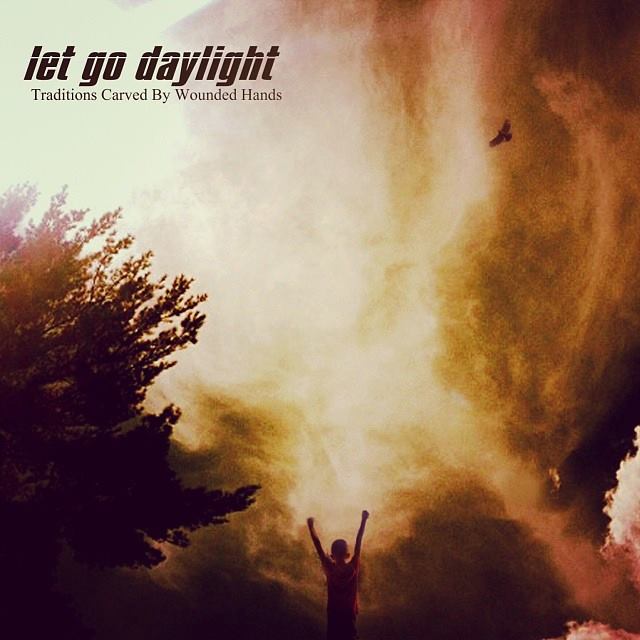
Traditions Carved by Wounded Hands, let go daylight’s first LP, drops on Saturday, June 14th.
Heavily steeped in the sounds of Black Sabbath and Led Zeppelin, let go daylight – they seem to market themselves in lower case – is an amalgamation of Troy musicians that have crossed over from several different bands to collaborate on this latest venture.
Let Go Daylight’s first LP since forming in 2012, Traditions Carved by Wounded Hands successfully captures a reminiscent flare to the aforementioned Sabbath, such as with the opening track of “Honey Wagon” or “Leave Me Be”. However, poised so close together at the beginning, it lends to some trepidation that the listener will be subjected to another Sabbath clone. But then, a funky bass guitar played by Mike Shudt leads us into the fourth track, “The Guts and the Glory”. As one continues to listen, you become more conscious of a transition into contemporary hard rock with “Let It Burn” to even toeing the line of punk. Ralph Renna’s bass to baritone vocals throughout the LP goes into Glenn Danzig territory with “A New Revolution”. However, a manic display of trippy guitar play by Dave White, accompanied with a strong performance by drummer Rocky Morey, at the introduction of “August Fire” showcases the band’s breadth of talent, but as it clocks in at under three and a half minutes, with a decrescendo to close out the album, I can’t help wanting more.
This four-piece band, though together for a relative short time, each is a veteran of his trade, having cut teeth with other bands (Last Call, Flate Broke, and Thrust). Nonetheless, they compliment each other well. After listening to this LP several times, you will start to hear a distinct sound germinated from the icons of the past and blossoming out with flashes of brilliance. Traditions is a good LP on its own, but it makes this listener perhaps more excited to hear how they progress further with their sound. If indeed the progressions realized throughout the chronology of this LP continue out to the next, that could be the makings of a standout performance.
The band drops the LP on June 14th, coinciding the release with a live performance at Dinosaur Bar-B-Que in Troy. If you’d like to listen to the album in full or purchase the album, click on the respective links.
Key Tracks: The Guts and the Glory, Let It Burn, August Fire.