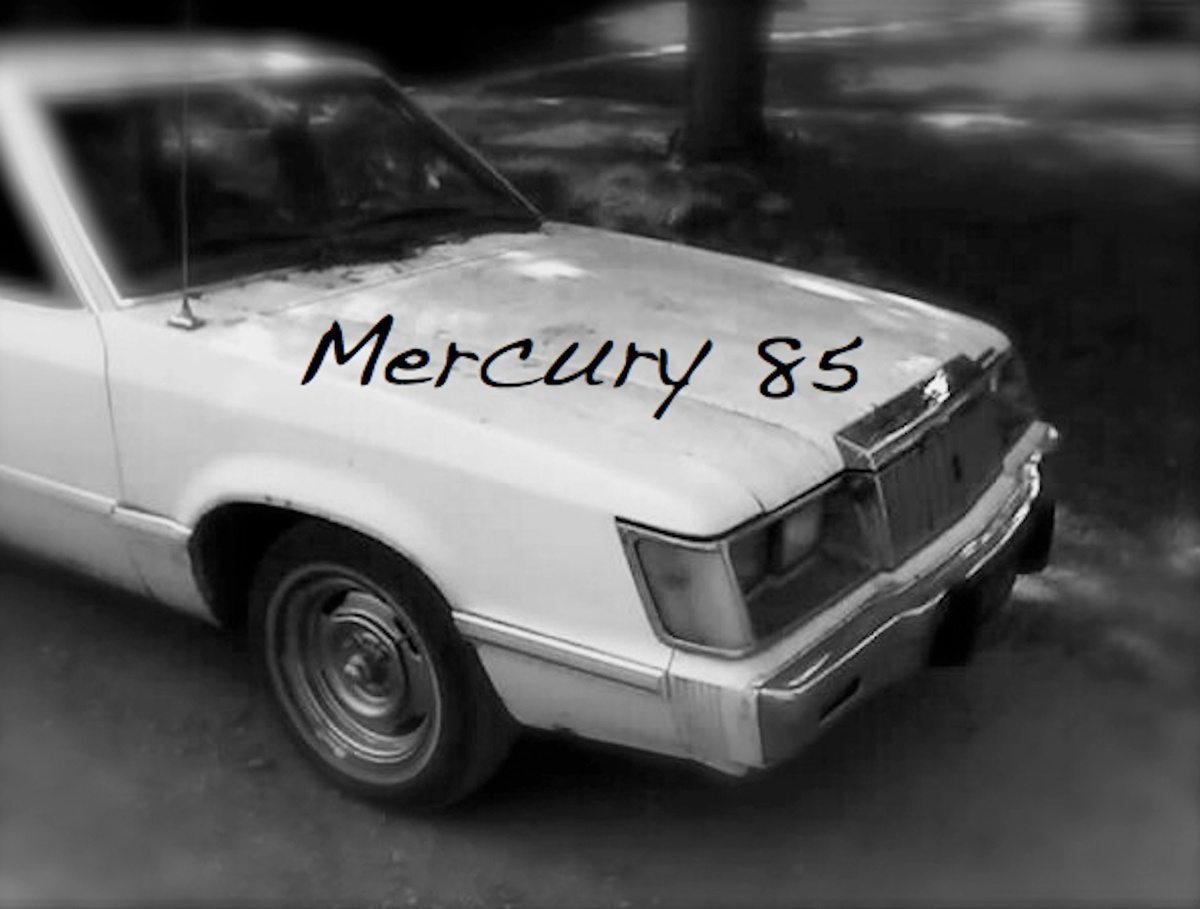
Despite calling Vermont home, the origins of Dan Johnson’s music career lie here in Upstate New York, where he first strummed his guitar to the public inside where Valentine’s Music Hall and Beer Joint once stood. Valentine’s is gone, but Dan Johnson’s Americana sound continues today with the release of his latest, Mercury 85. The album was released on May 27th.
Located off Albany’s New Scotland Avenue, Valentine’s was a popular venue for live music before it succumbed to a local hospital’s progressive movement to expand last year. Johnson, along with his Expert Sidemen, had hosted his Americana music series every Tuesday night featuring the likes of Woody Pines, Star Anna and the Laughing Dogs, The Farewell Drifters, Hamell on Trial, JP Harris and the Tough Choices, Holy Ghost Tent Revival, and Eastbound Jesus.
“Most of the album is about people I’ve known,” said Johnson, “especially folks from the time I spent in Buffalo, but also moving from New York to Vermont, and life changes [too]. The songs mostly use driving and cars as a metaphor for writing,” he added. “I’m curious about what other people get out of the songs so don’t want to go crazy breaking it down.”
Mercury 85 is Johnson’s third album and features twelve original songs that were all recorded at his home in Jericho, VT. It presents a departure from the live instrumentation of his previous releases, featuring drum machines, amp modeling and MIDI instruments to support his acoustic guitar, banjo and mandolin. While the instrumental support has taken some new turns, said Johnson, the songwriting remains rooted in storytelling and first person narration with strong poetic imagery.
Johnson’s unassuming approach to the mic is intended to allow the story to take the spotlight: Well-matched with his low-key but welcoming attitude towards the listener. The presentation is reminiscent of Bob Dylan, as each song tells a story surrounding common people remembering yesterday, lamenting today, and looking forward to a better tomorrow. Never does there seem to be a resolution to change. As with “Rose”, for which Johnson only recently released a video, the protagonist speaks to another about a woman he casually met at a bar his band had played. Over the course of one night, skirting around the truth and telling lies over cups of coffee, he fell in love. But, it’s apparent he has since spent a long span of time searching her at each bar he happens to play and seems to have given up hope on ever finding her. “If you ever see this girl, she’s got a tattoo of a rose. Tell her that I miss her when the chilly wind blows.”
Johnson attributes the country landscape of his new home for the stripped down production of his latest release. The focus on the storytelling is certainly his strong suit, and is the most appealing factor to this album. This same quality may also be off-putting to the casual music fan used to a contrasting style, but it is a sound that can easily find itself played at trendy coffee houses. And, for those who appreciate good storytelling, Mercury 85 is worth a preview (and purchase) on Bandcamp or contact the artist directly on his Facebook page.
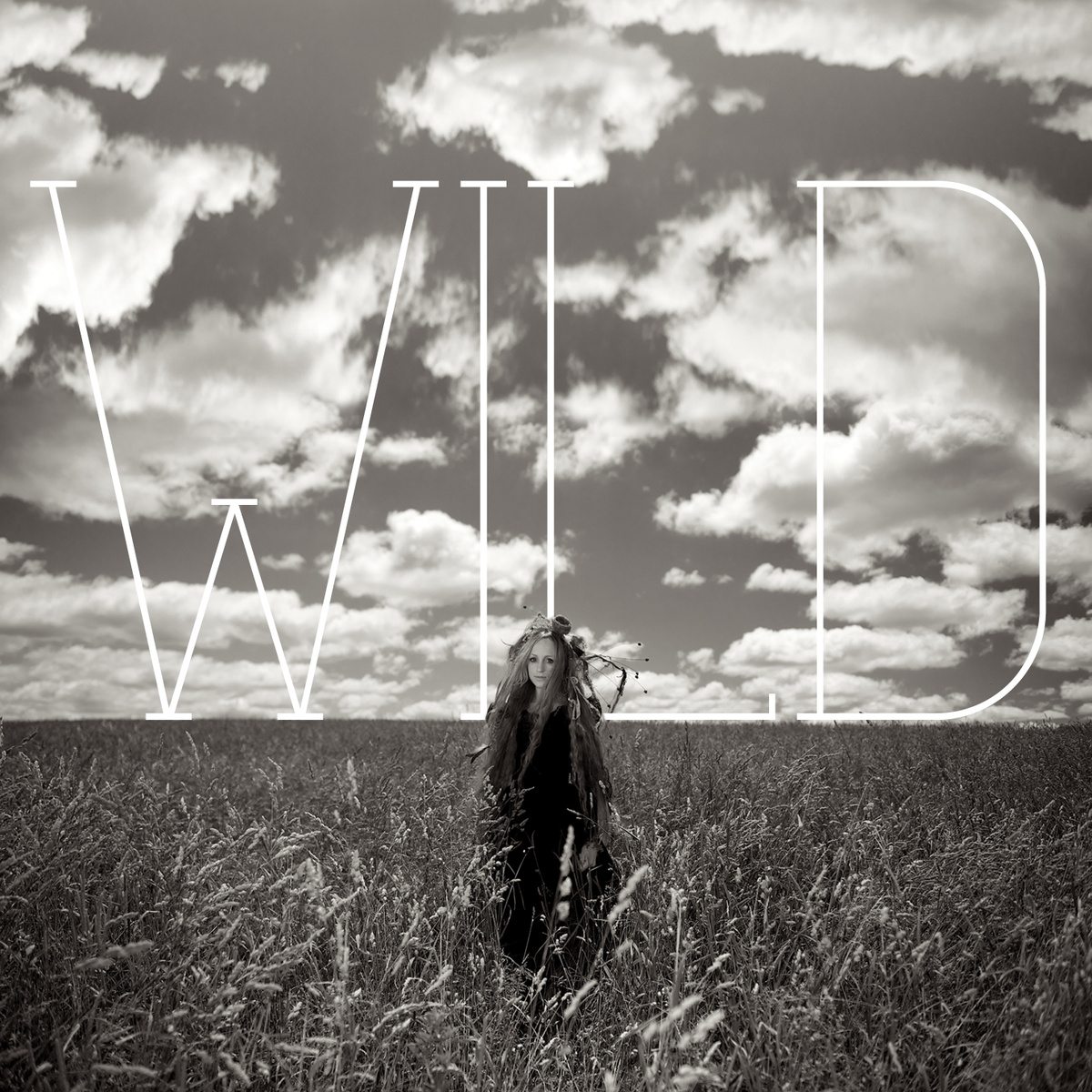
Several weeks ago I had the chance to review six songs off Amanda Rogers’ newest album WILD. The EP was a solid set that previewed the direction Rogers is taking with the album, which dips its toes in all sorts of musical genres. Rogers draws on some widespread influences from country to pop to piano ballads, all of which help keep her work undefined in any broader musical classification. The first half features singles that stand well on their own, while the second half really settles in, flowing agreeably between tunes.
One of the best songs off the album is a piano pop gem “Welcome To The Show.” With a really distinct and pleasing tone, the piano plays an upbeat rhythm that will have you hooked—a great way to start off. The drums pick the song up into a groove when they come in on the chorus and the carefree piano solo following after creates an open and unencumbered space of some feel-good music. Free and easy whistling throughout brings you back to an outdoor summertime atmosphere, something almost all of us in the New York area are longing for right about now when spring hits. With “Welcome To The Show” leading off, Amanda Rogers anticipates a sort of driving in your car with the windows down/living in America vibe to the rest of the album.
“The American Dream” presents this American feel throughout Rogers’ music, however not in an idealized or glorified way as she addresses some national issues with lines like, “We’re overworked and we’re underpaid” and “This American dream right in front of your TV screen,” as a possible call out to those who forgot about their dreams, contented by TV. “More, More, More” adds to Rogers’ exposing of the United States corporate structure by putting down certain CEOs who make an unnecessary amount of money at the expense of others.
“Sweet Sleep” is a soft lullaby tune that’s definitely meant to be listened to under the covers at night. There’s an airy freshness in songs like “Someone Waits” and “Genes I’m Always Wearing,” both of which have a similar feel to what’s heard in “Welcome To The Show.” With “10 Years Closer” Rogers offers a gloomy side to the album with some darker style singing. Altogether WILD is a long 19-song album with Amanda Rogers’ unique voice and piano style traveling through various styles of music.
The Egg Performing Arts Center’s American Roots and Branches series featured two unique acts that celebrated bygone eras of early American music that have since been revisited, to critical acclaim. Carolina Chocolate Drops, along with opening band Birds of Chicago performed in the Swyer Theater to an intimate sold out crowd, sitting quiet and focused during each song and story behind it, but applauded with great aplomb once a selection had completed. Hanging onto every note, the bands on stage were feeding a patient and receptive audience, eager to hear music that has otherwise been forgotten in American musical history.
Birds of Chicago opened the night with a six song set of folk-country that was mellow yet had a steady beat. Performing for the first time in Albany, Allison Russell sang with a June Carter-esque voice and vibe, playing banjo and clarinet on “Wild Horses”. Making jokes about her heritage (Scottish-Grenadian-Canadian) and nodding to her husband JT Nero (who has an incredible range in his voice) who is also Scottish, noted that this only complicates their daughter’s extensive heterogeneous background even more. “Sans Souci”, a pre-zydeco French influenced tune was a highlight of the set, and with the guitarist using his pedal with a gentle touch, he carefully poured each note out carefully, turning what may have been a 45’ speed song to that of a 33’. The finale, “Fever” gave the audience a fake-out, where an initially chill and happy song turned into a foot-stomping rager. A perfect complement to the main act this evening, Birds of Chicago stood out with a sound that was as unique as their band members.
Carolina Chocolate Drops took to the stage and opened up with an Emma Shelton tune “Pretty Little Girl with the Blue Dress on”, where Rhiannon Giddens somehow did not stumble over the complicated Micro-Machines-Guy speed of lyrics, accentuating every word perfectly. “Sandy Boys” encouraged a community sing-along, in an Appalachian/Hackensaw Boys style. A soulful “Country Girl” preceded a brief history lesson, taking the audience back to 1855 and using an 1858-era minstrel-style banjo, which had a light sound due to its hollow back. Along with the Bones, two pieces of wood click-clacked together with precision by Rowan Corbett, these are two of the oldest instruments in the world, brought to America by slaves from Africa and the banjo only brought into the broader musical pantheon in the latter part of the 19th century.
Rhiannon, reserved and soft-spoken but with a stage presence that shows marks of experience and maturity that added to the sound and performance on stage, also played banjo and fiddle in the course of the evening, the latter of which was key to the sound of many songs and underscores Hubby Jenkins’ banjo. A Hank Williams tune suggested by a friend “Please Don’t Let Me Love You” preceded a solo tune from Hubby, who had only a single string holding his guitar around him – no sturdy strap – for this was a band playing ol’ timey music with ol’ timey instruments, down to how they wore them on stage.
Singing Odetta’s “Waterboy”, the peak of the song was the wick of a firecracker, setting off the audience in applause and loudly garnering a ‘God Damn!’ from an audience member, certainly speaking for all. “Goin’ Down the Road Feelin’ Bad” was performed in a more upbeat fashion than the familiar Grateful Dead version while “Ruby”, a bluegrass standard, was played in its original version with dobro, bones and Rhiannon’s sweet voice eliciting the cry for the title woman. “Buck Creek Girls” had cellist Malcolm Parson playing his cello in the style of Edgar Meyer, and later picking it up to play it as the song accelerated, thanks to Corbett’s Bones, a new favorite instrument of all in attendance.
Thanks to Scottish settlers in North Carolina in the 1700s, Scotch-Gaelic mouth music was brought to the region. “Puirt a Beul”, sung by the Chocolate Drops with a beat from the bass drum, it recalled Irish singing but without a full band sound and had a distinct language it, incomparable to any other folk style. These songs could have been an early inspiration for Cajun songs if the Acadians were to have picked something up on their way from Maine to Louisiana.
As the set came to a close, more raucous upbeat songs were performed, closing with storytelling music in “Old Cat Died/Brown’s Dream”. The encore, “Read ‘em John” was a song about how to spread and enrich an idea, a capella style, a perfect Coda for the evening.
Upstate New York native Amanda Rogers is an internationally recognized singer-songwriter whose ninth studio album WILD will be released Wednesday, April 2nd.
Having spent the past 15 years centered around her musical career, Rogers has seen her music make appearances on television networks such as MTV and the Discovery Channel, and has multiple international tours under her belt. Her 2008 album Heartwood reached #81 on the International Top 100 Charts, and in its May 2012 issue, Rolling Stone Magazine stated that “Amanda’s tender, elfin voice is reminiscent of Heather Nova.” Additionally, Rolling Stone went on to illustrate how “[Amanda] has always been honest,” which is really an admirable trait in the pop world of music. Amanda Rogers has a classical background, while her sound is often unbound to any one genre. She encompasses various influences from Carole King’s ‘Tin Pan Alley’ style as well as Tori Amos’ classical roots and her unique sound can be classified as “lo-fi bedroom ambience,” or “pop with a dash of folk and blues.”
Amanda Rogers’ new upcoming album WILD was written and recorded right in the heart of Syracuse, New York, at Subcat Studios, where she worked with Co-Producer/Engineer Jon Lessels as well as L.A. recording engineer Patrick Macdougall. Towards the end of the summer, Rogers had a staggering total of roughly 30 songs written and recorded as demos. These recordings were then reworked to complete the final album. With a solid DIY way of going about the music industry as an independent touring and recording artist, Rogers’ return home to Upstate New York must have seemed fitting for the process.
“10 Cent Songbird” is a notable song off the album with its opening piano chords under a storm of thunder-like ambiance, which is then followed by the introduction of some light fiddling of a distorted guitar. The chorus will likely be stuck in your head only after the first listen, displaying Rogers’ knack for writing catchy pop music. “More, More, More” shows Amanda’s lyrical abilities as she calls out a distaste for corrupt corporations while pushing for working-class Americans with lines like, “I’ll work three jobs and still be poor, So CEOs can have their whores.” Straying a bit from the theme of WILD, and “Walking” offers a different aspect to the album as Rogers talks of “being careful these days” and “looking for steps to follow in,” which is quite contrary to anything wild, but possibly adds to Rogers’ sincerity and honesty noted by Rolling Stone. The album could maybe have been recorded and polished up a little bit better, as the drums and electric guitar often sound somewhat generic throughout and in need of innovation and freshness. With the many rigid rules commonly found in todays pop music however, WILD takes aim towards becoming an overall original, unconventional pop record.
Key Tracks: 10 Cent Songbird, Walking, More, More, More
On June 14, 2009, I drove to Beacon, NY for the annual Strawberry Festival, an annual community event on the shores of the Hudson River. I attended at the suggestion of Pete Seeger, so that we might chat and conduct an interview regarding music festivals. The family event had well over 1,000 in attendance, roaming the park grounds, sampling local food, and enjoying the greatest Strawberry Shortcake you will ever have.
photo by Pete Mason
I arrived around 9 am, not wanting to miss Pete. He did say to talk to him before his “set” (three songs with children isn’t your typical musical set) so I didn’t sleep in on that. But there were two documentary crews there to talk to him, and they got his attention the moment he started walking from the edge of the parking lot into the park. I stood idly by, listening and admiring the then 90 year old Pete who was answering every question levied at him, for well over an hour between the two films. He played some songs, and at one point lost his balance and fell backwards off the log he was sitting on. He righted himself easily and went on with the interview, hardly shaken. This is the man who had all the windows in his car smashed in the Peekskill riots of 1949, while he was driving through a mob. Falling back on a log was nothing by comparison.
photo by Pete Mason
Then it was my turn. There wasn’t a queue, and he had no handlers to speak of, so I waited for my moment. I saw his grandson Tao Rodriguez-Seeger was nearby, letting his grandfather handle his own interview and affairs on his own accord. If you make it to 90 and are still this able-bodied and aware, there is no need for a publicist to say when the interview was over. Pete handled all his own publicity and look how far that got him.
photo by Pete Mason
When I saw an opening, I walked up to Pete and said “Pete, I’m Pete Mason, I wrote you a letter and you said to come here and talk to you about music festivals.” He looked at me, then off into the distance, closed his eyes and said ‘Oh yes. OK, well, let’s walk and talk, I have to play music soon.” And we were off, walking at a slow, but steady pace for 15 minutes while we chatted. Now, I’m 6’2″ and Pete was a tall and imposing 6’4″, and I was fumbling with my questions, partially because I was talking to Pete Seeger and partially because he was a little larger than life. He had a John Muir/Mark Twain vibe, in the sense that both are best recalled in their later, white hair years, but also for their place in a specific part of American Written History: Muir with the environment, Twain with his humor and Seeger with his music. Like them, Seeger was grounded and charismatic, with a somewhat reserved personality, and he focused on the music and history which he readily shares with others. After a couple questions, I was relaxed and it felt like a conversation with Everyone’s Grandpa.
Pete Mason: What is the first event that you recall playing music at?
Pete Seeger: I never expected to become a musician. In 1939, 70 years ago, I was asked by a friend’s aunt to sing some of my songs to her class at school for $5, an impressive sum of money. It felt like stealing but I kept looking for an honest job and kept singing though at schools and camps, and as kids got older and went to college, one of the most important jobs in my life was to go from college to college to college to college in the 1950’s, and even thought the John Birch Society and KKK tried to stop me, all they did was give me free publicity. It was the most important job I ever did because I could have kicked the bucket in 1960 and now a whole batch of younger people picked up where I left off – Bob Dylan, Carol Oates, Sandra Lee, Joni Mitchell; I don’t have to get my records played on the radio, or get jobs on the side.
PM: What do you recall from the Peekskill event in 1949?
PS: It was closed down by police and right-wing opponents in 1949. It is referred to as a “concert” but was outdoors and included several performers [Seeger and some of the Weavers, who were on the pop charts at the time]. There was no encampment as far as I know, but 20,000 people showed up for the event from all over the East Coast. I think you can consider folk music of that era analogous to pop of 20 years later.
photo by Pete Mason
PM: Regarding the community aspect of festivals and the atmosphere that is present when folks come to a festival, how does the festival atmosphere differ from ordinary daily life and regular gatherings, and what does it say about festivals?
PS: E.F. Schumacher wrote “Small is beautiful” and Hawken wrote “Blessed unrest”. How did the largest movement in the world come so quickly? What is this movement? It doesn’t have a name. Little things are going on, 100’s of festivals and now 1,000’s of festivals and now 10’s of 1000’s of festivals going on all throughout our country and through much of the world. I really do believe that these little things are going to save the human race. Big organizations tend to get power hungry and they can be co-opted by people with money and a million little things. Big becomes a bad thing, and the establishment doesn’t know what to do about these things. Did you ever hear of the Spirit of Beacon day?
PM: No
PS: It was the result of a race riot from years ago. More than 14,000 people showed up in a town of 10,000 – it boasts diversity and everyone takes part – Muslims from their Mosque, Indians, Jews, the whole town. Now it starts with a big parade for a few hours up and down Main Street. A few years ago, women from India took part. My father was a musicologist and he would have loved it.
PM: In the event music festivals generate crowds that are there for the scene more than the music, what can be done to revert back to the roots of music festivals?
PS: (Laughs) Well, take this stage for example. This stage here is small, you can have not so much noise, sit up right and close to the music.
photo by Pete Mason
PM: What do you think gives music its power to change and bring about the good in people?
PS: Nobody can say exactly. I like to say that all the arts, music, the visual arts, acting and dancing arts, cooking arts, and I believe sports, will save the human race because they can leap over barriers, religions, leap over barriers of race, politics. Rugby was one of many ways of resolving conflicts in South Africa, because both blacks and whites love rugby and whites felt they were playing their (white) game.
PM: Can you shed any light on that feeling you get when you play music, and how the feeling and music can change over time?
PS: Well, music does affect your opinions. Plato is supposed to have said “It’s very dangerous to allow the wrong kind of music into the republic.” There is an old Arabic proverb, ‘When the king puts the poet on his payroll, he cuts off the tongue of the poet’, so throughout the ages, people in power have liked to control music, they used to throw songwriters in jail throughout history, and were assassinated.
PM: What are they afraid of?
PS: Ideas which might threaten their control. Aesop only told fables which were African folk stories to the Greeks, but some of his folk stories got too close to home, and the people who ran Athens ended up by assassinating him, executing him.
Folk music legend and activist Pete Seeger died this morning at 94. An activist, teacher, singer and influence on generations of musicians, Seeger dedicated his life to music, playing a banjo that read “This machine surrounds hate and forces it to surrender”. He was pre-deceased by his wife of 60 years, Toshi Seeger.
A lifelong resident of New York, Pete Seeger learned folk music from his father, Charles Seeger, and in turn influenced musicians from Bob Dylan to Joan Baez and Bruce Springsteen to Tom Morello. His musical impact and influence is far-reaching and encompasses songs that few identify with Seeger, for other musicians made their name with his words – Dylan, The Byrds, and Peter, Paul and Mary, to name a few. Pete Seeger spent a lifetime writing and teaching music to anyone and everyone, always with a positive outlook on the future, instilling in all the hope and courage to do the right thing and stand up for one another.
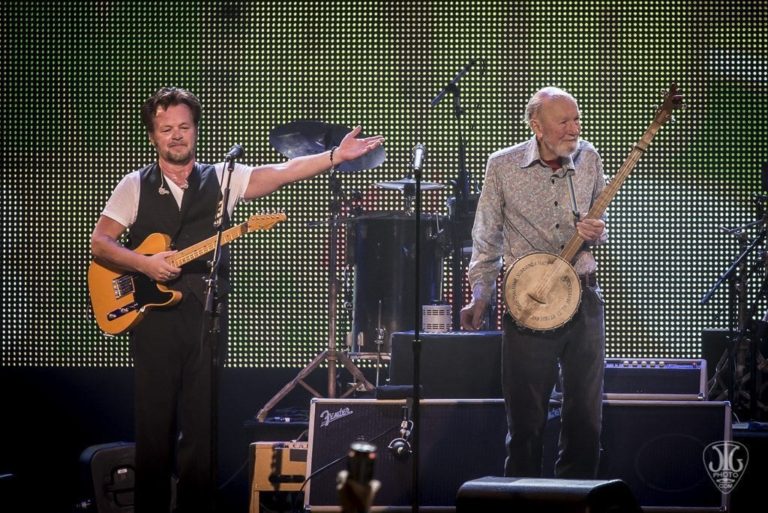
Even at Seeger’s 90th birthday concert on May 3, 2009 at Madison Square Garden, he was still teaching music. With a star-studded lineup to play his songs and more, Seeger talked history while teaching the audience the harmony to “Amazing Grace”, guiding the crowd through extended verses of the American original.
Agile even in his 90’s, Seeger never showed signs of retiring or slowing down, even making an appearance at Farm Aid in September 2013 at Saratoga Performing Arts Center. A surprise appearance, Seeger sang “The Hammer Song” and “This Land is Your Land”, adding in a new verse: “New York is my home, New York is your home. From the Upstate mountains to the ocean foam. With all kinds of people, yes, we’re poly-grown (sic), New York was meant to be frack free”, keeping his environmental activism at the forefront of his life. Mixing politics with music might be risky for some, but for Seeger, it was a day at the office.
His left-leaning views brought the ire of Joseph McCarthy and the House Un-American Activities Committee (HUAC) in the 1950’s, when Seeger refused to testify and answer questions on his alleged communist beliefs. Seeger did not flinch during the Red Scare, despite death threats to him and his family. What was an effort to overshadow his legacy and silence his voice were fuel to the fire that burned inside. In the decade that followed, Seeger’s songs became an anthem of the turbulent 1960’s, making him a harbinger of change. Never slowing down in his activism and music, he performed well into his 94th year.
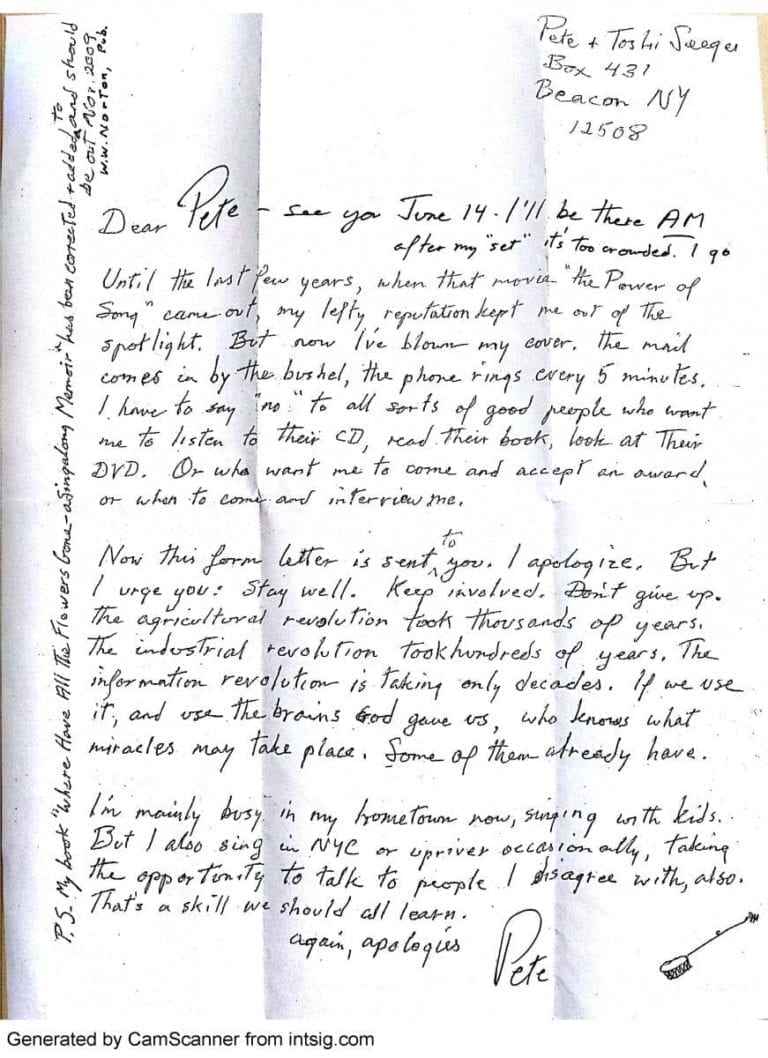
In 2009, as I began work on a book on music festivals I made a list of musicians I wanted to seek out for their input on the oral history of festivals that were not part of historical records. I sought out Seeger, feeling he must have a trove of stories on past events and festivals that took place in the middle of the 20th Century. Upon discovering his mailing address, I wrote him the letter below. To my surprise, he replied! He wrote back,
“Pete – I know almost nothing about festivals except Newport 1959-1969. I’m also swamped with work. If you want to come to one of our little free waterfront festivals in Beacon I could spare a 1/2 hour. Try the Strawberry Festival June 14 or the Corn Fest August 9th. Hastily, old Pete”
Undeterred and excited to have a conversation started with Seeger, I wrote back and told him I would see him at the Strawberry Festival (you will never eat better Strawberry Shortcake). This time, he sent his form letter with a note “Pete – see you June 14. I’ll be there AM. After my “set” it’s too crowded. I go.”
His reply, while reassuring and led to a walking interview, isn’t what drew me in. It’s not every day you correspond with an historic musician. It was the middle paragraph where he encourages involvement and activism, quite convincingly.
“I urge you: Stay well. Keep involved. Don’t give up. The agricultral revolution took thousands of years. The industrial revolution took hundreds of years. The information revolution is taking only decades. If we use it, and the brains God gave us, who knows what miracles may take place. Some of them already have.”
Seeger’s legacy will live on for generations, through music, through the Clearwater, through activism and protest, and above all, through hope for a better tomorrow.
“People ask, is there one word that you have more faith in that any other word, and I’d say it’s participation. I feel that this takes on so many meanings. The composer John Philip Sousa said ‘What will happen to the America voice now that the phonograph has been invented? Women used to sing lullabies to their children.’ It’s been my life’s work, to get participation, whether it’s a union song, or a peace song, civil rights, or a woman’s movement or gay liberation. When you sing, you feel a kind of strength; you think, I’m not alone, there’s a whole bunch of us who feel this way. I’m just one person, but it’s almost my religion now to persuade people that even if it’s only you and three others, do something. You and one another, do something. If it’s only you, and you do a good job as a songwriter, people will sing it.” – excerpt from the well-written narrative of Seeger’s life, The Protest Singer (Wilkinson 2009), including his testimony before HUAC and how his father’s music shaped his life. A must read.
 Despite calling Vermont home, the origins of Dan Johnson’s music career lie here in Upstate New York, where he first strummed his guitar to the public inside where Valentine’s Music Hall and Beer Joint once stood. Valentine’s is gone, but Dan Johnson’s Americana sound continues today with the release of his latest, Mercury 85. The album was released on May 27th.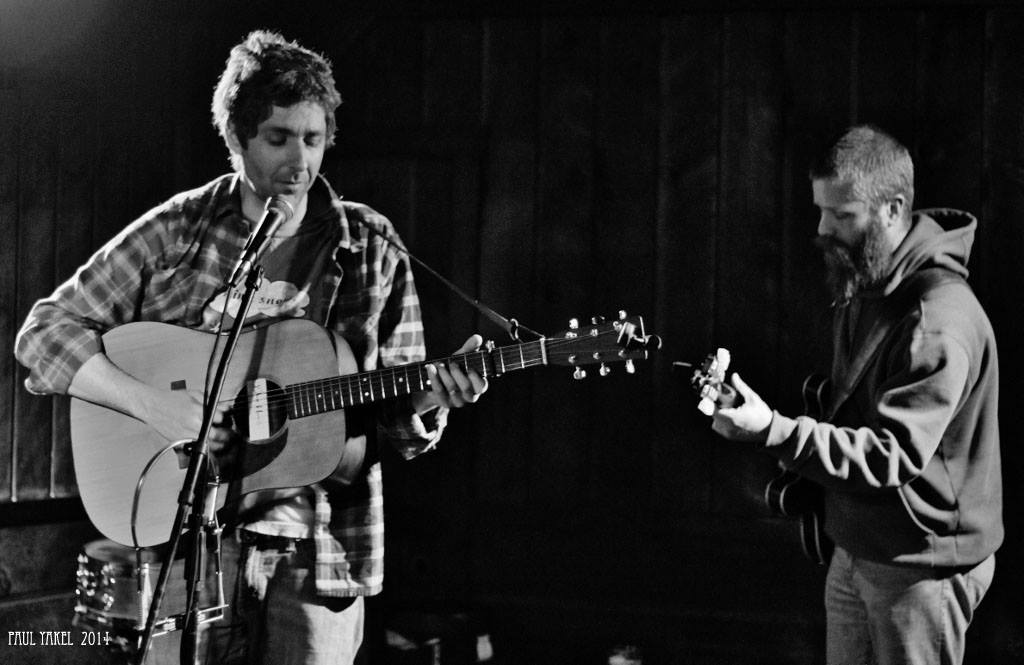
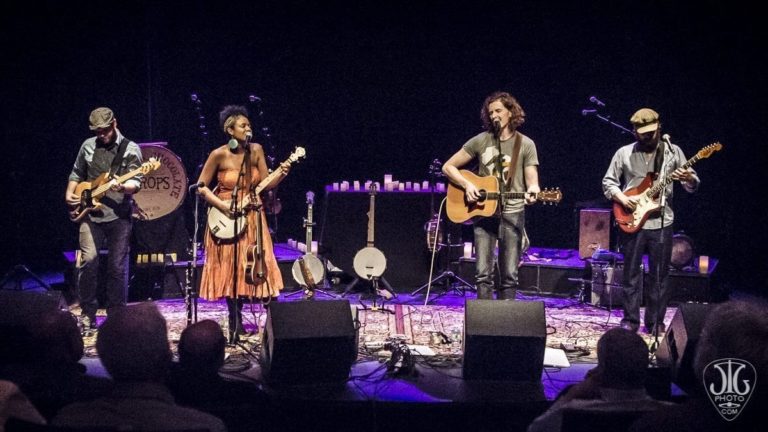 Birds of Chicago opened the night with a six song set of folk-country that was mellow yet had a steady beat. Performing for the first time in Albany, Allison Russell sang with a June Carter-esque voice and vibe, playing banjo and clarinet on “Wild Horses”. Making jokes about her heritage (Scottish-Grenadian-Canadian) and nodding to her husband JT Nero (who has an incredible range in his voice) who is also Scottish, noted that this only complicates their daughter’s extensive heterogeneous background even more. “Sans Souci”, a pre-zydeco French influenced tune was a highlight of the set, and with the guitarist using his pedal with a gentle touch, he carefully poured each note out carefully, turning what may have been a 45’ speed song to that of a 33’. The finale, “Fever” gave the audience a fake-out, where an initially chill and happy song turned into a foot-stomping rager. A perfect complement to the main act this evening, Birds of Chicago stood out with a sound that was as unique as their band members.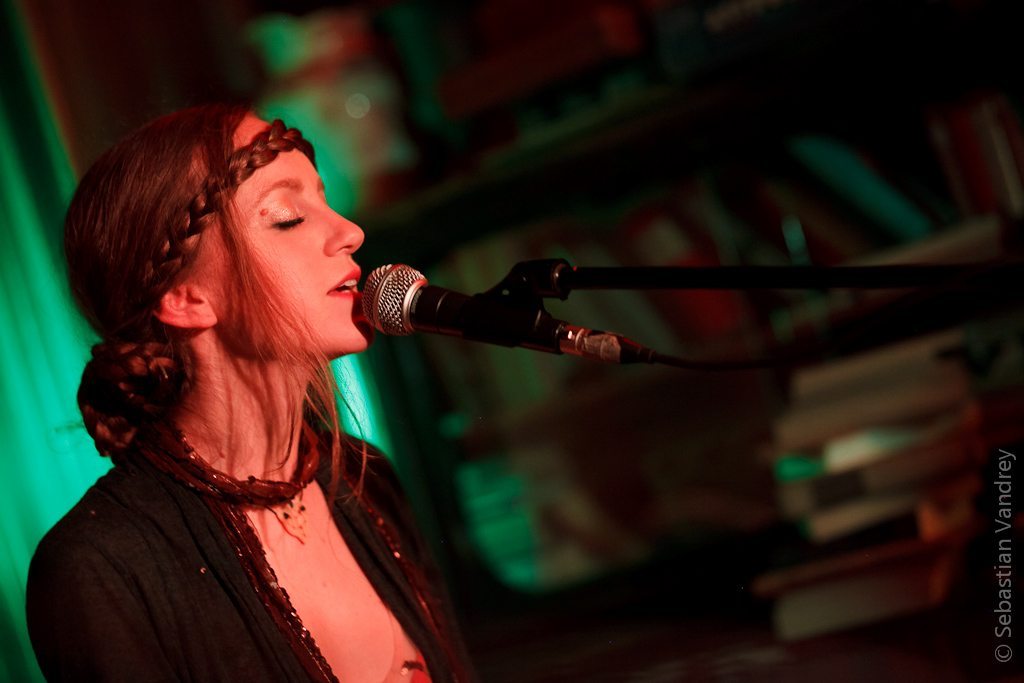

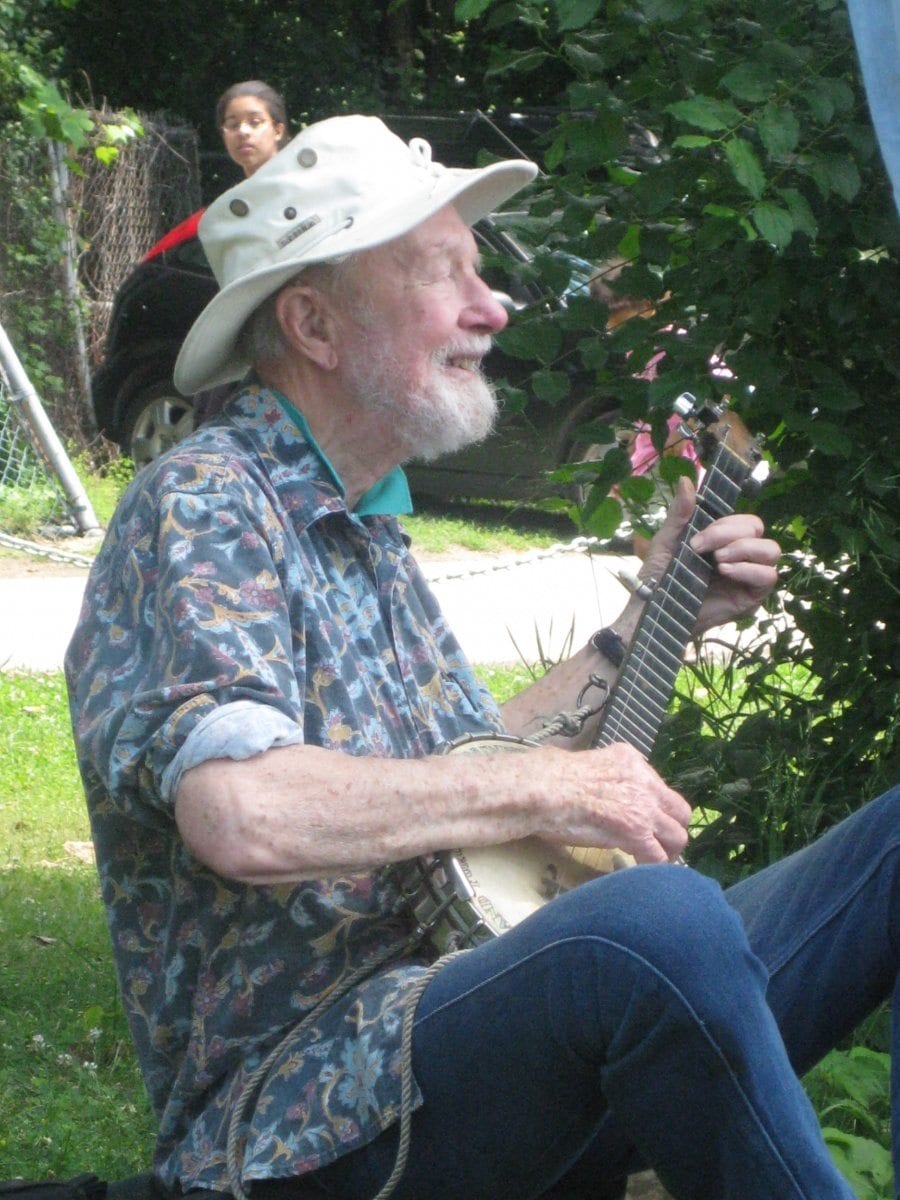


 A lifelong resident of New York, Pete Seeger learned folk music from his father, Charles Seeger, and in turn influenced musicians from Bob Dylan to Joan Baez and Bruce Springsteen to Tom Morello. His musical impact and influence is far-reaching and encompasses songs that few identify with Seeger, for other musicians made their name with his words – Dylan, The Byrds, and Peter, Paul and Mary, to name a few. Pete Seeger spent a lifetime writing and teaching music to anyone and everyone, always with a positive outlook on the future, instilling in all the hope and courage to do the right thing and stand up for one another.
 In 2009, as I began work on a book on music festivals I made a list of musicians I wanted to seek out for their input on the oral history of festivals that were not part of historical records. I sought out Seeger, feeling he must have a trove of stories on past events and festivals that took place in the middle of the 20th Century. Upon discovering his mailing address, I wrote him the letter below.