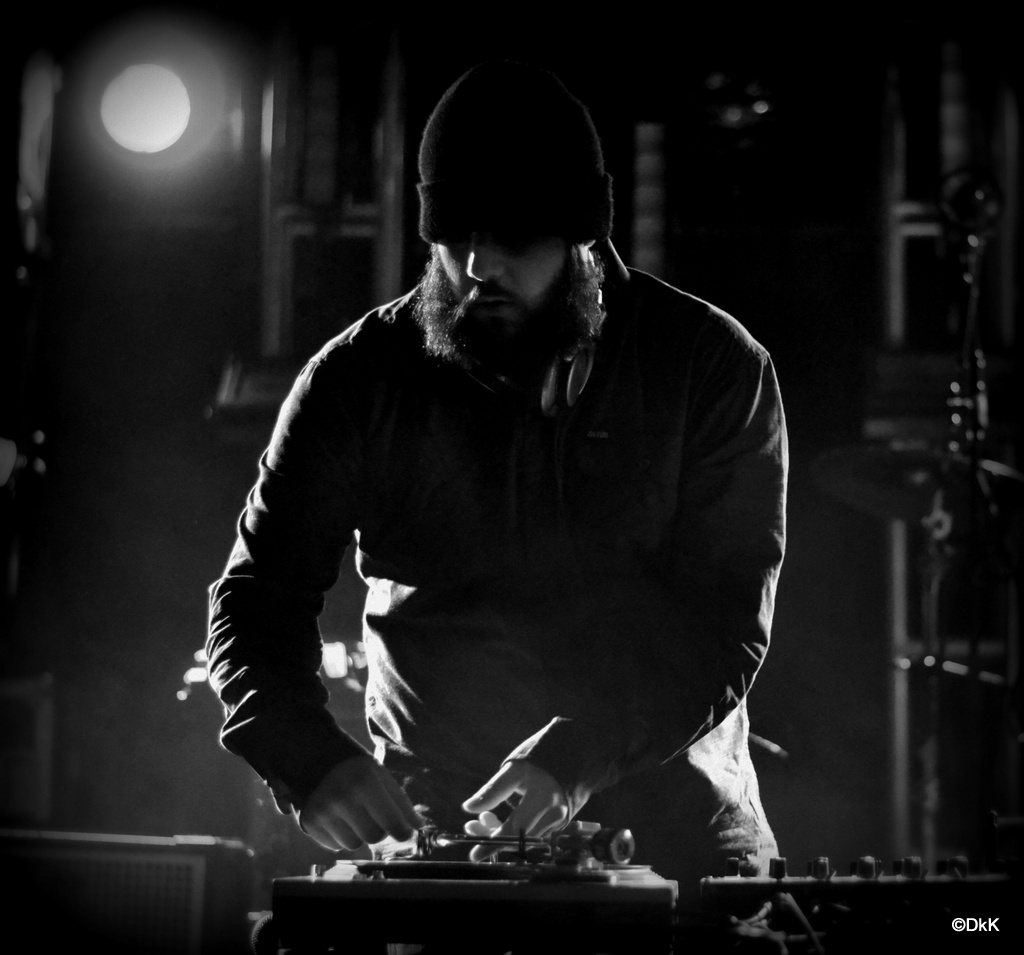
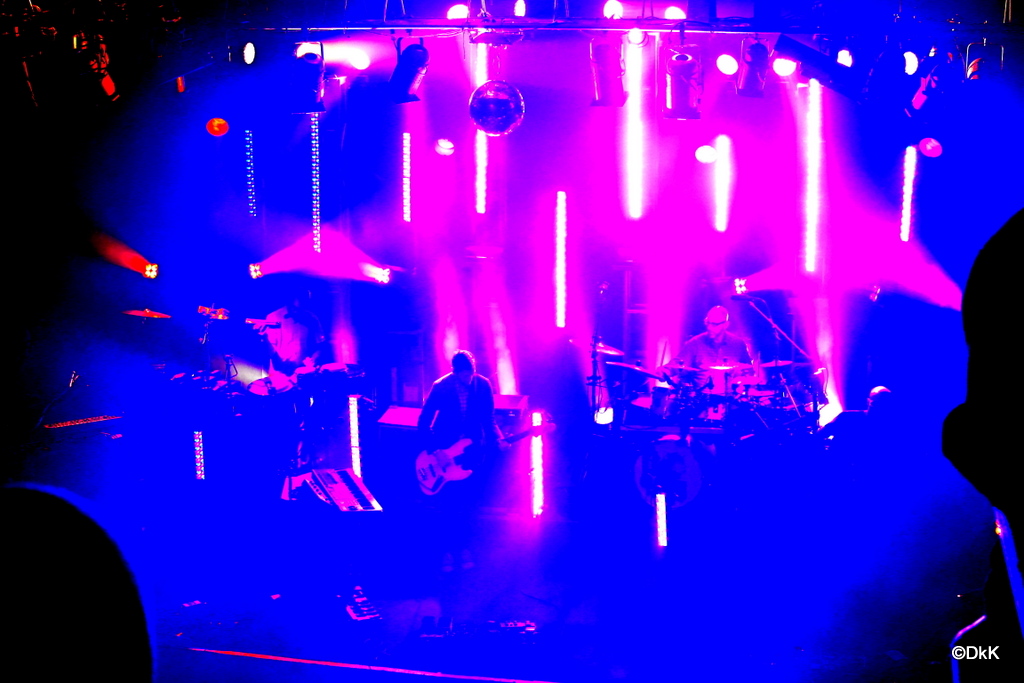
Hot off the brand new EP Down 4 My Ninjas, released by Firepower Records, which can be streamed below, ninja themed EDM DJ DATSIK announced the Ninja Nation Tour last night with special guest LOUDPVCK to open on select dates. The tour kicks off in Boston, MA on January 22 and will be stopping at the Terminal 5 in New York City January 24, also at Buffalo’s Town Ballroom on January 28, and at the F-Shed in Syracuse on January 29.
Since 2008, Deadmau5, aka Joel Zimmerman, has made quite the mark on the music scene as well as the public eye. Known for his giant mouse head, progressive electronic dance music and frequent tendency to openly speak his mind – Zimmerman’s rise to the top has been impressive and entertaining, to say the least. Setting himself far apart from your average “DJ” Mau5 considers himself more of an entertainer, often throwing together amazing and mind-blowing mixes and tracks on stage with cutting edge, advanced computer technology.
Zimmerman believes that the term “DJ” is played out and no longer truly encompasses what some of these individuals do on stage. He has headlined major events world-wide such as Itunes Music Festival, Lollapalooza, Budweiser’s Made in America, Virgin Mobile Free Fest and many more. In Summer 2012, Deadmau5 became the first Electronic “DJ” to be given the honor of front page of the Rolling Stone.
Deadmau5 has announced that this winter, just in time for the holiday season, he will be releasing a double album set with all of his older material from his first two albums, as well as new remixes and songs and other artists on Zimmerman’s “Mau5Trap.”
Deadmau5 will be playing his next major festival at the Hard Day of the Dead Festival in Southern California on November 1. Fans can live stream the show and get up close and personal with him on live.deadmau5.com. Look for the release “5 Years of Mau5” November 25 with more details being announced at a further date.
Everything is great about Great North Music and Arts Festival. Featuring two sets by headliner Tipper, this year’s line up brought a barrage of up and coming producers and bands together along with seasoned vets in central Maine. More than doubling in size from last year, Great North grew close to 4,000 revelers to experience live painting by Alex & Allyson Grey, fire spinning, graffiti artists, silent disco, art installations, multiple stages and a diverse array of vendors kept the attendees busy and entertained throughout the weekend.
The check in process was organized and it was immediately noticeable Great North had a bigger crowd than last year. Camping areas were full in comparison with the 2013 debut. Car camping was available to VIP and RV campers, otherwise off site parking required festival goers to hoof their gear in on foot or wait for a cart ride. Thankfully the parking lots were in close proximity so walking was manageable.
Generally a youthful crowd, the vibe was a cheerful and pleasant one. Smiles for miles all around with lots of outgoing groups intermingling through the weekend. Having recently relaxed marijuana laws in Maine, some vendors reflected that with flowers, concentrates, edibles and tinctures available for purchase.
Friday
JGB performed two solid sets Friday afternoon to get everyone shaking their butts and soon after, Conspirator brought the heat. Which was a slight relief to the increasingly arctic weather. Friday night temperatures dipped to 38 degrees, and when coupled with high humidity to make cuddling a priority. Ill-Esha graced the Temporal Dome stage getting the crowd hyped and ready for Griz. Headlining the main stage Friday, Griz laid down a set that had the crowd bouncing around. His version of the wedding stalwart “shout” got everybody singing and gyrating in unison. He then dropped his hit “Smash the Funk” to end his set. Cosmic Karma Fire kept the fire burning hot and bright while performing during Conspirator and Griz’s set. Staying awake for Desert Dwellers early Saturday morning would have meant enduring a hypothermic chill.
Saturday
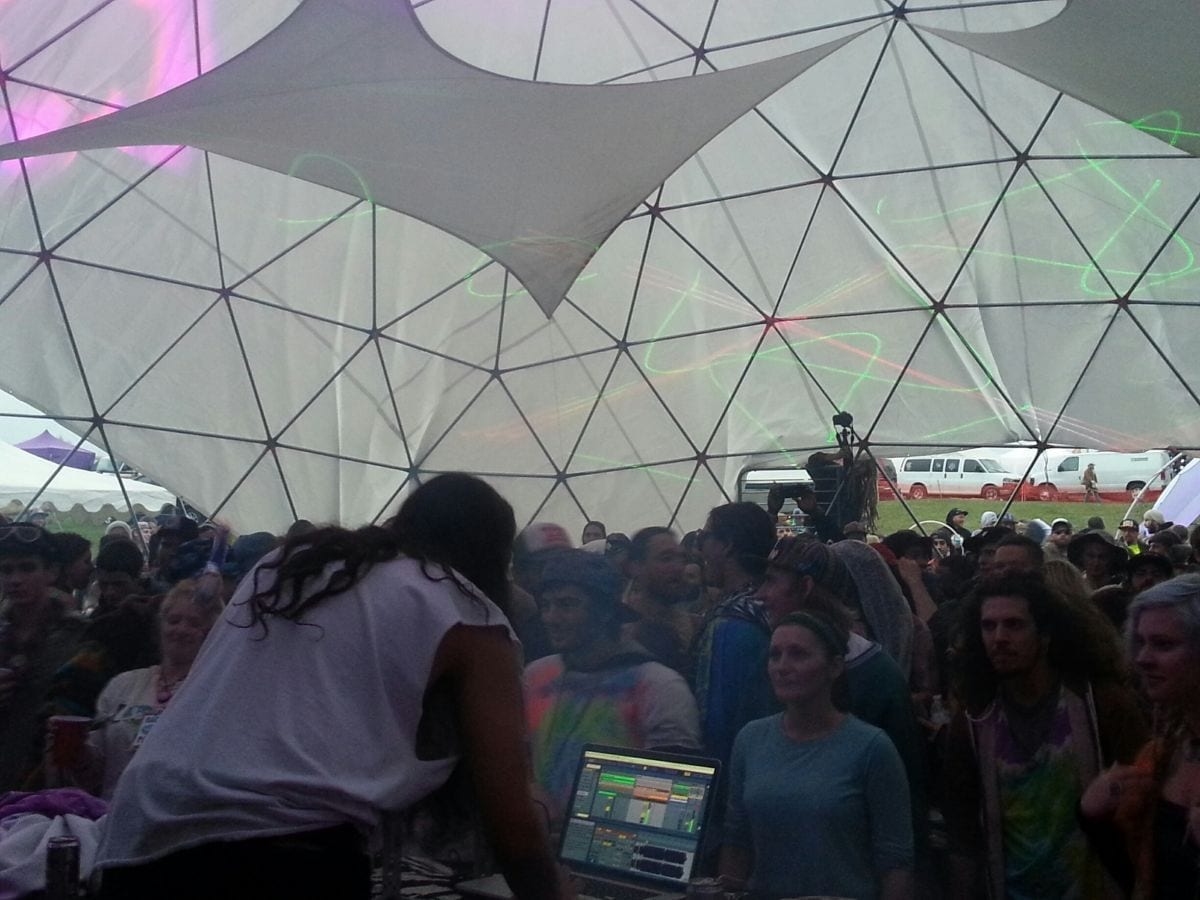
Up and at them. Upon acquiring credentials, the day unfolded with lots of incredible music ahead. Nahko and Medicine for the People were outstanding. Nahko even sang a few solo numbers for his fans. Space Jesus’ late afternoon slot set the tone for the night to come, even dropping a new track not yet played on the East coast. Tipper kept the evening groove light and bubbly then staked out darker territory during his late night set with Jonathan Singer projecting psychedelic visuals including manipulating some of artist Chris Dyer’s work. The G-Nome Project, Israel’s answer to The New Deal, and legend DJ Qbert treated the crowd to some high energy dance beats between Tipper sets. Cosmic Karma Fire spun fire during Qbert, but pulled out all the stops for Tipper. Fire breathing, fire swords, rope dart, and fire juggling coupled with LED hoopers and LED juggling combined with Tippers stage projections made for an incredible spectacle. Pulling out all the stops the Late night Bluetech was a magical dub adventure. A fledgling Space Jesus vs Bluetech collab closed the dome stage and had Bluetech laying down the deep dub/drum and bass while Space Jesus painted sweet and spacey chords on top replete with horns and operatic singing.
Sunday
Sunday funday. Overcast skies kept the weather warm and humid after early morning showers made getting out from under the blankets a challenge for many. Maine natives Cyborg Trio brought the energy levels up during their day set and Wobblesauce expounded on it by coming hard and fast with beats and wobble. After some fantastic day sets by festival veterans Viral Sound and Consider The Source, Papadosio was ready to close down the main stage. Papadosio has truly stepped up their game. A polished set had visual projections added by Deciduous Pupils as an added bonus.
With Orchard Lounge expected to close down the Fest at the dome stage, a surprise G-Nome appearance roused the crowd into one last frenzy. Their drummer even lit his sticks on fire. Orchard Lounge then set about laying down some deep house funk for everyone to unwind and groove to deep into the night, playing much later than their time slot.
With plans to expand next year and two extra fields to fill, Great North Festival will certainly continue to grow. The long Maine sky is the limit.
Bella Terra has continuously outdone itself as a small town festival, while keeping its reputation for pulling some of the biggest names in music and giving them a personal and organic experience.
Year after year festivals come and go from the circuit. These festivals open up new venues, new bands, and new experiences, but it isn’t until a festival has been around long enough to establish itself that you recognize the importance of all of these new avenues for the music world.
The extensive focus on both music and art makes the festival not just a string of fantastic musical performances, but an experience. Over the past few years Bella Terra has established itself as a festival with the bandwidth to hang with the best of them. The venue is small and intimate which gives patrons the opportunity to enjoy big names in a smaller crowd.
Bella Terra takes place year after year at Gardner’s Farm, nestled quietly in the sleepy town of Stephentown, New York amid the beautiful backdrop of the Berkshire Mountains. Being in between the capital of New York State and the Massachusetts border, the venue is out-of-the-way but in the middle of it all making it very accessible and an easy drive.
Conspirator was one of the main highlights of the weekend playing a 2 hour set and releasing a ton of new material. The band played their new sound “Quick Sand” which had extremely low-key but solid jams that were unlike anything they have put out thus far. Conspirator does a fantastic job of balancing each other out musically on stage. No particular band member takes the spot light for overly extended periods of time, and the entire band plays off of each others energy to create a phenomenal balance and stage presence. The entire set was leaning more on the jam side than their usual heavy-electronic sets, but still they included their classic sound of synth and bass oriented jams.
Papadosio played the Wicked Cool Stage directly following the Conspirator set which was an organic transition due to the parallels between the two bands. Over the past few years Papadosio has drawn quite the following and truly established themselves within the music scene.
Surprisingly, the tent during the Abakus set was next to empty with just a handful of die hards dancing intently throughout the small stage area. This is a shame as this was perhaps one of the most phenomenal electronic performances of the evening. Abakus played a set blending acid-house, electronic and trance that showed why Abakus has accumulated the amount of respect he has within the time he has spent at music festivals.
Local Upstate artists like Digital Dharma, DJ Leila, Mentally Ill, Formula 5 and Lucid represented well at their hometown festival with fire sets across the board. Turkuaz played a fantastic and energy packed daytime set with the perfect musical backdrop to begin the last evening of the festival. Dr. Fameus, aka Allen Aucoin of the Disco Biscuits, showed that you don’t need much more than a drum set to make the crowd move. Saturday night turned into a full-blown dance party with DJ Craze and his spectacular and mind-blowing spin-techniques. This seemed to be the biggest crowd pleaser of the weekend. Perhaps it was the exceptional amount of energy that both Craze and the crowd reciprocated throughout the set, or perhaps it was the insane and unrealistic style of DJing. Araab Muzik seemed to be another huge crowd draw, however it would have been nice to break up the heavy electronic acts with something a little more versatile. Perhaps the most interesting thing about this set was finding out that Araab Muzik uses an MCP Drum machine so all of his beats are being made live on stage. This definitely set him apart from all of the ‘push-play’ DJs that take stage from year to year at all of the festivals world-wide.
The Canadian electronic trio Keys and Krates packed the dance tent and blew the crowd away with a spectacular, high energy performance. They played a few new songs which seemed to settle well with the crowd, as well as their fan favorites “Dum Dee Dum,” and “High All the Time.” The Sky Net Stage lit up the night deep in the woods of Stephentown with a smaller set up and psychedelic decor. Cosmal, Ali Laz, and B.A Dario made for a great closing of the evening drawing the crowd away from the main concert stage and into the woods until the late hours of the night.
The huge focus on visual arts is also extremely evident throughout the festival. With a full set up of wooden cut outs of anyone from Theodore Roosevelt to Randy “Macho Man” Savage, art installations by Cinder Block Hustle included many set ups for live graffiti and painting lining the greater portion of the concert venue; it was refreshing to see such a solid blend of different medias. Throughout the long weekend fire spinners lined up to do their thing alongside the main stage in an enclosed area. There were fire spinners as young as five years old with immense amount of talent and passion. It was nice to see so many local artists of all different age groups and styles coming together and creating such beautiful and different varieties of art.
To sum up the festival in the words of Jules Jennsen of IndoBox:“The people who put it on are solid people. I have a lot of respect for what they do. This festival is true to their vision and they persevere in an ever-changing environment through the Northeast festivals. There’s always a good lineup and always a good vibe. I’m just happy I can go home and feed my cat.”
When Mysteryland USA was announced I was immediately interested in covering the event. I was excited that a multi-day music and camping festival was going to be held at the site of the original Woodstock festival and the fact that the music at Mysteryland would bear little resemblance to the original festival. ID&T, the company hosting Mysteryland, started as a hardcore record label in the late 1980s as dance music exploded in Amsterdam. By 1993, they had organized the first Mysteryland festival in Holland. In 2002, the festival switched to a day and night format. One of the goals of the festival is to promote friendship and inspiration, and this is accomplished by working with record labels and other artists to curate multiple stages, art installations and food and drink vending.
Mysteryland allows its guests to become part of a truly interactive environment, not knowing what exactly is going to happen next. You can meet people from the same place that you’re from, or from the other side of the globe. You can hear new music from acts you might not have heard of, or you can check out a favorite performer in a unique new setting.
On Friday May 23, 7,500 Holy Ground campers began celebrating Mysteryland USA 2014 at the Camping Circus stage, located within the Holy Ground camping area outside of the main festival venue. The music provided a nice backdrop as people arrived and began setting up their campsites. By the end of the day the camping area was packed out. Navigating through camp to the showers, portos, stage and vendors was tricky during the days as occasional rain contributed to the most traveled pathways between tents becoming extra soggy. During the nights it got even harder as the harsh light from the light towers placed around the campsite forced you to shield your eyes so that you could focus on what was immediately around you; having a small flashlight here was clutch. Although the daytime temperature rose above 70 degrees F, it cooled to near 40 degrees F at night.
Dancing under the tent of the Camping Circus stage Friday night provided a small preview of what was to come for the weekend when the festival officially kicked off on Saturday. The featured performance Friday was the official pre-party, Nicky Romero Presents: Protocol NY Reboot. Even in the cooler nighttime air, the dance floor under the tent got hot and sweaty as you moved towards the center of the crowd, and standing at the edge of the tent you could observe a noticeable difference between the ambient temperature and the heat generated by the party inside, moreso when the breeze picked up. The BangOn! NYC Boombox Van was parked not far from the Circus tent and played music into the night after campers had returned from the main stages, adding an extra dimension of sound and activity to the atmosphere in Holy Ground. I enjoyed John Dahlback and Don Diablo before Nicky Romero took the stage for a great high energy set, which turned out to be a good example of how his set would go on the Main Stage the next night.
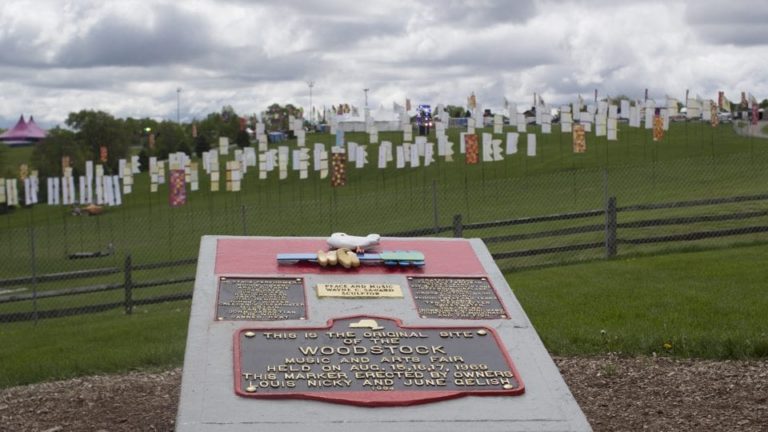
On Saturday, I finally got to see the main festival venue. On the way in I took a small detour to visit the monument commemorating the 1969 festival. It is located past the main gate and looks towards the site of the stage and the field that the fans watched the show from. This field was decorated with many rows of flags and was named the Ceremony Field at Mysteryland. At the front of the field were several teepees, a fire pit, a small stage and a dancing circle. The official opening ceremony was held here, and featured members of the Red Hawk Council, which represents first nations and indigenous people of the Americas. The ceremony began with traditional native drumming and chanting.
A speaker from the Red Hawk council welcomed us to Mysteryland and explained how the native focus on the earth, honor, integrity, respect and love was reflected in the crowd and experience of Mysteryland. We were asked to think about what we want in life, and what we need from it. The happiness and peace that comes from the music and the dancing that we were going to participate in, and the friendships that we came with and the new ones that we were going to make, shows us that this is how Mother Earth wants us to be. After the speech, the Red Hawk dancers were introduced and they began to lead the crowd in traditional ceremonial dances. They showed us two different dances before a small rainstorm began and scattered the crowd. And this is how Mysteryland really began for me.
There was so much to do and see here that it was truly overwhelming. Once the music starts, one quickly realizes that they can stay at one stage for most of the day and experience the type of music they enjoy most. The tent stages – Big Top, The Sound of Q-Dance, and Spiegeltent were all full of people dancing and enjoying the sounds of pop, electro, hardstyle and experimental house. Like the Camping Circus stage, the Big Top and Q-Dance stages were under large tents. The Spiegeltent was a traditional Dutch portable venue constructed mostly from wood, and being inside it actually felt like being inside an actual building, which was unique here at Mysteryland.
The Vinyl Only stage was tucked into a stand of trees, and had an open air DJ booth at one end of a synthetic dance floor surrounded by stage rigging decorated with vinyl records. There was a small pavilion behind it that had many disco balls hanging from its ceiling. I really enjoyed this stage for its steady blend of house music.
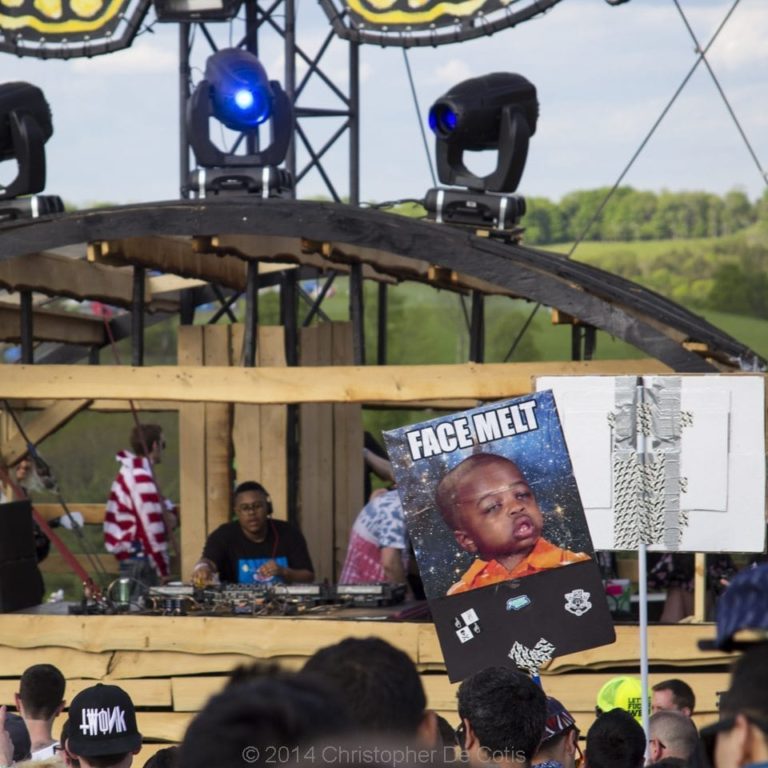
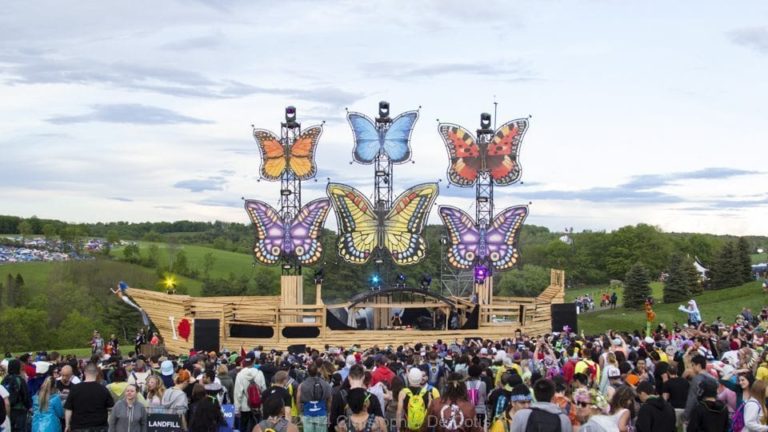
Big Gigantic closed the Boat stage on Saturday. This was an open air stage in front of a small slope. The whole facade of the stage was fabricated to look like a sailing ship. The DJ booth appeared to be in the cabin in the center of the ship, and there were several pairs of large butterfly styled sails rising above it. Dance platforms were located on both sides of the DJ booth for those with backstage access. Big Gigantic was one of the most unique acts here because they use live instruments – drums and a saxophone – to provide rhythmic and melodic textures over a base of electronic sounds with styles ranging from jazz to hip-hop to dubstep.
Kaskade closed the Main Stage on Sunday. This stage was styled as a house of cards in an Alice in Wonderland theme. The DJ booth here was in a ML cutout in the center of the stage, with five towers of cards rising around it. The central tower was the tallest and featured a clock face at its top. All of the hour markers around the face of the clock read ‘NOW’. The finale at the end of Kaskade’s set was fantastic. After more than ninety minutes of driving electro with elements of pop, trance, moombahton and more, all of the lights within the card towers were flashing and pairs of laser lights were tracing multiple layers of colored wedges through the smoke above the crowd. And then the fireworks started. Small rockets were launched from within the crowd on the field in front of the stage, slicing through the layers of smoke and lasers and exploding in the sky above the festival. More fireworks were launched off in the distance to the left of the stage. The launching, whistling, expanding and exploding were all choreographed to the music and a farewell monologue to the guests of Mysteryland, reminding us that yesterday is history, today is a gift, and tomorrow is a mystery.
Mysteryland USA 2014 was presented as well as or better than most debut festivals. The rainy weather leading up to the festival contributed to some delays and under-performance of some of the technical and logistic aspects of the event, but on the whole the vibe was fun and positive and the music and art created an environment shared by more than 20,000 people for two days that really took you away from the day-to-day world. ID&T is already planning another Mysteryland festival for Memorial Day weekend in 2015 and is hoping to make it an annual event. I look forward to spending a few short days at Mysteryland in the future and finding it better than when I left it.
Back in May we rejoiced over the celebration of Geek Week, and had plans on speaking with DJ Scarecrow out of Albany about how advancements in technology have influenced his craft. But, our schedules conflicted, and we couldn’t get together in time.
Nevertheless, we ultimately caught up with Brian Mattiske, also known as DJ Scarecrow. Scarecrow’s professional career dates back to the mid-90s, lending him a healthy perspective on how technology has changed the game from spinning turntables to pressing keyboards. Though software makes certain aspects of the trade easier for the novice, Mattiske is quick to remind you that knowledge and skill still separates the men from the boys.
Michael Hallisey: Okay. Let’s go: For starter’s, why don’t you breakdown your musical résumé for us.
Brian Mattiske: I got into “club” music when I was in high school. Besides the usual stuff, I happened to have a couple friends that were [fraternity] brothers that moved up here from Long Island. So, they introduced me to NYC club music and I was hooked. I then started DJing in my bedroom using my dad’s old turn table, a cassette deck and a SONY Discman. I had always been doing production type stuff since I was in like the 3rd grade with my dad’s dual-cassette deck and other equiptment. Mostly, I recorded stuff from the radio and edited to my own tapes. Then, when I was senior in high school, I bought another turntable. So, then I could do more legitimate mixing. I still remember the first two records that I mixed were C&C Music Factory – “Gonna Make You Sweat” and Mr. Lee – “Get Busy“. All throughout high school I used to take my allowance and go to the record store every week, so I already had a decent record collection.
MH: Then you went off to college? Did you continue on while at SUNY Oswego?
BM: Yes, throughout college I had my setup at home in the basement, so whenever I was home I just kept practicing my mixing. Then, when I was a junior in college I did my radio show with a fraternity brother on Saturday nights. We played club and hip-hop music, which I felt was appropriate for a Saturday night show. We would also have other brothers and friends come in or call in and we did sort of a goofy morning show at night. I still have a tape of outtakes of that which I NEED to get to digital. Then when I was a senior in college I started DJing some fraternity events and parties. Right out of college I got my internship with Z-Rock. We did a semi-goofy Saturday night radio show, but it was alternative and hard rock. Unfortunately, Z-Rock went out of business. Then I was kind of left doing odd jobs until I ran into my partner/supervisor from Z-Rock several months later.
DJ Scarecrow has gone from dual-cassette tape decks to fully digital formats.
MH: Z-Rock out of Albany?
BM: Yup.
MH: When did you take on the name Scarecrow?
BM: Scarecrow is my fraternity nickname. I just decided to use it as my DJ name because it suited me in a way and it was unique.
MH: How’s it suit you?
BM: Well, I was kinda tall and skinny. Much skinnier than I am now. [Laughs.] And, I was goofy. It came from the scarecrow in the Wizard of Oz. So, when I ran into my friend from Z-Rock, he asked me if I wanted to get into the mobile DJ business with him. So, I just started doing it with him. All kinds of events. But, I really loved the club DJing still. He had a few of those gigs, so I got to tag along and he’d let me spin. Eventually I started filling in for him and some other DJs. Then finally landed at the Lamp Post/Oasis with another friend where I was doing most of the spinning. There I could finally play all the NYC style club music. I did both hip-hop and club there though.
MH: Who are your mainstays, artists in particular?
BM: Well, I really go for a variety when it comes to my music. Some of the producers that are pretty consistent in my rotation are: Tiesto, Deadmau5, Sander van Doorn, Armin van Buuren. When I started mobile DJing, I was turned on to DJ remix services like X-Mix, Funkymix, and Ultimix. I still use those. They give you lead ins and outs for every track, with some additional production added, and they provide “clean” versions of hip-hop tracks in particular.
MH: I understand you’re still mixing today. With that said, that brings your timeline of experience beyond 20 years. You spoke of starting off with cassette tapes and needing to go digital with your old stuff. How has technology changed your craft? For one, there’s little “spinning” involved today.
BM: Haha, yeah now it’s my hard drive that’s “spinning”.
MH: What kind of hardware and software are you dealing with to do the job?
BM: I use a Toshiba laptop along with the Native InstrumentsTraktor DJ software and their S4 Controller. I keep all my music on a 1TB hard drive so that it can be portable. One of the drawbacks of using all digital are the common problems that come along with it. For example, at the end of last year my music drive died and I had to pay a lot of money to recover data I would have lost. I now subscribe to Carbonite. Can’t have that happening.
MH: You need a high-end laptop? What’s under the hood of your Toshiba?
BM: Yes, you definitely need a high-end laptop. You need a lot of RAM and a good processor. I also learned the hard way that you should never have an integrated video card. They don’t play well with the DJ software. One “problem” with digital DJing in general is that it makes it too easy for the average Joe to say they’re a DJ, when the equipment is doing the work for them. However, most music made before the turn of the century was not perfectly digitalized beats, so you do need to have some skill to mix that. What it does provide is the opportunity for artists to focus more on the production side than just on mixing. You can still scratch and do tricks if that is your thing. At first that was a problem, but now the technology has advanced to the point that it’s no longer necessary to only do that on vinyl. Plus you can now use your vinyl with the digital equipment and software. I have sold most of my vinyl because I was almost exclusively using CDs for all those years of DJing up until a couple years ago.
Now, I’m selling my CDs and will only be using music files. You can find my CD collection on E-Bay. [Laughs.]
I do still keep a few records and have a turntable for historical purposes. Also, I’d like to show my kids that. There were a few artists that I collected almost all their record singles: The Prodigy, Depeche Mode, and early De La Soul. Eventually I stopped so I never had them all, but up to a point I did. I have some De La singles that I got in Europe and cannot be bought in the US.
De La Soul – 3 Feet High & Risingis my favorite hip-hop album of all time. And I’ve never listened to an album as much as I did that one. I listened to it every day for at least 3 months. I wore out the tape, bought another, wore that out, then bought the CD.
I’ve always believed that song selection is the main key to DJing, so even with the greatest digital equipment, you aren’t necessarily a good DJ. I’ve always prided myself on getting people excited about tracks they don’t know rather than just the same stuff they’ve heard a million times.
MH: Otherwise the software is fairly user friendly?
BM: Hmmm, yes I would say it is user friendly. There is A LOT you can do with it though. So, it’s really about putting in hours of practice.
MH: How does it have an effect on your craft? Does it flatline the learning curve for novices, or does it add more tools to the trade for vets to use?
BM: I would say a little of both. Like I said, it makes it easy for someone that has never done it before to be “mixing” almost instantly. However, it does add tons of tools that experienced DJs can use and add all sorts of production aspects to their mixes, like loops, effects, samples, etc. The instant access to your full music collection is probably one of the best advantages. You don’t have to dig through record crates or CD’s. Plus it’s way more compact and portable. But it’s so great to literally type a song , artist, or anything into the search and have it instantly filter. So, if you walk up to me and request a song that I may not be familiar with or by a certain artist, but you don’t know the song, I can pull that up right away and see if I have it. Cuz you always have those people that think you are Creskin and they can walk up and say, “Hey do you have that song that goes, blah blah boom tap?” [Laughs.]
MH: Okay. Last question: where do you see things going with the influence of technology on DJing?
BM: Hmmm, that is a tough question. It’s hard to see it get even more advanced that it has, but I know it will. They keep coming out with more and more hardware that can be added to your setup to make on the fly production even easier and give more options for more creativity. I can see touch-screen technology being more integrated into it, but there’s always a certain hands-on element to DJing, so I don’t see that ever being taken away. It’s just changed as to what equipment you use and the capabilities that equipment has.
While at Mysteryland USA 2014, writer/photographer Chris De Cotis had the opportunity to sit down on Sunday, May 25th for an interview with DJ and electronic musician Moby, not long after he arrived at Bethel Woods Center For The Arts. Richard Melville Hall is a classically trained musician who has been performing in the electronic dance music scene for three decades. He ascended to fame and commercial success in the late nineties while I was still in college and earned a Grammy award three years in a row from 2001-2003. I asked him questions about his career as a musician and about his perspective on electronic dance music, music festivals, and the music industry. His stage name is a nickname given to him at birth; he is a distant relative of Moby Dick author Herman Melville and is a part of a family with a long arts tradition.
Interviewing Moby at Mysteryland 2014
Chris De Cotis: How do you think music festivals have changed the music business?
Moby: I first started playing festivals twenty five years ago, and mainly in Europe, because at that point festival culture didn’t really exist in the States. Festival culture in the States seems like it was Woodstock, then Altamont, then US festival, then there weren’t really that many festivals. And then Lollapalooza happened, which is a travelling festival. And Lollapalooza was a festival in that it involved a lot of musicians, but it didn’t feel the same way as like, a Glastonbury. And then slowly European festival culture came to the states, Coachella being one of the first really big European-style festivals, and now, it’s everywhere. And I think, one of the ways it’s changed the music business is that the utility, or the criteria by which a lot of music is judged now is ‘how does it work at a festival?’
Still, a lot of music is judged on how it works in your living room, how it works in your car, how it works in your earbuds when you’re going to work. But now, there’s this… like dance music, most music played here isn’t the sort of music you’d necessarily want to listen to at eight o’clock in the morning when you’re making breakfast, but it has a utility where it makes perfect sense here.
CD: How do British festivals compare with American festivals?
Moby: It’s very hard to generalize. There are great European festivals, and there are shitty European festivals. There are great American festivals, and there are terrible American festivals. They’re neither better nor worse, they’re at times different and at times quite similar.
CD: Outside of the PR part of it, your set, and then the Speaker’s Tent engagement, will you get to see any other parts of the festival?
Moby: I have about three hours between the public speaking I’m doing and my DJ set, and so I’ll be walking around, probably going to a vegan food truck and going to different stages, seeing what’s going on.
CD: Is there anything in particular that you really want to see?
Moby: To be honest with you, I haven’t really looked at the festival lineup. The nice thing about a festival is that you can wander around and be randomly, accidentally exposed to things.
CD: Do you have a favorite genre of EDM?
Moby: No, I like everything. I mean, when I’m home I listen to a lot of, you know, I listen to WC and I listen to Led Zeppelin, and I listen to Pantera and you know, I like everything.
CD: Do any one of these genres inspire you right now, more than any other?
Moby: No, again, I just like everything.
CD: Do you think dance music is, or will be, or has been considered ‘pop’ music, generally?
Moby: The funny thing is, if you look at the state of electronic music in 2014, there is Lady Gaga, and then there is, you know, big pop records that are made by electronic musicians, and then there is obscure, minimal Berlin techno which will never get played on the radio. As a very broad musical genre, it can exist at the most mainstream and the most underground concurrently.
CD: Has it become harder for you to evolve or progress as a musician as you’ve achieved more success?
Moby: I don’t know. My goal as a musician is just to make music that I love, and hopefully in the process make music that other people like, or that other people love. I’m not too concerned with evolving or progressing, I’m more interested in just how the music resonates with people emotionally.
CD: What other things that you are passionate about has your success allowed you to pursue?
Moby: I’ve been an animal rights activist for a very long time, and so, as a result of whatever random, weird success I’ve had, I’ve been able to financially help different animal welfare organizations, and environmental organizations and human rights organizations, and I think, as a quasi-public figure, when I look at an issue that I’m interested in or concerned about, it’s figuring out how to be the most effective activist. And sometimes that means just donating money, sometimes it means speaking out about it publicly and trying to draw more attention to it. Sometimes it means getting creatively involved with an organization to see if I can help them in other ways.
CD: What topic will you be discussing at the Speaker’s Tent today?
Moby: I started working about ten years ago at an organization called the Institute for Music and Neurologic Function. It was started by Oliver Sacks, who is a neuroscientist, a neurologist. I will be talking about music therapy from both the personal anecdotal level and from a clinical level. Looking at the science behind music therapy, how it effects the endocrine system, how it affects neurotransmitters.
CD: What is your assessment of the dance music scene over the past five years, and where do you feel we will be five years from now?
Moby: My background is very strange. When I was really young I played classical music, and then I grew up playing in punk rock bands and studying music theory. Djing and electronic music is… something I came to later, for me.
What’s been very interesting, because I started making electronic music in the late eighties, and at that point electronic music really was a ghetto, and now, practically speaking, it’s become like the most ubiquitous dominant musical form on the planet. Because every hip-hop artist, most pop artists, dance artists, they all use the same equipment. I don’t think it’s overstating it to say that probably eighty to ninety percent of the music currently being listened to on the planet is produced in some context electronically, and I don’t see that ending because the means of production used to be so much more complicated.*
Now you just need software, and I feel that the ubiquity of the software, and how egalitarian it is means that anyone can make electronic music, and I just see that continuing to lead to electronic music just being so ubiquitous.
Stay tuned for Chris’ review and photos from Mysteryland USA.
*Ed. note: The late eighties and early nineties marked the beginning of a large growth in the availability and variety of specialized professional audio equipment like synthesizers, drum machines and samplers to more people and at lower, yet still generally high prices.
Brace yourselves… Mysteryland 2014 is coming. Over Memorial Day Weekend, May 23-26, “The festival that started the worldwide electronic music phenomenon” is making its U.S. debut. The first Mysteryland festival was held in the Netherlands in 1993, and was an annual event until 2009. Three festivals occurred in 1997. Without an event in 2010, Mysteryland was presented in Chile in 2011. In 2012 and 2013 Mysteryland was presented to audiences in both the Netherlands and Chile.
This is not a concert. It is not a show. It is not a nightclub. It is an event. There will be more than 200 DJs performing on seven stages on Saturday and Sunday.
Kaskade. Steve Aoki. Nicky Romero, Showtek, NERVO, Fedde Le Grand. Moby. Dimitri Vegas & Like Mike. Dillon Francis. Flosstradamus. That’s just the main stage. Kaskade is performing as a headliner for the first time here.
The Sunday School Mini-Fest features three stages of underground talent. Check out The Big Top Tent for techno, Spiegeltent for the Visionquest showcase, and the Vinyl-Only stage for a B2B set with Carl Craig and Dimitri.
Big Gigantic. Chase & Status. Zomboy. Paper Diamond. Bro Safari. These acts are being featured on The Boat (the kids call these sounds ‘bass’ and ‘trap’). Dillon Francis + Flosstradamus, performing together for the first time as Dillstradamus, will close The Boat at Mysteryland USA 2014.
Q-Dance is an indoor tent featuring higher BPM dance music.
Mysteryland USA 2014 is being held at Bethel Woods Center For The Arts, in Bethel Woods, New York. This was the site of the 1969 Woodstock music festival. Limited camping space was made available at the venue, and the Holy Ground Camping Circus-stage will host a pre-party on Friday night featuring Nicky Romero’s Protocol music label. Mysteryland participants will also be allowed to camp offsite or stay at local hotels. Those staying offsite are only allowed to enter and leave the festival once per day.
In addition to the music, Mysteryland presents “experiential environments”, featuring art installations, theatrical performances, a rodeo, the Love Chapel, a library, a Confessional, live painting, yoga, and more. This is a world-class festival that is sure to feature elaborate stage settings, awesome sound and visuals, and a great environment to find yourself in a spontaneous community of people ready to listen to music and dance like there is no other place on earth. ID&T and SFX Entertainment are the production companies presenting Mysteryland at Bethel Woods, and they are the same groups that produce the Sensation festivals, Life in Color, and Tomorrowland.
More information about Mysteryland USA 2014 can be found at www.Mysteryland.us
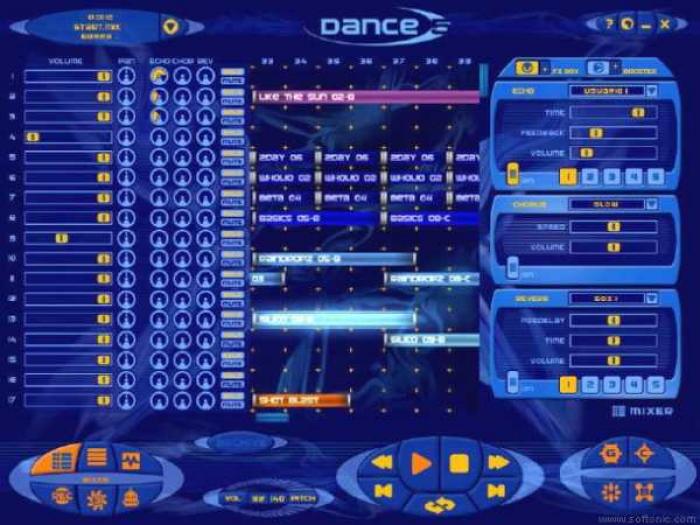
Yo, check this out. Imagine the lifestyle of DJ Armin Van Burren. Young. Talented. Blond-haired pretty-boy. Behind a turntable in the middle of a show, he’s the center of attention. Everyone’s attention. Yes. Including her. eJay was a leader among a handful of games that allowed users to compose professional sounding EMD tracks that could be shared.
Now, you’re him. You’re rocking the set at an outdoor venue somewhere in the French Riviera. The warmth from the early summer sun still bakes off the sandy beach as you step onto the stage. All you smell is the salt of the Mediterranean Sea, and suntan lotion. Lots of it. Like the one she’s wearing. The honey out front, who’s just about to groove to the beat you provide her and thousands of other revellers. Just as you set the needle down, the crowd sparks to life. You throw up your hands as the synth sound starts to rise to a crescendo of electronic bliss. You give a look to that honey with the mocha-latte skin, the ends of her curly chestnut hair gently brushing off her shoulders as she moves with anticipation. But, all you can think about is dropping that dope-nasty bass….
Wait. What? You just described this amazingly hot girl, and you can think of nothing but “dropping a dope-nasty bass?!” Nothing’s been “dope,” let alone, “dope-nasty” since the 20th Century. Not sure anything’s been dope-nasty at that. But, okay. Just, listen. Just, keep reading. Okay?
Generations- technologically speaking – before Activision published DJ Hero (2009) for the gaming console, another game provided would-be Armin Van Burrens a creative outlet for the personal computer.
To describe it as a precursor to DJ Hero may be misleading; but, than again, DJ Hero didn’t quite utilize records and true turntables either.
eJay started off as a Window’s based game for the personal computer back in 1997. To snap things into proper prospective, Nintendo and SEGA were still locked into fierce competition for console sales. SONY and Microsoft were too wet behind the ear to be taken seriously. And, serious, high-end graphic based games were still played on personal computer.
ejay was not a graphic marvel, but provided a lot of punch as an interface for the music lover to start producing music. Users immediately started off on a fresh canvas that consisted of several layers, by which blocks of sound tracks could be placed. The end product would resemble something of a constructed building, so literally, the track was built brick by brick.
Sound clips of one- to five-seconds in length would be organized, first under a handful of different sub-genres of EDM – Techno, Hip-Hop and so on. From there, you could choose from a variety of sounds for percussion, rhythm and vocals. With practice and developed talent, it wasn’t uncommon to wind-up with a professional sounding track worth sharing with the world.
The eJay series enjoyed a successful run before closing shop in 2009. But, before falling victim to the crash of the global economy, according to one UK newspaper, it was the go-to game within a genre that was slowly building into popularity. Keep in mind, EDM was a movement most popular in Europe in the 1990s, and slowly migrated to the United States through metropolitan megalopolises like New York City and Los Angeles. By 2009, console games were more the rage, and DJ Hero was born.
Despite it’s demise more than five years ago, eJay still has a devoted following on the Internet and a Facebook Page that is still relatively active. From the fan page, one can still sample tracks created by gamers or artist. And, if you are such an artist, you can upload your work as well.
Search the web for eJay and see what magic can be captured. If you’re lucky enough to find a program, perhaps then you too can imagine yourself as Armin Van Burren in the French Riviera.
Despite several non-heady forces: A red hot Syracuse basketball team playing, sub-zero wind chills, and a liquor license-less venue; Rochesterians turned out en masse for the electro-jam instrumentals of Philly based Lotus. Touring heavily behind their latest critically acclaimed release Monks, fans came from far and near to catch this rare Upstate performance of Lotus at Water Street Music Hall. Local DJ favorite Papi Chulo opened the night with his skillful genre hopping house infused DJ set that got everyone limbered up for the headliner.
Water Street, as many know, has been struggling to get their new liquor license for many months, and many shows have been canceled, rescheduled or moved. Despite the lack of delicious hops, this show was expertly staffed and it was a relief to see a packed show again in Rochester’s most history filled venue. Note to New York State: These unbelievably long, senseless bureaucratic delays for a simple license continue to cripple small businesses struggling to profit and stay open. Reboot this system and let’s get New York’s small entrepreneurs back on top!
By the time Lotus took the stage Water Street was elbow to hoop girl from front to back with a large contingency spilling upward into the balcony for some dancing room. Their sound, while definitely in the EDM genre, sticks mostly to old school influences with healthy doses of funk and hip-hoppy beats mixed within melodic keyboard battles and a dual-ax core. Beyond some occasional voice effects by guitarist Luke Miller, the songs are all instrumental, yet hold a distinct memorable vocal character to them that transcends many similar bands in the genre. No UntzUntzUntzDROP here, this is hypnotic organic dance music filled with timeless melodies. Unfortunately Lotus has no more shows scheduled in NY currently, but keep an eye on their tour page, as they’ll be back and you won’t want to miss it.
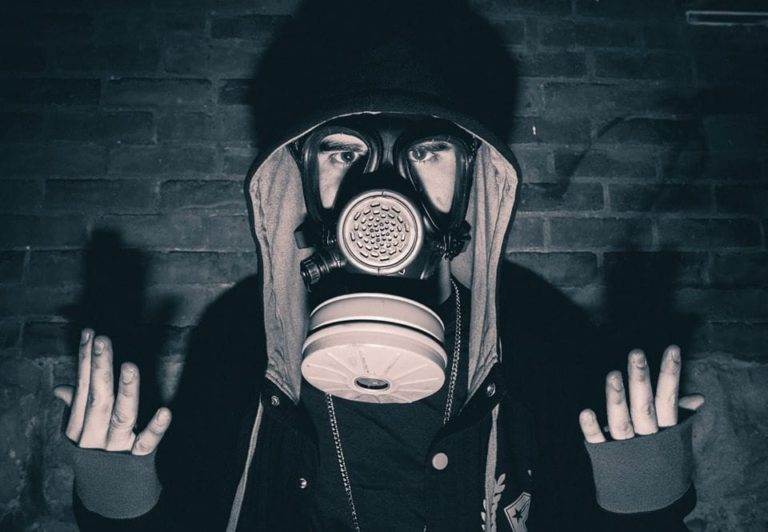 Some of the other guest on this tour will include ETC! ETC!, Kennedy Jones, Trolley Snatcha, Truth, Barely Alive, Bear Grillz, Fox Stevenson and Twine.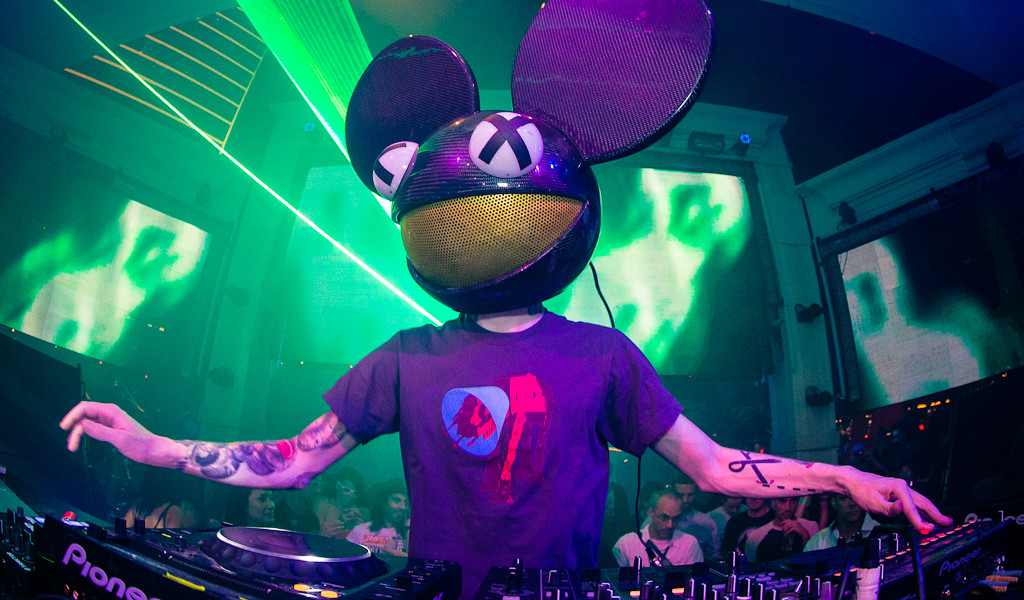
 The check in process was organized and it was immediately noticeable Great North had a bigger crowd than last year. Camping areas were full in comparison with the 2013 debut. Car camping was available to VIP and RV campers, otherwise off site parking required festival goers to hoof their gear in on foot or wait for a cart ride. Thankfully the parking lots were in close proximity so walking was manageable.
 Saturday
 Sunday
 Conspirator was one of the main highlights of the weekend playing a 2 hour set and releasing a ton of new material. The band played their new sound “Quick Sand” which had extremely low-key but solid jams that were unlike anything they have put out thus far. Conspirator does a fantastic job of balancing each other out musically on stage. No particular band member takes the spot light for overly extended periods of time, and the entire band plays off of each others energy to create a phenomenal balance and stage presence. The entire set was leaning more on the jam side than their usual heavy-electronic sets, but still they included their classic sound of synth and bass oriented jams.
 Surprisingly, the tent during the Abakus set was next to empty with just a handful of die hards dancing intently throughout the small stage area. This is a shame as this was perhaps one of the most phenomenal electronic performances of the evening. Abakus played a set blending acid-house, electronic and trance that showed why Abakus has accumulated the amount of respect he has within the time he has spent at music festivals.
 The Canadian electronic trio Keys and Krates packed the dance tent and blew the crowd away with a spectacular, high energy performance. They played a few new songs which seemed to settle well with the crowd, as well as their fan favorites “Dum Dee Dum,” and “High All the Time.” The Sky Net Stage lit up the night deep in the woods of Stephentown with a smaller set up and psychedelic decor. Cosmal, Ali Laz, and B.A Dario made for a great closing of the evening drawing the crowd away from the main concert stage and into the woods until the late hours of the night.
 Mysteryland allows its guests to become part of a truly interactive environment, not knowing what exactly is going to happen next. You can meet people from the same place that you’re from, or from the other side of the globe. You can hear new music from acts you might not have heard of, or you can check out a favorite performer in a unique new setting.
 Dancing under the tent of the Camping Circus stage Friday night provided a small preview of what was to come for the weekend when the festival officially kicked off on Saturday. The featured performance Friday was the official pre-party, Nicky Romero Presents: Protocol NY Reboot. Even in the cooler nighttime air, the dance floor under the tent got hot and sweaty as you moved towards the center of the crowd, and standing at the edge of the tent you could observe a noticeable difference between the ambient temperature and the heat generated by the party inside, moreso when the breeze picked up. The BangOn! NYC Boombox Van was parked not far from the Circus tent and played music into the night after campers had returned from the main stages, adding an extra dimension of sound and activity to the atmosphere in Holy Ground. I enjoyed John Dahlback and Don Diablo before Nicky Romero took the stage for a great high energy set, which turned out to be a good example of how his set would go on the Main Stage the next night.
 On Saturday, I finally got to see the main festival venue. On the way in I took a small detour to visit the monument commemorating the 1969 festival. It is located past the main gate and looks towards the site of the stage and the field that the fans watched the show from. This field was decorated with many rows of flags and was named the Ceremony Field at Mysteryland. At the front of the field were several teepees, a fire pit, a small stage and a dancing circle. The official opening ceremony was held here, and featured members of the Red Hawk Council, which represents first nations and indigenous people of the Americas. The ceremony began with traditional native drumming and chanting.
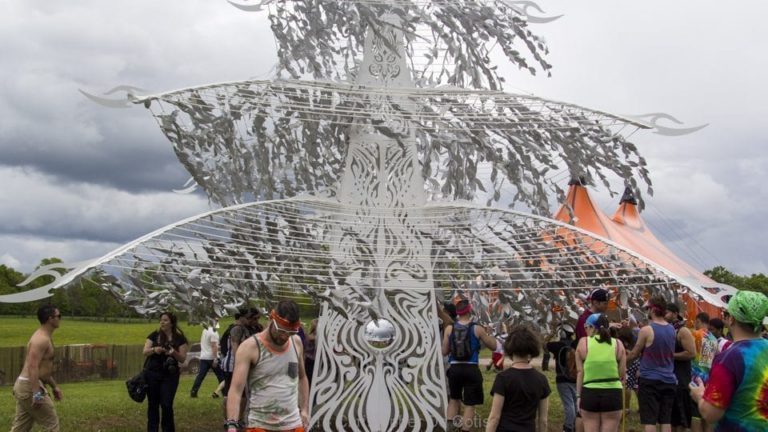 There was so much to do and see here that it was truly overwhelming. Once the music starts, one quickly realizes that they can stay at one stage for most of the day and experience the type of music they enjoy most. The tent stages – Big Top, The Sound of Q-Dance, and Spiegeltent were all full of people dancing and enjoying the sounds of pop, electro, hardstyle and experimental house. Like the Camping Circus stage, the Big Top and Q-Dance stages were under large tents. The Spiegeltent was a traditional Dutch portable venue constructed mostly from wood, and being inside it actually felt like being inside an actual building, which was unique here at Mysteryland.
 The Vinyl Only stage was tucked into a stand of trees, and had an open air DJ booth at one end of a synthetic dance floor surrounded by stage rigging decorated with vinyl records. There was a small pavilion behind it that had many disco balls hanging from its ceiling. I really enjoyed this stage for its steady blend of house music.
 Big Gigantic closed the Boat stage on Saturday. This was an open air stage in front of a small slope. The whole facade of the stage was fabricated to look like a sailing ship. The DJ booth appeared to be in the cabin in the center of the ship, and there were several pairs of large butterfly styled sails rising above it. Dance platforms were located on both sides of the DJ booth for those with backstage access. Big Gigantic was one of the most unique acts here because they use live instruments – drums and a saxophone – to provide rhythmic and melodic textures over a base of electronic sounds with styles ranging from jazz to hip-hop to dubstep.
 Kaskade closed the Main Stage on Sunday. This stage was styled as a house of cards in an Alice in Wonderland theme. The DJ booth here was in a ML cutout in the center of the stage, with five towers of cards rising around it. The central tower was the tallest and featured a clock face at its top. All of the hour markers around the face of the clock read ‘NOW’. The finale at the end of Kaskade’s set was fantastic. After more than ninety minutes of driving electro with elements of pop, trance, moombahton and more, all of the lights within the card towers were flashing and pairs of laser lights were tracing multiple layers of colored wedges through the smoke above the crowd. And then the fireworks started. Small rockets were launched from within the crowd on the field in front of the stage, slicing through the layers of smoke and lasers and exploding in the sky above the festival. More fireworks were launched off in the distance to the left of the stage. The launching, whistling, expanding and exploding were all choreographed to the music and a farewell monologue to the guests of Mysteryland, reminding us that yesterday is history, today is a gift, and tomorrow is a mystery.
 Mysteryland USA 2014 was presented as well as or better than most debut festivals. The rainy weather leading up to the festival contributed to some delays and under-performance of some of the technical and logistic aspects of the event, but on the whole the vibe was fun and positive and the music and art created an environment shared by more than 20,000 people for two days that really took you away from the day-to-day world. ID&T is already planning another Mysteryland festival for Memorial Day weekend in 2015 and is hoping to make it an annual event. I look forward to spending a few short days at Mysteryland in the future and finding it better than when I left it.


 Big Gigantic. Chase & Status. Zomboy. Paper Diamond. Bro Safari. These acts are being featured on The Boat (the kids call these sounds ‘bass’ and ‘trap’). Dillon Francis + Flosstradamus, performing together for the first time as Dillstradamus, will close The Boat at Mysteryland USA 2014.