The venues we see music are more than just a place to congregate to experience concerts and performances. The work that goes into architecture – into designing, creating and building these venues is a lengthy process that spans years, well before patrons take their seats or find dance space to enjoy the sound. Architects, engineers and consultants contribute to the development of the overall sound, acoustics and open space that factor into the finished product – a music venue with, in more and more instances, incredible acoustics and sound.
In this, the second part of ‘s look at the Architecture of Sound and designing of music venues, Editor Pete Mason spoke with Mike Wildman, Principal and Architect at Wildman Architecture PLLC, AIA, NCARB, LEED AP BD+C. A graduate of the School of Architecture at Syracuse University, Wildman spoke with Mason to discuss the ‘how’ of music venues and acoustics as the latter grows in importance throughout the design and construction process, with a particular focus on music venues of New York City.
Pete Mason: When the design process for a music venue begins, what factors are brought into play initially for the rest of the design to build around?
Mike Wildman: When it comes to the design of any space no matter the use, there is always a “main” element to be the focus of; the key is to first determine the best location, orientation, form, etc…, or in my experience to do the exact opposite and almost ignore it until the end so it becomes a puzzle to be solved rather than catalyst for the rest of the project. Regardless of the path chosen, design should never be done in a vacuum where you lose sight of the rest of spaces that are important. For example, a great sounding music venue would be useless if there was no viable entry sequence to get to the performance space or the sound control room and wiring were not done correctly and most importantly, form and shape aside, that the finish material used did not properly move the sound from the source to the intended destination.
 PM: How are acoustics and the flow of music built into the design in a way that does not affect the overall structure of the building? How can acoustics be worked into a building without making the overall structure unappealing, or worse, unsafe?
MW: This is twofold, as the best sounding music venues grew out of simple clamshell forms that hundreds of years ago were carved into the earth and slowly became surface elements like those found throughout Europe and eventually the Americas, to finally the modern day building form where the “clamshell” is engulfed within the structure. This encompassing of the form can either be visible or hidden.
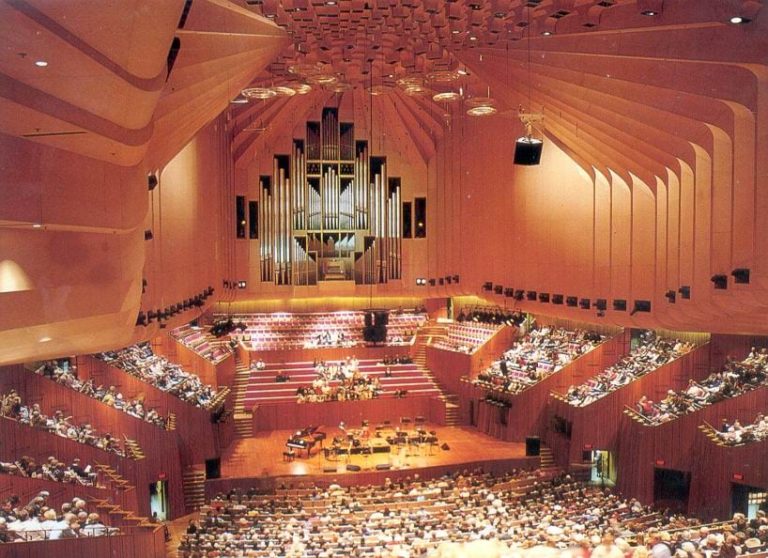
 Take for example the Sydney Opera House, where you can see from the exterior the curved shape of the interior space to move the sound, whereas with Radio City Music Hall you couldn’t even tell where within the building the main stage and theater was; both are incredible examples of acoustical masterpieces where you literally can hear a pin drop. There is even the middle ground which can be experienced in the renovated Lincoln Center in New York City. Here you cannot see the form of the music space in its purist form as in the Sydney Opera House, but in the area of the building that does house the theater the architecture changes and you can tell where it is unlike Radio City.
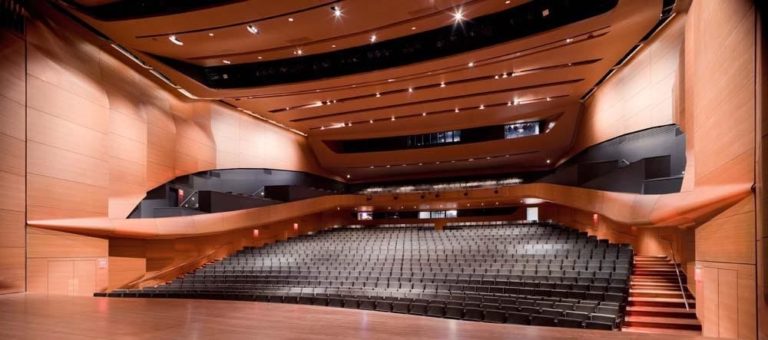
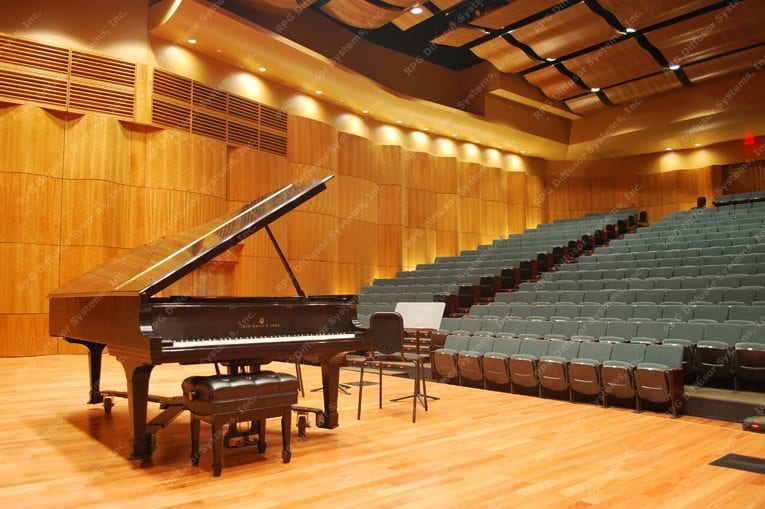 The last piece of the puzzle is finish materials used for acoustics, hard and soft surfaces and how they “reflect” the sound waves around. Movie theaters tend to have softer fabrics as they have a single main sound source and do not want echoing because the sound is mechanic, so the soft fabrics deaden the sound waves rather than bounce them back. Live performance spaces tend to have harder materials so they move the sound around but this must be calculated as the waves will intersect each other. This is where physics gets into the equation, causing waves to cancel each other out, cause delays or even echoes. Have you ever wondered why when watching a major sports event on TV the singer performing the National Anthem doesn’t seem to be moving their lips to the words you are hearing, why they are wearing sound canceling headphones or even lip syncing? This is because sound moves slower than light which is what is transmitting the sports event to your TV and the stadium or arena they are performing in was not designed for live performances like that, so they can be hearing their own words seconds after they say them bouncing back into their ears after traveling through the entire complex.
PM: How long does the process for designing, drafting and building a music venue take, in years?
MW: For starters it depends on the size on complexity of the venue in question as well as the budget for the project. A general rule I always go by is anything will take longer than your think to design and get to the construction phase and far longer to build than ever planned or estimated.
PM: When it comes to the process of designing a music venue, what would surprise music fans the most?
MW: Not realizing that the design of a music venue is much more than its form and shape, that all the support spaces and materials are equally as important to the outcome. This is not the same as some other architectural forms, say a house where better materials typical mean better house in the terms of size or location or price because at the end of the day the toilet should still flush. In a music venue, improperly designing and accounting for the sound that the mechanical system makes or using materials that alter the wavelengths of the sound to be heard can literally destroy a place to the point of unuseability.
PM: Considering the great many music venues in America what are some of the best venues for sound and acoustics, that you have come across in your experience?
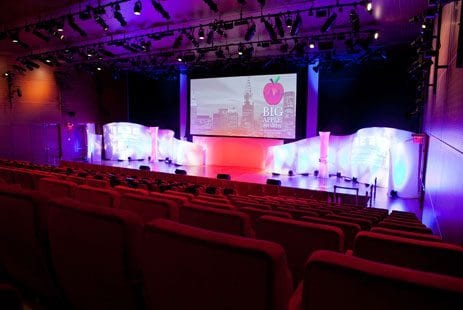
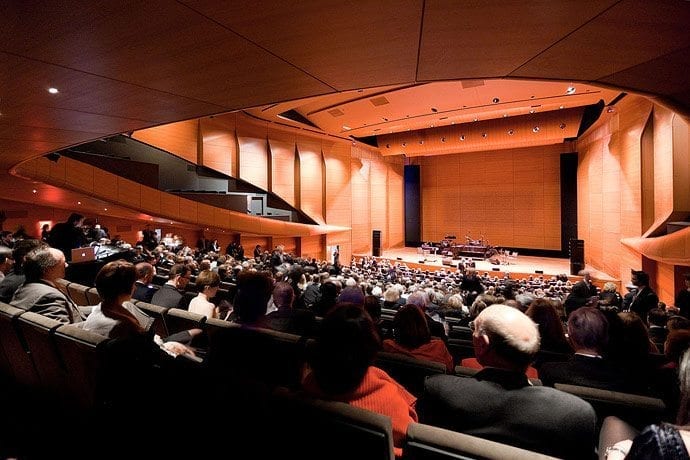
MW: It’s funny as you mention yours and my beginnings in Syracuse and ask for a possible Syracuse spin on this, I am drawn to the memories of “Dome Stomping” around the perimeter of the Carrier Dome. Obviously that is not a music venue but a truly amazing example of a space’s ability to reflect, enhance and move sound. As far as places I have been that have been great venues; the above mentioned Lincoln Center and Radio City for starters as well as the counterpart to Radio City, The Beacon Theater. Additionally I have fond memories of traveling through Europe and experiencing the technology of moving sound in places that are ruins and hundreds of years old. But the most amazing place I have been to, and this was only for a spoken word presentation and not a musical performance, was The Times Center, which is the theater at the New York Times Building in Times Square. What amazed me most about this room was that is was a fairly decent size and the presentation was for multiple hours with multiple presenters going one after another but not one of them used a microphone and you heard every word. To me this was more impressive than if it was a musical performance because odds are, just speaking was done at a lower volume than if someone was performing music. I was impressed by the “architecture” and coordination of everything that had to go into that room.