Author: Pete Mason

  • Rock n Roll Resort and Hoplite Present: Turkuaz’s First Annual New Year’s Eve Extravaganza: The Ball Drop

    Wicked Cool Productions and Hoplite announced this week a New Year’s Eve gathering of friends, family and eclectic, high energy artists to ring in the New Year at the Hudson Valley Resort & Spa in Kerhonkson, NY, the home of Rock n Roll Resort events. This one-day Winter festival/slumber party, hosted by Turkuaz finds the band and promoters have packing the 27 hours between doors on 12/31/14 and check out time on 1/1/15 with a broad range of music spanning multiple genres and the most user-friendly situation possible. Fans are offered many room, meal, beverage and VIP plan options, all adding up to a very special gala affair of great music, dancing, food, libations, festive attire, costumes, mirth, and likely a bit of mayhem.

    Check out ‘s past coverage of Rock n Roll Resort over the years.

    The Ball Drop is based on the concept of Rock n Roll Resort, a unique, intimate music experience designed by fans for fans and quickly becoming the ultimate music destination event for the festival lifestyle set. Rock n Roll Resort’s rising popularity is in many ways tied to the ideal setting of the Hudson Valley Resort & Spa, an expansive, inviting and intriguing grand resort nestled in Shawangunk Mountains of New York. Just 90 miles from New York City, the Hudson Valley Resort & Spa is sited on 400 wooded acres adjacent to Minnewaska State Park and surrounded by gorgeous Catskill views. Guests can enjoy the fitness room, arcade centers, jacuzzi, sauna and steam rooms, heated indoor pool, on-site shopping and more.

    The lineup for The Ball Drop was put together with Hoplite and Wicked Cool Productions, featuring Brooklyn-based funksters Turkuaz; The Primate Fiasco, who will kick off the event; Mister F, who bring live electronic beats with force; the roots-reggae-punk sounds of Western Mass’s Danny Pease & The Regulators; Spiritual Rez, who bring an incredible reggae/ska/roots sound that is full of energy; Manhattan-based “Middle Eastern Sci-Fi-Fusion” band, Consider The Source, and finally Tauk, with heavy instrumental rock fusion to usher in the first morning of 2015.

    Room packages, VIP Rockstar passes, and NYE tickets go on sale October 15th at rocknrollresort.com

    For more info on the performing artists, please visit rocknrollresort.com

    Rock n Roll Resort | Facebook | Twitter | YouTube
    Hoplite | Facebook

  • Hugh Masakela and Vusi Mahlasela Celebrate South Africa at The Egg

    On a night celebrating 20 years of a free South Africa, The Swyer Theater at The Egg played host to a once in a lifetime show – Hugh Masakela and Vusi Mahlasela performing South African selections in an intimate setting.

    To start the night, Vusi Mahlasela took the stage alone, playing “Ubuhle”, a speedy bike ride after a slow climb on a guitar that sounded like a harpsichord with a hint of sitar. Joined after by Francis Fuster (percussion), Ian Herman (drums), Bakithi Kumalo (bass, who, along with Herman and Fuster kept a consistent beat throughout the night), Mongezi Ntaka (guitar) and finally, Hugh Masakela, the audience rose up to thunderous applause and welcomed the sound of South Africa to the stage.

    Ubuntu, translated as ‘humanity towards others’, was mentioned for the first time this evening, prior to the song “Meadowlands”, featuring a jazz groove, Vusi’s vocals and Hugh’s trumpet. Hugh then spoke about how much of a privilege it was to play in Albany, and thanked Albany for their role in the anti-apartheid movement, likely referencing the 1981 protests against the South African rugby football team who came to Bleeker Stadium to play against a local club. Nods and rumbles of agreement echoed through the theater, as Hugh told us that tonight we would hear songs of love, protest, tradition, and revolution

    The legendary Mama Africa, Miriam Makeba, had her name invoked prior to “Thanayi”, pointing out that some form of beauty was to be found within all of us. Hugh performed in Troy, NY in the mid-90s with Makeba, a memorable experience that more than a few audience members chatted happily about in the theater lobby before and after the show. The cowbell intro to “Grazing in the Grass”, the most easily recognizable of the night’s songs, highlighted the trumpet once again as Masakela performed double-duty between the two instruments. “Weeping”, containing the melody from “Nkosi Sikelel’ iAfrika” (the South African national anthem at a time when South Africans could not sing their own anthem under apartheid), was one of the more passionate and emotional songs of the evening. The lyrics reference moving past the anger over apartheid, rather than seek revenge after years of injustice:

    It doesn’t matter now / It’s over anyhow / He tells the world that it’s sleeping / But as the night came round / I heard it’s lonely sound / It wasn’t roaring, it was weeping

    As Masakela said early in the evening, “Forgiveness – all men should wear it like a crown.”

    The show continued with “Say Africa”, an active crowd sing-along; Johnny Clegg’s ode to Nelson Mandela, “Asimbonanga”, clearly a more emotional and life affirming song for Hugh and Vusi, followed by “When You Come Back”, which told the story of the gold trains that traveled from countries in south and central Africa to Johannesburg, bringing miners to work 16 hour days. Hugh imitated the train whistle and screech eerily well, the tone of his voice and the threatening pace of the beat conveying the passions towards the exploitation of labor.

    Naturally, the final songs of the evening would be more upbeat, and with Masakela saying to the crowd “Shake your bootie for all those old geezers” (a reference to Mandela and those he was sentenced to life in prison with), the crowd rose up and danced, waved their arms and sang “Bring him back home to Soweto”. For the final ten minutes, there was nonstop music, dancing and band introductions. An encore of “Pata Pata” was prefaced with an apology from Hugh, “Sorry, but you have to stand up and boogie harder”, the band singing “Dance, dance, dance, what a party!” and sending the crowd out with broad smiles and beaming with energy.

    Professing the philosophy of Ubuntu throughout the night, Mahlasela and Masekela mentioned its many elements – love, helpfulness, neutrality, variety, and the redistribution of morals, knowledge and skills – throughout their music, a common theme that tied the night, audience and band together. 

    Hugh Masakela and Vusi Mahlasela Setlist: Ubuhle, Meadowlands, Thanayi, Miyela Afrika, Grazing in the Grass, Weeping, Say Africa, Asimbonanaga, When You Come Back, Stimela, Bring him back home, Unomeva

    Encore: Pata Pata

  • Gov’t Mule Announces New Years Eve run and Vault Releases

    Gov’t Mule will spend their New Years run in New York City at The Beacon Theater on Dec. 30 and 31 and swing down to Philadelphia for two more shows on Jan. 2 and 3 at The Tower Theater. On New Year’s Eve, Mule will be joined by Myles Kennedy for a potential night of AC/DC covers, given the artwork below and Kennedy’s vocal potential.

    On Jan. 2, Cabinet and Ron Holloway will join Mule, and sax legend Bill Evans will join the band on Jan. 3. Tickets are on sale for the Beacon shows Friday, Oct. 10 at 12 noon, while Tower Theater tickets are on sale Friday, Oct. 17.

    In addition to their four-night New Year’s run, Mule will also be releasing four vault releases:

    Stoned Side of the Mule: Volume 1 releases exclusively on vinyl on Black Friday, Nov. 28 and features seven Rolling Stone covers from Halloween 2009 at The Tower Theater.

    Dark Side of the Mule, will release on Dec. 9, including 90 minutes of live Pink Floyd covers. Recorded on Halloween 2008 at The Orpheum in Boston, this release will be available as an album, an album/DVD package or double vinyl.

    Dub Side of the Mule, to be released in early 2015, will feature reggae songs with reggae legend Toots Hibbert of Toots & The Maytals from Mule’s New Year’s Eve 2006 show at the Beacon Theatre in New York City.  This release will be available as an album, an album/DVD package or double vinyl and features special guests Gregg Allman & Friends and John Popper.

    SCO-MULE, a long-awaited release that celebrates John Scofield’s teaming with Gov’t Mule as the band enters their 20th year. Details from the press release spell out the great potential for this live release:

    In late September of 1999, John Scofield teamed with Gov’t Mule, then featuring original bass player the late Allen Woody, along with keyboardist Dr. Dan Matrazzo, in Georgia for two legendary shows of mind-bending live prowess. Both shows were recorded and included the Mule’s first-ever all-instrumental sets. The band had begun preparing the music for eventual release while working on their third studio album Life Before Insanity. However, less than a year later, their beloved bassist Allen Woody passed away, setting the Mule on a different path. The idea of releasing SCO- MULE came up over the years, but the timing was never as right as it is now – helping to mark Gov’t Mule’s 20th Anniversary. While Scofield and the Mule did reunite briefly for a set at Warren Haynes’ 25th Annual Christmas Jam in December 2013, fans have been clamoring for the return of the project ever since those lauded 1999 shows, and for more than a decade the Mule have been eager to share the music from these shows through an LP. Now for the first time, fans can experience the SCO-MULE magic first-hand in album form, newly mixed and mastered. The 3-hour all-instrumental album is a jazz romp laced with rock riffs and will be available as a 2-CD set as well as a double vinyl.

  • The Disco Biscuits to Release ‘The Classical Set’

    The Disco Biscuits are easily classified in the genre of EDM or Livetronica, but their classical roots are apparent in their extensive compositions such as “House Dog Party Favor” and “Hot Air Balloon”, and form the backbone of the band’s sound. On August 16, 2003 at TranceMission festival in Trade, TN, The Disco Biscuits played a set composed solely of famous classical pieces of music and some original Biscuits songs.  Now, for the first time, a remastered show is available for download and vinyl, The Classical Set.

    disco biscuits classical setKeyboardist Aron Magner recalls “I vividly recall the band tearing through the sheet music of the conductor’s score and crafting our own unique four piece orchestration that still stayed true to the written music. Though we have played some of these songs very rarely over the years, this is the only time we have performed them as one complete set, and that fluidity made it an instant fan favorite since the day it was first performed.”

    Mastered by Jon Altschiller (Wind at Four to Fly, Rocket 3, TransFusion Radio), and engineered for vinyl by Scott Hull, the vinyl edition is pressed to high quality, virgin 180g vinyl by RTI, Americas finest vinyl production facility pressing plant.

    A limited edition, four sided official release is set for November 28, and pre-orders are being accepted now that ship in mid-November. Included in the release is original artwork by Gwen AP, liner notes by Jon Lesser, a special bonus track on side 4, a download card redeemable for a free digital version of the album, and, for those who purchase via the pre-order before the end of October, a bonus item from our merch store.

    The Classical Set track listing:

    1. Eine Kleine Nachtmusik (Mozart)
    2. The Devil’s Waltz (Jon Gutwillig)
    3. Sabre Dance (Aram Khatchaturian)
    4. The Thieving Magpie (Rossini)
    5. The Overture (Jon Gutwillig)
    6. In The Hall of the Mountain King (Edvard Grieg)
    7. Waltz Of The Flowers (Pyotr Ilyich Tchaikovsky)

  • Film Review: Love is Strange

    The various capacities to love and the relationships that can contain love are explored throughout the film Love is Strange, an accurate film title if there ever was one. Directed by Ira Sachs, the film explores the bounds of love when distance of varying degrees is placed between two individuals.

    love is strangeBen (John Lithgow) and George (Alfred Molina) get married after 40 years together, once New York State legalized marriage equality in 2012. Soon after they return from their honeymoon, George is fired from his job as music director at a Catholic school, causing a disarray of finances, with Ben a retired artist, who has hair reminiscent of Bruce Dern in last year’s Nebraska. Without money to afford their apartment, Ben and George have to rely on separate family and friends to provide them with temporary accommodations, after decades of being together. With their living and lifestyle fundamentally changed, these two men in their 60s and 70s face a difficult transition as they adjust to their loved ones who welcome them willingly into their lives.

    George takes up at the house of two gay cops, who introduce George to Game of Thrones, have party nights (a little too often, even for cops) and leave their guest without a place to lay his head some nights; he is treated as a peer and not a recently fired school teacher in his 60s. Ben meanwhile takes up with his nephew Elliot (Darren E. Burrows), his wife Kate (Marisa Tomei) and their teen son Joey (Charlie Tahan), with whom he shares the lower bunk in his room. Relationships develop under extenuating circumstances for all involved, as both Ben and George are all but imposing on their friends and family, left with no other option but to rely on their loved ones, for they are quite homeless without them. Thrust into family situations – arguments, work and parenting aspects – Ben has to mind himself, and does so at times but at others interrupts the work and daily life routines of Joey and Kate in particular. Even when presented with the option of government assistance to find housing doesn’t seem to pan out for them, and with only a niece in Poughkeepsie as an option, a true lack of income and shelter makes the reality of the situation even direr and ultimately heartbreaking.

    With a soundtrack full of selections from Chopin (most notably Chopin’s Nocturne No 8 in D Flat Major Op 27-2 in an emotional scene between George and a student), Alfred Schnittke and Henryk Wieniawski, the mood of the film is kept hopeful, never dark or foreboding. Even while Ben and George are getting on with their respective lives – apart, for the first time in 40 years – they show signs of separation and the physical and emotional toll that it takes upon them. George looks sad and dejected while Ben looks distant and finds a muse in his art – beginning a painting of a lone teen standing on a rooftop on the Upper East Side. In one of the limited scenes Molina and Lithgow share together, George makes his way across town to see Ben, and following a tearful embrace, take over Joey’s room, splitting bunk beds. Eventually, separated by mere feet, Ben says to George, “I missed your body next to mine and I won’t let bad engineering get in the way”. Of all the moments in the film that exemplify love, this is one of the truest moments.

    Love is Strange portrays the many various ways that love is unique, odd and strange, amazing and beautiful, separately or all at the same time. Through the numerous relationships that develop over the course of the film, we see connections between characters are various levels – friends, family, spouse, co-worker and student – each demonstrating a different facet to the grand scope of love. While love is strange, Love is Strange is a fantastic romance film set in a present day reality that is accessible and moving.

    Love is Strange is rated R. 

  • A Sound Man – An Interview with John Chiara

    The role of the sound engineer is overlooked during live performances, with attention given to the musicians performing on stage and the product of the lightning designer’s illumination. Having good sound is an important component to the live music experience in tandem with these two, and a factor that can ruin a show experience without the proper attention or sound engineer behind the board. Local sound engineer John Chiara from Albany Audio sat down with and provided insight into the local Albany music scene, hinted at what it would take for a potential new venue in the Albany area, and the challenges that are presented in running a sound business.

    Pete Mason: Growing up in Upstate New York, what was the first music that piqued your interest?

    John Chiara: I grew up in Amsterdam. I used to see bands like 805, Dove, and lots of Western NY show type bands so I developed a liking for high production acts even in the club scene.

    PM: How did you first get into running sound?

    JC: My first band had one microphone. I became the singer and the sound engineer at our first rehearsal! We purchased a solid state Bogen 3 input mixer/amp and 2 4 x 12″ column speakers with Paisley grill cloth.
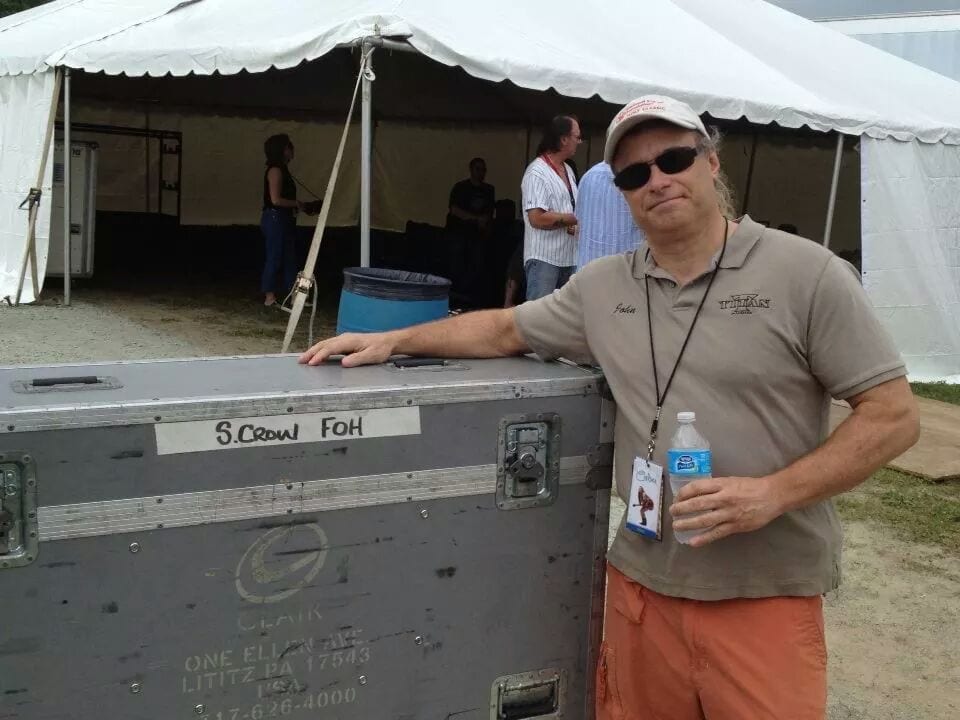
    john chiaraPM: Over the past decade in particular, how have you seen the music scene in the Capital District rise and fall and rise again? Is it rising again?

    JC: The scene has not been great since the late ’80’s. Most kinds of original music are not very actively supported by fans in the local bar scene. A few genres have ‘survived’. The hardcore bands pretty much support themselves, meaning that most band members actively attend other shows and can produce enough revenue to keep bands working, even though the actual audience makes up a very small percentage of the club going public. The Jam scene is really the only one that functions somewhat normally, meaning there is a structure that a local band can get into that allows them to profess from local to regional, and hopefully beyond.

    Music mainly happens in restaurants so it usually is not the top priority for owners. Therefore they seek out less expensive and less risky options. Local party bands dominate for those reasons. Seeking out original music is not that popular so original bands, which are necessary for any real music ‘scene’ to exist, are not encouraged or rewarded and become a tough sell. I believe that a locally subsidized venue is necessary to revitalize the local music business. I have been working on this but right now the process is stalled until 2015.

    PM: What issues does the Capital District face in trying to open up new music venues? Will we ever see a venue akin to the former Revolution Hall?

    JC: The overhead of a for-profit music venue is pretty much overwhelming unless an investor gets involved for the sake of the music, understanding that it will take many years to establish a reliable reputation and clientele. Club Helsinki in Hudson is a good example. While not exactly a rock venue, the fact that they spent literally millions on the building, which may never be recouped, and host national acts show what’s needed to be competitive.

    Revolution Hall was a unique situation, with me taking all that risk and while a great place to see shows could not generate enough profit to survive on its own, at the end it was actually at a place that I believe could have turned profitable, but ownership changes pretty much destroyed that possibility.

    PM: In what way are sound guys a critical component to putting on a full live music experience, in a way that might not be obvious to fans?

    JC: In my opinion, the ‘sound guys’ should be the most important and valued component of a live show as they are in direct control, hopefully, of what gets presented to the audience. Their first job is hospitality to the performers and making them feel comfortable so they can put on the best show possible. After that, they are supposed to then ‘perform’ themselves and contribute to the ‘magic’ of the performance.

    A little aside here: this is what I see lacking in most performances, both local and national. I can’t count how many shows I attend and walk away thinking “Wow, the lights and video were really together and well done and the audio was, meh.” It’s a different skill set. The lighting and video can all bed pre-programmed to look and move in predetermined ways, but lived audio cannot, so the mixer must ‘perform’ as well. Most bodies behind the mixing boards got there because they were loyal employees that showed up on time and worked hard, .valuable traits but has nothing to do with having the knowledge and skills to mix music. Kinda like rewarding the busboy for 5 years of service by making him the  Head Chef! I offer classes and private sessions to teach these skills at all levels.

    PM: What bands that he has seen grow from the local scene into having the greatest potential?

    JC: Phantogram, Eastbound Jesus, Sean Rowe, The Chronicles. I am sure there are others. Success is mostly determined by a good plan, ability and willingness to work endlessly, travel, work with good managers, booking agents and promoters, and being flexible enough to adapt to changing possibilities.

    PM: How did your sound business develop over time and what venues do you most enjoy running sound at?

    JC: My sound business grew into Revolution Hall out of necessity. I have worked for other companies on and off over the years. I started a portable sound company a few years back and quickly found the local market. The musician side of the market was completely saturated and because of that no one was charging enough for actual sound gigs to generate enough to make it a profitable business. Most companies also do online sales, installations and other self contained projects that subsidize the actual live show work. While this makes sense financially for the business it is also a contributing factor to the overall, in my opinion, low quality presentations at local live shows.

    I was not successful because my skills, making the music sound great, did not fit into that type of business plan, as crazy as that sounds. My explanation for this is a form of ‘trickle down’ skill sets. If the company owner is not an expert at certain skills, he probably will not value them as highly as someone who is.  I am often asked what I think about live shows I attend. I explain my visualization of the situations like this. For me, it is like The Terminator, where there is a little checklist that comes up in my left eye and things get checked off as being good or bad. I can identify, in order of importance, what changes will make the most impact of the result. This overview comes from doing nearly 5000 shows and pretty much seeing it all and understanding what works and what doesn’t. I assume a chef eating at a new restaurant does the same thing. He tasters the dish and immediately rifles through all that ingredients in his mind and evaluates what needs to change. The hard part is when the cook in the kitchen only knows about using salt and pepper and the concept of a cupboard full of spices is lost. My experience tells me that even the use of salt and pepper is enhanced by knowledge of the other spices.

    PM: What makes running sound for shows a rewarding experience?

    JC: Having the performers and audience members enjoying a great experience. I have had some great shows lately that were greatly appreciated by all involved and resulted in others requesting training from me. Usually this comes from less experienced techs who actually realize the value of advanced knowledge. Their perspective is enhanced by the fact that they are not worried about job security so they can be honestly curious and willing to learn. I am lucky to do a wide variety of different kind of acts, and I believe that getting a gig doing sound for popular local cover bands, while overall financially viable and predictable, is a great recipe for stagnation, with no real pressure to improve your skill set and get progressively better at the job; kind of the ‘cubicle’ job of music mixing! Revolution Hall was great because I got to mix all kinds of stuff in and environment that I had control over. I could eliminate variables and concentrate on the music and performance. Most gigs are predominately making sure the gear gets set up, works, and that nothing breaks! Not exactly a creative environment!

    PM: What are your favorite places to go for shows?

    JC: I like the big theater at Proctors. I mixed a show there in August and it is a really good theater setup.

    PM: What influences had the greatest impact in your understanding of sound and sound mixing?

    JC: My main knowledge source is studio work. I read all the time but without the studio to actually practice what I learn, I would not be as comfortable and willing to take chances in a live setting. I try things live because I know from studio mixing what results should occur from certain actions. Most mixers who don’t practice their skills in a setting where they can check results will never push themselves. It really amazes me that the musicians all learn their instruments, practice their instruments, rehearse with the band, work on arrangements and parts, etc… and the person mixing the show, the person with direct control over how the performance is presented to the audience, usually never moves a fader except during a show! It really doesn’t make sense, but that is the norm. I think people think that the ability to comprehend a complex process, examine and judge all their variables of a live show, interpret how to put all these variables together into a coherent mix, in what is usually an inhospitable environment, is something that is just going to ‘come’ to them magically! I have NEVER seen an example of this! I teach private and group classes for live mixing and offer on site consultations and system service. This is a great starting point for bands running their own sound as well. Just email john@albanyaudio.com!
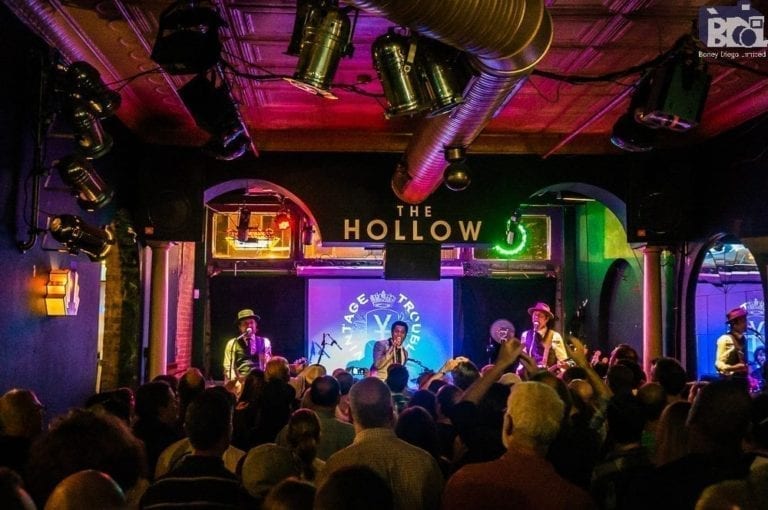
  • An Exciteable Crowd got into Vintage Trouble at The Hollow Bar

    With an energetic 60s rock sound and a crowd that gave as good as they got, Vintage Trouble put an impressive performance September 28 at The Hollow Bar in Albany. Amid The Swing House Sessions Tour, in support of their latest album, Vintage Trouble drew upon influences that spanned genres that developed in the ’60s, including Little Richard, Albert King, The Rolling Stones and Smoky Robinson as they put forth a powerhouse 90 minute show.

    vintage troubleLead singer Ty Taylor channels Marvin Berry (think Back to the Future) and his cousin Chuck, engaging with the crowd, who quickly became the 5th member of the band. Taylor has the stage presence of a 1960s band leader, and alongside Nalle Colt (guitar), Rock Barrio Dill (bass) and Richard Danielson (drums), put forth a sound that could have been made by another five or more musicians on stage – the sound was that big. “Low down Dirty Dog” had a rockabilly blues vibe, while “Pelvis Pusher” appropriately channeled Little Richard.
    Mixing the show up with some acoustic songs, the break served to drive the crowd’s attention to a couple of ballads that reeked of pain and loss. The song titles alone in this middle part of the show – “Never Mine,”  “Another Man’s Words,” “You Save Me” and “Still Always” could have been a part of a relationship exit interview. “You Save Me” was most notable for a Peter Gunn-esque bass line from Dill.  “Run Like the River” had a (likely) Hollow Bar first – Taylor walked through the crowd, found his way up to the small balcony in front of the soundboard and sang to the crowd a most energetic call and response.

    “Nobody Told Me” the ballad of the night, hinted at Smoky Robinson influence while “Strike Your Light” began with a tribal surf rock before moving into swing rock, giving a nod to Chubby Checkers “Twist” in both energy and music, leading to a college professor crowd dancing with abandon. The encore of “Total Strangers” found the band walking off the stage, once again through the crowd, serenaded by “Na na na na na na” capping an evening with a welcome surprise on a Sunday night in Albany.

    Setlist: High Times, Blues Hand me Down, Nancy Lee, Low Down Dirty Dog, Pelvis Pusher, Never Mine*, Another Man’s Words*, You Save Me*, Still and Always*, Lo & Behold, Run Like the River, Nobody Told Me, Tear Drops, Strike Your Light
    Encore: Total Strangers
    *acoustic

    On Facebook | Twitter | Website

  • Hugh Masekela and Vusi Mahlasela Celebrate 20 Years of South African Freedom at The Egg

    South African legends Hugh Masekela and Vusi Mahlasela head to Albany on October 7 as part of the Rhythm International series at The Egg. These two musicians are freedom fighters and renowned musical icons in South Africa and beyond, and this night they will celebrate the 20th anniversary of the end of apartheid with a special concert.

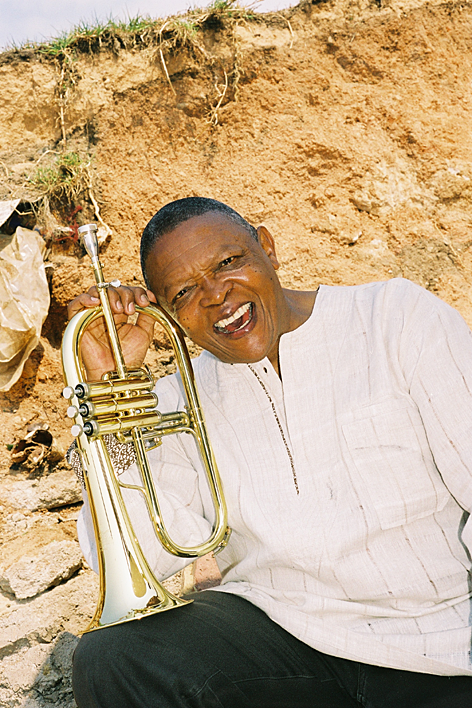
    Hugh Masekela Vusi MahlaselaHugh Masekela is a legendary jazz artist who hit the top of the pop charts in 1968 with “Grazin’in the Grass” and Vusi Mahlasela – simply known as ‘The Voice’ in South Africa – is celebrated for his distinct, poetic, and optimistic songs. Separately, they are two of the most powerful performers on the planet – and together a tour-de-force.
    Tickets are $34 and are available at The Egg Box Office at the Empire State Plaza, by telephone at 518-473-1845, or online.

  • Phish Big Cypress Midnight Set

    The largest concert to celebrate ringing in the year 2000 was held just west of Miami at Big Cypress Seminole Indian Reservation, and 75,000 Phish fans flocked to spend the last two days of 1999 with the Vermont quartet. Over the course of the those two days, fans were treated to bust outs (Light Up or Leave Me Alone), special guests (Seminole Indian Reservation Chief Jim Billie), a smoke filled “Mike’s Song”, a set-ending “After Midnight”, merely 5 hours before the band returned for a marathon 7 hour, 37 song set that ended at sunrise.

    phish big cypress
    photo courtesy of PhanArt

    Big Cypress stands out in the lore among Phish fans, and with 2024 on the horizon, a return to the hallowed grounds in South Florida is sought after by many. The festival marked the largest concert to celebrate the arrival of the year 2000.

    Fans have longed for a box set or official release of the footage from the weekend, and just yesterday footage began to leak of a pro-shot version of “Down with Disease” and now, an almost complete video of the first 5.5 hours of the fabled midnight set. Bask in the awesomeness of Phish at Big Cypress.

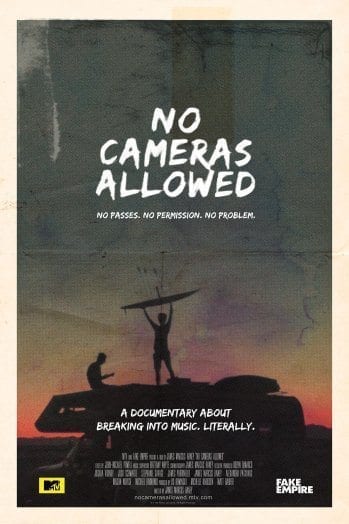
  • Film Review: ‘No Cameras Allowed’

    Sneaking into music festivals is a dick move. Artists and patrons pay to attend while vendors, staff and volunteers go to great lengths to make the festival run with as few preventable glitches as possible. And a (very) few try to attend without contributing either through money, performing or factoring into the machine that runs a music festival. No one wants to be glorified for sneaking into a festival, but James Marcus Haney thrusts himself into the spotlight in his documentary No Cameras Allowed.

    No Cameras AllowedHaney claims his film is “a love letter to these festivals, in a way. And it shows them in such a great light that my goal is that people will see my film and then go and experience live music on their own.” And while there might be some who are inspired to go to these festivals as a result, how many will follow his lead and sneak in, use old/fake wristbands and not support the artists by buying a ticket? It’s the hardest aspect of the film to get around – is Haney doing damage to future festivarians or is he just pointing out flaws that need to be patched?

    Along the way he gets to see some incredible music – some of it onstage and in the huddle before the headlining set (with Mumford and Sons) – and later goes on tour at an age that makes you envious of his youth and jealous of his opportunities. Sure I went to festivals at his age but damn he makes it thrilling and with the added degree of difficulty of greater surveillance, with which he gets away with it, usually.

    The film is a double-edged sword with breaking into festivals, and while it is not Almost Famous for 21st century, you do get some nods to the Cameron Crowe film. With a good soundtrack – Jay-Z, Young the Giant, Mumford – No Cameras Allowed follows a journey of a 20-something through the world of music festivals. Haney doesn’t set an example that anyone should follow, but it is interesting that only large festivals were the appeal. Sure, they have the big name, but smaller festivals not being shown is both a good thing and a snub. The best festivals aren’t always the largest names, and that is proved year in, year out. Yet showing how to sneak into festivals that live year to year on ticket sales and not extensive corporate sponsorships would have been a slap in the face. Overall Haney snuck into 50 festivals but we only see the large ones. It would be interesting to see what was left on the cutting room floor/recycle bin and what didn’t make the cut.

    We get to see Haney make his way into 4 large festivals – Coachella, Bonnaroo, Glastonbury and Austin City Limits, documenting them along the way and getting his photos into Rolling Stone while blowing off his graduation from USC to follow Mumford and Sons on the Railroad Revival Tour. The thrill is palpable and you may end up rooting for Haney, or maybe just surprised he got through security so easily, so many times and caught just as well. The relationships back at home are tested between friend and girlfriend.

    Is Haney a dick? Is he a millennial getting what he thinks he is owed? Is it just for the thrill or is it to show off on camera? Watch for yourself and decide.