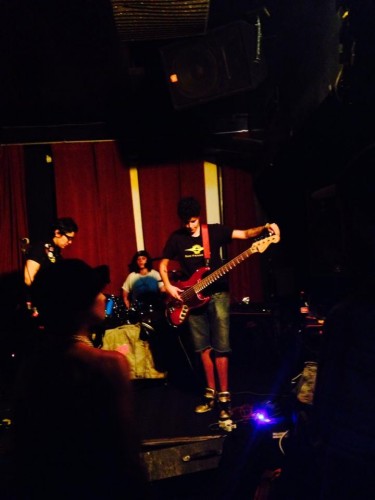
Note: the events in this article represent certain activities that might have been entertained by a young girl in New York, i.e. of the author’s general height, weight and build. She is aware that her Steely Dan obsession isn’t punk rock at all.
It’s almost seven in the evening when I leave work, and realize that the temperature has dropped about twenty degrees since I stepped out for lunch in the afternoon. The sheer polka-dotted black shirt that I wear in lieu of a blazer is only just keeping me from shivering. Pushed, I shove through the multitudes of crowds on Madison Ave, scraping through the suited M&A types that storm out of the Black Rock buildings on both sides of the road. After having been paid—for the first time in the past couple of months—I plug in my headphones and hit ‘play’ on my ‘Reigning Gauraa’ playlist that I save for my few and far between empowered, optimistic moments. I mouth the lyrics to one of my favorite Steely Dan songs, “Glamor Profession” as I reach the 51st St station and somehow manage to board the 6; my shoulders droop, my eyes begin to close, and the track’s smug idiom-y delivery takes on a narrative arc of its own. I begin to think about my own glamor profession in the music industry—not the glorified, romanticized version involving creative freedom and backstage passes that I save for my relatives and ex-boyfriends—but the actual dreary, underpaid selection of gigs that I tie together and loosely categorize as a ‘job.’ At the Union Station stop, the crowd spits me out of the train. I decide to take a few minutes to myself before I transfer to the L, where I routinely endure the hand-quilting, alt-lit-reading crowds on my way home. I flee onto 14th street with what feels like a self-aware, if slightly jaded, grin. I’m nineteen-going on-Donald-Fagen-level-cynicism, thinking about how the music industry is a concession, but this time from the perspective of a fictional albeit big time coke dealer.
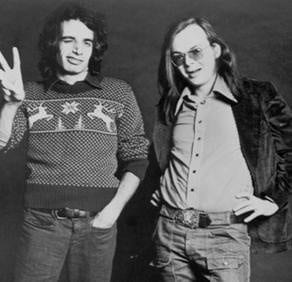
I was dragged into the world of Steely Dan as a reluctant seventeen year old, when a boy I was seeing professed his love for the band over dinner. Unlike the rest of my friends, who had previously shared with me scarring accounts of their mothers dancing in the kitchen to “Peg,” my parents didn’t introduce me to the jazz fusion duo. (In fact, they were under the impression that Steely Dan was the name of Broadway production, until I clarified later in 2013.) Knowing little about them at the time, I met his confession with scornful second-hand opinions that expressed disdain for the band’s self righteous studio attitude. Though I had my doubts about a band named after a dildo in a William S. Burroughs novel, I was taken in by how every conversation with him was riddled with footnotes that cited a Steely Dan song. When he moved to another city, I sought solace in the Dan discography, attempting to match their apathy for sport. The more I listened to them, the more I realized that they weren’t writing “cocktail jazz” as much as they were playing the armchair detective. Under the silk harmonies and solo horn sections, lay snarky lyrics and double entendres, that you had to be clever enough to unveil. Walter Becker and Donald Fagen were the two people you befriend at a show over cigarettes and a mutual dislike for The Hold Steady.
When I walk around Lower Manhattan, Two Against Nature guides me like color-changing lyrics on a karaoke video screen. I hear “What A Shame About Me” when I walk down Broadway and see Donald Fagen stacking cutouts at the Strand with rigid self-pity. A few blocks later, when I pass by a Dean and DeLuca, Becker’s bubbling bass on “Janie Runaway” comes to mind. I ricochet into the fall of my sophomore year in college when the boy I was seeing would visit. On Thursdays, he would fly out to New York and I’d get takeout from Dean and DeLuca’s, and we’d reenact the song. It was a theme park equivalent of a relationship. Most of our texts were laden with Steely Dan references—when I’d get mad I’d refer to him as Randall, Pixeleen’s “as-if boyfriend” from Everything Must Go, and he’d tell me how “the connection seemed to go dead” whenever I had droned on for too long about a new band I interviewed. We’d argue a lot about “Green Book,” a song that I was positive was drawn from J.D. Salinger’s eponymous character in the short story “Franny,” who also carried around a green book. One October night when he was visiting, he insisted on taking me to Rudy’s in Hell’s Kitchen to pacify me after we had gotten in a fight. Rudy’s was the bar in which the protagonist of “Black Cow” worked and advised an outrageous, high, mess of a woman in Aja. (We had gotten into an even bigger fight when we found out that the place wasn’t nearly as seedy as described in the 1977 song, and my fake ID landed a spot on their ‘Wall of Shame’.)
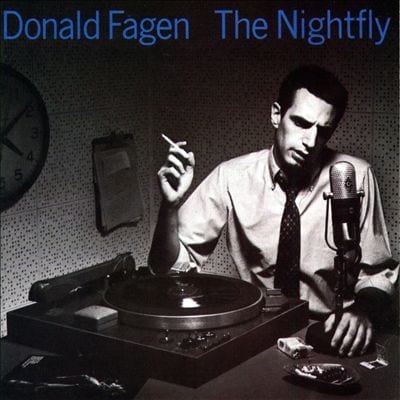
My train of thought is rudely interrupted when a breeze wafts through my hair. Shivering, I decide to stop by my favorite ale house on Bleecker street to warm up with a quick drink. As I place my order, I catch a glimpse of Bleecker Street Records. There, I had picked up a copy of The Nightfly a summer ago. I think about the album cover and wonder what Donald Fagen was trying to imply by sitting in front of a record player, with an ashtray and a pack of Chesterfield King cigarettes. I can’t quite place my finger on what it is, but I know that it makes me want to drink in inspiration. I take a swig from my mug and dial my friend. ‘Meet me at midnight’ I say in a rather coy manner, ‘at Mr. Chow’s,’ which more likely than not, gives away that I have been drinking. Meet me at midnight at Mr. Chow’s? I’m not a character from a ’74 neo-noir mystery film. I send her a text with a link to the lyrics of “Glamor Profession” in order to clarify. Knowing that going on impromptu Steely Dan inspired field trips is my version of getting a radical, post-breakup haircut, she agrees.
I had looked up Mr. Chow’s before, and was well aware that it was a high-end Chinese restaurant. To someone who survives almost exclusively on takeout, upscale Chinese sounds like a fifteen percent increase on the prices of the Szechuan Dragon noodle house. When we get there, both dressed in some kind of casual denim variation, we are reminded to never buy anything from a retail company that identifies itself as “the fast option for fashion” again. As we wait to be seated, I see a woman in a silk gown swirling vintage port wine at her table. She looks like a wizened vestige of the woman on this month’s Vogue cover. The host walks up to us to inform that the kitchen is about to close in five minutes. ‘You can stay if you place your order right away’. I make a mental note to check details in the future, just in case timings from a thirty-three year old song change. ‘Sure, that won’t be a problem’, I assure him. I already know we’re going to order Szechuan dumplings, like in “Glamor Profession.”
The waiter comes to take our order, glancing at our denim apparel in the condescending manner high-end boutique sales assistants look at you when you try on something they know you can’t afford. ‘We’ll have the Szechuan dumplings, please.’ ‘And for your entrees?’ I glance down at the menu, trying hard to keep my jaw from falling down. There are few selections priced in double-digit numbers. “That will be all, thank you!,” I say, hoping he will disappear into the kitchen with our order. With a sharp grin, he tells us there is a strict $40 per person minimum charge. I entertain the thought of dining and dashing for a brief second, but then decide the odds of outrunning the security are probably slim. We order just enough appetizers to reach the minimum. ‘Do you think they have a pool going on to see how long it takes for us to give up and leave?,’ I ask, trying to make light of the situation. We eat, what could easily be most mediocre set of dumplings ever, in silence. How the mighty have fallen.
The evening suddenly becomes more embarrassing than the culmination of the wall of shame incident at Rudy’s, and the time my mother commented on my “Any Major Dude”- inspired squonk cover photo on Facebook, asking me to take down the “ugly, crying mythical creature” from my profile. This is not as bad as the time I danced a little too long with Cuervo, the fine Colombian, and sang “Hey Nineteen” to an empty karaoke room on my own nineteenth birthday, I remind myself in consolation.
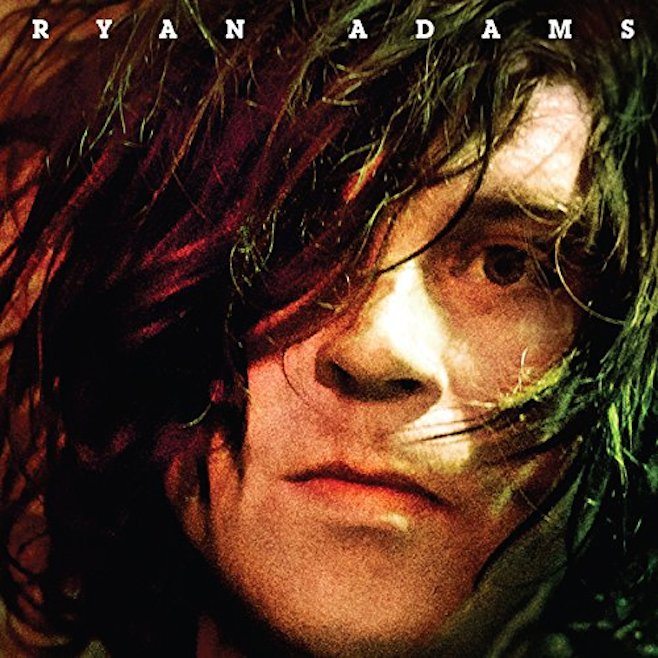
“Nothing much left in the tank/ somehow this thing still drives/ forgot what it needed/ but somehow it still survives” sings Ryan Adams on “My Wrecking Ball”.
On his self-titled album, Adams has so far gone into rekindling the flame of a past romance that he burns himself in the process. With a Robert Smith sense of emotional claustrophobia, he irrationally vacillates between holding on and letting go, insisting “it’s a slippery slope hanging around a wishing well”. Unlike his past records Easy Tiger and Cardinology, that are doused layers of almost too-slick production, his vulnerability is well translated into his no-frills self-produced live sound, which serves as an elaborated albeit less embellished sequel to the 2004 “Come Pick Me Up”.
Though there are no harmonicas on this album, there are prevalent traces of how dizzyingly happy this relationship once made him in his hesitation to move on. From the raw lyrics of “Shadows” to the palpable anguish in “Am I Safe”, Adams plays the part of a man who has drowned himself in a relationship to the extent he has lost perspective. He is in limbo, engulfed in nostalgia induced from taunting memories. On “Kim”, you can find him scratching a name on the wall of a Sycamore tree, and you too can hear names ringing like false alarms. Part reverie of love, part haunted account of a paradise lost, he is human, lost in limbo. “I can’t stand/ can’t let go/ underneath my feet it’s miles/ Nowhere to go”.
Shadows of his 2004 album Love Is Hell also linger on this record in the way his ability to maintain balance is eradicated. However, he trades in the extra fuzz and greasy guitar work for catchy melodies in straightforward arrangements. He is even ready to the play the fool to renounce time and retrieve the past on closer track “Let Go”: “Cross your fingers behind your back and lie to me/ Tell me it’s ok and you’ll fix everything.”
As wonderwalls rise and fall and leave him without hope of redemption, there is barely an illusory entity left of Adams. As he sings on the leading single,”Gimme Something Good”, it’s like ‘there’s no tomorrow/ barely yesterday’. Ryan Adams fans, this album might not be as radio friendly as Gold, but you’re definitely in for something good. This album delivers.
“They’re a poor man’s Galactic”, the banker in the dark charcoal suit standing next to me tells me. Though I have no idea what Galactic is, or what a suit is doing watching a self-proclaimed funky-reggae-rock-soul band playing at Fontana‘s (I later learn that it’s an obscure jam-band, and they’re friends of the band from University of Miami), I nod my head in agreement anyway. The suit is soon joined by more men wearing brown herringbone skinny ties and I arrive at the conclusion that it’s corporate night at the music bar.
As hard as it is to take these men in floral shirts with highjacked Jamaican accents from Washington seriously, it gets harder to maintain my level of cynicism a few minutes into their set. The crowd begis to sway with abandon to the jazz harmonies in “What A Time”, and not even the staff is immune to the hard hitting horn lines of “The Motions”. Feel Free even spews a lyric or two about having a thing for a girl with sleeve tattoos in “Popcorn and Alcohol”, a song built around a chord progression reminiscent of Young the Giant’s “West Virginia”, granting them major star power from the crowd.
Feel Free is by no means a band that’s going to ritually treat their hair the way it’s described in Chapter Six of the Book of Numbers, but there is no doubt that they will create genre-bending music that brings all sorts of people together. By the end of the night, everyone left Chinatown feeling free, thoroughly impressed by the band’s musicianship.
The streets you know come to define you, especially if you’re Justin Rice and Christian Rudder, who lived in a house on Bishop Allen Dr. The two met in an English class during their sophomore year at Harvard, and have come a long way from making music in their dorms. In 2008, they were featured in the generational cult movie Nick and Norah’s Infinite Playlist which amassed them a sizable fan-base, but surprisingly enough, the band went on a hiatus after releasing their third studio album Grrr…, leaving fans to wonder if they’ll ever hear from them again. Five years later, Bishop Allen is finally back with a new “sad party record.”
When I spoke with Justin over the phone (after staying up the night before trying to remember the password to my YouTube account so I could take down my graduation montage set to “Click, Click, Click, Click“), he was humble, honest, and witty. I got the scoop on Lights Out and moving to Kingston (where “Start Again” was shot). We also talked about collecting vinyl and the return of the cassette.
Gauraa Shekhar: You guys have definitely moved around a lot. Starting in Cambridge, where you guys went to college, then Brooklyn, followed by the big move Upstate to Kingston in 2009. Would you say that each city you’ve lived in has influenced your sound?
Justin Rice: In addition to those places, we’ve also lived in Virginia and Austin. In each environment, there were different interactions with people and different ways musicians interacted with each other. In New York City, there were a million bands and it was an environment where everyone was just really competitive. As a band, you’re always trying to figure out how to be as good as you can be in order to stand out from all the other bands around. Whereas in Kingston, it’s a very cooperative environment and it’s easy to collaborate with people. I think those different relationships affect the way that you sound.
GS: I know in Syracuse, besides the random assortment of touring artists (ranging from EDM to jam bands to Aaron Carter), there’s quite a local scene. What is the music scene like in Kingston?
JR: There’s a place here called BSP—I don’t know how long it’s been open—we’ve lived in Kingston for maybe four years now and in the past year and a half to two years it’s grown into a really vibrant hub for local music here. Not only is it great for local bands, but it has also turned into a real stop for a lot of touring bands so there are good shows every night. It just always seems like a community supported space and a very engaged and active group of people show up to a lot of shows. It’s almost like a normal social event as opposed to in the City where there’s so much stuff going on that you’d only go to a show if you were really interested. In Kingston, people are more open and supportive of the space and bands that are playing here.
GS: Eight years ago, Bishop Allen recorded and released an EP every month for a year. You did the same thing with The Last Names—where you and your wife Darbie released one cover a week for a year. Would you say designating yourself a time frame is more effective when it comes to the creative process rather than sitting around waiting for a muse?
JR: Yes. For me, having a structure and a set of goals is definitely an effective way to write and record songs. When moments of inspiration come to you, you have to make sure to grab a bunch of them. You have to grab on to a song idea, a lyric idea, a melodic idea and somehow make a record of it whenever the “muse” speaks to you, but to actually take some sort of fleeting inspiration and turn into a finished product is a matter of sitting down with whatever thought you had and seeing it through. A good way is to sit down every day and work with the material that you have and grow it into a finished product. It’s nice because when you’re working on a daily basis, you’re basically taking the whole giant process of creating a record and turning it into a series of tiny, tiny decisions — it’s a lot easier to deal with than giant overall decisions.
GS: Were you working on Bishop Allen material simultaneously along with the Last Names and other projects?
JR: No, not really, which is part of why it took so long to put out this record. For me, it’s really hard to do two things at once. So it’s always like—focus on one thing and put it down, then focus on the next thing, then put it down.
GS: Rumor has it that Bishop Allen finished recording Lights Out last December. What led you guys to wait almost a year before releasing it?
JR: We finished recording it last September, and we finished mixing it around January and then we turned it into the label and they chose this release date for us. They have to schedule our release date—they have a lot of other releases that they’re dealing with and they don’t want to put them all out on once—there’s almost like a queue that you wait until it’s your turn. They already had releases scheduled all the way up until August basically on the day that we turned the record in.
GS: You guys originally started out without a label and/or publicist. What made you change your mind about the DIY aesthetic?
JR: I feel like we still do a lot ourselves—we’re very engaged in every single part of the process—from recording the music, mixing the music, releasing the music, making videos, all of the stuff—we’re still very hands on. That said, when we first started out, we didn’t have a choice. It’s not like you wake up one day and start a band and automatically get all of the support that you want—you have to earn it—go and tour and make people want to work with you. We worked on our own for so long that we found a way of doing it that we were really happy with—we weren’t actively seeking labels, but at some point in the middle of the EP project in 2006 that you mentioned, people started coming to us. We’d meet with most of them and we could tell that the relationship wouldn’t be perfect, and since we’re happy doing it on our own, we were planning to stay that way. Eventually the label that we did sign with, Dead Oceans, approached us, and the impression they made was different from any other label made—they were very forthright, very clear, had a good vision, and seemed to proceed from a simple common sense point of view, so it seemed like they would be good people to work with specifically. The reason why we signed with them was because they seem to be doing things right. Dead Oceans is a part of the whole group of labels—Dead Oceans, Secretly Canadian, and Jag Jaguwar—they’re doing great—they’re putting out great records and getting them out in a way that artists couldn’t do themselves. Finding a good relationship and knowing that the people you’re working with can help you exceed beyond what you’re doing on your own.
GS: Is there any other band on the label you can say you’re particularly a fan of?
JR: The last record that just came out on Dead Oceans—it just came out last Tuesday—Strand of Oaks—that record is amazing!
GS: Would you say the recording process is more laid back in Kingston than it is in Brooklyn?
JR: A lot of times, we’re just tinkering in the recording studio and whether that studio is in Kingston or in Brooklyn, it doesn’t really matter because it’s not like we’re booking studio time and hearing the pressure of a ticking clock. That being said, life up here in general is a little easier, so it does spill over into the recording process. For instance, when we’re in the middle of recording, and trying a bunch of stuff on computers, preamps and microphones, the process is kind of the same in both places. But when we take a break from that process here in Kingston, we stroll outside and we’re in the woods, and it’s more peaceful and much more relaxed.
GS: As former math majors, do you guys have a tendency to look at your music from a very technical standpoint—like focusing on cadences and all?
JR: Well, I was not the math major—Chris Rudder was; To me, though, there is a lot of mathematics in music—and a lot of songs on this record, for instance, have a lot of synthesizers on them—and synthesizers are all based on frequency modulations and sound wave forms. There’s a physics to taking two oscillating sine waves and running them through the parameters to make a sound wave that has the shape that you want. Definitely in learning how to use those synthesizers, there was an understanding of the physics of the sound—that’s very helpful in terms of being able to craft the actual sound.
GS: Lights Out has a very cool packaging—it’s a thoughtful collectible without being overpriced and gimmicky. The deluxe bundle pack comes with the CD, a white vinyl and a glow in the dark custom print poster (which definitely highlights the theme)—all under $23. What made you choose this layout rather than, say, pressing the album on vinyl mixed with blood and tying it together with custom art prints, like a lot of artists are doing these days?
JR: I feel like at this point there are a lot more people who are interested in vinyl as an artifact—as something that you can collect, and I think that the urge to collect is a little more pragmatic than it used to be—the idea of making something that’s really expensive appeals to a very, very small segment of people who can afford the luxury of buying it—it’s an approach that I understand. But we wanted to make a collectible item that’s really just accessible to everyone—that feels special and limited but what makes it limited is not necessarily the price point—it’s an easy collectible that you can reach and doesn’t feel insane. Part of that is, I think, that we want to make cool things that you can enjoy—like a cool poster on your wall? Great. But I just don’t feel precious about it—it’s not something that should be put in a museum.
GS: I know you’re vinyl collector yourself. What are a few of your most prized records?
JR: I would say, “Wanna Buy A Bridge?” which is a compilation of early Rough Trade singles. “No New York”, which I have on vinyl, which is the Brian Eno produced compilation of early no wave dance in New York. A lot of the records I have, I listen to them, love them, but I don’t set aside the most expensive, rarest records. I love Astrud Gilberto, but there are not that many records that she put out, but those are like the records I listen to all the time; or like every Bob Dylan record, but I don’t necessarily own the most premium, first edition unless I accidentally stumble on them. I collect records to listen to more than anything else. That said, those two records that I mentioned initially are pretty hard to find. They’re really, really good.
GS: A lot of the newer indie bands are now coming out with eight-track cassettes—what are your thoughts on that? Do you think cassettes are going to make a comeback too and hit—dare I say—the shelves of all the Urban Outfitter/Hot Topic stores?
JR: (Laughs) I doubt it. The thing about it is that an eight-track player is a hard thing to find. I think before they actually make a comeback, there has to be someone who decides to manufacture eight-track players. But it’s kind of the chicken-and-egg thing—I think that there are definitely downsides to the eight-track format that prevent it from lasting—I think it’s an outdated technology. Any tape format wears out faster than vinyl—you listen to it too many times and you’re degrading it till it eventually stretches out and it won’t last generations. Secondly, with an eight-track, there is a problem when it plays—you can’t fast forward. So if you have your favorite song on an eight-track on one side and you want to listen to it, you have to flip the tape and listen to the other side an equal amount so it rewinds the tape back, and then you can hear your favorite song again. It’s practically because you can’t choose your entry point—you’re forced to listen to it from A to B without having much control over basically where you drop the needle or where you skip to track-wise. It’s a really difficult format to actually listen to.
GS: Hey, as long as it looks good on your shelf, right?
JR: (Laughs) Hey, definitely, it’s cool. I’m not opposed to eight-tracks, I just don’t really see them coming back.
GS: A lot of the indie bands today have signed hefty sync deals with publishing companies. Would you guys consider trusting a company to place your songs in other media?
JR: I doubt it. I guess it would depend on the company and what offer it was, but it would really depend on the company as it’s hard to imagine giving away the rights of something that you create. It’s hard for me to picture that as a good idea. Historically, it’s been a bad idea for a lot of people. In the music industry, a lot of corporates took advantage of artists who didn’t understand that they were signing away their rights to songs and they turned those into giant mega corporations and left the actual creator. I mean, I obviously wouldn’t sign a deal like that but that is sort of the idea—you’re taking something that you’re creating and selling it to someone without ever knowing what the value of it might end up being. On an economic level, it might make more sense, but on a spiritual level, it doesn’t feel great to know that you no longer are in possession of the actual publishing of this thing you wrote and someone who doesn’t even write music is.
GS: “Click, Click, Click, Click” has been featured in a lot of movies. Did you have a say in all of that?
JR: Yeah! There is a company that handles licensing for us—Bank Robber Music—they handle licensing for thirty labels—hundreds and hundreds of bands. They try to pitch songs for placement in movies where they think they’ll be appropriate, but they’re always working with the artist they’re representing so they’ll check in and say, “hey, this TV show is interested in licensing your song—would you want to do it?”. It’s always done very knowingly with both sides being very, very clear about what it is that is going on.
GS: You’ve actually licensed that song for a Sony ad before. If you could pick an ad to have your new songs featured in, what would it be for?
JR: I feel like a lot of the times when you’re licensing your song for a commercial, it does lessen the value of your song. You usually do it out of necessity—it’s more about the money than the exposure. It’s a way to keep making what you make—also, most of the songs that I write, for instance, I don’t think they need to be protected—they’re not some sort of treasure that you hoard or put a moat around to make sure that you never diminish their value by licensing them to some corporation. But at the same time, I don’t know that there’s an ideal ad. There are terrible ads and then there are ads that are okay. The two places that I’ve seen have a cooler take on music and use it in ways that seem interesting and seem to actually appeal to me for instance are Volkswagen ads and Apple ads. They seem pretty smart about what they use and how they use it—but even then, it’s not that different.
GS: Yeah, the other day I just saw Elliott Smith being used in a diaper commercial and I was cringing as I was watching it.
JR: Anytime I feel like, “I can’t believe they’re using Elliott Smith to market diapers”, it’s also like, I’m the person in front of this TV being marketed to by this diaper commercial. It feels bad, but that’s part of the point, I guess.
GS: The release party for the new album will be held at Brooklyn venue Glasslands on August 21st. Any specific reason you guys chose to kick off with a 21+ show?
JR: No, we just wanted a venue we were happy with in New York City and I feel like 21+ in New York City is a different animal than 21+ in a lot of places because, honestly, if you want to get into the show, you can get in no matter what the age is.
GS: Actually, Glasslands happens to be one of the strictest venues in Brooklyn where age policy is concerned. They’ve been hosting a lot more 18+ shows this year, though.
JR: I wasn’t aware of that! Definitely, I’d like for all of our shows to not be 21+, and whenever possible, we try to make that happen but sometimes by mistake, or because of the lack of suitable options, we have to go with a 21+ show. I didn’t realize that 18+ shows were an option. Maybe I can look into it and see if we can get that changed. Thanks for letting me know!
GS: What can we tell our readers to look forward to in the upcoming album?
JR: I think the new record is kind of a little different from anything we’ve done before. This record was done altogether at once, so I think it’s rather coherent. Mood-wise, I think there’s a certain sadness to a lot of it, but it’s sort of a party record—it’s a sad party record.
GS: A sad party record?
JR: Yeah, in a good way. That sounds weird, but what I mean is that a lot of it is pretty upbeat and dance-y and it’s fun, but it acknowledges a certain sadness at its core. It’s a melancholic dace record I guess. Definitely, there are some different sounds—some synths that we had never explored before and I think that it’s kind of hard for me to pinpoint.
Lights Out will be out August 19th on Dead Oceans. Pre-order it here.
Friday, June 20th. My friend buys us tickets to see Dresses play The Studio at Webster Hall. I like the duo but feel as if my street cred is in question walking into a venue after a gaggle of fourteen year olds making some kind of remark about wearing dresses to a Dresses show. I try putting off going in for the openers, but between the scalper trying to sell me tickets to a show I already have tickets for, and the homeless guy on 11th street making me bear predictable Charlie Sheen jokes against my will, I realize it’d be easier to follow my friend inside.
Surprisingly enough, we walk into a beach-party kind of vibe. A band called Boxed Wine is on and I initially can’t tell if there are four or five members in the band—a guy in a ponytail and blue Boxed Wine shirt (apparently this guy never got the memo that this is bad luck) keeps bouncing on and off stage to sing gang vocals. Within minutes, the band has the crowd dancing. There’s a palpable sense of familiarity in the air—not in the sense that you recognize them from one of the OC mixes but in a way you know you’ve heard the songs before. When “Summer Wine” comes on, I find that I’m no longer thinking about rent, or my shitty coffee shop hours the next day. Instead, I ricochet into that two week long Halloween freshman year (Syracuse will stretch out any holiday where it’s socially acceptable to wear seasonally challenged outfits and spend the night adjacent to the toilet) when my friends drove up to my dorm, corrugated fiberboard boxes in hand, and we stayed in and got wrecked off of cheap red wine together. That’s the exact sentiment Boxed Wine captures in their music.
With the lead singer of Silver Conor on their side, a song in an Adam Sandler movie, and tragicomic DIY music videos, this New Jersey band is out to show you that sometimes cheap really is more fun. In this interview, lead singer Chris Nova talks more about the band that we’ve all seen from the corner of our eyes.
Gauraa Shekhar: According to your website, you guys love Johnny Walker Red, Magic Hat and Craft Beer. How did you end up with the name Boxed Wine?
Chris Nova: Well it happened after we wrote the first EP drinking Franzia Sangria every night (re: the cause of Summer Wine’s poor vocal takes, haha). We settled on ‘wine’ as part of the name, but argued between naming the band Fine Fine Wine or Winetown. Someone said why not just name it Boxed Wine, but we all assumed it was taken. When we looked it up and saw it was open, we were shocked and made the Facebook page that night!
GS: What brought you guys together?
CN: Ralph and I lived together for most of college at Rutgers, and met Mike halfway through mutual friends. Ralph played in a band called Jackie Treehorn with Mike (who’s also the best singer in Boxed Wine) and the precursor band to Boxed Wine, Le Le Low, but they both imploded and we all did nothing for a bit. Then Ralph and I started writing different songs when we were both depressed about how awful the ‘real world’ was. The songs were just an escape that grew gradually over time into a full band with other members. Eventually we settled on the current lineup, adding Mike and his friend Steve. Now we’re practicing with our new member Andrea who’s gonna be playing keyboard since that our sound is changing up a bit.
GS: Your songs are always in commercials, playing before Banks shows at Irving Plaza, etc. Do you guys have a say in the syncs at all or do you just randomly turn on the TV and go, “man, our song’s in a washing machine ad”?
CN: We played before Banks’ show?! That’s so cool! (Laughs) We must have a fan in NYC! We have say on some songs and not on others. The sync market is crazy competitive so they often need a yes immediately. We trust our friends in the licensing world to look out for us, but they did soundtrack an Adam Sandler movie commercial with “Waste Your Time” so we might need to reevaluate those friendships…
We never see the commercials first, our fans and friends usually text us and ruin the surprise. We don’t have cable though so it’s actually pretty helpful.
GS: On that note, what’s the weirdest place you’ve ever heard your music play?
CN: We got a small random check for being in a Norwegian airlines in-company video, so though we’ll never see it we hope it made us a fan or two! Go Norway!
GS: These days artists have started giving music videos an importance again. Bands like Cable and Babes have quite the narrative play going on in their videos but you guys are definitely onto something new. What was the thought process behind the music video for “Spies”?
CN: Well Spies isn’t a music video we made, but we’re glad you enjoyed the guinea pigs! We don’t have enough money to make videos for all our songs, so we ended up stealing a bunch of footage from YouTube to give something entertaining to watch during the non-single tracks!
We love music videos though, but have kinda screwed up every one so far, especially Cannibal. That turned out to be oddly misogynistic instead of as ridiculous as originally planned. We might remake it with naked dudes and dogs, but the original idea was pretty much done in an MGMT video we hadn’t seen. They probably do more drugs than us, which is why their music video was better. Unfortunately it had a different and much worse effect on their last album…
GS: NJ has a very tightly kit music community. I just learned that Bruce Springsteen helped Nicole Atkins set up her new record label after they met at an Ashbury Park show once. Have you met anyone from NJ who has served as your rock and roll guardian angel?
CN: Our bassist’s dad is Joe Cerisano of the 80s rockers Silver Condor. He also sang the ‘Be All You Can Be’ Army theme, which is awesome. He’s been super helpful with general career advice, which is great. Unfortunately half the people he knows in the music business are dead from an overdose of Rock and/or Roll.
Fun fact: he also sang the best version of “When a Man Loves a Woman” with Clarence Clemons on sexy sax duties. It is jaw dropping.
GS: How do you guys deal with situations where fans in Boxed Wine T-shirts insist on coming up on stage three times per show to sing gang vocals?
CN: We have an officially licensed Homer Simpson ‘Reachin’ Stick’ that we use to push them off stage.
Haha just kidding! We love our fans and honestly wish our shows were crazier, kinda like a Black Lips show. I have never been drunker or happier jumping off the stage while they played through ‘Bad Kids’ and that’s a memory to cherish. We want our crowd to have those memories too.
GS: Which show has been your favorite thus far? Why?
CN: We’ve played some seriously great basement shows in New Brunswick, but the best in our memory was April 20, 2013. It was insane and we had a whole basement soaked and exhausted at the end. That was a memory indeed.
GS: What would you say is the difference between performing in NY and NJ?
CN: There’s no venues in New Jersey, so there’s the answer. Haha kidding again. There are a few, but our best shows have been in basements, hands down. The Court Tavern finally noticed us recently and we had a good show there so we’ve set up another for August 30th.
Unfortunately there are more scammy venues in NJ than NY. There’s a difference between a draw requirement and “here’s 50 $20 tickets to sell or you don’t play an have to pay us back.” NJ has more of the latter and it’s absolutely awful. We’ve always said no to that garbage, and they’ve only tricked us once, causing us to purposefully invite no one and cancel the day before, ha.
GS: People in NY are slightly…well, insane. They tend to say a lot of ridiculous things (paging guy down the street from me who sings dirty versions of nursery rhymes and claims to be a pirate)–what’s the most bizarre thing someone’s said to you at a show?
CN: The exchange went as such:
Homeless man: “you look like a Beatle, can I have a dollar?”
Chris: “what?”
HM: “you look like John Lennon, give me a dollar!!!”
Chris: “thanks but sorry I don’t have any cash”
HM: “FUCK YOU JOHN LENNON GIMME A DOLLAR!!!!”
He then chased us. Very slowly…
GS: I know you guys look up to bands like Bear Hands. In an ideal world, which artists/bands would you like to tour with?
CN: All we want to do is tour and hang out with Tokyo Police Club, that’d be like a dream come true. I’d say Spoon would be a close second. I met Britt and he was so appreciative of his fans; just an all around nice dude. My dream, though, would be to play with the Strokes, but I imagine the second coming of Bowie would happen first.
GS: What are you all listening to right now?
CN: Ralph is listening to a bunch of synth pop bands like Magic Man and Betty Who, so now he never shuts up about Charli XCX. He keeps playing the new Blondfire record on repeat as well.
I’m currently obsessed with Mounties (because Steve Bays is a musical god) and have listened to their debut album like 40 times this month. I’m also crazy about JJAMZ because Alex from Phantom Planet is in it. Unfortunately JJAMZ has been quiet since 2010.
Mike never stops listening to Gaslight Anthem, and it’s clearly influencing the awesome solo songs he’s been writing. Frank Turner and the Fratellis are other passions of his, as well as the Naked and Famous.
Steve listens to way heavier stuff and loves Crosses and the Deftones when he’s not listening to Rush. That’s why he’s the greatest drummer in indie pop, haha.
GS: What’s your favorite Boxed Wine song?
CN: My favorite is currently our next single “Innocent.” but I also really like “Young Lovers”. Ralph’s is probably our new single ‘Quiver.’ Mike is a rockist and likes “Bones” and Steve likes another b-side that’s our heaviest track. It’s untitled currently but will be out pretty soon, we hope.
GS: What led you to make your new album available for free download on Bandcamp?
CN: We’re just realists. Everyone steals music, including us, so we felt this was a way to give back. People have the option to give us a few bucks and they often do, which shows us the true good in humanity. We line our pockets with humanity! Really though, we’d rather people buy a tangible T-shirt and come see us instead of spend the money on the digital songs themselves. We just try not to be jerks, and expect the same from any fans.
Unfortunately we’re forced to charge on the bigger sites, but if you’re not smart enough to figure out how to get it free then unfortunately you must pay handsomely, ha.
GS: Why should our readers pick up “Cheap, Fun?”
CN: It’s FREE, why wouldn’t you take it?! In all seriousness, it will hopefully make your day brighter, guide you in times of trouble, and bring you closer to His Holiness (sic.) David Bowie. All we want to do is help people forget that the world is a cold, dark, cruel place with no rhyme or reason to anything other than the fact that we should all be dancing way more often. And eating pizza. And taking naps. That’s it.
___
Download Boxed Wine’s latest album Cheap, Fun here.
The number of expensive hats and paper clip necklaces in the room—not to mention the Ty Segall lookalikes—would make you think you’re at Glasslands rather than a punk queercore show at some Park Slope venue best known for being “the bar next to that really good pizza place”. It’s Gay Pride Day in Brooklyn and the all girl band, “BOYS” (ha, ha) is ready to give the amassed dearly-beloved-we-have-gathered-here-today crowd all that they’ve got. Charged with duck taped ¥ signs on their jackets (can you say DIY), BOYS start the show with their fit fueled artillery. “My secret for getting by is acting like you care when you’re sleeping with random girls” sings Frances Rex on “Musical Beds”.
Their set is full of Venus in Furs references and an Elliot Smith sense of self-doubt and betrayal. On “Self Control”, they sing, “All this dread fills my head/ Of your happiness in someone else’s bed”. On “Circles”, a song that beckons for the kind of emotional disengagement explored by Belle & Sebastian, you can hear a kind of spacey dark sound that takes cues from 90s alt rock.
As sad as the lyrics are, the crowd dances fervidly to the angry bass lines and it’s as if everybody finds themselves by singing about being lost together. The punk band, however, isn’t quite punk in the three chords sense of the word. Each member is a talented multi-instrumentalist in their own right—in fact, drummer Allie Falco happens to be in two other bands, Saint Rocco and Royal Garde. With their melodic hooks, vocal harmonies, and fast and loud energetic performance, the NYC born and raised band brings the crowd together by expressing its discontent with society’s disapproval of the gay, transexual, lesbian and transgender communities.
For someone whose queer exposure is limited to Monika Treut screenings and late night conversations with the self proclaimed pansexual “Mexi Lexi” on Christopher Street, I felt more at ease in the chaos of a room full of proud queercore fans than I ever did in the homophobic city of Jakarta, where I grew up. And if you still seek reassurance—yes, couples were getting it on in the back row (ah, the true marker of a successful show). If you can’t make it to the Punk Island festival on June 21st, make sure to catch the band live at Fontana’s on the 26th!
Most of us took Jersey Shore’s Angelia’s stint in the music industry just about as seriously as we took The Newlyweds. We humored her as she rapped about being “Hot as an ice cream cone with a cherry on top” like we humored Jessica Simpson’s banter about “mouses” and taking Louis Vuitton bags on camping trips. But it turns out that Angelina is not the only one trying her luck in the music scene.
Marnie Michaels, the prettiest girl in HBO’s Girls, who leads the stereotypical post-graduation I-don’t-know-what-I’m-doing-with-my-career life in Williamsburg, has also decided to tap into the music industry on the latest season of the show. It seems like breaking into showbiz is the latest trend for everyone who is either attractive, rich, or simply in possession of DAW software on their computer.
Tennis stars are similarly trying to crossover into music. It was the Danish sports star, Caroline Wozniacki, who trigged this movement with her auto-tuned debut, “Oxygen”. With generic lyrics and overly compressed drum kits, let’s just say that winning 21 WTA single titles does not necessarily equate to ranking a hit single in the music biz. (Having a drummer and bassist in the music video does not convince me that the song was not entirely composed on Garage Band).
As if Wozniacki’s experimentation in the music industry wasn’t enough, Serena Williams’ urge to be number one could not hold her back from following suit in May 2012 with her rapping debut. In her own words, the tennis player “balls hard” even without a tennis racket: “My name is Serena/ On the court, I serve them up/ No Suppeona!/ I win, I, I go in/ I got game like ESPN. I know you see me on ESPN”. Though rhyming ESPN with ESPN is nothing short of sure-shot talent, listeners seemed to think Williams left the key parts of her game behind on the court and preferred when she stuck to the regular kind of slamming sets. Serena, however, disregarded feedback in her song “I Win” with lyrics like “I can’t see these haters through my Gucci glasses”.
The latest addition to the list is Denitza Todorova, who is better known by her stage name, Dena. The Bulgarian junior tennis champion’s debut album, Flash, surfaced on the music scene this March. Coming from a family of tennis players, she was number three in her country and was geared towards pursuing it as a profession until she moved to Berlin and joined a band. Todorova describes her music as “Effortless raps set to 1990’s R&B and hip hop with a touch of Balkan beat” that captures the broke bohemian vibe of Berlin. Her lead single off her album, “Cash, Diamond Rings, Swimming Pools”, unfortunately, comes across as a sad attempt to recreate the buzz Lorde’s “Royals” stirred last year. With lyrics like “If you are listening to this in a hot country/ please come rescue me/ I’m give you what you need/ I’ll bring my friends we’re just about twenty/ If you got a swimming pool, then we can be hanging”, the tennis player-come-rapper’s pool seems pretty shallow. Her look is reminiscent of M.I.A. circa Arular, but the resemblance ends there. A faux street-cool sound might be able to garner a few remixes on Spotify, but dotting sentences with “Yo’s” and hip-hop gestures can only take a 31-year-old so far.
Although there are a few athletes who have somewhat successfully crossed over into music like Shaun White with his band Bad Things and the Bryan Brothers with their guitar duo, the vast majority of them prove that being good at Tennis does not mean the ball is in their court musically. Even if you are 5’9″ and on the receiving end of pretty girl privileges, lyrics like “Boy, you’re my match point” won’t crown you poet laureate of the millennium. Yes, even if you’re Wozniacki, the similarity between the racket and guitar ends there.


 When I spoke with Justin over the phone (after staying up the night before trying to remember the password to my YouTube account so I could take down my graduation montage set to “
 The number of expensive hats and paper clip necklaces in the room—not to mention the Ty Segall lookalikes—would make you think you’re at Glasslands rather than a punk queercore show at some Park Slope venue best known for being “the bar next to that really good pizza place”. It’s Gay Pride Day in Brooklyn and the all girl band, “