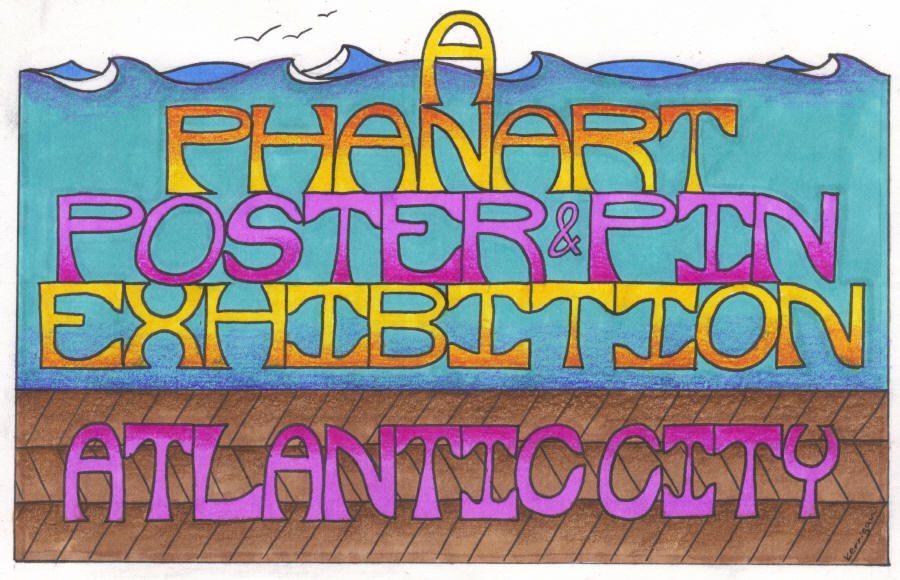
PhanArt Exhibitions have become a part of Phish Tour for so many Phans. These shows have become a collective way of sharing their love for the Vermont foursome, outside of sharing in the groove at live shows. If you’re looking for something creative and fun to do while in Atlantic City for the Halloween Run we suggest you stop by this exhibit and support the art of Phish by Phans.
Taking place November 2nd, from 12pm-5pm at Caesar’s Atlantic City in the Tiberius/Spartacus/Romulus rooms, featuring the best Phish inspired art, including limite edition art made specifically for the show. Admission to the event is FREE. This unique art show, developed and produced by Pete Mason, will be held on the final day of Phish’s Fall Tour, ending that night at Boardwalk Hall.
The artists announced for A PhanArt Poster and Pin Exhibition: Atlantic City represent a wide array of artists from among the Phish art community. Longtime Phish artists Ryan Kerrigan, Isadora Bullock, Michael Boyer, Jiggs, Jeff Nesbit and Pompeii Prints are all familiar names with fans from past poster art shows. Each will have a large portfolio of current and past concert poster art to exhibit from a wide range of musical acts. Erin Cadigan, an artist from Woodstock, NY, will be featuring her art, posters and clothing line THREE.
Joining the show for the first time is Setlist Tees, a line of shirts created by Ryan Stanley that feature fan-requested setlists with unique designs for each show. Pin makers and artists Matthew Jurcic of 10 Minute Tube Designs, Adam Davidoff of Phishcoins, Jack Firestone of Party Time Pins, Noah Phence, Adrian Sharpe of stuPINdous Creations, Ant Pharms Tour Pins and Designs, Cactus Bomb Designs/Tweezburger, Pin me Down, Brian Zuckerberg and Stuphph & Things will all feature their ever-popular pin series and designs, as well as other items made specifically for the Atlantic City shows.
The second round of artists slated to exhibit at Caesars on November 2nd include poster artist Bruce Horan, photographer Mike Geller who will be on hand exhibiting his concert photography, while the art of Ian Millard and art from Like Minded Productions will be available for sale. Pin makers include Phanbadge, Terra-Pins and Gowy Gear, as well as MYFE. Designs, who will be releasing brand new limited edition pieces as well as rare, sold out items.
Throughout the event, Show of Life will be streaming live the first ever PhantiquesRoadShow! Fans are encouraged to bring their collectible art to be reviewed by a panel of expert curators who will be on site for appraisal. Fans are encouraged to participate in a silent auction in person at the show or live from couch tour, making for an interactive feature to “A PhanArt Poster and Pin Exhibition: Atlantic City.”
Non-profits include The Mockingbird Foundation, which has given grants for music education totaling more than $700,000 over the past 15 years, and PhanArt, a book and website created as a way to showcase the art made by Phish fans, raising money for The Mockingbird Foundation through donations from artists and fans, totaling over $11,000 since 2009.
Phish Art shows have been held since 2003 with great success. Unique posters, pins, shirts, stickers and much more are made for Phish shows, making “A PhanArt Poster and Pin Exhibition: Atlantic City” a must-attend event during Phish tour. Produced by Pete Mason, founder of PhanArt and author of PhanArt: TheArtoftheFansofPhish, the art exhibition represents a continued effort to promote and exhibit original and unique concert art from a wide variety of artists. The eclectic artists featured at this event show the broad scope of Phish related art and capture the inspiration of the band in their art. Phish’s creative fan base makes amazing art inspired by the band, their music and the locales they play.
In keeping with the great tradition and success of past poster shows, “A PhanArt Poster and Pin Exhibition: Atlantic City” will offer freeentry to all patrons and tubes available for purchase. Charitable donations from the event will be made to The Mockingbird Foundation, as well as a wide array of artists featuring posters to fit any budget. More artists will be announced in mid-October, as well as special edition works only available at the show, which will be available for viewing shortly thereafter at www.phanart.net.
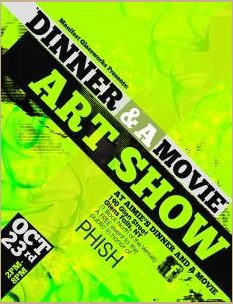
Dinner & A Movie Art Show, presented by Manifest Glassworks, will be held on October 23rd at Aimiee’s Dinner & A Movie, located at 190 Glen Street, Glens Falls, NY.
Running from 2pm-until 630pm, the art show will feature many artists including Tripps Prints, Isadora Bullock, Pin Me Down Designs, Bill Pompeii of Pompeii Prints, Ant Pharms Pins, StuPINdous Creations, Brian McGowan of GowyGear, PhanArt, Noah Clein and local glass from Manifest Glassworks, Liffiton Fine Arts and others.
Admission to the art show is free and will feature Live Music from High Peaks Band at the adjoining bar, Wallabee’s. This is a rare chance for Glens Falls residents to view and purchase art from vendors that travel the nation, to meet up with friends new and old and to celebrate Vermont’s greatest band visiting Glens Falls!
With the Fourth of July just around the corner, the good people of America are cleaning their grills and readying themselves for a relaxing day in the sun with friends, family, and fireworks – unless you’re a Phish fan!
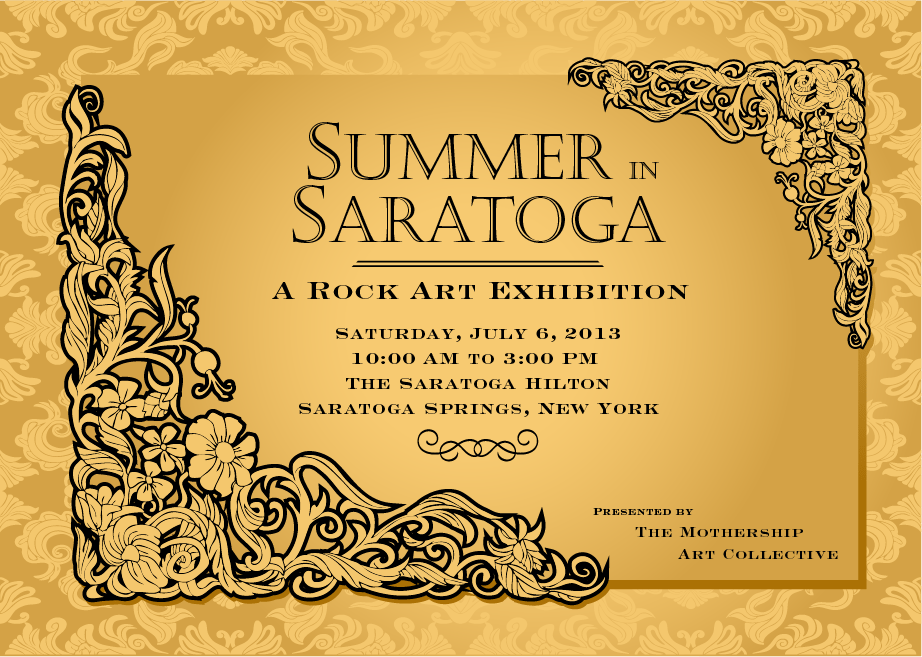
The long awaited summer tour is all but days away and Saratoga, NY will be busier than ever as truckloads of phans roll in to reclaim Saratoga Performing Arts Center (SPAC) for three nights of our four favorite men. Along side the first run of 2013 Summer tour will be a Rock Art Exhibition all but a stones throw from the Performing Arts Center.
The show is developed and produced by a group of artists and fans called The Mothership Art Collective. The show will include some of the best names in Phish inspired art including Lauren Domsky, Noah Phence, Dave Calarco, MYFE pins, Ant Pharm Pins and PerPINdicular Pins, AJ Masthay, Erin Cadigan, Isadora Bullock, Nate Duval, John Warner, Ryan Kerrigan, Branden Otto, Bruce Horan, Ed Wilson, TRiPP, Bill Pompeii, Drew Suto, 10 Minute Tube Designs, Party Time Pins, Page Side High and stuPINdous Creations.
Non-profits included in Summer in Saratoga: A Rock Art Exhibition are The Mocking Bird Foundation – which has donated over $700,000 in grants to music education over the past 15 years. Screens ‘n’ Suds – which combines craft beers and art to benefit the National MS Society and charities in Richmond, VA and Chicago, IL, raising over $75,000 since 2009. PhanArt – a book and website created as a way to showcase the art made by Phish fans – raising money for The Mockingbird Foundation through donations from artists and fans, totaling over $10,000 since 2009.
Rock art exhibitions have been held since 2003 drawing phans from far and wide making this event a must-see during the Saratoga Phish weekend. “Summer in Saratoga: a Rock Art Exhibition” is the first event of the year produced by the Mothership Art Collective.
The art show will be held Saturday July 6th at 10am- 3pm at the Saratoga Hilton featuring some of the best Phish inspired art and limited edition art made specifically for this show. Admission is free.
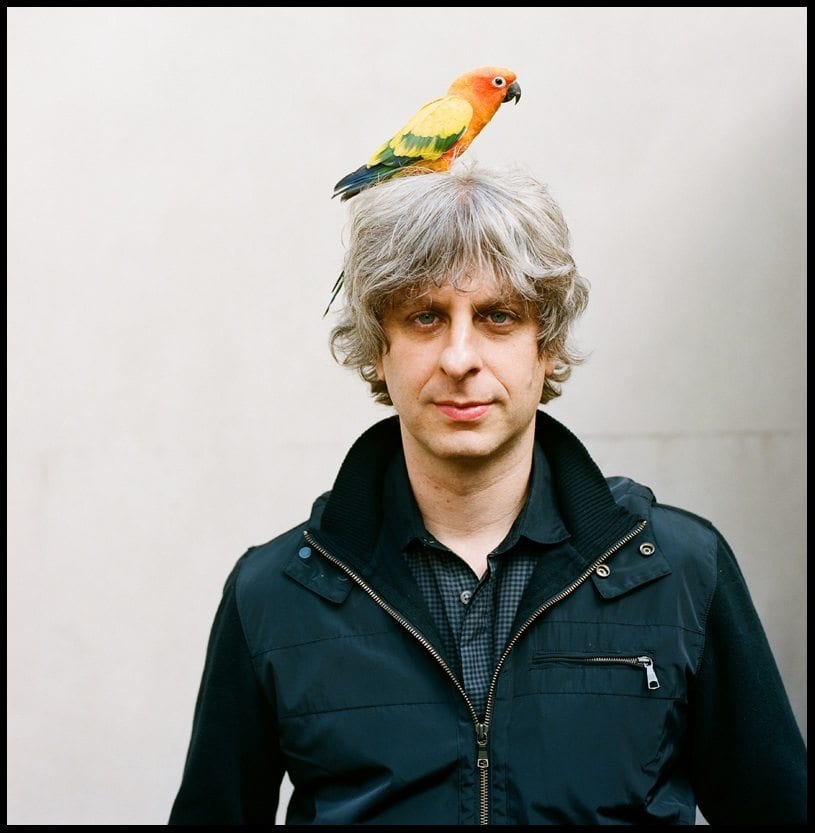
Prior to the release of Mike Gordon’s album Moss, Pete Mason sat down for an interview with Mike regarding the album, Phish’s recent Halloween show in Atlantic City, his purple pants, music festivals, his new fatherhood, among other topics.
Pete Mason: Where do you think Moss differs from your earlier albums, particularly your first, Inside In?
Mike Gordon: Well, since Inside In had stemmed from the movie soundtrack (to Outside Out), it ends up being a lot dreamier, and the songs are strange little excerpts of sentiments and vibes from the movie actually, from the lyrics, I think so. As I progressed a few albums later, I became interested in having the songs being more about the sort of more self-contained, in terms of the message and sentiment, and not requiring the movie or dreamscape litmus to allow the album to stand on its own.
PM: Listening to Moss, particularly “Flashback”, “Can’t Stand Still” and “Idea”, they seem to have more of a presence of horns on this album than previous releases; why were they incorporated more this time around?
MG: Well, there were some horns on GreenSparrow and they were synthetic on Sound. We tried it on “Fire from a Stick”but it didn’t work as well as I hoped, but I think the reason for using more horns was because Phish had just done Exile on Main Street, and I really liked the way the horns were woven into that album and the backup singing, which we did with Sharon Jones and the Dap Kings. That got me thinking about horns as a rock and roll sound, not just as a jazzy sound. It got me excited to get some different textures and it just made sense. I tried to get local guys because the vibe of not homemade, but locally made. So we got who was needed for the songs, and not because of names, instead it was more efficient and added to a more macrobiotic feel, musically somewhat. So we got local Vermont horn players, and great ones.
PM: What have you learned about solo project from watching your band mates in Phish go on solo tours over the past decade?
MG: I’ve learned that it’s to make money at it. It’s so important to me that I don’t really call it a side project anymore, it’s as important as to me as the Phish stuff, because I’m just a creative person and I like to do a lot of writing and I like to see how my creations are sort of working or not working in the context of bringing them out to the world, then refining them and bringing them out to the world trying different things. The whole process is really fun for me because I don’t get to do that process in Phish because I’m not the song writer, or I am on occasion, but my role in Phish I see as bass-playing. In a way I feel like Phish is a side-project (laughs), in terms of time, and I guess huge musical inspirations that come with playing with Phish.
(I’ve learned) from watching the other band members the importance of a there being a strong leader, even though I like to be the leader who shares the responsibilities of decision making and creativity, and I’ve seen that sometimes work and not work. I guess those are the two big things. The importance of having a strong leader in the group and at the same time letting everyone thrive and come into their own creatively and to surrender some control to the others, because I think that some bands that are side projects or solo artists and its clear that everyone else is a side-man or side-woman. There is only so much to you can do in life without going outside of your comfort zone (it’s hard), and if you’re in a band where there is one members name on the marquee then they may not be encouraged to leave their comfort zone and take risks and go crazy and become the full people they are, and I see that a bunch of times, and that’s actually one reason why I would like there to be a band name instead of just my name, but so far I haven’t decided on one; its been a couple of years and I’m still thinking about it. So, anyway, yeah.
PM: How did you assemble this band of musicians for the album and tour?
MG: It’s different from the album and the tour. The band, my goal there is to stick with the same people, and it’s been the same lineup for the last two and a half years with no changes. The cool thing with that is that is the chemistry and telepathy start to grow. Its only been seven years, so its not that long like with Phish who I grew up with, it’s a different group of people and context and what’s fun is to see how it can be different from the other side projects other members have been involved with and become its own thing and that’s really fun for me, just letting it develop and see what the potential is because of the interesting mix of personalities, and the new music that we’re working with. Everything is new and also inspired by where we’ve all come from and for me that’s definitely Phish. It’s been a couple tours, a couple years with the same lineup, so its cool to just get up on stage, even though we don’t know each other as well, in some cases, to just see that the happening, the chemistry thing. I’ve been playing with (guitarist) Scott Murawski for a long time in different projects, and there are two others from Burlington, (Craig Myers on percussion and Tom Cleary on keyboards) and the drummer (Todd Isler from Brooklyn) was one of I auditioned a million drummers, or at least researched a million and really wanted to find a guy who clicks, so he is someone I don’t really know, and although he was a recommendation through the grapevine and he just clicked; his rhythmic sense is just mesmerizing and danceable and the same time, which I wanted. So that’s where the band came from.
On the album, there are some tracks that have three of us from the band playing plus some overdubs, and there are a few tracks that have other band members overdubbing, so its not a band album where all the tracks are just the band, but they have a strong presence. There are a couple of Phish band members on there, a handful of Burlington musicians and a few non-Burlington musicians, a sort of smattering of people on the album.
PM: Having played three moe.down’s in the past few years, at two separate venues, what is your opinion on the venues and the shift south to Mohawk?
MG: Well I guess I had gotten used to the first one (Turin) but the second one (Mohawk) seems like a nice spot. Its just different, don’t really have a strong opinion. The first one had a coziness to it while the second one had a vastness to it.
PM: What do you feel is the best aspect to playing music festivals?
MG: For me, its getting to check out other music and meet people, to do some talking and networking with other musicians. We played at the Austin City Limits with Phish, and I really wanted to check out JJ Grey and Mofro, and I left to run there like a mile and a half away along the river. When I left the hotel, I noticed that there was a stage setup outside between the pool and the river, and a lot of bands were playing on this tiny little stage, and there were a lot of people and kids just walking around, I was almost so tempted to stay there because it was so festive, but I really wanted to see JJ Grey so I ran along river, flashed my pass and ran right up to where he was playing and watched the whole thing so I could get inspired in that way. There are things I don’t like at festivals, I don’t like to play music when there is other loud music that you are hearing at the same. At Phish festivals, our biggest thing is because there generally wasn’t other music or other stages in the campground, there was a lot of silence, so we would play a set for an hour then there would be silence, and people would get a break from their ears and I think there is something nice about that too. I have a lot of fun at festivals, get on a golfcart, check out crafts and things, behind the scenes, so I guess there are pros and cons.
PM: Looking back on 10/31 and playing Waiting for Columbus, (and having playing “Sailing Shoes” last night in Seattle), what is your post-mortem on how you played the album that set, as well as the three weeks of touring and did the members of Little Feat share their take on the show with you?
MG: They all heard about it and they were honored, so there were some nice emails going back and forth. It was a favorite album of mine since high school, so it was probably my favorite one, even though I think we have done some good ones. Learning it was a big challenge, it was harder than I thought it would be, but it was great to get inside what was going on there both musically and vocally. Rehearsals were really fun, but I think that it wasn’t quite as tight on stage as it had been in rehearsals, in terms of ending and transitions and getting it all right but I think the energy was there. I guess I would agree with a lot of the fans who said that Saturday was a great show or even the best one, but for me its not because of the Led Zeppelin stuff that everyone is talking about, its the flow that we were in, very deep and subconscious and groovin’, I just loved Saturday night, the Led Zeppelin stuff was just sort of an extra icing on the cake. It was cool to play “Ramble On” all the way through even though we hadn’t played it or practiced it in 20 years or however long it was (last time played – 8/12/98, Vernon Downs, NY) and just guessing what the chord changes would be and that kind of thing, that’s how much fun it was.
PM: How did you guys decide to play so much Zeppelin that night?
MG: Just because it was the rumor and we had been teasing some stuff at soundcheck, hoping that people would tweet it, which they were. It was part of the tease and keeping the secret really well, it was the best kept secret of which album it would be. I actually had a brief email correspondence with Kenny Gradney (Little Feat bass player) a few weeks earlier, and we weren’t allowed to tell them so I had to just wait till I answered his email at a certain point.
PM: When you guys prepare for Halloween, its very tight lipped to keep the album secret. Nobody knew.
MG: Yeah, and a lot of younger people didn’t know the album, but I think that the Phish Bill kind of explained it, we had David Fricke write a whole history of the album and interview us about what it meant and how hugely influential it was to us and fun, it meant to turn people onto something they might not have known for the younger fans.
PM: There is a small following of Phish fans who admire the purple pants you wear from time to time on stage. What it your affinity with them, and what has your reaction been to them?
MG: That’s funny because at a certain point I decided that I was going all black and gray and I went to the store, got a whole new wardrobe, but lately I’ve been carrying the purple pants with me but not yet wearing them, I’m glad you reminded me. Maybe its getting to be time. I think I’m leaving my black and gray phase. I just went shopping yesterday in Seattle and what I got departs from the black and gray. My fantasy is to very gradually turn into Steve Tyler, with a bunch of scarves and lace frills and everything. But I’m many steps away from that.
PM: For 1/1/11, was scheduling the show that day done thinking that it would be a cool date to play, or is it only reflective of scheduling?
MG: Generally we’re not going to play more than three in a row just to stay fresh, which required us to go over to the first and I think people like it because it’s a little different and so we don’t repeat ourselves.
PM: Do you have any plans for 2011 for touring, either solo or with Phish?
MG: This tour that I’m on now is part A of two tours and I’m not exactly sure when Part B will be, probably sometime in the first part of next year. It’s good to do more and it’s been fun, then it gets to be so sad when it’s over. I want to hunker down and work on some more writing, so many song-writing projects in mind, 100’s of things that are half-finished or barely started. I don’t have a lot of time to do that. When we have time off, it’s never off, it’s either hanging out with my two-year old or working on projects, mostly song-related. So I’m hoping not to do too much touring so I can do more of that and maybe Phish will dabble in some recording. I’m sure that at least some point Phish will be playing next year, I just don’t know all the timing yet.
PM: You mention your daughter, how do you feel fatherhood impacted your music and the touring life?
MG: Well, it’s interesting. When the first band member had a wife and kid, I remember thinking that their attention would be deflected and the music won’t get as much attention, and it turns out that’s not true at all. Now I realize its grounding and give me more focus. She is such a huge central figure in my life, the central apex of everything, and not just because of her being a kid and because she’s supposed to be but because I just love her so much and she’s so funny and inspiring and I can learn so much from her perspective of the world. Sometimes that happens and I wind up being more grounded as a person. And also, actually, I did The Artist’s Way book, which Trey recommended a couple of times, which is one of the most popular books on creativity – a workshop in a book – and the whole thing is geared towards trying to regain your childish sense of wonder that you used to have and approaching your life and your art from that child’s eye, and trying to overcome all the sensors that you have built-into your head from what your parents and teachers told you and your experiences that led to living confidence, and its important getting back to that playful state, and it’s important for music and art. That’s another fringe benefit of having a little one around us is that everything she sees, whether it’s a sheep drawn on the wall of a hotel lobby or whatever it is, it’s so exciting and noteworthy that she has got that ability to share that perspective of the world, and it is probably indirectly rubbing off where it’s probably a whole lot refreshening for my musical outlet to get to the point where I can see music that way too. I just got a text from my wife saying that our daughter said “Like the music that Scott makes and dadda too”.
PM: To be able to pick Scott out of the mix is pretty good for a two-year old.
MG: Yeah, it’s very cool. She’s been completely fluent with music since about one and a half and knows 400 signs of sign language, but I love it when kids all convolute it. We were walking down the street and she says “Daddy look, ‘pine noodles’”, instead of pine needles, ‘daddylion’ instead of dandelion, or other funny grammatical structures.
PM: Regarding your hotline, I called it the other day
MG: Yeah, I have to update it
PM: How did the hotline startup and update fans randomly through it?
MG: The original idea came from when InsideIn came out and a guy from Ropeadope (Records) recommended it as a sort of marketing tool for InsideIn, and that’s what it was called, the Inside In hotline or something, just a voicemail service. I had a lot of fun with the interactive quality, giving people little games to play, answering people’s questions, having it be like a back and forth thing, kind of like a slow motion radio talk show. I kept it going and at a certain point my manager said “You’re wasting your time with this, don’t do it anymore”, and I said “Well, I just enjoy it and I think it’s a unique way to talk to fans and get some feedback”. It went dormant for a little while, and when it did people said ‘You can’t stop this, I talk to you more than my own mother!”, so after a little while I decided to bring it back. We’ve talked about making some hotline merch or maybe a website with some archival messages, at some point, maybe for the 10th anniversary of it. I like it because it’s unique, its a little old school, doesn’t really use new technology but I kinda like that about it too, it’s always available, people put it on speed dial so when they are heading home from work or walking home alone from bars or something they can call for their virtual friend.
Upstate New York music legend and producer Tony Markellis has played with the likes of David Bromberg, Jo Henley, Paul Butterfield, The Mamas & the Papas, been a member of The Unknown Blues Band and is the current bassist for Trey Anastasio Band.
With a career spanning from his origins in Helena, Montana to his current home in Saratoga Springs, NY, Markellis has spent the past forty-plus years playing a wide variety of music, including jazz, folk, rock, country and blues music, including appearances on nearly 100 albums in his storied career. Tony was kind enough to sit down for an interview after meeting at the Soule Monde show at Putnam Den on May 12, 2011 and discuss his bass playing and local musical impact.
Pete Mason: What is it like being one of the most famous local music celebrities in the Saratoga area? How has your status as a musician evolved over the years living in the region?
Tony Markellis: I really don’t think about it much. I live a pretty private life, and for the most part, I come and go without much notice when I’m not in a professional setting. I don’t think most of my neighbors know what I do for a living, and I tend to prefer it that way.
PM: What is it like playing with guys like Russ Lawton and Jo Henley?
TM: Playing with Russ is a real pleasure. We’ve known each other for over thirty years, and I’ve been a big fan of his playing since I first heard him playing with Zzebra (a Vermont based Afro-fusion band led by Nigerian musician Lofty Amao, formerly of Osibisa). My band, Kilimanjaro, was losing drummers just about every five years. Every time that happened, I would recommend Russ as a replacement, but the timing was never quite right– even back then he was in high demand! When Trey called me up to start what became TAB, I couldn’t think of a better drummer for the project than Russ. My one and only regret about Russ is that he’s a strict vegan, and I’m definitely not. Wherever we go, I’m always in search of the local equivalent of a goat roasting on a spit, or just about any cuisine that involves a combination of immigrants, meat and fire. As you can imagine, we don’t get to share many dining adventures.
I’m glad you know about Jo Henley. I got introduced to them about five years ago when they were recording their CD Sad Songs and Alcohol in Schenectady, NY. They happened to be between bass players at the time. The engineer mentioned that I lived in the area, and the guys knew me from my work with TAB. It worked out well, and I even played out with them for a while. I went on to do their next CD, Inside Out, as well (which also included Russ Lawton and Ray Paczkowski from TAB). Jo Henley has just released a very autobiographical new CD called Mohawk, which is a great representation of how the current working band sounds with their new bass player and drummer.
PM: You play a wide variety of music. Where does this interest and ability come from and do you have a style that you prefer to play above all others?
TM: I’ve always had varied interests– not just in music, but in everything. Life’s just too short to think that only one type of anything is good. As a college kid in Ann Arbor, I got to start playing with some living legends like blues singer Johnny Shines and singer/songwriters like Paul Siebel and Rosalie Sorrels. After that, I worked for years with people like David Amram, David Bromberg, Kilimanjaro, the Mamas & Papas and Paul Butterfield, just to mention a few. I also got some great opportunities to play once in a while with people like Professor Longhair, Martin, Bogan & Armstrong, Ellen McIlwaine and Nick Brignola. I have played almost every form of American music in one context or another, and I hope I can continue to do that for a long time to come. I have to agree with Duke Ellington that there are only two kinds of music– good and bad.
PM: Can you talk about the group of talented musicians in the Saratoga area?
TM: There are so many great musicians in the Albany/Saratoga area who I am fortunate to have worked with at one time or another. I have a couple of great singer/songwriter friends, Michael Jerling and Bob Warren, who I have been playing and recording with for about thirty years. I’ve played Mexican and cowboy music with Don & Victoria Armstrong on and off for the same period of time. They have migrated back and forth between Saratoga and the Southwest for as long as I’ve known them. For the past ten years or so, I have worked with a great roots/blues trio called No Outlet (with Kevin Maul on slide guitar and vocals and Dale Haskell on drums and vocals). For about the same amount of time, Kevin and I have been traveling and recording with the Burns Sisters, a wonderful three-sister country/Americana act out of Ithaca, NY. I worked with the Sarah Pedinotti Band (now Railbird) for a couple of years, and for the past couple of years have been playing in an intense roots/blues trio called Street Corner Holler with Dale Haskell and slide guitarist Mark Tolstrup. For a few years, I had the pleasure of playing with Albany songwriter Rosanne Raneri, who just might be the best singer I’ve ever heard.
PM: What kind of bass do you play?
Tony Markellis, The Palace Theatre, Albany, NY February 19, 2011
TM: I have a number of basses that I use, depending on what the gig demands. I have two almost identical P-J basses (combining features of the classic Fender Precision and Jazz basses), one fretted and one fretless, that I assembled myself out of parts from various makers. The fretted one is the one I generally use when I play with TAB. I have a fretless Taylor AB-1 acoustic/electric bass guitar that I use on a lot of singer/songwriter, jazz and bluegrass gigs. I have an Eminence Portable Upright that I use on some blues and jazz gigs. And I have a couple of headless Hohner basses that sound great and are wonderfully easy to transport– I can carry them on a plane and put them in the overhead rack.
PM: How did you get into playing the bass?
TM: I began playing upright bass in the third grade in my grade school orchestra in Helena, Montana. The music teacher gave us a choice of which instrument we wanted to play, and for some reason, the bass spoke to me.
PM: Any bass influences or favorite musicians amongst your peers?
TM: From early on, I was a great admirer of Paul McCartney’s playing. Unlike most of the players who I consider influences, he was always more of a ‘guitar player playing bass’ than a bassist, but the playful fluidity of his playing was always very appealing; his playing with the Beatles is consistently brilliant. As a teenager and as a college kid, I listened to guys like Jack Bruce, Jack Cassady, Freebo, Rick Danko, Bruce Palmer and Phil Lesh, but it didn’t take me long to discover the masters– giants like Oscar Pettiford, Jimmy Blanton, Ray Brown, Willie Dixon, James Jamerson, Chuck Rainey, Duck Dunn, Jerry Jemmott, Phil Upchurch, Scott LaFaro, Eddie Gomez, Family Man Barrett and George Porter. If anyone reading this doesn’t recognize some of those names, I hope they will do themselves a big favor and go look them up. Of my contemporaries, I think very highly of Lincoln Goines, Huey McDonald, Mark Rubin, Sarah Brown, Conrad Lozano, Lee Allen Zeno, Oteil Burbridge, Victor Wooten, and of course, the late Jaco Pastorius.
PM: How did you develop your method of playing bass, seated with the bass so vertical? Is it a comfort thing?
TM: I have sustained a number of injuries over the years, the cumulative effects of which have made standing up with a bass around my neck really difficult. I was an avid and overly daring skier as a teenager, and I broke my back and one of my knees. Those injuries didn’t bother me for a long time, but they’ve both kind of snuck back up on me over the years. I also broke my collarbone as a baby. It apparently didn’t set right, and after some fifteen years of hanging heavier-than-average basses over my shoulder, I started getting pinched nerves and numbness in my left arm. About ten years ago I dislocated both ends of my left collarbone in a badly-planned home logging mishap. To top it all off, last year I was on an extremely turbulent flight on the edge of a tornado system, resulting in a case of whiplash that I’m still trying to get straightened out. With all that, a seat and a bass stand makes it a lot easier for me to do what I do.
PM: How did you develop your method of playing bass, seated with the bass so vertical? Is it a comfort thing?
TM: I have sustained a number of injuries over the years, the cumulative effects of which have made standing up with a bass around my neck really difficult. I was an avid and overly daring skier as a teenager, and I broke my back and one of my knees. Those injuries didn’t bother me for a long time, but they’ve both kind of snuck back up on me over the years. I also broke my collarbone as a baby. It apparently didn’t set right, and after some fifteen years of hanging heavier-than-average basses over my shoulder, I started getting pinched nerves and numbness in my left arm. About ten years ago I dislocated both ends of my left collarbone in a badly-planned home logging mishap. To top it all off, last year I was on an extremely turbulent flight on the edge of a tornado system, resulting in a case of whiplash that I’m still trying to get straightened out. With all that, a seat and a bass stand makes it a lot easier for me to do what I do.
PM: What is it like going from the high energy/big crowds at a Trey Band show to your regular quieter gigs in the region?
TM: In many ways, I find it easier playing for a sea of faces than for a handful of people who are only an arm’s length away. The biggest difference, though, is that on the TAB gig, everything– transportation, business, equipment set-up, logistics– is taken care of by a very well-oiled crew of professionals. Back in the real world, I have get used fending for myself again.
PM: Is it a wind or a bug?
TM: Ah, yes– I’m afraid people will be asking that question long after we’re all gone.
PM: Seriously though, how did “Windora Bug” come about?
TM: It predates me. Knowing Trey and Tom, they were probably having an evening writing session near an open window, and heard something unidentifiable outside, raising the question, “Was that a wind or a bug?” and another classic was born. Trey’s always trying out different material in different contexts, and that’s one of those songs that I guess he had tried out with Phish, and then shelved until Russ and I came along.
PM: How did Trey first invite you to join him in the creation of the original Trey Trio?
TM: When Trey first went to Burlington to look at colleges, I was playing there with Kilimanjaro and the Unknown Blues Band at a great (now-defunct) club called Hunt’s. Trey claims that we were one of the deciding factors in making him choose to stay in Vermont. He and his girlfriend Sue came out to see us on their first date; years later, we played at their wedding. As we were watching Phish develop into the juggernaut that it is today, they were also looking to us “old guys” for inspiration. The Phish guys were also big fans of the Sneakers Jazz Band, some of whom also became members of TAB. In 1999, Trey wanted to get a side project going, and he got in touch. At the time, he was very interested in African music such as that of Fela Kuti, and I couldn’t think of anyone better than Russ Lawton, with his strong background in African beats, to recommend to Trey as a drummer for the project.
PM: Didyou have any input into the evolution of the band as it went from 3 members to 6 to 8 to 9 to 10 and back to 7?
TM: I brought Russ on board– beyond that, it’s all been Trey’s doing. The process has involved Trey trying to assemble a group of individual musicians who are not only versatile enough to handle all the many styles that he might throw their way, but are also agreeable enough to coexist smoothly. And I think it’s worked beautifully– I can’t imagine a better group of not only musicians, but people, than the current TAB lineup.
PM: Describe the evolution of songs like “Sand”, “Gotta Jibboo” and “First Tube”, three of the most popular and famous TAB songs that have become full fledged Phish songs.
TM: When Russ and I first got together with Trey, he encouraged us to build some basic grooves from the bottom up, based on things we liked or had been working on individually. He then fleshed the grooves out with his own ideas. We came up with the foundations for about twelve or fifteen tunes from our first rehearsals. After we left, Trey continued to tweak ideas, eventually adding some of Tom Marshall’s lyrics onto the finished tunes. He eventually took a few of them to Phish, and now they’ve become standard parts of the Phish songbook– so much so that when a lot of people hear us play them, they think we’re covering Phish tunes.
PM: How does life on the road affect your playing over time? Do you prefer to stay local for shows?
TM: They both have their good points. I love to travel– I have since I was a little kid. My parents would throw us on a train and take us from Montana to Chicago or New York, or we’d drive to San Francisco or the Oregon coast. Now, as an adult, how much better could it get than getting paid to travel around the country playing music with a bunch of people I like? There is, however, something to be said for being able to jump in the car, drive five minutes to the gig, and five minutes back to sleep in my own bed. One thing I know is that I don’t get much time to practice when we’re on tour.
PM: How did the 6/20/10 sit-in at SPAC with Phish come together? What prompted it and how did it all go down?
TM: I hadn’t heard Phish play for a few years, and I wanted to stop by to say hi to all my friends in the band and the crew. If you know anything about Trey, you know that he is unable to pass up a show-biz opportunity. As soon as he saw me, I know he was thinking, “How can we work this into the show?” It worked out fine– he picked a song that I cowrote (Gotta Jibboo, which Phish even plays in the same key), so it wasn’t a stretch. Fishman is such a pleasure of a drummer to play with, it was just a piece of cake. I think Mike even enjoyed playing guitar for a change. I guess I’m just lucky that Trey didn’t have the crew try to stuff me in that bathtub with all those little kids!
PM: Have there been any TAB moments that stand out among the rest over the past decade-plus?
TM: I enjoy listening to the other players in the band so much that there have been moments– I couldn’t tell you exactly where or when they were– where I’ve just sort of left my body while listening to them play. I’ve enjoyed the beautiful venues we’ve gotten to play– Red Rocks stands out, as does RadioCityMusic Hall, the Ryman Auditorium, the Pabst Theater and the gorgeous Fox Theaters. One of the most memorable highlights for me would be when Carlos Santana came to sit in with us at the Warfield Theater in San Francisco in 2003. He’s been a musical hero of mine since I was in college. What a great night that was– I was grinning from ear to ear the whole time!
 PM: Listening to Moss, particularly “Flashback”, “Can’t Stand Still” and “Idea”, they seem to have more of a presence of horns on this album than previous releases; why were they incorporated more this time around?
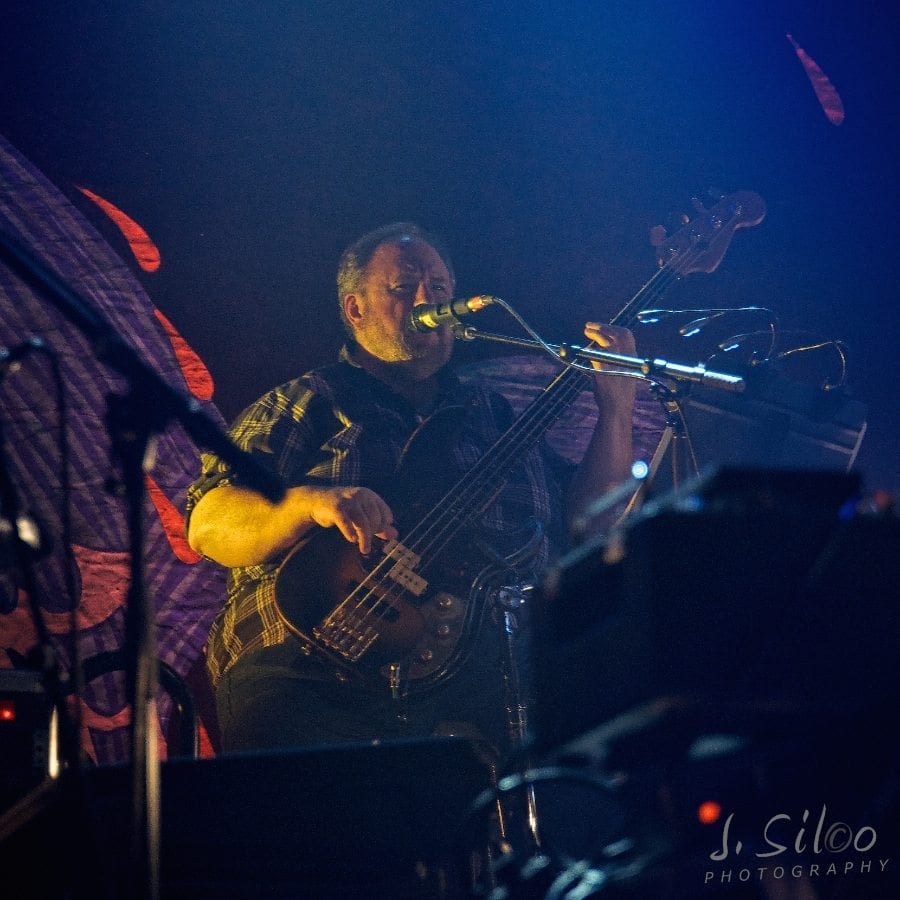 Pete Mason: What is it like being one of the most famous local music celebrities in the Saratoga area? How has your status as a musician evolved over the years living in the region?
 PM: You play a wide variety of music. Where does this interest and ability come from and do you have a style that you prefer to play above all others?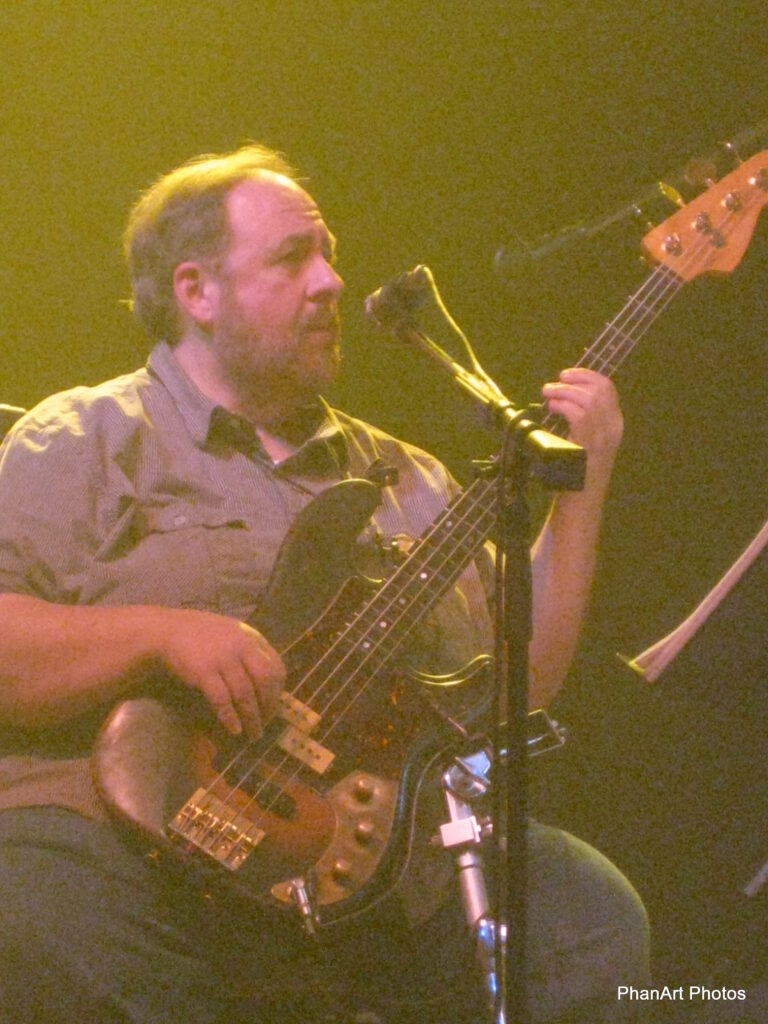
 PM: How did you develop your method of playing bass, seated with the bass so vertical? Is it a comfort thing?