The Westcott Theater in Syracuse, NY has been a go-to venue for Syracuse University students and area residents for years. Recently, the Westcott has offered an eclectic blend of bookings that span across many different music styles and genres. This particular night was no exception to this relatively new trend, as Oregon-based producer Douglas Apping took the stage with live violinist Ilya Goldberg under the moniker of Emancipator.
The crowd was primed well by openers Beatkid, Tor and Eliot Lipp, who offered fast-paced infectious dance grooves that drew from several subgenres of electronic dance music like House, Drum n Bass, and Dubstep. I had broken a sweat and felt loosened up by the end of Eliot Lipp’s set, anxiously waiting to see what Emancipator would bring next. As Emancipator began their set, the overall vibe of the crowd seemed to change from raging craziness to a slower, more relaxed feel. Emancipator’s advanced lighting rig grabbed my attention right away. The rig included thirteen LED lit triangles that towered over the two artists. It was obvious that the lights were programmed for each song, as they seamlessly changed with each subtle transition in the music.
Emancipator seemed to build in the layers in each track carefully, which allowed the set to take on a free-form. Emancipator barely used any distinct riffs from any of their albums, but did include brief teases of “Jet Stream” and “Kamakura” from their latest album Safe In The Steep Cliffs. Douglas and Ilya seemed to be in a trance, lost in their own musical take on down-tempo, trip-hop grooves.
The performance was especially enjoyable and unique because the music warranted multiple potential responses. One could dance to it, just stand and relax to it or immerse one’s mind in the detail and complexity of it. An even blend of these types of expressions was apparent in the audience and I was eagerly sampling each one. This show presented me with three things that I look for in a live music experience: a danceable groove, some musical complexity to ponder and a chill crowd to experience it with.
The Saranac Lake Winter Carnival will take place February 1st-10th, 2013. Back in 1897, The first “Mid-Winter Carnival” began as a way to enjoy outdoor recreational activities such as skiing, sledding, and skating in the coldest days of winter. That inaugural 2 day event featured skating races, a parade and an ice tower. The following year, the first Ice Palace was constructed from blocks of ice from Lake Flower’s Pontiac Bay. Today, the The Ice Palace stands as both the centerpiece and symbol for the Winter Carnival.
Another long standing tradition at Winter Carnival is the Waterhole‘s live music series. Each night of Carnival, Waterhole features the region’s top bands and/or local favorites. This year’s lineup is top notch, check out the flier below and hopefully we’ll see you there!
What once was a bunch of friends jamming cover songs to an elite few in a living room while their listeners munched on hummus and drank the wine has now molded into closed session rehearsals and a slew of new songs. Those originals skipped a trial run. Instead, the five bones tossed their project out into the world for a live recording in front of a live audience at the Rustic Barn in Troy, NY.
The Bear Bones Project has drawn a following of old time hippies hanging onto Grateful Dead era songs and young followers trying to capture the essence of an era just out of their reach. The winter covered streets, the flakes in the frosted beards and ice under foot didn’t stop their dedicated following for the trek into the hills just beyond Troy. Inside the dimly lit pub, the wooden beams and stone fire place set the ambiance for a toasty evening of good grub, hearty brew and jam friendly music which will soon find it’s way to a polished disc.
Each set was a blend of originals speckled in between obscure cover songs. However, they started with a fun warm up tune familiar to most. The Bear Bones Project had a little fun with The Beatles original, “I’ll Follow the Sun.” They create a neat little arrangement of two part harmonies breaking away to the only female of the group, Sandy Decker, during the chorus. They were warmed up, the crowd was primed and they kicked it up a notch breaking into some brand new songs written by lead vocalist and guitarist, Carey Ahner. The Bear Bones Project arranged each song for an overall sound of bluesy, classy jams interjected with a playful flute. Bill Decker laid the bass lines down and drummer Eric Johnson moved the songs along as guitarist and vocalist Pete O’Hearn added just enough depth to keep this project firmly rooted in it’s inspirations of whimsy and jazzy tunes.
Each new song is rich in lyrics, and musically accomplished. There is a certain kind of sway to their songs and it is certain to get folks out of their seats. The Bear Bones Project can be seen at various clubs around the Capital District.
What do you get when you take the mandolin from Woodenspoon, mix in the drums and guitar from moe., and add the fiddle/banjo and upright bass,? A knee-slappin’, foot stompin’, head bobbin’, skirts-a-twirlin’ good time.
Floodwood is Al Schnier & Vinnie Amico of moe., Jason Barady (mandolin) of Woodenspoon, plus Nick Piccininni (fiddle and banjo) and Zachary Fleitz (bass). This isn’t the first side project for Al and Vinnie. They have been playing together in Al & The Transamericans for over a decade.
This quintet came together about a year and a half ago, but on stage they gelled like they’ve been doing it much longer. The fun interactions between bandmates added to the warm vibe in the room as they pulled out a unique mix of bluegrass, Americana, and progressive string – or as the band would call it “Madgrass”.
While the snow may have kept some people home on Friday night, the ones who showed up got a pleasant treat. There was even one person who drove all the way in from Boston to see the show and was heading to Oneonta the next night for a double-dose of Floodwood.
The band mingled with the crowd during opening act Rebel Darling, a trio featuring two guitars and a harmonica. There were a lot of familiar fans (some of whom were family and friends) there to see the local musicians. Floodwood seemed to be right at home at The Putnam Den. In fact, during the second set, Nick Piccininni jumped down off the stage to play fiddle and dance with the many smiling faces on the dance floor.
It was a great time for those who braved the slippery conditions. If you are one of those who stayed safely at home Friday night, you will be able to catch Floodwood as they play theFiddler’s Picnic festival this year with other local favorites like the Rumpke Mountain Boys, The Blind Owl Band, Eastbound Jesus, Jatoba, and many others. But those courageous souls who made it — they got to be a part of Floodwood’s intimate, and successful, Saratoga debut.
When most people think of Saratoga Springs it’s visions of horse racing in August. Tiffany and Jonathon Albert, Bob Millis and Jarrett Hartstone and the staff at the Putnam Den are working hard to make Saratoga known as a place to catch great ORIGINAL music, year-round! Based on the crowd at the Putnam Den on a bitter cold Thursday in January, they may be succeeding. Over 150 people braved the negative temperatures to feel the face melting heat of two talented bands, Barika and John Brown’s Body.
Barika (pronounced body-kah) started off the night with a unique blend of psychedelic charm and West African-inspired beats thrown in, crossing gracefully into the realm of dub. When Craig Myers stood center stage with a large gourd that had a long neck and bright yellow strings, heads turned. The opening act of most shows is noticed for a moment and then conversations continue throughout the room. However, when Craig started to play his Kamel N’goni – a wave of silence washed over the crowd. The Kamel N’goni sounded like two dueling banjos fighting it out to see who could please the eardrums more. Both hands plucked and strummed away at the neon strings, setting off a magnetic vibe through the Den. As Barika played, the crowd started to creep toward the stage to find out what foreign magic these strangers from Burlington, Vermont brought to Upstate New York. Craig wasn’t alone in playing the funky groove. Barika has six other talented musicians: Caleb Bronze (Drums), Rob Morse (Bass), Andric Severence (Keyboards) and on horns are Dave Purcell (Trumpet), Gordon Clark (Trombone) and Deva Racusin (Tenor Sax). Deva didn’t make it out to the Putnam Den, but you can hear everyone on Barika’s new CD, Remember, available on iTunes and other outlets.
Just as things were getting warmed up nice and toasty, John Brown’s Body came on stage and turned the heat way up. John Brown’s Body has Upstate roots in Ithaca and have been playing their future roots take on reggae for nearly 10 years. With tours around the world, it is always nice to catch them back in the area with new songs and a new EP, JBB IN DUB. JBB started the show with a song off their new release, “The General’s Ambush.” A nice steady beat and smooth horns come into play in this melodic instrumental number. Bandleader Elliott Martin got to flex his chops with the second song, “Invitation” that had more of a ska sound with the brass section sharing the spotlight with Elliott’s smooth yet strong vocal stylings. The crowd took the “Invitation”, and those fortunate enough to be at the Putnam Den had a hard time not approaching the dance floor. More dub, more funk, more dancing ensued as JBB played another track off the new album, “The Grass.” “The Grass” was reminiscent of the reggae of Marley in that it carried a strong message. The band ended up playing three songs off the new EP.
John Brown’s Body is also planning a new full length album in the next few months and played “Plantation” off that upcoming release. They also played old favorites like “The Gold”, “Resonate”, and “Push Some Air”. Look for them around the festival circuit this summer and keep an eye out for the new album. John Brown’s Body is a treasure that Upstate New Yorkers can call their own and it was a nice surprise to see them at the Putnam Den. Be sure to check out the Den’s upcoming shows and give them the support they need to keep bringing these great line-ups to the region.
Setlist: General’s Ambush*, Invitation, The Grass*, Plantation, Wellington*, Shine Bright, The Gold, Follow Into Shadow, Peace in the Valley, The Cup Dub, Empty Hands, Make It Easy, Zion Triad
EP Review: “The Sound of Forgiveness” by Sleep Circadia
Genre: Metalcore/Prog
Rating: ****1/2
Full of surprises, dark energy, and musical mastery, Sleep Circadia’s debut EP is certainly the right way to kick off 2013 in the 315 music scene. After reviewing the lead single, “Gloom”, I have been anxiously awaiting the release of the whole EP, and am in no way disappointed with the whole product. Like the single, the rest of “The Sound of Forgiveness” is ridiculously heavy, full of melodic riffing and super slow breakdowns, deep lyrics, great grooves, and dark atmosphere. The greatest thing about this EP, however, is not what is in “Gloom”, but what isn’t in it that the rest of the songs have. This EP keeps you guessing, with different melodic patterns, song structures, and sound effects. The title track/intro song is climactic, building up the suspense as it opens up into “Set It Off”, and the whole record keeps that sense of curiosity at what will come next. It is beautifully produced, giving a creepy, confined tone that seems to open up and close you inside it at the same time. This sound matches the incredibly low tuning of the instruments and key of the vocals, making the whole thing seem so mysteriously dark. The musicianship on this EP is fantastic. The guitar tracks consist of choppy rhythms, shredding riffs, slow breakdowns, and catchy melodies, all in a creepy tone, and most of which are in every single song. The drums are phenomenal, keeping the time perfectly and alternating flawlessly between very fast and very slow rhythms of different styles. The bass has one of the coolest tones I’ve ever heard, which is really saying something because you can almost never hear the bass in a song. The vocals are incredibly low and well delivered, with great execution of both the guttural screams and the beautiful clean vocals. I must mention, however, that I have seen Sleep Circadia many times before, and their screams are better live than on the studio recordings. This sounds like a bad thing, but it really isn’t for two reasons; the vocals do sound good on the EP as well, and it gives you another reason to go see them play live. If, of course, the fact that their music is awesome wasn’t reason enough to want to see them live. Their live show is every bit as entertaining and heavy as the EP sounds, but seeing them live adds a whole new depth to the character of the band. In conclusion, I recommend “The Sound of Forgiveness” very highly to all fans of metal and hardcore for its creativity, atmosphere, quality, and diversity. I predict that the future is as bright for Sleep Circadia as their music is dark.
Go “like” Sleep Circadia and download “The Sound of Forgiveness” here FOR FREE:
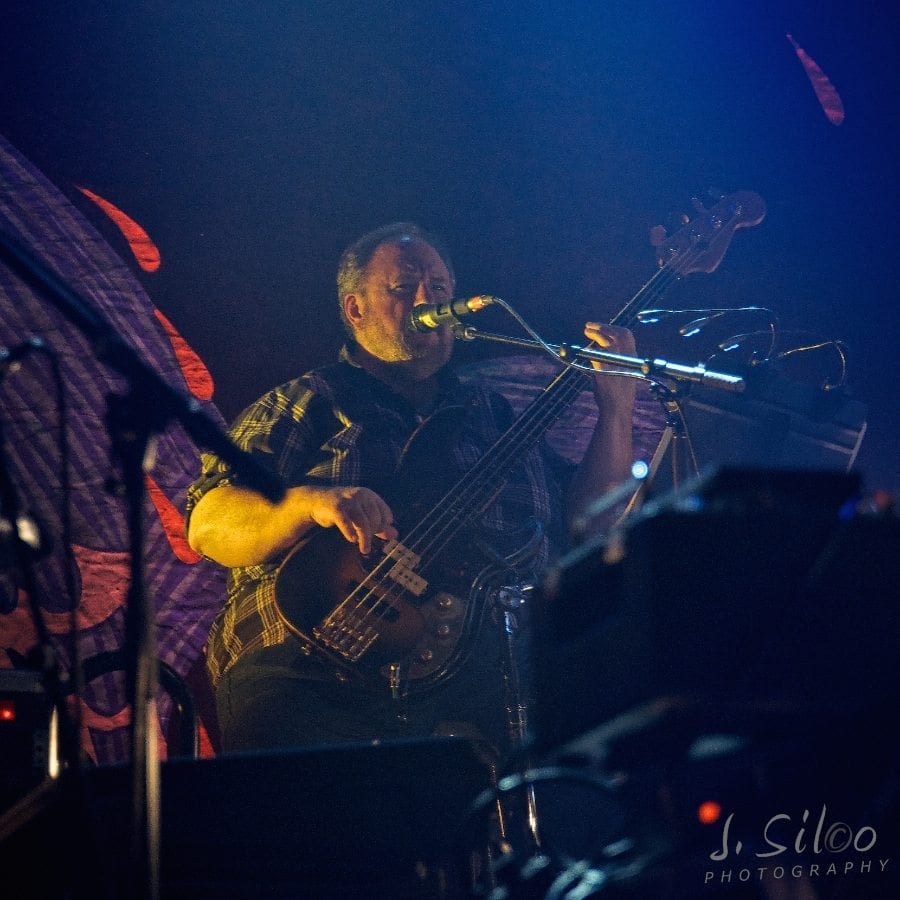
Upstate New York music legend and producer Tony Markellis has played with the likes of David Bromberg, Jo Henley, Paul Butterfield, The Mamas & the Papas, been a member of The Unknown Blues Band and is the current bassist for Trey Anastasio Band.
With a career spanning from his origins in Helena, Montana to his current home in Saratoga Springs, NY, Markellis has spent the past forty-plus years playing a wide variety of music, including jazz, folk, rock, country and blues music, including appearances on nearly 100 albums in his storied career. Tony was kind enough to sit down for an interview after meeting at the Soule Monde show at Putnam Den on May 12, 2011 and discuss his bass playing and local musical impact.
Pete Mason: What is it like being one of the most famous local music celebrities in the Saratoga area? How has your status as a musician evolved over the years living in the region?
Tony Markellis: I really don’t think about it much. I live a pretty private life, and for the most part, I come and go without much notice when I’m not in a professional setting. I don’t think most of my neighbors know what I do for a living, and I tend to prefer it that way.
PM: What is it like playing with guys like Russ Lawton and Jo Henley?
TM: Playing with Russ is a real pleasure. We’ve known each other for over thirty years, and I’ve been a big fan of his playing since I first heard him playing with Zzebra (a Vermont based Afro-fusion band led by Nigerian musician Lofty Amao, formerly of Osibisa). My band, Kilimanjaro, was losing drummers just about every five years. Every time that happened, I would recommend Russ as a replacement, but the timing was never quite right– even back then he was in high demand! When Trey called me up to start what became TAB, I couldn’t think of a better drummer for the project than Russ. My one and only regret about Russ is that he’s a strict vegan, and I’m definitely not. Wherever we go, I’m always in search of the local equivalent of a goat roasting on a spit, or just about any cuisine that involves a combination of immigrants, meat and fire. As you can imagine, we don’t get to share many dining adventures.
I’m glad you know about Jo Henley. I got introduced to them about five years ago when they were recording their CD Sad Songs and Alcohol in Schenectady, NY. They happened to be between bass players at the time. The engineer mentioned that I lived in the area, and the guys knew me from my work with TAB. It worked out well, and I even played out with them for a while. I went on to do their next CD, Inside Out, as well (which also included Russ Lawton and Ray Paczkowski from TAB). Jo Henley has just released a very autobiographical new CD called Mohawk, which is a great representation of how the current working band sounds with their new bass player and drummer.
PM: You play a wide variety of music. Where does this interest and ability come from and do you have a style that you prefer to play above all others?
TM: I’ve always had varied interests– not just in music, but in everything. Life’s just too short to think that only one type of anything is good. As a college kid in Ann Arbor, I got to start playing with some living legends like blues singer Johnny Shines and singer/songwriters like Paul Siebel and Rosalie Sorrels. After that, I worked for years with people like David Amram, David Bromberg, Kilimanjaro, the Mamas & Papas and Paul Butterfield, just to mention a few. I also got some great opportunities to play once in a while with people like Professor Longhair, Martin, Bogan & Armstrong, Ellen McIlwaine and Nick Brignola. I have played almost every form of American music in one context or another, and I hope I can continue to do that for a long time to come. I have to agree with Duke Ellington that there are only two kinds of music– good and bad.
PM: Can you talk about the group of talented musicians in the Saratoga area?
TM: There are so many great musicians in the Albany/Saratoga area who I am fortunate to have worked with at one time or another. I have a couple of great singer/songwriter friends, Michael Jerling and Bob Warren, who I have been playing and recording with for about thirty years. I’ve played Mexican and cowboy music with Don & Victoria Armstrong on and off for the same period of time. They have migrated back and forth between Saratoga and the Southwest for as long as I’ve known them. For the past ten years or so, I have worked with a great roots/blues trio called No Outlet (with Kevin Maul on slide guitar and vocals and Dale Haskell on drums and vocals). For about the same amount of time, Kevin and I have been traveling and recording with the Burns Sisters, a wonderful three-sister country/Americana act out of Ithaca, NY. I worked with the Sarah Pedinotti Band (now Railbird) for a couple of years, and for the past couple of years have been playing in an intense roots/blues trio called Street Corner Holler with Dale Haskell and slide guitarist Mark Tolstrup. For a few years, I had the pleasure of playing with Albany songwriter Rosanne Raneri, who just might be the best singer I’ve ever heard.
PM: What kind of bass do you play?
Tony Markellis, The Palace Theatre, Albany, NY February 19, 2011
TM: I have a number of basses that I use, depending on what the gig demands. I have two almost identical P-J basses (combining features of the classic Fender Precision and Jazz basses), one fretted and one fretless, that I assembled myself out of parts from various makers. The fretted one is the one I generally use when I play with TAB. I have a fretless Taylor AB-1 acoustic/electric bass guitar that I use on a lot of singer/songwriter, jazz and bluegrass gigs. I have an Eminence Portable Upright that I use on some blues and jazz gigs. And I have a couple of headless Hohner basses that sound great and are wonderfully easy to transport– I can carry them on a plane and put them in the overhead rack.
PM: How did you get into playing the bass?
TM: I began playing upright bass in the third grade in my grade school orchestra in Helena, Montana. The music teacher gave us a choice of which instrument we wanted to play, and for some reason, the bass spoke to me.
PM: Any bass influences or favorite musicians amongst your peers?
TM: From early on, I was a great admirer of Paul McCartney’s playing. Unlike most of the players who I consider influences, he was always more of a ‘guitar player playing bass’ than a bassist, but the playful fluidity of his playing was always very appealing; his playing with the Beatles is consistently brilliant. As a teenager and as a college kid, I listened to guys like Jack Bruce, Jack Cassady, Freebo, Rick Danko, Bruce Palmer and Phil Lesh, but it didn’t take me long to discover the masters– giants like Oscar Pettiford, Jimmy Blanton, Ray Brown, Willie Dixon, James Jamerson, Chuck Rainey, Duck Dunn, Jerry Jemmott, Phil Upchurch, Scott LaFaro, Eddie Gomez, Family Man Barrett and George Porter. If anyone reading this doesn’t recognize some of those names, I hope they will do themselves a big favor and go look them up. Of my contemporaries, I think very highly of Lincoln Goines, Huey McDonald, Mark Rubin, Sarah Brown, Conrad Lozano, Lee Allen Zeno, Oteil Burbridge, Victor Wooten, and of course, the late Jaco Pastorius.
PM: How did you develop your method of playing bass, seated with the bass so vertical? Is it a comfort thing?
TM: I have sustained a number of injuries over the years, the cumulative effects of which have made standing up with a bass around my neck really difficult. I was an avid and overly daring skier as a teenager, and I broke my back and one of my knees. Those injuries didn’t bother me for a long time, but they’ve both kind of snuck back up on me over the years. I also broke my collarbone as a baby. It apparently didn’t set right, and after some fifteen years of hanging heavier-than-average basses over my shoulder, I started getting pinched nerves and numbness in my left arm. About ten years ago I dislocated both ends of my left collarbone in a badly-planned home logging mishap. To top it all off, last year I was on an extremely turbulent flight on the edge of a tornado system, resulting in a case of whiplash that I’m still trying to get straightened out. With all that, a seat and a bass stand makes it a lot easier for me to do what I do.
PM: How did you develop your method of playing bass, seated with the bass so vertical? Is it a comfort thing?
TM: I have sustained a number of injuries over the years, the cumulative effects of which have made standing up with a bass around my neck really difficult. I was an avid and overly daring skier as a teenager, and I broke my back and one of my knees. Those injuries didn’t bother me for a long time, but they’ve both kind of snuck back up on me over the years. I also broke my collarbone as a baby. It apparently didn’t set right, and after some fifteen years of hanging heavier-than-average basses over my shoulder, I started getting pinched nerves and numbness in my left arm. About ten years ago I dislocated both ends of my left collarbone in a badly-planned home logging mishap. To top it all off, last year I was on an extremely turbulent flight on the edge of a tornado system, resulting in a case of whiplash that I’m still trying to get straightened out. With all that, a seat and a bass stand makes it a lot easier for me to do what I do.
PM: What is it like going from the high energy/big crowds at a Trey Band show to your regular quieter gigs in the region?
TM: In many ways, I find it easier playing for a sea of faces than for a handful of people who are only an arm’s length away. The biggest difference, though, is that on the TAB gig, everything– transportation, business, equipment set-up, logistics– is taken care of by a very well-oiled crew of professionals. Back in the real world, I have get used fending for myself again.
PM: Is it a wind or a bug?
TM: Ah, yes– I’m afraid people will be asking that question long after we’re all gone.
PM: Seriously though, how did “Windora Bug” come about?
TM: It predates me. Knowing Trey and Tom, they were probably having an evening writing session near an open window, and heard something unidentifiable outside, raising the question, “Was that a wind or a bug?” and another classic was born. Trey’s always trying out different material in different contexts, and that’s one of those songs that I guess he had tried out with Phish, and then shelved until Russ and I came along.
PM: How did Trey first invite you to join him in the creation of the original Trey Trio?
TM: When Trey first went to Burlington to look at colleges, I was playing there with Kilimanjaro and the Unknown Blues Band at a great (now-defunct) club called Hunt’s. Trey claims that we were one of the deciding factors in making him choose to stay in Vermont. He and his girlfriend Sue came out to see us on their first date; years later, we played at their wedding. As we were watching Phish develop into the juggernaut that it is today, they were also looking to us “old guys” for inspiration. The Phish guys were also big fans of the Sneakers Jazz Band, some of whom also became members of TAB. In 1999, Trey wanted to get a side project going, and he got in touch. At the time, he was very interested in African music such as that of Fela Kuti, and I couldn’t think of anyone better than Russ Lawton, with his strong background in African beats, to recommend to Trey as a drummer for the project.
PM: Didyou have any input into the evolution of the band as it went from 3 members to 6 to 8 to 9 to 10 and back to 7?
TM: I brought Russ on board– beyond that, it’s all been Trey’s doing. The process has involved Trey trying to assemble a group of individual musicians who are not only versatile enough to handle all the many styles that he might throw their way, but are also agreeable enough to coexist smoothly. And I think it’s worked beautifully– I can’t imagine a better group of not only musicians, but people, than the current TAB lineup.
PM: Describe the evolution of songs like “Sand”, “Gotta Jibboo” and “First Tube”, three of the most popular and famous TAB songs that have become full fledged Phish songs.
TM: When Russ and I first got together with Trey, he encouraged us to build some basic grooves from the bottom up, based on things we liked or had been working on individually. He then fleshed the grooves out with his own ideas. We came up with the foundations for about twelve or fifteen tunes from our first rehearsals. After we left, Trey continued to tweak ideas, eventually adding some of Tom Marshall’s lyrics onto the finished tunes. He eventually took a few of them to Phish, and now they’ve become standard parts of the Phish songbook– so much so that when a lot of people hear us play them, they think we’re covering Phish tunes.
PM: How does life on the road affect your playing over time? Do you prefer to stay local for shows?
TM: They both have their good points. I love to travel– I have since I was a little kid. My parents would throw us on a train and take us from Montana to Chicago or New York, or we’d drive to San Francisco or the Oregon coast. Now, as an adult, how much better could it get than getting paid to travel around the country playing music with a bunch of people I like? There is, however, something to be said for being able to jump in the car, drive five minutes to the gig, and five minutes back to sleep in my own bed. One thing I know is that I don’t get much time to practice when we’re on tour.
PM: How did the 6/20/10 sit-in at SPAC with Phish come together? What prompted it and how did it all go down?
TM: I hadn’t heard Phish play for a few years, and I wanted to stop by to say hi to all my friends in the band and the crew. If you know anything about Trey, you know that he is unable to pass up a show-biz opportunity. As soon as he saw me, I know he was thinking, “How can we work this into the show?” It worked out fine– he picked a song that I cowrote (Gotta Jibboo, which Phish even plays in the same key), so it wasn’t a stretch. Fishman is such a pleasure of a drummer to play with, it was just a piece of cake. I think Mike even enjoyed playing guitar for a change. I guess I’m just lucky that Trey didn’t have the crew try to stuff me in that bathtub with all those little kids!
PM: Have there been any TAB moments that stand out among the rest over the past decade-plus?
TM: I enjoy listening to the other players in the band so much that there have been moments– I couldn’t tell you exactly where or when they were– where I’ve just sort of left my body while listening to them play. I’ve enjoyed the beautiful venues we’ve gotten to play– Red Rocks stands out, as does RadioCityMusic Hall, the Ryman Auditorium, the Pabst Theater and the gorgeous Fox Theaters. One of the most memorable highlights for me would be when Carlos Santana came to sit in with us at the Warfield Theater in San Francisco in 2003. He’s been a musical hero of mine since I was in college. What a great night that was– I was grinning from ear to ear the whole time!
I won’t lie — I went into Umphrey’s McGee’s show at the Landmark Theater in Syracuse on January 17, 2013, with almost no high expectations. I had seen them nine times and not once was I blown away. It always seemed stale, like the music was a moldy piece of bread. Just guitar solos and crazy lights, which always made for a fun show, but UM never made the cut to my iPod. That has since changed.
So it came as a huge surprise to me when I walked out of the venue with a smile on my face, slapping hands and chatting about how great of a show it was. And it was! Not being familiar with a band’s full catalog can have serious consequences if you are reviewing a show. Luckily for me, I knew every song and had just enough UM experience to understand what was going on.
First, let’s talk lights. Jeff Waful, the band’s lighting director, is insane. Not the committed-to-asylum insane, but lights-in-your-face crazy. I am so used to Chris Kuroda of Phish that I never really thought lights for any music could be as powerful as they are for Trey and Co. Waful puts on more of a psychedelic feeling show, with lasers and rotating bulbs. The Landmark is a small theater and to fit a rig in there has to be difficult and cannot compare to playing a large festival or outdoor arena. Waful manages to weave in perfect diversions from Jake Cinninger and Brendan Bayliss’ wicked guitar mania. Those two guys, who just so happen to put on a real guitar clinic every summer, are two of the most talented players going today. My only gripe is that the lights were so blinding that I couldn’t hone in on watching their fingers. As a guitarist, I try to take something from every guitarist I see play. I need to see them again, standing on the stage again, listening to them shred again.
“Cummins Lies” bled ever so thrashingly into “Miss Tinkle’s Overture” before a brief breath. “Walletsworth”, “Der Bluten Kat” segued into an instrumental of Springsteen’s “I’m On Fire” back into “Der Bluten Kat”, “Through the Cracks”, “Smell the Mitten” and “The Floor” made for a rocking set. The second set was where I got “it”, as in understanding the band. “Prowler” > “In The Kitchen” > “Deeper” > “#5” > “In The Kitchen” was a full-on dance-a-thon, It just kept heating up with “Let’s Dance”, “Utopian Fir” > “Cemetery Walk” lit the rafters ablaze with fiery soloing. An encore of “Miami Virtue” > “Glory” sent the almost-full theater home with a happy ending.
Setlist
Set 1: Cummins Lies > Miss Tinkle’s Overture, Walletsworth, Der Bluten Kat > I’m On Fire > Der Bluten Kat, Through the Cracks, Smell the Mitten, The Floor
Set 2: Prowler > In The Kitchen > Deeper > #5 > In The Kitchen, Let’s Dance, Utopian Fir > Cemetery Walk
Questions were looming whether Camp Bisco was going to happen in Upstate New York this year. There were rumors of it being completely done; moving south or even changing it’s name. Well, Bisco fans don’t need to worry anymore. Camp Bisco announced that the show will go on for # 12 of its run. Camp Bisco will be returning to the beautiful Indian Lookout Country Club, in rural Mariaville, NY.
Camp Bisco is a unique festival for many reasons. Where else can you find such a unique blend of electonic house, hip hop, jam bands and whatever else they might throw at you every year. the only thing you can count on is that the disco biscuits will be gracing the stage and that you will have a great time. Oh yeah, there is also a good chance of rain.
The festival plans to expand and enhance the experience for attendees by adding “surround sound and greater concert production to all stages. From large-scale art installations and artist workshops to performance art demonstrations, carnival rides and more, Camp Bisco is also increasing the interactive elements in 2013 to create an even better festival experience for patrons. Long distance shuttles will also return, offering service from Albany, Baltimore, Boston, New York City and Philadelphia.”
Early Bird tickets go on sale Saturday, February 2 at 10 a.m. EST for a very limited allotment at $170. General on sale tickets will start at $185, before raising to the last minute price $199. All-inclusive pre-sale VIP packages are available again this year, starting at $450 for VIP and $1300 for a pair of Platinum VIP tickets, before increasing to $500 and $1400 respectively. Camp Bisco will also be introducing a new layaway plan, where fans can divide payments on General Admission tickets equally between the on sale date and July 1st. Tickets will be available online at campbisco.net. Camp Bisco is an 18 and over event.
Floodwood, the progressive string band featuring the combined talents of Woodenspoon’s Jason Barady, Nick Piccininni, and Zachary Fleitz, plus moe.’s Al Schnier and Vinnie Amico, have announced 2 Upstate NY festival appearances in the month of June.
Saturday June 15th, Floodwood will return for the 2nd annual Fiddlers Picnic at Miller Hollow in Marion, NY. The Fiddlers Picnic is a celebration of American bluegrass, folk, and roots music. 3 days and nights of live music on 3 stages, overnight tent and RV camping, arts & crafts vendors, food vendors, a kids activity area, art & soul village, fire spinners, songs around the campfire, and more! Floodwood will headline the main stage on Saturday night.
Other bands featured include Rumpke Mountain Boys, The Blind Owl Band, HogMaw, Jatoba, The Mallett Brothers Band, Eastbound Jesus, Free Grass Union, Acoustically Speaking and more.
Sunday June 16th, Floodwood will perform at Clearwater’s Great Hudson Revival. The “Clearwater Festival” features seven sustainably powered stages with diverse music, dance, and storytelling. Inspired by Pete Seeger’s desire to clean up the river over forty years ago, Clearwater’s Great Hudson River Revival initially helped raise the funds to build the sloop Clearwater, which has since become a world-renowned floating classroom and a symbol of effective grassroots action.
The Clearwater Festival will take place on Saturday and Sunday, June 15 and 16 at Croton Point Park in Croton-on-Hudson, Westchester County, NY. Other acts include Sharon Jones & the Dap Kings, Son Volt, Acoustic Hot Tuna, Jorma Kaukonen & Steve Kimock, Antibalas, David Bromber Quartet and more


 Pete Mason: What is it like being one of the most famous local music celebrities in the Saratoga area? How has your status as a musician evolved over the years living in the region?
 PM: You play a wide variety of music. Where does this interest and ability come from and do you have a style that you prefer to play above all others?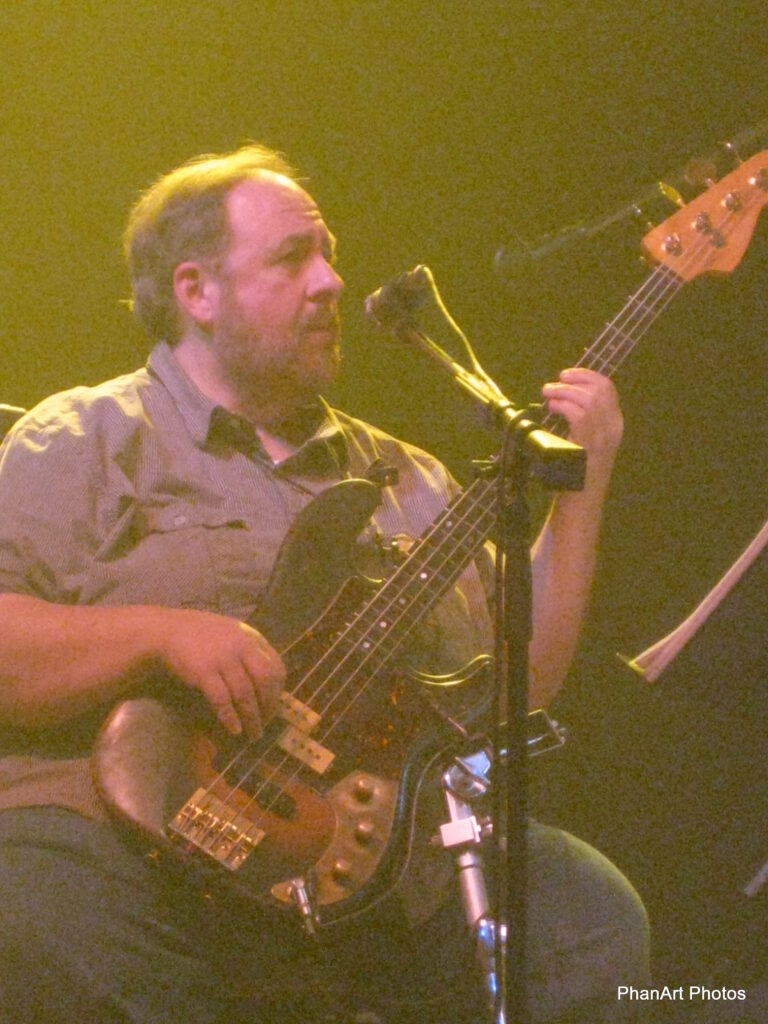
 PM: How did you develop your method of playing bass, seated with the bass so vertical? Is it a comfort thing?
