Category: Album Reviews

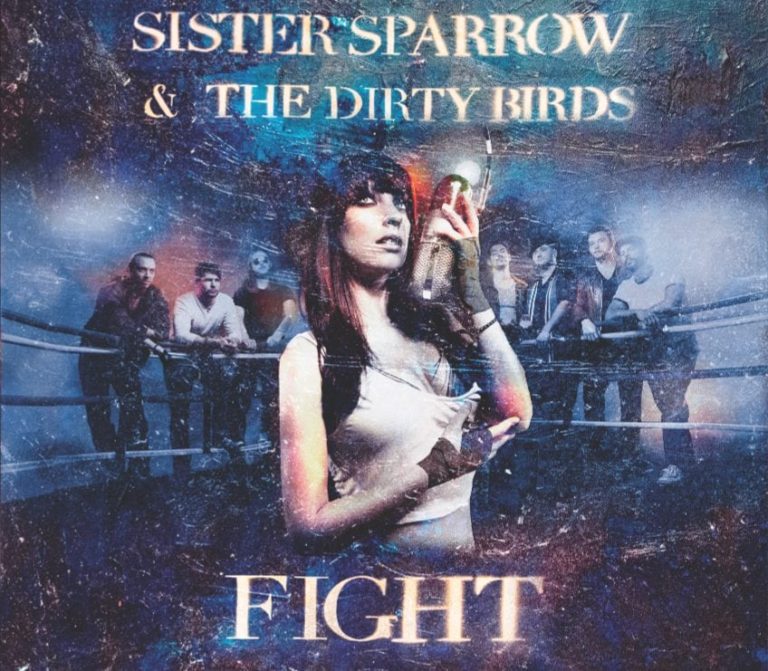
  • Hearing Aide: Sister Sparrow and The Dirty Birds new EP ‘Fight’

    Fight, the latest EP from Sister Sparrow and the Dirty Birds doesn’t just have American Idol’s Randy Jackson as producer, it features a matured and well-honed sound of the large funk group, headed up by the soulful Arleigh Kincheloe. The eight-piece band’s first release since early 2012 (the compelling Pound of Dirt) continues the funk parade with four powerful tracks that make the wait for the next full length album a little more satiable.

    sister sparrow fight“The Long Way” is a fast and funky number, with Arleigh channeling 1970s Tina Turner in her vocals while the horns give a Big Bad Voodoo Daddy blast as a frame for the number. The soulful serenade of “Fight” makes for a poweful love song, where Arleigh combines a dose of Tina with guitarist Sasha Brown riffing “Little Wing” to compliment the pain pouring out in the lyrics. Forceful horns and bass create the dirty funk of “Boogie Man”, grittier and nothing like K.C. and the Sunshine Band’s song – this one smokes on its own. The final track, “Crawdaddies”, could be a Grace Potter song from first listen, and with a thumpin’ beat and New Orleans style funk, makes for a number destined to shine in live performance. Fight is funky and soul-filled, with no frills or excess – just pure Dirty Birds.

    Sister Sparrow & the Dirty Birds are swinging through Upstate in early December, with a stop in Albany on December 5th at The Hollow, and they ring in New Years Eve at Club Helsinki in Hudson. Don’t miss this fast-rising funk troupe from Brooklyn, there’s plenty of Fight in them.

    Sister Sparrow & the Dirty Birds on Facebook

  • Hearing Aide: Arcade Fire ‘Reflektor’

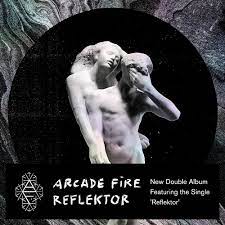
    Arcade Fire Reflektor

    After releasing the Grammy Award winning The Suburbs in 2010, Arcade Fire traveled to multi-instrumentalist, Régine Chassagne’s Haitian homeland, where the Montreal-based septet played before a Caribbean crowd whose musical background extended as far as the francophone island’s coasts. Just as George Harrison’s post-Revolver trip to India resulted in newfound international influences and a fresh identity as Sgt. Pepper’s Lonely Hearts Club Band, Arcade Fire was exposed to Haitian rara spawned the creation of The Reflektors, a moniker used in the band’s promotional campaign leading up to Reflector having a late October release.

    From the beginning of the album’s  ambitiously creative promotional campaign, the influence brought on by traditional Caribbean culture acted as Reflektor’s centerpiece. The album title’s initial announcement came in the form of veve-inspired street art spread all throughout major cities across world, followed by the display of a Manhattan mural reading “Arcade Fire 9 PM 9/9.”

    On September 9, Arcade Fire released their first single, “Reflektor,” the track that opens their fourth record of the same name. In its introduction, “Reflektor” exhibits a percussion section prominent throughout the entirety of the album.  Made up of drummer Jeremy Gara and Hatian conga players found during the band’s Caribbean travels, the percussive dominance used throughout Reflektor is emphasized by the production contributions of LCD Soundsystem’s James Murphy.

    Divided into two discs, the first half of Reflektor continues the title track’s dance-driven instrumentation, integrating a range of genres far removed from the baroque-rock days of Funeral. “We Exist” incorporates a disco-style bass riff among reverbed-out guitar chords, and the influences responsible for distorted guitar lines in “Normal Person” are recognized by frontman Win Butler’s opening enquiry: “Do you like rock ‘n roll music?” Reflektor’s second disc is introduced by “Here Comes The Night Time II,” whose dissonant string section and prolonged synth lines feel more appropriately fit for the conclusion of an evening than its beginnings. Disc two finishes with the eleven minute-plus “Supersymmetry,” an ethereally epic track that acts as the cessation to an equally epic record. As a follow-up to their most well-received release in The Suburbs, Reflektor is the result of a more experienced, innovative Arcade Fire.

    Key Tracks: Reflektor, Here Comes The Night Time, Afterlife

  • Album Review: The Chronicles ‘Spanning the Gap’

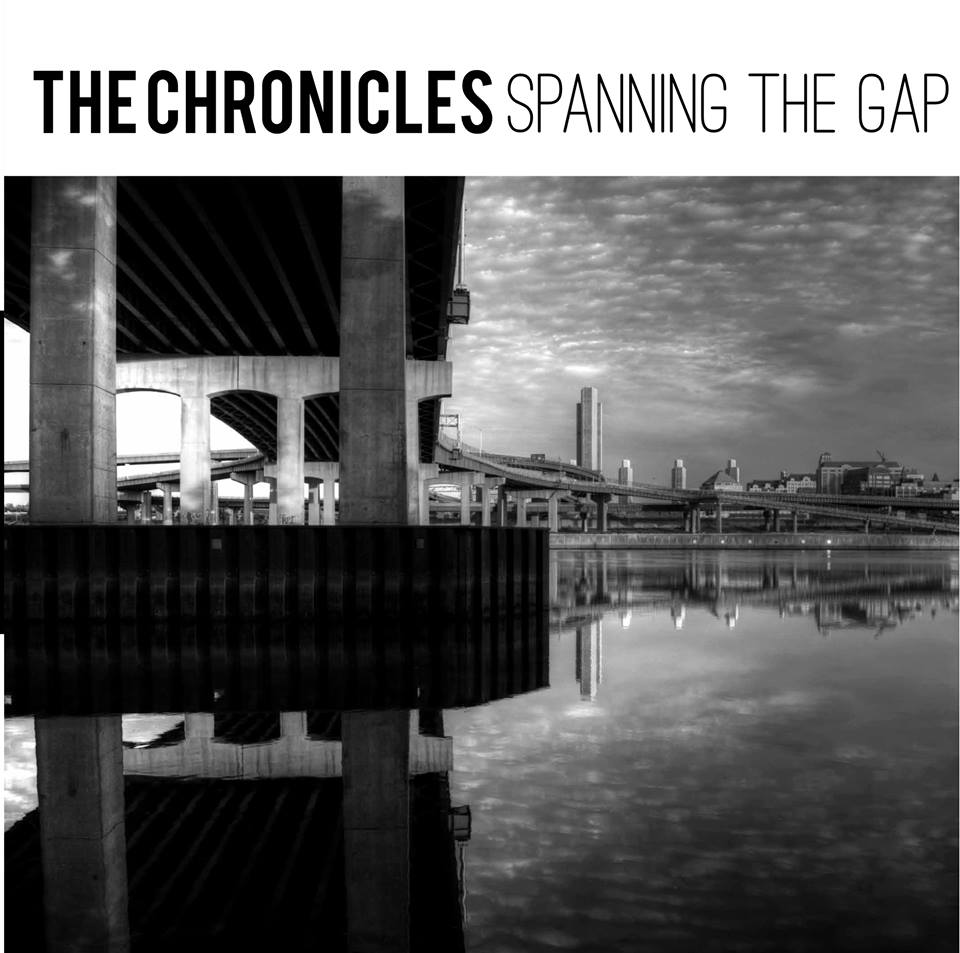
    spanningthegap

    The Chronicles, a progressive jazz band from Albany have released their second studio album this month, Spanning the Gap. Their newest album was produced and mixed by musician Alan Evans of Soulive, who even makes a guest appearance on a few tracks. The seven-piece band combines the flavors of funk, soul, jazz and hip hop to create a dynamite album that is not easy to put down. The album is available for free listening and immediate digital purchase on their website, where you can also order vinyl copies.

    The album kicks off with “Village Living”, a groovy attention grabbing guitar melody from Justin Henricks that soon meets up with the eruption of the full band sound. The horns get dirty as they jazz up the song with a wide range of notes with the organ blasting in full effect. “Interzone” switches into a smooth and chill retro groove with a slow tempo that increasingly picks up pace into a jumping back and forth dance party. “Way Back Home” brings in Tara Merritt for vocals for a sensitive yet tough twist, suitable for The Chronicles diverse sound. This song features a more sophisticated feel with the strong string presences of Iris Mulhern on harp, Phil Ducreay on Violin and Dylan Perrillo on String Bass. “Vibe” features strong cymbal playing and percussion for a relaxed funky feeling with a little help from Alan Evans.

    “Just Knew”, an upbeat song with a great blend coming from every musician making for a unstoppable funk machine. Philippe Chow brings his trumpet to the table for an extra and always appreciated boom. “Spanning the Gap” gets a dose of hip hop from Jeff Nania, spitting out lyrics in sync with the modern chill jazz with a light piano solo from Tyrone Hartzog to finish off the song, proving that The Chronicles have no problem bridging multiple genres. “Quartal” is where Nicholas Lue shines with heavenly piano peaks and a consistent locomotive vibe. “Bad,Bad,Bad” features vocals recorded by Tyrone Hartzog, organ player of the band, with funky guitar riffs giving off the bad boy charm. “Reprise” ends the album with robust, soulful keys and steady bass notes from Daniel Lawson, to fade out with echoes of the haunting harmonies.

    Key Tracks: Way Back Home, Just Knew, Spanning the Gap

  • Hearing Aide: Paul McCartney ‘New’

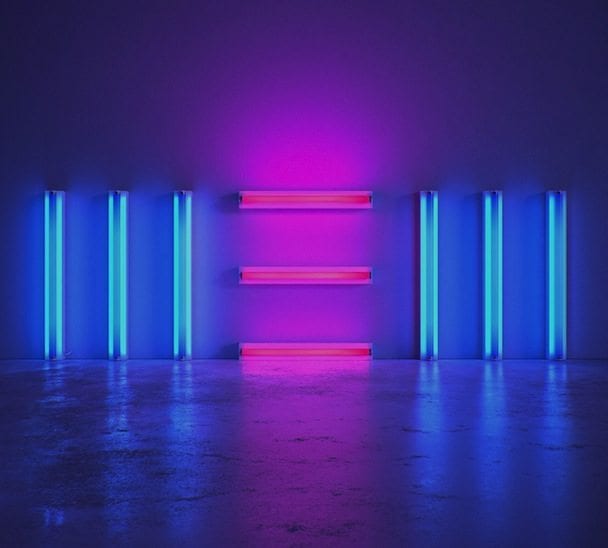
    In some sense, Paul McCartney, on his 16th solo studio album, New, is appropriately named. By titling the album New, McCartney suggests that in his seventy-first year, he’s making music unlike anything he’s done before. For someone as accomplished as McCartney, this is a pretty big statement. While the album’s four producers, Paul Epworth (Adele), Mark Ronson (Amy Winehouse), Ethan Johns (Kings of Leon), and Giles Martin (son of George Martin), contribute new age aspects to the music of a man who co-wrote his first number one song in 1962. McCartney himself approaches New with songwriting topics unfamiliar to his sixty year career.

    Paul McCartney NewNew is McCartney’s first album of original material since 2007’s Memory Almost Full. Since then, he’s written classical music for the New York City Ballet production, Ocean’s Kingdom, performed with three surviving members of Nirvana, released an album of standards as Kisses on the Bottom, and re-married for the second time. As long as this list of achievements may be, side projects, legendary collaborations, and re-marriages are nothing new to McCartney.

    What makes his most recent album “new” presents itself in the first ten seconds of its opening track, “Save Us.” Controlled distortion introduces a guitar riff straight out of The Strokes’ 2011 album, Angles, creating an indie-rock feel that quickly merges with a driving piano and classic McCartney courting: “I can try to give you everything you ever wanted / You’re not hard to please.” Tracks like “Alligator” and “Appreciate” also display the efforts of New’s all-star production team, incorporating Danger Mouse-esque beats and synth work far removed from the Abbey Road days. The album’s standout tracks, however, come as acoustic ballads focused on McCartney’s life before the Beatles. “Early Days” recounts the beginnings of the McCartney/Lennon relationship, and “On My Way To Work” is told from the perspective of a pre-fame McCartney. It’s these glimpses of personal insight that make the album different than McCartney’s work in the past; the album is an opportunity to look back and appreciate, to recognize what is new.

    Key Tracks: Early Days, New, On My Way To Work

  • Hearing Aide: Toad The Wet Sprocket “New Constellation”

    When “All I Want” hit the airwaves in 1992, it railed delightfully against the timbre of the dominate alternate genre. So much so, the band I was in covered it, the song reached the top 5 of Billboard’s “Mainstream” column and into the Top 20 of the “Hot 100”. Pretty nice, as well as the equal success of “Walk On The Ocean”, but for me, that was their flash in my pan, though the songs remain all-time favorites. Fear was their third release, spawned these two gems, and earned the band their first Platinum plate.

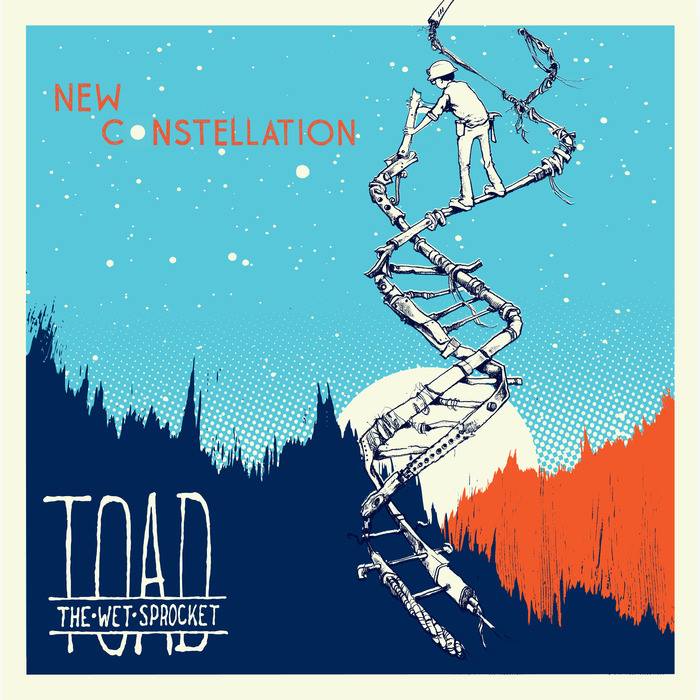
    New ConstellationTheir line-up has remained Glen Phillips (vocals, guitar), Todd Nichols (guitar), Dean Dinning (bass) and Randy Guss (drums) and they’ve had their break-ups and reunions, but any band lasting this long surely deserves a listen. New Constellation is the newest offering from TTWS. (By the way, the band name comes from an Eric Idle sketch where he made up a name he thought was so silly, it would never be used.)

    The title track opens almost as expected, they come out of the box and flex their layered vocal harmonies over soft hooks, trying to hang on to their prior strengths while expressing 16 years of personal growth. “California Wasted” pushes the topic forward and looks back at time spent as it flies by. Not even having a chance to correct the mistakes you’ve made or take in what’s right in front of you. Sweet melodic structure has been a signature for TTWS and continues with “The Moment” which speaks directly to living in the now and friendship lost. A nice reflection of maturity, but I always felt they were ahead of their time in the early 90s. “Rare Bird” may be a bit of a tired analogy, but the lilting guitar and the soaring, melancholy reading make it quite convincing, where “I’ll Bet On You” is signature stuff. Cali beautiful, thick harmonies, big guitars that bolster, not overwhelm, it’s up, it’s positive, it’s a single! (or should be)

    “Golden Age” opens like I had been waiting for with some nice finger-picking on top of a subtle pedal-steel line, you can almost picture the three piece drum kit. Fleeting dreams and wants abandoned in search of a goal, very introspective, full of fore-thought. “Get What You Want” picks the pace of the album back up with a little Indie gas and entitlement, sticking around a developing theme of being left for what is perceived as less. It could be right, it could just be bitter, either way it rocks pretty strong on this cut. I’m not sure I’d want to be hanging with these guys while they wrote this, but the best music comes from an open-heart. “Is There Anyone Out There” continues on expressing the difficulty in communication and the nuance of hearing what is said until it’s understood properly. “Life Is Beautiful” takes the next step in healing, acceptance, opening your eyes to what remains and life’s possibilities, like the song title says. While “The Eye” takes a quick dig at becoming jaded and accusing, but I guess we all get a little resentful at some point. Musically it’s thick and tight, fitting for the topic. “Enough” closes out the 11 song early edition I have, there are 15 on the full release. Apt to close the song cycle, it’s bittersweet and heart-broken, yet yearning with positivity. Wanting just to move forward, not wanting to know more, pushing through the pain against physical resistance. “Don’t tell me when I have had enough, I’ll tell me when I’ve had enough”.

    It’s remarkable to me that a band this talented would need a Kickstarter program, but in this case they’ve used it a unique way, to retain their “Indie” status and keep control over their work. Brilliant. “We hit our goal in 20 hours” noted Dean Dinning while speaking to Editor Pete Mason at FarmAid. Glen Phillips shared his thoughts, “It’s been great to get the music out to the people who care the most first and take care of them. It’s exciting to put something out. It’s a totally different world from the last time we did it. We came from an Indie background and we finished our first two records on our own before Columbia hooked up with us, so we’re excited to be back to the Indie roots and a real experienced team behind us.” They immediately re-recorded their early catalog, honing chops and writing “New Constellation” on their own label.

    Their fans can really hang in there with them, this being their first studio album in 16 years, but they’ve satiated their fans with live performances, mini-tours and live music releases. They set their crowdsourcing goal at $50,000, expecting it to take two months, their fans exceeded that in 20 hours! It speaks loudly for the fans as it’s exceeded $200k and is paid back in spades with the product. This one will go right on the iPod and send me reaching into their back-catalog. Very well done.

    Key Tracks: California Wasted, I’ll Bet On You, Life Is Beautiful

    Check out the band through their website and on Facebook or Twitter @ToadWetSprocket.

  • Gusto’s got somethin’ for you in “Packin Heat”

    I pride myself on being an objective critic.  This admirable characteristic of mine enables me to review metalcore bands and express to you their merits, without personally possessing the urge to run out and buy the CD for myself – just not my thing.  But, my thing is irrelevant to providing you a proper review.  Afterall, I have you in mind with every review and it’s my job – nay, it’s my duty – to assess each CD on every merit and shortcoming. It’s a daunting task, but I do it for you. You are welcome.

    But, sometimes I come across a CD I instantly like, and it makes it impossible for me to remain objective.  Such is the case with Gusto’s “Packin’ Heat.”

    Gusto is a three-piece, garage punk band out of Saratoga Springs, NY that’s just making it out in the world.  In fact, Josh Robin tells UpstateMetal how they all got together, signed a contract and recorded their debut album in one short weekend this past August.  Blessed with either luck, or good karma, Gusto has overcome obstacles the same way in which one would expect with their namesake. Prior to their first show in June, their drummer canceled due to scheduling conflicts. Zach Edwards stepped in on “an hour’s notice” but was unfamiliar with the band’s sound. Regardless, Robin said he “Killed it!” and was immediately signed as their regular drummer.

    The majority of their songs are short and quick paced, with light-hearted lyrics written by Robin. A favorite of mine would be “Gettin Old,” which at a little over four-and-a-half minutes, is the longest song in this ten-song collection. With lines like “Woke this morning and my back was sore/took some drugs for the pain/from a pillcase, not from a bag/I’m getting old,” it’s made me chuckle, as I can somewhat relate.  Of the ten, “Gettin Old” is the most polished.  I’ll admit to being immediately hooked in by the introductory guitar rift from “On and On”.  It’s hard not to bob your head to the beat of this catchy tune.

    Throughout the CD, Robin’s clear vocals is backed evenly and adequately by Edwards’ drums and Jason Brown’s bass (who also double times as the band’s producer).  Which, with Robin predominately on vocals, it makes for a two-piece band! Their collective sound reminds me a little of Blink 182 or Weezer, if only to distinguish them from a different sound, like The Dead Kennedys.  Packin’ Heat is garage punk at it’s most primitive.  The sound is not over-produced in the studio.  The band is not dealing with any heavy political statements, no obscure references to Margaret Thatcher, or stances against clubbing baby seals.  Gusto gives you a fast-paced beat, with easy lyrics on light-hearted subjects.  You turn them on – preferably loud – and get yourself moving.  This is a CD I plan on buying for once. If you have any appreciation for punk, you should find room to slip this one into your collection too.

    Go to www.Gustoband.com for more information.

    You can also buy “Packin Heat” here.

  • Pale Green Stars “The Honky Tonk Years”

    Syracuse natives Jeff Jones, Brian Coyne and Jeff Tripoli, collectively known as The Pale Green Stars, celebrate the release of their album The Honky Tonk Years this week. The album mixes strains of blues, rock and full-bodied vocals to bring together an offering well suited to its moniker.

    Pale Green StarsObservations of and reflections on life experiences make for songs like “Lazy Man”, which ponders the possibility of getting rich without working, and the literal “Dance Floor’s Empty” in what can only be an attempt to motivate audiences to move.

    True storytellers, the trio set scenes with each of their songs, weaving in context for their lyrical stories. The fast tempo of “Never Took Nothin”, a ditty about love, doing time and getting pulled over brings the listener to the moment those red lights start flashing on the highway. The slow tempo and baritone vocals of “Cold Vicious Man” was quickly reminiscent of The Grinch, slithering around Whoville, up to no good. The Frampton-esque “You Keep on Talking” bemoans an ever nagging significant other whose voice inexplicably sounds like Charlie Brown’s teacher.

    The bands humorous spin on work, life, love and struggles combined with talented musicianship make for an enjoyable album from start to finish. The Pale Green Stars are actively touring in support of The Honky Tonk Years. Find their tourdates on their Facebook page and pick up their album.

    Key Tracks: You Keep on Talking, Long Hard Road, Dance Floor’s Empty

  • Album Review: HAIM – ‘Days Are Gone’

    The Haim sisters make music that represents a time period that has never happened. On their debut album, Days Are Gone, middle-sister Danielle’s experience touring with 2000’s indie-rock icon, Julian Casablancas, stands out as a central influence just as much as the 1990’s R&B scene defined by Destiny’s Child or Stevie Nicks’ 1980’s songwriting. As Days Are Gone progresses throughout its forty-five minutes of California-based indie pop, the varied influences in HAIM’s music are exhibited by the band’s range of instrumentation and skilled songwriting. Their ability to fuse antiquated sounds into a modern context makes Days Are Gone a perfect compilation of old and new.

    HAIM’s style of music, particular to no specific era, is something that Este, Danielle, and Alana have developed through a lifetime of playing music together. After performing in a family band with their parents at an early age, Danielle and Este spent their teenage years in the teen-pop quintet, The Valli Girls. Since then, the three sisters have become HAIM, creating music that features a scope of influence greater than their twenty-something years of life experience.

    Days Are Gone opens with a nod to the 80’s, as the album’s first single “Falling” features synth lines and electro-beats originally found in dance-pop acts like Madonna and Michael Jackson. With the vocal melodies and the songwriting featured on tracks like “Honey & I,” however, it’s clear that HAIM are more than just a reincarnation synth-pop party music. While the entirety of Days Are Gone incorporates contemporary takes on older influences, the voice modulations and minimalist percussion section featured in “My Song 5” establish a sound more closely related to today’s EDM-driven music scene than any other track. As the album concludes with the slow-building, R&B-esque “Let Me Go” and the dream-like “Running if You Call My Name,” HAIM returns to their 80’s and 90’s roots, forming a style of music from neither the past nor present.

    Key tracks: The Wire, Honey & I, My Song 5

  • Hearing Aide: “Spark: A Burning Man Story” Soundtrack

    Since the first bonfire at Burning Man in 1986, the festival has grown and attracted world-wide attention. Burning Man is a week long annual event held in the Black Rock Desert in Northern Nevada, known for its utopian concept of society where the primary focus is radical self expression, community and art. “Spark: A Burning Man Story”, is a documentary depicting an inside look of the festival through the eyes of the “burners,” or creators, of Burning Man. The ideals that surround and define Burning Man resonate throughout the entire soundtrack of the documentary.

    The compilation of music set to the documentary is unbelievably powerful and completely captures the togetherness that Burning Man promotes. From the opening track, “Feel The Love” by Rudimental (featuring John Newman) a down tempo into fast drum and bass song fully equipped with horns, you can immediately pick up on the vibe and feeling of the album, documentary and festival as a whole. “Coastal Break” by Tycho truly portrays the range of music that is utilized to depict the emotion and love behind the creation of Burning Man. Far more ambient than “Feel the Love”, “Coastal Break” still perfectly encompasses the upbeat and progressive nature of Burning Man. People who have attended Burning Man in the past have spoken of the wide array of people from all walks of life that show up to Burning Man and reach a platform of unity and oneness with the entire community. That is what makes this album so unique. It truly covers so many different aspects of the Burning Man experience that even with each song being so different from the last, it still makes complete sense. Some songs are more literal within their lyrics like Edward Sharpe and the Magnetic Zeros, “Man on Fire” and Missy Higgins, “We Ride.” Higgins croons somberly about the coming to life of being in a desert surrounded by so much energy from the people surrounding you. Comprised primarily of electronic instrumentals, these tracks are filled in nicely with ballads related to the entity of Burning Man as a whole, whether they meant to be or not. Michael Franti’s “Let it Go” is such a high energy, feel good song that perfectly depicts the spirit of the festival, even to those who have never attended.

    The second disk of Spark has a much more somber theme compared to the upbeat dance tunes of the first. Leading with “Flutes,” the Sasha remix of the Hot Chip original is a down-tempo instrumental until about halfway through when the song where the tempo is picked up via vocal samples – it’s the kind of song you would hear in a European discotheque and not think twice before busting out some moves on the dance floor. A dance remix of Michael Franti’s, “Let it Go” by Stanton Warriors is as enjoyable as the first disk version featuring Ethan Tucker –  both songs are enjoyable and each portraying completely separate tones.  Along with Michael Franti’s split disc remix, the second disc also holds the remix for Edward Sharpe and The Magnetic Zeros – “Man On Fire”, the Adam Freeland Remix. Spark Music Supervisor Amine Ramer came up with an interesting notion to offer both versions of each song on separate albums to portray two very different emotions for the soundtrack. Each song brings a different aspect and energy of Burning Man to an extremely well put together album. Each song is different, and yet in the context of Burning Man, very much the same. This album is a perfect compilation to be set to the making of one of the best festivals in the world.

    Listen to “Spark: A Burning Man Story” here and buy it from iTunes here.

    Key Tracks: Disk 1 – Feel the Love, Let it Go, We Ride, Man on Fire, Going to the Desert; Disk 2 – Flutes, Let it Go, One Type of Dark, Scorpion Frog

  • Voice of Gen-X Pearl Jam rings out with Lightning Bolt

    Pearl Jam to tour, release tenth studio album Lightning Bolt Oct. 15th

    Twenty-two years have come and passed since the release of Pearl Jam’s Ten, eclipsing the career of former NBA point-guard Mookie Blaylock, to whose jersey number the band paid homage. But, unlike an aged athlete who fails to recognize the time to retire, Pearl Jam has retained their relevancy through a sound which has matured along with the generation it initially helped define.

    Pearl Jam was born out of the hot cauldron that was the Seattle grunge movement of the early ‘90s. It was a revolution in both music and image.  It revolted against the pop-synth sound that dominated the Top 40 with heavy bass and lyrics that told stories of depression and ostracism. And, where television’s Beverly Hills 90210 portrayed rich, preppy teenagers in the midst of decadence in sunny California, followers often times embraced a hippy look complete with long hair, Birkenstocks, baggy clothes and plaid. Bassist Jeff Ament and guitarist Stone Gossard achieved success earlier as members of the band Mother Love Bone. However, the unfortunate death of their frontman, Andrew Wood, not only served as a harbinger for a heroine-infested scene that would also see the premature deaths of Layne Staley (Alice in Chains), Kurt Cobain (Nirvana) and Shannon Hoon (Blind Melon), it created an opportunity to introduce wordsmith and vocalist,  Eddie Vedder.

    Through the years, Pearl Jam has captured listeners with existential lyrics and garage rock sound that continues to speak to members of Generation X, who grew up along with the band.

    Generation X, in general, is characterized by openly acknowledging and embracing social diversity in terms of  race, class, religion, ethnicity, culture, language, gender identity, and sexual orientation. Unlike their predecessors who challenged leaders with an intent to replace them, Gen X’ers are less likely to idolize leaders and are more inclined to work toward long-term institutional and systematic change through economic, media and consumer actions. Views, in which, coincide with those of Pearl Jam as well.

    Throughout its career, Pearl Jam has promoted wider social and political issues, from pro-choice sentiments to opposition to George W. Bush’s presidency. Vedder acts as the band’s spokesman on these issues. The band has promoted an array of causes, including awareness of Crohn’s disease, which McCready suffers from, and Ticketmaster venue monopolization. Gossard has also been active in environmental pursuits, and has been an advocate of Pearl Jam’s carbon neutral policy, offsetting the band’s environmental impact.

    In 2011, Pearl Jam was named Planet Defenders by Rock The Earth for their environmental activism and their large-scale efforts to decrease their own carbon emissions.

    To date, the band has sold more than 31.5 million records in the United States and an estimated 60 million worldwide.  Pearl Jam has outlasted and outsold many of its contemporaries, and is one of the most influential bands. And, come October 14th, the band will be releasing their tenth studio album, Lightning Bolt, to an international audience (October 15thfor domestic release). The release will be followed by a two-leg tour in North America during October and November, then they will headline the Big Day Out festival in Australia and New Zealand in 2014.

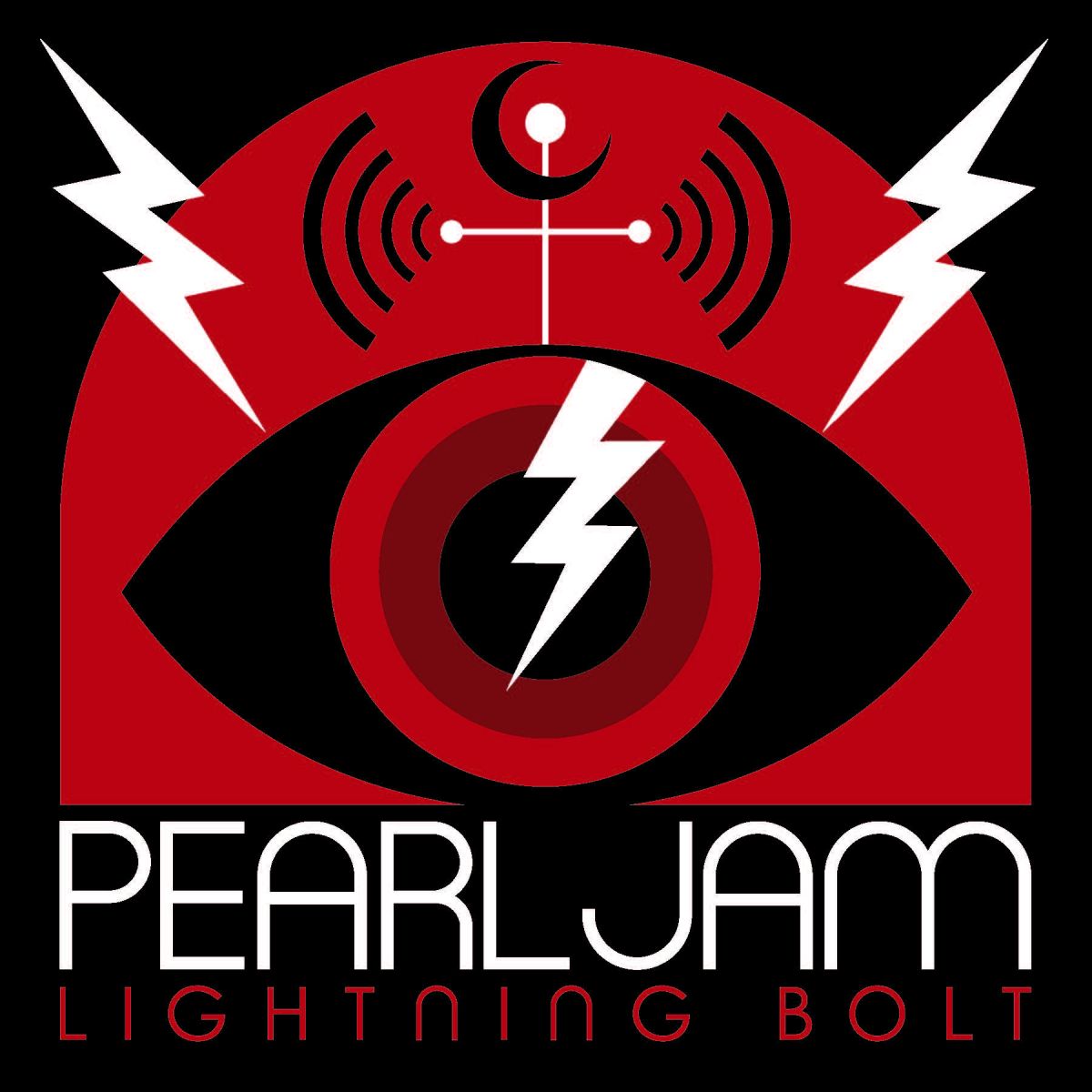
    PJ_LightningBolt_COVERARTThis 12-song compilation is a signature Pearl Jam experience. Of which, the first three song, “Getaway”,” Mind Your Manners” and “My Father’s Son”, harkens to their garage punk influences. Most notably of this is Manners, a fast-paced, in your face , anthem which McCready has already professed to being influenced by the Dead Kennedys. It’s true to its influence, and comes off as a genuine piece of their own. It’s followed by “My Father’s Son” an introspective look at the narrator, with a foreboding and nostalgic sound that carries a similar fingerprint to Vs.   “Pendulum”, somber and haunting in tone, is yet another song that shares that same similarity that longtime fans will recognize.

    Aside from two ballads, which will be mentioned in a moment, the CD transitions from garage-punk to classic rock, which McCready recently described as having a “Pink Floyd vibe”.  Matt Cameron’s drum play does present a classic-rock presence throughout the majority of the album.  The title track “Lightning Bolt” is an arena rock piece, heavy on McCready’s guitar play, something that should be fun to hear live. The boys, however, seem to go farther back than Floyd on “Let the Records Play,” a piece played in a honkey-tonk style, made popular in the ‘50s, that showcases Ament’s rhythm guitar.

    In addition to honkey-tonk, “Sleeping By Myself” is yet another stretch from the expected.  It’s a song originally recorded for Vedder’s solo album, Ukulele Songs. As implied, the ukulele takes the forefront in this sweet, laidback piece on unrequited love.

    “Sirens”, which was just released last month, breaks us from the punk inspired songs of the first three tracks.  It’s a beautifully penned ballad by McCready, where the narrator, a “grateful man”, confesses his fears of possibly losing his lover due to poor choices he has made.  This is one of two noteworthy ballads; the other being “Future Days”, the twelfth track on the album.  Days opens with the elegant piano play of Boom Gaspar, but is predominately played on acoustic guitar. With touching lyrics – “I believe, ‘cause I can see, our future days. Days of you and me.”– Days is a love song that will certainly be played as the first dance for couples on their wedding day.

    Lightning Bolt is Pearl Jam’s first album in five years, and has been well worth the wait.  Producer Brendan O’Brien  masterfully facilitates transitions from one song to the next, each blending well in both tempo and style of play.  Longtime fans will embrace such songs as Manners, My Father’s Son, and Pendulum for nostalgic reasons.   But, overall, Pearl Jam has refined their sound, pushed out enough to make things fresh, that I believe there are plenty of gems here to make this CD a worthwhile purchase for even the casual fan. Each song has the potential to stay with you, long after you stopped playing it.

    For more information, visit Pearl Jam at www.pearljam.com.