Author: Tim O’Shea

  • Hearing Aide: Phish Niagara Falls – December 7, 1995

    The newest edition of the Live Phish series will be available for purchase and features a classic show from one of the seminal eras of Phish history. The selection is the December 7, 1995 show at the Niagara Falls Convention Center, plucked from a time where Phish began to shed the smaller theaters and arenas of the early 90s, but before they embraced the massive popularity they enjoy today, this show contains almost every element that makes this band one of a kind and serves as a can’t miss purchase this holiday season.

    Listen to Taper Lenny Stubbe’s recording of the show
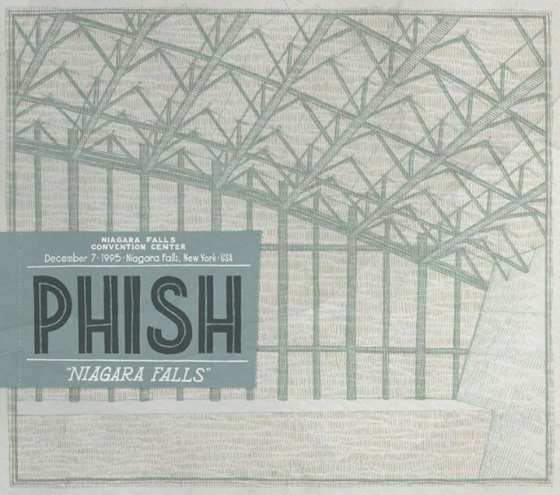
    Phish Niagara Falls


    Phish greets the crowd with a somewhat fitting opener in the form of ‘The Old Home Place’. After all, they are in Upstate New York, the scene of many memorable shows in their formative years. Bassist Mike Gordon belts out the lyrics in this short but sweet opener before the band gives way to ‘The Curtain’, one of their earliest original compositions and a somewhat more logical choice to open a show based on the title alone. This is a short but technically sound version and the final guitar chord struck by Trey Anastasio ushers in the beginning of another old school original, “AC/DC Bag”, a segue in the truest sense of the word. Here, the band finally gets a chance to let loose and develop the first true jam of the evening as the energy and power of this Gamehendge classic builds to a frantic finish. As it always does, the jam eventually dissipates, with drummer Jon Fishman immediately moving to the hi-hat and begins ‘Demand’, a short and rather odd original that is found on the band’s fifth major album, Hoist. The first set energy picks back up instantly as Phish dives into the title track of their fourth album, Rift. Poignant solos by both Anastasio and keyboardist Page McConnell highlight this song which is played with a fervor so typical of this band in the early to mid 90’s.

    With energy in the room at a peak, the choice is made to go big with ‘Slave to Traffic Light’ and big they went. Even though this may be an odd song placement by today’s standards, Phish destroys this version with all the passion and exuberance of a show closer. The song’s signature slow build is executed to complete perfection and gets capped off by yet another rousing guitar solo that surely left an audience member or two with mouths agape. 

    ‘Guyute,’ a song that made its debut the year prior, follows and ‘Bouncing Around the Room’ then gives the Niagara Falls crowd somewhat of a chance to catch their breath. This turns out to be important as an absolutely smoking ‘Possum’ is then delivered replete with scorching guitar licks and precise drum fills courtesy of Anastasio and Fishman, respectively. The two are clearly locked in, as is the whole band really, and this 14+ minute version goes through many a twist and turn before climaxing. While some may say it’s a song overplayed these days, this version is surely one even the most jaded vet wouldn’t mind hearing on a regular basis; it’s that good. A rare first set a capella closer in ‘Hello My Baby’ follows before Trey tells the audience they’ll resume melting faces in 15 minutes.

    The second set picks up right where the first left off with a stellar rendition of ‘Split Open and Melt’ that features a prominent ‘In-A-Gadda-Da-Vida’ tease at the outset of the jam. This song shows Phish at their improvisational best as the jam just drives along and slowly but surely picks up energy and intensity along the way. More inspirational guitar work and well placed piano fills from McConnell highlight this version which clocks in at over 17 minutes. Always cognizant of the ebb and flow of a setlist, ‘Strange Design’ then follows which is succeeded by the primitive version of ‘Taste’ which went by ‘Taste That Surrounds’ in this era. In fact, this song made its debut not even two months prior and is now a regular on setlists.
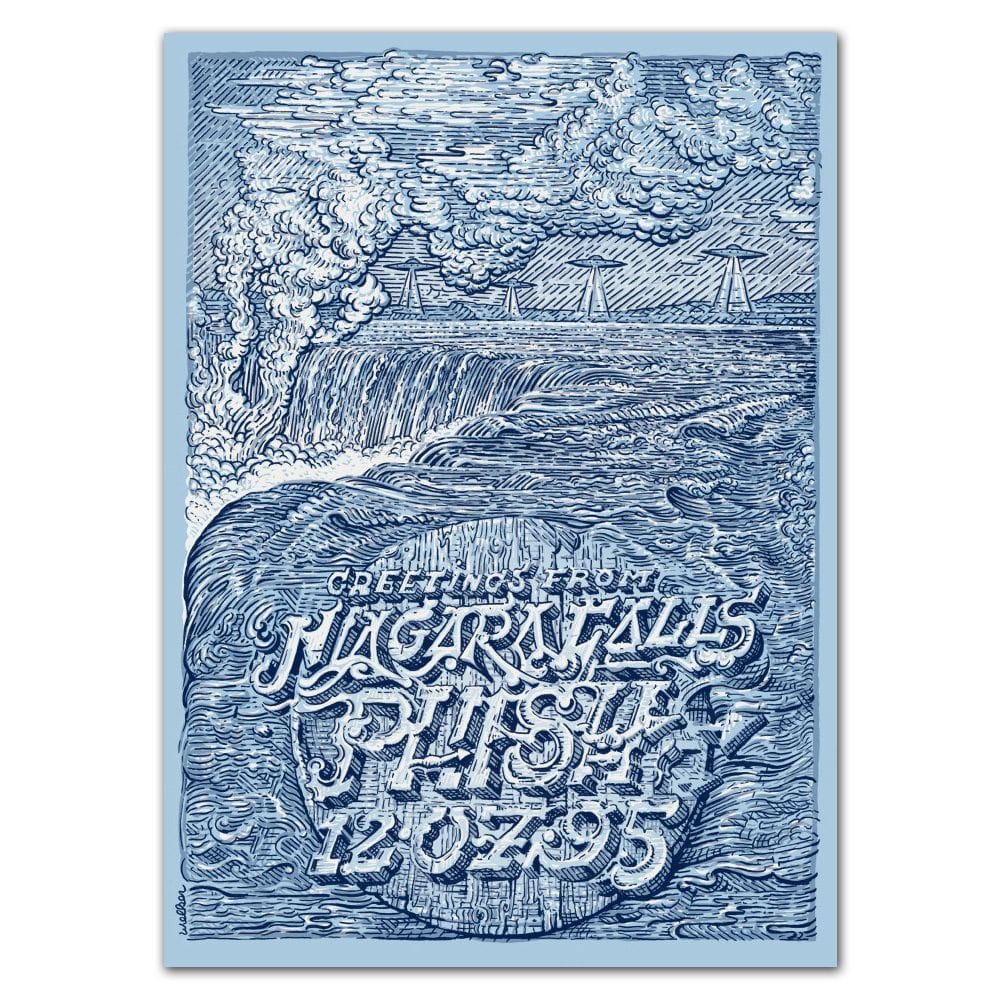
    Phish Niagara Falls

    Feeling the crowd has had a sufficient chance to regain its collective faculties, the Vermont quartet delves into an almost comically uptempo version of ‘Reba’. The composed section is played with such a frenzy that if this were a cassette recording, one might think the stereo was in 2x or fast forward mode; it’s not even close to the speed of a modern day rendition. However, the ensuing jam slips back into classic ‘Reba’ mode as the band moves fluidly and cohesively towards yet another stirring peak, highlighted by sublime bass playing and tempo control from Gordon. This is a truly special version and a must hear if only for the novelty of the composed section and the spaced out “sustain” ending. Instead of the typical “whistle” ending, Phish keeps its moving with a standard (read: powerful) version of ‘Julius’ that allows McConnell another chance to show his chops much to the audible delight of band members and crowd alike.

    ‘Sleeping Monkey’ and ‘Sparkle’ then follow and serve as two short and sweet second set fillers before giving way to one of the true treats of this show, an absolutely stellar ‘Mike’s Song -> Weekapaug Groove’. They tear through the composed section of ‘Mike’s’ and immediately find themselves locked in a tight, thick groove, no pun intended. Anastasio once again shows off his prowess on the sustain pedal before jumping onto his percussion kit, a staple of the mid 90s’s, and leading the group through yet another monster 17+ minute joy ride that’s equal parts drum circle and arena rock throwdown. Instead of something light and easy to segue into, Anastasio slowly but surely begins to structure the opening of ‘Weekapaug’, the rhythm section soon follows suit and an impeccable segue ushers in the arena rock anthem that is ‘Weekapaug Groove’ that’s played with its typical force and energy before yielding into a somewhat spacey finish.

    Fishman then seems to start the hi-hat intro that signifies the beginning of ‘Maze’, which surely would’ve blown the roof off the Convention Center, but instead the band vamps out the ending a little before shutting it down altogether. Never ones to be slaves to conformity, an a capella number also closes the second set in ‘Amazing Grace’. ‘Uncle Pen’ serves as the encore which is another seemingly odd choice for a show with such classic hits and magical moments. As an added bonus, this Live Phish release contains a cut from the show’s soundcheck.

    This is a fantastic show selection from one of the seminal points in this band’s history. It has everything from fun bluegrass covers to classic originals, from precise technical compositions to long, free form improv, from breathers to ragers – all the things that make up the very essence of this band. Live Phish has struck gold once again with this release which is sure to please fans of all varieties.

    Key Tracks: AC/DC Bag, Slave to the Traffic Light, Reba, Mike’s Song -> Weekapaug Groove
    Buy it at Phish Dry Goods

  • JAMerica the Beautiful – A Book Review

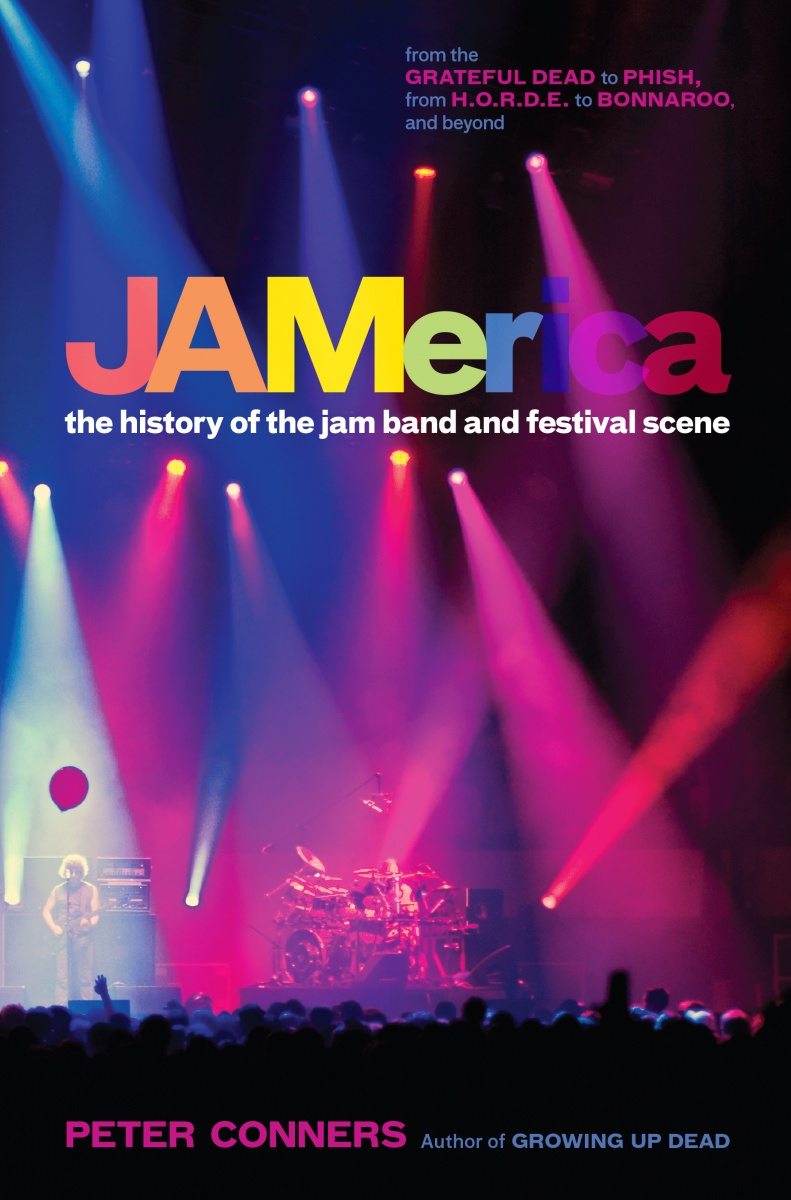
    Peter Conners takes on a noble task in his recently published work, JAMerica: The History of the Jam Band and Festival Scene. He attempts to bring to light a clear definition of the term ‘jam band’ and everything it entails. By noting all the similarities and influences of the artists and bands that fall into this seemingly broad genre, Conners makes every effort to give the reader a better idea of how this term has made its way into popular culture and why it’s still there. He offers insight into the seminal moments and venues that have helped spur this counterculture movement into what it is today. And he does this in, perhaps, the most fitting way possible: by having the people who were directly involved in the origins of the scene as well as those who are still prominently involved in it tell their own story.

    jamerica

    The book is molded in the same fashion as another popular read that attempts to define and explain a different musical genre, Legs McNeil’s Please Kill Me: The Uncensored Oral History of Punk. Conners spent two years interviewing people who were prominently involved in the early days of the jam band scene and they share their memories and offer insight from everything to early gigs, to developing fan bases, to the rise of show tapers. Whether it’s John Popper rehashing old details from an early gig at Columbia University or Mickey Hart theorizing on the power of music, JAMerica gives the reader first hand tales with little to no filter on them that shine a light on both the jam band scene and the music industry as a whole.

    It tells the story of just how influential the now defunct New York City club Wetlands Preserve was for acts like The Spin Doctors and Blues Traveler. It highlights the truly unique and ground breaking origins of the H.O.R.D.E. Festival and how successful modern festivals like Bonnaroo can trace its roots back to this roving experiment of “hippy” bands. It offers an explanation as to how a band like Phish went from playing small club shows to arenas in a matter of years and serves as an excellent teaching tool for any current band looking to do the same. It shows the vast and seemingly universal influence that The Grateful Dead had on bands ranging from Dark Star Orchestra to Jane’s Addiction and everything in between. Along the way, JAMerica tries to take these stories and first hand personal encounters and use them to offer explanations on musical improvisation and paint a picture of the scene that relies on this so heavily. It even attempts to lock down the origins of the word “jam band”. Spoiler alert: esteemed Relix editor Dean Budnick is prominently involved.

    Like any good “jam” concert, the book does tend to be a little all over the map at points and shifts from one musical era to another in the blink of an eye. It would also be a little more helpful if the sources were better identified when first used or if there was an earlier written notice that a list of contributing sources and a short bio for each is found in the back of the book. Unless the reader is prominently involved in the music industry, there are bound to be some sources used in this that are not recognizable by name alone.

    By having these sources open up and tell their own stories, Peter Conners does an admirable job in giving this popular musical genre both a more tangible definition and the credit it so richly deserves in influencing a generation of bands and artists. Interestingly, it even shows how some acts were initially opposed to being associated with the ‘jam band’ label but have now fully embraced it. By all accounts, JAMerica is the most complete work out there that attempts to tell the story of the jam band scene and how it has reached its current state of popularity. However, it’s important to note that this is still a story being re-written and modified every day.

    Buy book on Amazon or at Pete’s website Jamerica.net.


  • Hearing Aide: Roots, Rock, Zydeco: Donna the Buffalo’s New Release, “Tonight, Tomorrow and Yesterday”

    One of the true jewels of the Upstate New York music scene is a little band that hails from Trumansburg called Donna the Buffalo.  With founding members Jeb Puryear and Tara Nevins at the helm, this act has been delivering its own unique brand of Americana/Rock and Roll for well over two decades now.  As other parts of the band have changed, these two have developed a chemistry and song writing style that continue to produce fun and memorable music.  Their 10th studio release, Tonight, Tomorrow and Yesterday, gives the newest members of the band a chance to be heard and highlights all of the little things that make this band a treat to see live.

    The album starts off with an appropriately titled and fiddle-based song called “All Aboard” and takes off from there.  “Working On That” gives keyboardist David McCracken a chance to shine through a little and fits the mold of Donna’s signature style of making a point with its lyrics without getting preachy.  The Tara Nevins penned tune “I Love My Tribe” is a bouncy, sing along type song that seems to serve as somewhat of a nod to the bands faithful following, otherwise known as The Herd.  Undoubtedly, this song will be a fixture at Finger Lakes GrassRoot Festivals for years to come – a festival now in its 23rd year!

    Get More:

    The title track of the album is a fun and upbeat one with a zydeco feel to it, a style of music this band incorporates so well into its playing.  As a sign of the band’s versatility, “Ms. Parsley” is a spirited dub/reggae type number that really stands out.  Most of the songs on the album are filled predominantly with lyrics, but on “Why You Wanna Leave Me” Donna stretches it out a little with a focused jam featuring interplay between Puryear on electric guitar and new bassist Kyle Sparks.  It also gives a little taste into what one can expect from the band in a live setting.  Another staple of this band is songs with Tara Nevins playing acoustic guitar while delivering lyrics from the heart and this gets accomplished and then some on “I See How You Are”.

    While some bands may have difficulty producing their authentic style of music and the energy found in playing live, Donna the Buffalo definitely accomplishes this with Tonight, Tomorrow and Yesterday.  It’s sure to satisfy both members of The Herd and the casual listener who wants to get an idea of what this band is all about.

    Key Tracks: Working On That, Tonight, Tomorrow and Yesterday, Ms. Parsley

    Follow Donna the Buffalo on Twitter, Facebook and visit their website

  • Review: Conspirator “Unleashed”

    The term ‘supergroup’ is thrown around pretty loosely these days, but there’s a certifiable one slowly rising up the ranks in the world of electronica.  Conspirator, originally a low profile side project of The Disco Biscuits has continued to grow and evolve its sound over the years into something that both pays homage to its EDM roots while exploring new sounds and redefining the way this genre of music is produced.  Conspirator recently released its latest EP Unleashed and it’s been met with serious acclaim, if iTunes and download totals are any indication.  The title of this EP is all too fitting as the band comprised of half of The Disco Biscuits (Marc Brownstein and Aron Magner), the guitarist from Raq (Chris Michetti) and arguably, the best drum and bass drummer on the planet, KJ Sawka, unleash a magnificent fusion of hard hitting dubstep and inspired instrumental work that leaves you wanting more and more of the same, once all six tracks have been heard.

    Unleashed gets in your face right away with the opening track ‘Pow Wow’, which features a tight dubstep beat underlying  some intense and jagged synth sounds that almost sound like an electronic Indian eliciting a war cry of sorts.  After the second ‘drop’, there’s some absolutely brilliant guitar work courtesy of Chris Michetti who has several well placed and inspiring guitar solos on this release.  “The Commish” is another fun track that has even more catchy synth sounds that has the effect of an electronic horn section of sorts. KJ Sawka really shows off his chops here and shows why he’s one of the best in the business by nailing the furious tempo changes and giving a veritable human touch to electronically programmed drum beats. “Right Wrong” is a Conspirator remix and one of the more mellow tracks on the EP; the take on this gives Mark Brownstein a chance to put his melodic bass playing on full display alongside some vocal samplings which makes for an incredibly fun and engaging listen.  Not to be outdone, “Accent” features a synth melody that sounds like something found on an intense level in a Nintendo game.  Combined with more stellar dubstep fury and another sparkling guitar solo, it caps everything off in fine fashion.

    Simply put, this is not your older brother’s dubstep, but rather a new and fun take, with an added emphasis of real instrumentation to go along with tight and precise programmable magic.  It would seem to lend itself towards decent mass appeal since there are really enjoyable parts for both the ‘jam’ fan and the dubstep fiend to latch onto. Time will tell, and until then, we’ll just have to wait and see what this supergroup unleashes next.

  • Phish at Madison Square Garden, December 30th

    December 30th has always had a somewhat special place in Phish lore and there’s some that say this night has produced better shows than the far more renowned New Year’s Eve.  With this being the third show of a four night run at the mecca of rock and roll, Madison Square Garden, it was safe to say all bets were off and hopes were raised high this evening.  As they always do, Phish delivered in its own unique way with a show that may not necessarily go down in the annals as a legendary one, but certainly one with some incredible musical moments that featured some memorable jamming.

    phish december 30th
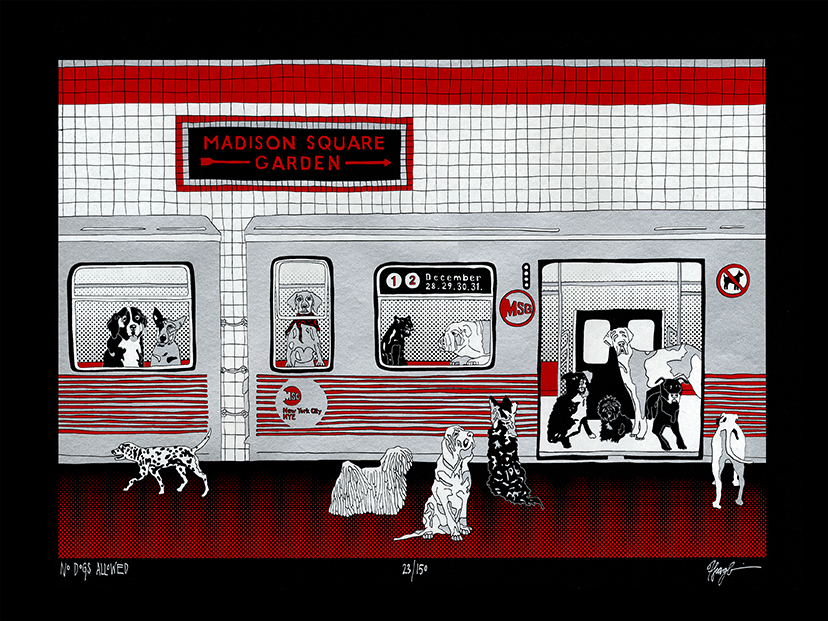
    poster by Franky Scaglione

    Those who called a ‘Runaway Jim’ to open on this night were right and Phish wasted no time in delivering a fairly standard version of this classic show opening song which certainly did nothing to dampen the already high energy level in the Garden.  After some soft early interplay with keyboardist Page McConnell, Trey Anastasio’s guitar licks gradually grow in intensity and precision as the song comes to its peak before finishing.  The short, but emotive, jam seems to serve  as the perfect musical warm up for both the band and the fans, giving everyone a chance to get stretched out and warmed up for a long night of music. This reviewer was hoping they’d open with an old school flair and follow this up with a ‘Foam’, but instead, after a short discussion, the decision was made to go with ‘Cities’.  This Talking Heads cover  is no stranger to Phish first sets and the group plowed with through with a clean, yet fairly meek rendition that didn’t feature much of a jam unlike some ‘Cities’ of yesteryear (see: 1997). Batting in the third spot this evening was one of Phish’s oldest and most iconic numbers, ‘The Divided Sky’.  This song with its exquisite composition, multi-layered sounds and unique vocal section exemplifies the essence of this band and is generally a crowd-pleaser.  While Trey was slightly off on some of the early ‘technical’ parts, he and the group more than made up for it with a rousing and powerful finish to the song that re-established the high energy level in the building. To keep things moving, it was time to ‘Back on the Train’.  Another crowd favorite, this version saw Mike Gordon and Jon Fishman shine on bass and drums, respectively, as they spearheaded the effort through a shuffle type jam that finally brought about  the first glimpses of group improvisation on this night.  Next, came another cover as Page led the group through a short and fairly standard ‘Ride Captain Ride’. So far, the first set saw all the songs played more than adequately but without much jamming or extended improv.  ‘Ocelot’ changed all that in a hurry with a stirring 11 minute version that finally saw the group get into an extended jam and stretch things out a little.  This version saw Anastasio and McConnell once again complimenting each other wonderfully in a jam that took its time and was played to perfection.  While it didn’t seem incredibly too well received at its inception, the crowd got loud and made sure the band’s effort on this one was appreciated at the end. This was followed by ‘Ya Mar’, another one of the band’s older numbers (and another cover).  The calypso-groove classic kept everyone moving, but again, a fairly routine and uneventful version was played as the song selection in the first set continued to be all over the map with few continuations or any innovative segues between songs. Keeping in line with this, ‘Horn’ was played next to little fanfare and this parlayed into ‘My Friend, My Friend’.  Both songs again gave Phish a chance to show off some of their compositional wizardry and prowess, but also didn’t feature anything out of the ordinary. With one last bullet in its holster for the first set, Phish made it count with the always entertaining ‘Run Like an Antelope’ set closer.   This vintage Phish staple gave everyone a final chance to cut loose this set and the boys delivered a high octane rendition that served as a fitting end to the set in that it was played flawlessly but without anything truly memorable.  No extended build up, no guest vocalists, not even a slight lyrical alteration.  Not that these things are necessary by any means, but hopes are a little higher and dreams a little wilder on a night like tonight. To recap, the first set had several very enjoyable songs (Divided Sky and Back on the Train) and featured one quasi-intensive jam (Ocelot), but overall lacked a sense of continuity and explosiveness often felt in other 12/30 shows of the past.  Set break served as an opportunity for everyone to recharge and wonder what lay in store next.

    The second set is typically the time the band will really delve into the heavy improvisation and ‘darker’ jams and this set proved to be absolutely no exception to that rule.  ‘Down with Disease’ let everyone know it was game on for the second set as the corresponding jams in this tune have the capability of reaching epic proportions.  The first several minutes of such proceed in a typical fashion and the high tempo rocker has everyone moving along and anticipating a big second set.  Around the ten-minute mark, Fishman starts to slow the tempo slightly with Page throwing in delicate piano fills.  Shortly after, Trey takes the reigns with some guitar play that seeks to bring the tempo back up and it’s clear each band member is prominently involved in this one – always a clear indicator of a good jam. As the second set opener continues to march on, Trey soon introduces some darker, mysterious tones to the jam before finally dissolving into some familiar, spacy ‘whale call’ sounds – somewhat of a staple of the Phish 3.0 era.  Not much time is wasted on this and, before long, the jam begins to pick up pace and intensity again.  At this point, it was all over the map, but in a good way.  Gordon then takes his turn and introduces a sinister bass effect that drives the jam to a new level of darkness and fun.  When all is said and done, the ‘Disease’ clocks in at almost 20 minutes long and finally gives everyone a taste of the spontaneous and cohesive playing this band has hung its hat on its entire career.

    As a breather of sorts, Trey then starts up ‘Twenty Years Later’ which seems to always find a home after an intense second set jam.  This fairly new original is played to perfection and does little to diminish the still high energy level that’s present.  Upon its completion, Trey immediately starts the opening riffs to what many are already calling one of the highlights of this four night run, ‘Carini’.  This powerful number has been taken to a new level in the 3.0 era and this version followed suit and then some.  For the next few minutes or so, Phish builds on an already dark and powerful number and gives it a menacing jam that at one point drops off into an almost eerily ambient one.   This one is Phish at their finest – dark, melodious and full of improvisational goodness.   At one point, during one of the more menacing portions of the jam, it even sounds like Trey makes a half-effort to re-introduce the ‘Little Drummer Boy’ theme that was so prevalent on 12/28/12.  There’s also somewhat of a ‘Crossroads’-esque section introduced by Trey before the jam blisses out and ends almost 15 minutes after the start of the song.  Three songs into the second set, Phish has already dropped two noteworthy and inspiring jams. Seeking to keep momentum going, Trey then begins ‘Backwards Down the Number Line’ which seems to be a hit or miss song with the crowd these days and, in this spot, may be more miss than hit.  However, that didn’t stop the group from delivering a soulful and inspired version of the song that gives Trey a chance to shine with some inspired guitar play in the jam that ensues.  It certainly kept the second set energy high and Page’s complimentary play on both piano and organ is stunning on this version.   One can tell that the band just simply loves to play this song and this energy always seems to carry over into the crowd by song’s end. Before Fishman even hits the last cymbal crash, Trey has already started the opening riff to a somewhat older Phish ‘rocker’, ‘Julius’.  This leads to another eight minutes of high tempo, fun arena rock that has the Garden again moving as a collective whole.  It’s cleanly played and brings to the forefront, once again, the cohesiveness and skill of these longtime friends who have now been playing together for over 30 years!

    With a monstrous second set already under its belt, the call is made to have the classic hit ‘Slave to the Traffic Light’ bring things to an end as only it can do.  This is met with great approval and seems to be the perfect choice to cap off a memorable and truly innovative set.  This is another song that fits the ‘exquisite composition/odd vocal styling/mind-blowing performance’ mold of song that Phish has officially perfected.  A truly masterful ‘Slave’ jam that takes its time and builds to perfection follows and leaves the crowd standing in applause as the foursome takes a well-deserved and long bow on stage. A somewhat of a two-faced encore followed as it began with a sterling rendition of the crowd favorite, ‘Harry Hood’.  This gave the group one last chance to bob and weave through a 12 minute musical masterpiece while taking everyone in the Garden along for one last ride for the night.  This ‘Hood’ was typical of all good ones: slow, patient and bursting with energy by song’s end.  The show could have ended right there, but instead, ‘Show of Life’ took the honors and was met with some groans by the crowd, as it usually seems to be.  The short, but powerful, number served as a fitting end to a show that had a little bit of everything. [vimeo http://www.vimeo.com/56567290 w=400&h=300] Overall, Phish delivered a fun and memorable show like they always do.  While some of the song selection was sporadic at best in the first set, they more than made up for it with intense, thoughtful and innovative jamming in the second.  The stage was now officially set for New Year’s Eve where, as we all know, anything can (and did) happen.