Author: Tabitha Clancy

  • Ninth Annual Mountain Jam Kicks Off June 6th

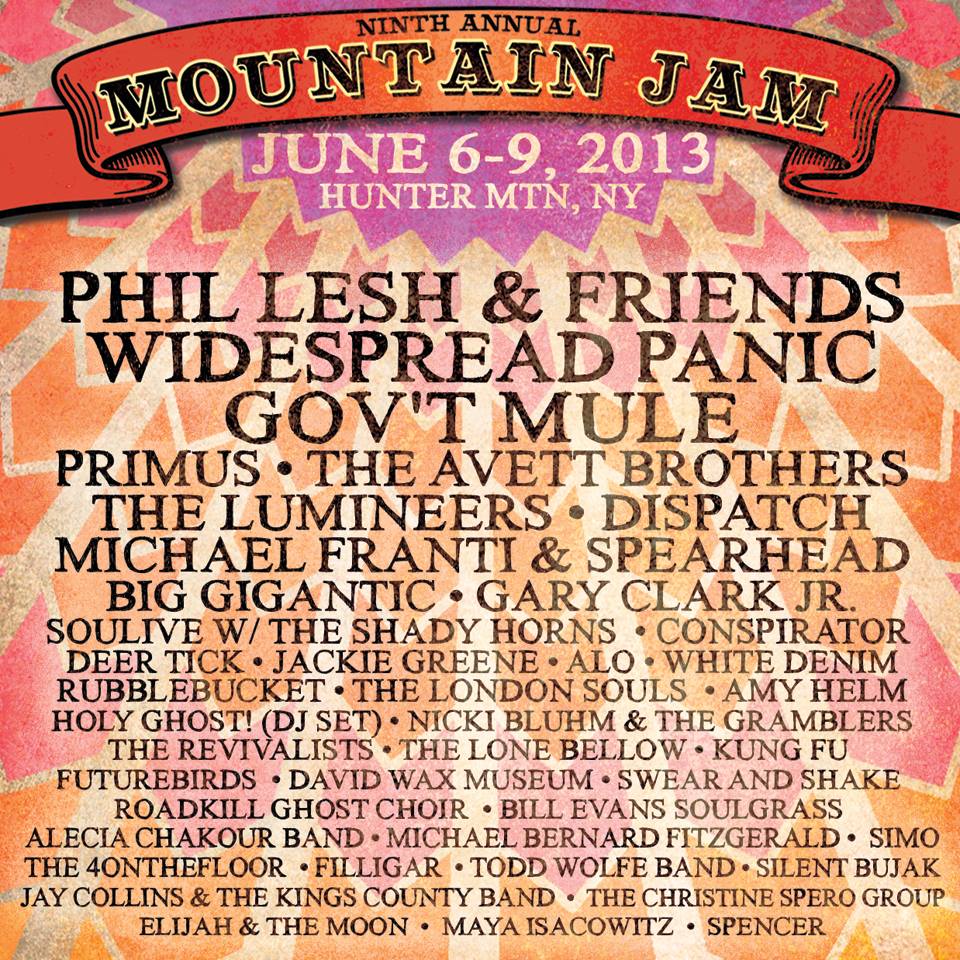
    The Ninth Annual Mountain Jam festival kicks off June 6th and runs through June 9th at Hunter Mountain in Hunter, NY.  Mountain Jam is a four-day, multi-stage festival hosted by Radio Woodstock 100.1 and guitarist, Warren Haynes (Gov’t Mule, Allman Brothers, The Warren Haynes Band, The Dead).  In one of the most pristine locations in the Northeast and natural amphitheater, more than 50 bands will perform on three stages.

    mjphoto

    Mountain Jam welcomes legendary bassist, Phil Lesh bringing his all star side project Phil Lesh & Friends for a two-set performance.  Friends for this year’s Mountain Jam are Warren Haynes and John Scofield on guitar, Joe Russo (Furthur) on drums, and Jeff Chimenti (Furthur, RatDog, The Dead, Les Claypool) on keys. Widespread Panic will make 2013 it’s first (and only northeast) appearance at Mountain Jam.  Festival resident Gov’t Mule will also headline a two-set performance. Primus will headline the expanded Thursday night program.  Staple guest artist, Michael Franti will perform on Saturday, June 8th.

    In addition to headlining bands, Mountain Jam continues it’s all-star line-up with many others including: Dispatch, a groove rock outfit of fun; Gary Clark Jr., Austin based artist fuzzing soul, rock and R & B; Jackie Greene, a versatile singer-songwriter armed with a catalogue of Americana and roots songs; Amy Helm whose vocals evoke a nostalgia of an old soul; and ALO, a pop-funk danceable groove band hailing from California.  Mountain Jam also welcomes The Lumineers, The Avett Brothers, Soulive, Deer Tick, Rubblebucket, Nicki Bluhm & The Gramblers, The Revivalists, David Wax Museum, SIMO, Swear and Shake and many more.

    Jammers will have a variety of activities and attractions while on the mountain. Some attractions include: sky rides, a scenic view of the Catskill Mountains; yoga, offered on Saturday and Sunday; a beer (and wine) garden for exclusive craft brews; psychic readings, Hammock Groove, Frisbee golf tournament, and artist signings.  Mountain Jam is offering a wide selection of cuisines to satisfy even the pickiest of eaters as well as an on-site Farmer’s Market.

    Mountain Jam has always done its part to reduce its carbon footprint.  The festival guide will not be available in paper form – saving over 2000 lbs. of paper ink.  The iPhone and Android supported App includes all the bells and whistles. The app provides a festival map, alerts, user created schedule and more.

    Tickets are still available, however VIP passes are sold out.  For more information, rules and regulations please visit www.mountainjam.com

    ’s must see picks: Nicki Bluhm & The Gamblers, Amy Helm, Gary Clark Jr.

    ’s must do picks: Sky Ride, Rainbow’s B-Rushless Karma Wash, Awareness Village

  • Former Members of ‘The Band’ to Play The Egg: Jim Weider and Garth Hudson in Project Percolator May 18th

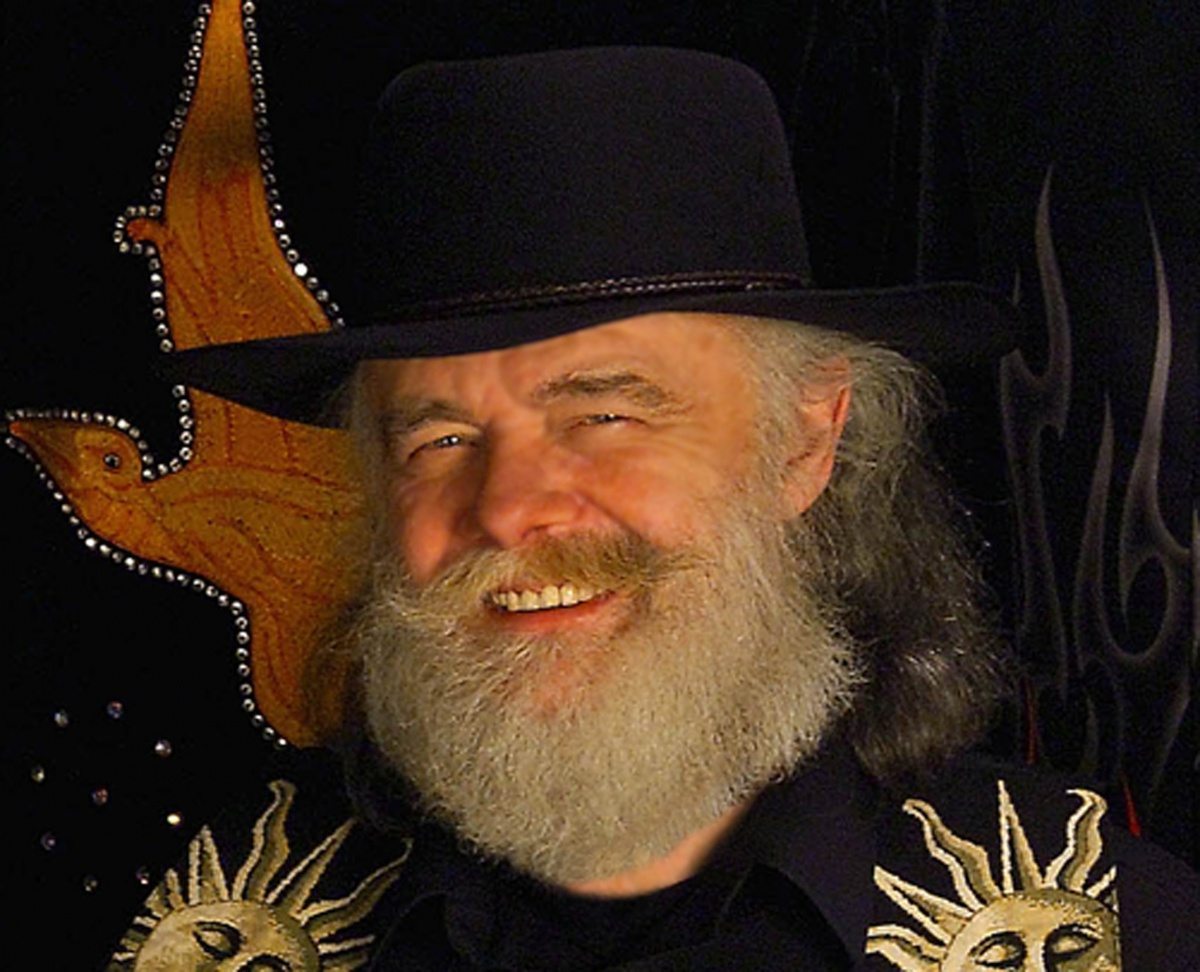
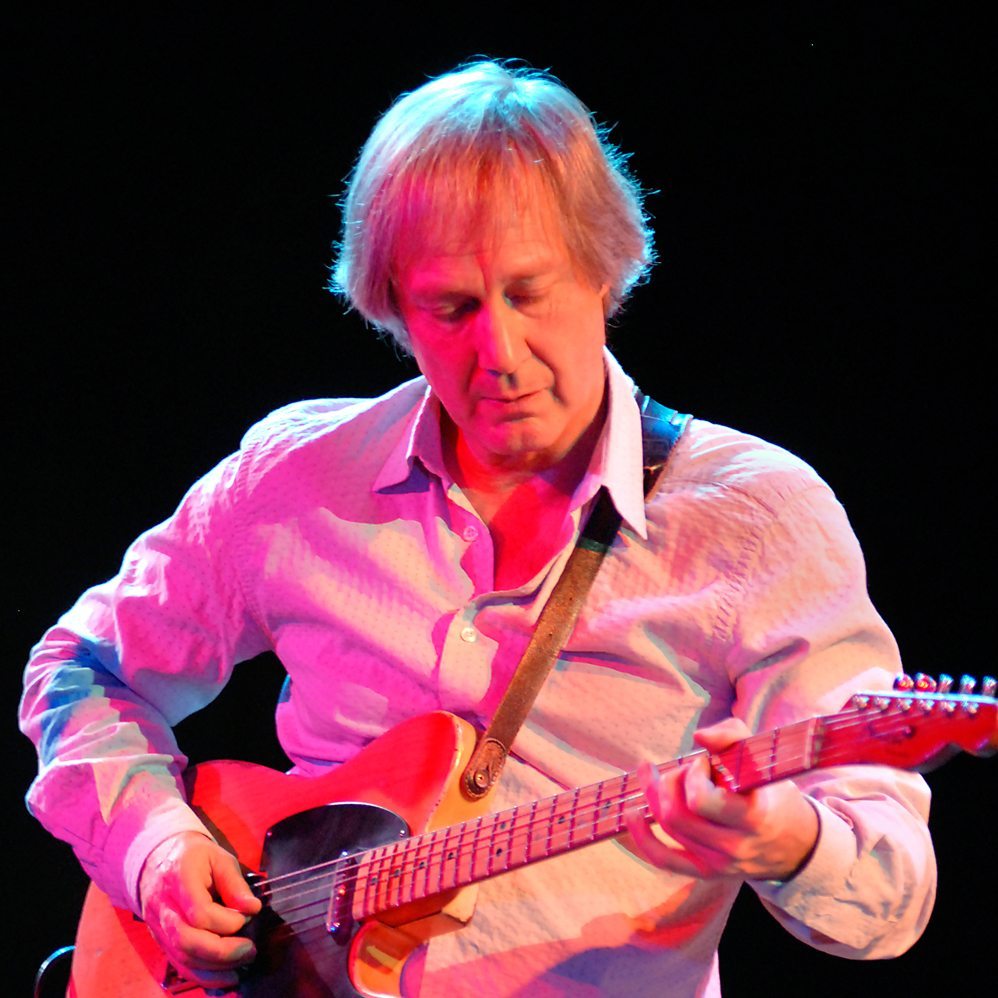
    Woodstock native Jim Weider heads up the Thruway to present Project Percolator featuring Garth Hudson at The Egg on Saturday, May 18th. Jim Weider talked with about his project, growing up in Woodstock and fondly recalls his time spent as a member of The Band.  His resume is long, his music is well crafted and he aptly presents something that is uniquely him.

    JW

    Tabitha (TC): Let’s start off by talking about Project Percolator.  Describe what people can expect from a live show.

    Jim (JW):  It’s all groove instrumental with my Telecaster Guitar. It’s rock style and blues over the top.  We have several albums out and it is structured songs. I like to write instrumentals that are structured just like vocal tunes.  There will be verses, bridges and everything.  Then we have sections in the songs where we stretch it out. We play them differently each time. We might go into a Led Zeppelin line so it’s as exciting for the audience as it is for the band.  All the musicians are so great behind me; depending who takes off, we follow the other.  We try and jam out on certain songs.  We’ll do “The Weight” by The Band, with a reggae feel and then in the middle we’ll jam it out then go into double time. If Garth Hudson (The Band) takes off on the keyboard, we’ll all follow him.  So we do everything differently each night.  It’s kind of exciting for both of us – the audience and us.  I always have a blast playing with these guys.  Rodney Holmes is just an amazing drummer to be seen. Avi Bortnick (John Scofield Band) is on guitar and he plays much different than me. Of course having Garth is a true dream. We’ve been together for many, many years. Garth comes up with amazing sounds. You’ll hear Garth Hudson like nobody’s ever heard him before because the way this band opens it up and lets us play. Everybody has a blast.

    TC: How did you determine with whom you would work with for Project Percolator?

    JW: It started about seven years ago with Percolator. I wanted to branch out from my blues – rock records into something different. I just felt like I was cornering myself. I wanted to get into groove music. I started writing and came up with drum loops. I was lucky enough to get Rodney Holmes. He played with Santana and Brecker Brothers. He freed up and joined me. Once I got Rodney, we toured Europe and United States. Rodney’s been with me the whole time. The bass player, Steve Lucas (Bruce Cockburn) joined up on the Pulse record. We’ve been together for quite a while now. We’re going to play some new tunes, and we’ll bring in some Dylan stuff and some Band tunes also, which we do our own versions.

    TC:  You have worked with Garth Hudson for a number of years, most notably with The Band.  How is working with Garth similar or different in Project Percolator than prior commitments?

    JW:  Garth does some shows with us.  He just fits in because Garth always made all the great atmospheric sounds for The Band.  He was always into effects and sounds so putting him in the midst of Project Percolator works out perfect.  He goes with the flow.  He uses his ears and comes up with some great stuff and then we’ll break it down, then it’ll just be Garth by himself.  He just fits right in with this kind of music because it’s wide open and flowing.  It’s like a glove and very entertaining.  I get a kick out of it and so does the band.  I think the audience will too.

    GH

    TC:  What sparked the idea for Project Percolator?

    JW:  I had done a couple of blues-rock records.  There were a million blues bands and I had done the roots rock thing with The Band.  I just wanted to stretch out more.  Get more down to the R & B feel where it’s about the groove.  So I started with loops. I started recording by myself.   On the first record the drums were over-dubbed.  We’ll do some songs with some loops still.  I just wanted to get out of that corner write something totally unique that’s not your standard blues shuffle.  I really felt like I needed to come up with something fresh and I just stayed with it.  Of course I still played with Levon up until his time of passing.

    TC:  We just past the one-year anniversary of Levon Helm’s passing.  Having worked closely with him for many years, how has his passing impacted you both professionally and personally?

    JW:  Well, you can’t put a finger on when you lose someone you’ve been with that long of a time.  We played a lot of shows.  It’s deep rooted and it’s a huge loss – as a friend and a musician.  About four years ago, Jimmy Vivino went back to Conan on the left coast.  When he did, I joined up.  I still kept Percolator going but it was great to be back playing with Levon.  We did a lot of shows.  I never saw him happier.  He was on top of his game.  He was just very happy and it was great to be with him.  He really inspired me.  He had my back and looked over my shoulder since we started to work together.

    TC:  Do you have a favorite pastime or memory of Levon?

    JW:  Laughing across the country in the back of the bus at three or four in the morning.  That’s what keeps coming up.

    TC:  How has being born and raised in Woodstock contributed becoming a musician?

    JW:  Everybody was playing music.  One after another a new group would come out. Then The Band, from our hometown, came out and that was a huge inspiration.  It was just one thing at a time that led to the fire burning to be a musician.  All these great players were playing around town.  I never went too far.  I went down and saw Paul Butterfield playing at the local café.  All these great musicians playing live and then I saw Sound Outs (impromptu concerts) before there was the Woodstock Festival.  It was a big inspiration living around this area.  It was a fantastic time to be alive for music.  All the sounds were inspirational.

    TC:  When did you first begin to play for an audience?

    JW:  Early on we would play high school dances.  We practiced in my grandmother’s garage.  We had cookies and coffee and just practiced for a high school dance or a hippy party in some older person’s backyard barn until I was old enough to play in bars.

    TC:  What was your first band?

    JW:  It’s hard to remember.  I think I came up with a brilliant idea smoking something other than cigarettes looking up at a bunch of trees laying in the woods going, “hey, I got a great idea for the band, Leaves of Green!”

    TC:  Your resume of musical endeavors is jam packed with various projects.  You’ve done everything from session work, to production, touring, and even large telecast concerts.  Is there and event or a project that stands out for you?

    JW:  Well I guess playing at Dylan’s 60th Anniversary at Madison Square Garden.  We were doing all Dylan tunes with The Band.  Playing the Berlin Wall with Roger Waters when that went down.  Just being able to play Carnegie Hall was fantastic.

    TC:  What was your most surprising, yet satisfying collaboration?

    JW:  Being able to produce tracks on a Mavis Staples disc and playing with her was fantastic.  I also recorded with Scotty Moore, so that was full circle.  I also got to lead The Band at South-by-Southwest in Austin.

    TC:  Is there a collaboration you have yet to do that you would like?

    JW:  I’m not quite sure.  I have to think about that.  People ask me that a lot.  I am starting to write a new album and I have a new live CD that I’ll have at the show.  I had Blues great, James Montgomery play with us.

    TC:  What do you believe was a defining moment in your career?

    JW:  I’d say when I joined The Band in 1985 changed everything.  Levon getting me in the band was pretty amazing.

    TC:  Besides music, do you have another passion, hobby or activity that you enjoy?

    JW:  Yes!  I like to be outside.  I like to go fishing and talk a walk in the woods in stuff.  There is a reservoir not far from me, which is where I like to relax.

    TC:  What is your secret to longevity in the music business?

    JW:  Keep listening, keep the glass half full and just stay at it, don’t give up.  It’s harder now than it’s ever been, but you just have to keep an open mind.  Play for the love of music because if you do it for any other reason, you should get out.

    Preview the sounds in this video:

    Squirrels in Paris

  • Eastbound Jesus CD Release party with The Mallett Brothers at Revolution Hall, April 19th

    Yes, THAT Revolution Hall! For one night (and apparently one night only) Brown’s decided to open the doors of the shuttered music venue for Eastbound Jesus‘ show where they released their latest album Northern Rock, to a sold out audience, an impressive feat even in Rev Hall’s heydey. With a few tweaks and a bar in the lobby (not a bad idea, it turns out), Revolution Hall was alive and festive with a crowd to complement the music of Eastbound Jesus and opening act, The Mallett Brothers.  Rev Hall looked great, but its a damn shame they don’t have shows there on a regular, if not monthly basis.

    The Mallett Brothers from Maine took the stage around 9pm, filling the room with a Greensky-esque style of country/bluegrass, speedy and twangy, with great lyrics and engagement with the crowd. “Wrong Kind” was an upbeat number early into the set and lit the dance floor afire, particularly the front row of ladies dancing with great excitement. The slide guitar from Wally Wenzel was a tight and consistent sound throughout the show, as were the namesakes of the band, Luke (guitar) and Will (banjo) Mallett. “Born Cryin” was one of the sicker tunes of the night, with Brian Higgins’ catchy drum jam a highlight. The enthusiastic set was welcomed by the crowd and would definitely be seen again in Upstate New York.

    Setlist: Something to Lean on, Wrong Kind, Good with the Better, Farmers Tan, Last Man, Don’t Need You, Born Cryin, Getaway Queen, Muddin, All Kinds of Crazy, Lowdown, Take it Slow, Dynamite Dot


    Holy Smokes! may be the title of their last album but it accurately depicts the party Eastbound Jesus threw on April 19th. In a celebration in their latest disc release, Northern Rock, Eastbound Jesus sold out a venue that has been closed for over two years. The bar sold out of Pabst Blue Ribbon before the band even took stage; the staple beverage, as deemed by die-hard fans as a result of a reference in “Doors Open”, played ironically at the end of set two. The crowd was primed. The band had every reason to be over-joyed, full of energy and set to deliver their new material. The first set comprised of shiny brand new songs played in order as they appear on the disc. Set two was a mix of songs from prior discs. The crowd is well versed, and highly intoxicated and, as expected, the second set was a hell of a party. The Mallet Brother’s shared the stage, lady friends would pop on and off the stage, and gents took their shirts off. Eastbound Jesus encouraged the unholy on what surely has become a band bound for glory.

    Mind you, this show wasn’t some Mumford and Sons group with catchy riffs then a banjo explosion late in the song, this was true jamgrass through and through every song. The crowd wasn’t there to sing along to the radio hits, they were there to sing along to every song. That was the understated highlight of the night – amid all this folk/bluegrass music that has come out in the past few years, Eastbound Jesus stands head and shoulders above the mainstream acts; the party they threw for the release of Northern Rock is evidence of that.

    Setlist: 

    Set 1: Out Yonder, 54 Miles, Waitin’ on the Sun, Sittin’ by the River, Talkin to John, Katy Belle, North Country Girl, Where the Winter Goes, My Old Pickup, I Wouldn’t Know, Above the Water

    Set 2: Hold on me Now, Nothin’ to Say, Goin’ Steady, Corn Whisky, Ghost Town, The Road, Pickin’ It, Take a Ride, Easy Now, Pipe Dreams, Times Wastin’, Holy Smokes!, Turn on your Lovelight, Doors Open

    Encore: Ballad of Eastboud Jesus, Eastbound and Down > Hold on me Now

    Photos by Tom Miller

  • Bovine Social Club: An Interview with Samuel Saint Thomas

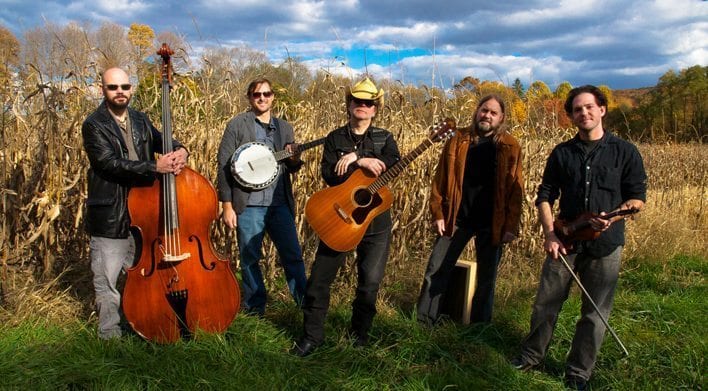
    Surely seeing or hearing a name like Bovine Social Club would conjure up images of cattle gathering.  Is there a club for such a thing?  Well in a sense, yes.  In this case people are not coming together to discuss cows or any such variation.  Instead, this is a band with a unique and humorous outlook rich in Americana roots.  caught up with lead singer and guitarist, Samuel Saint Thomas and talked about his band co-founded by Jeff Barg (drummer).

    Tabitha Clancy: You and your bandmates have many years experience as musicians. How did Bovine Social Club come together?

    Samuel Saint Thomas:  I had taken some time of to study. To be honest, I burned out as a singer-songwriter.  During the time I was a singer-songwriter, I had worked with a lot of different people – almost all of the guys from Railroad Earth at one point. I was in the same bands in the same neighborhood.  One of the people in that scene was Jeff Barg, our drummer now.  I had seen him around a couple of times and every time I’d see him he’d say, “Why don’t we start a band?” We both ended up at the same table at Tim Carbone’s birthday party.  Jeff was pretty forceful at that time.  So I said, “I’m going to think about this.” And we put together a list of things, a guide as to how we were going to go about this.  We started planning that night.  Over the next year the band went into development. By that time I had graduated.  I had just completed my graduate education.  We were really inspired, as well, by what was going on with Railroad Earth (RRE).  Next thing I know, Johnny Grubb had left RRE and he came on board and helped to get us started.  I guess at the end of that year of development, Tim Carbone had heard about the project. I went to see him play somewhere and he came up to me and said, “Hey, I want to produce your record.” So that changed things drastically because we just thought we would put a band together and play around town.  Tim said he was going to produce the record, and then everything started falling into place.  We were off and running.
    bovine social clubTC:  Lets talk about your self-titled disc. What approach did you take going into the studio for the first time as a group?

    SST:  The approach was, “Tim, do whatever you want.”  We gave him a blank slate. I had produced records before and it was kind of hard to keep my mouth shut.  He came to our rehearsals and took notes on the songs.  He came back with a bunch of ideas about audio arrangements and tempo changes and things like that. We didn’t quite have all the songs we needed. Being put under the gun, I came up with two more songs.  This was very interesting because I was forced to come up with these two songs at the last minute. I always write songs over a period of a couple weeks and whatever came to mind is what ended up in a song. This time I did a little research. I picked up a book on gardening and went through the book.  I picked out the things that I thought was the most interesting about gardening and put it in the song. I just completed a song last night doing the same thing about the dust bowl. I did my research about the dust bowl and it’s the most interesting things that I try to express in a poetic way.

    TC:  How did working with producer, Tim Carbone help shape the disc?

    SST:  I think it first shaped the way that we played, that in turn made the disc what it was.  He took time with each one of us to work on specific things such as phrasings, or he would ask us questions; he would give us insight. For instance, for me, I have what Tim calls a “folk musician tick” with a very specific way that I finger the guitar when I’m playing chords. He said that really isn’t helping the song. That’s true from what I know about writing fiction or non-fiction. If it’s not helping the song, it doesn’t need to be there, it doesn’t matter how expressive or how creative. Tim was very focused on the song, so that in turn influenced the disc.

    TC:  Are there any future projects in mind?

    SST:  Yea, how to approach it is a difficult thing because the music business changes daily.  We’re probably going to have to wait until the fall to see what the climate is for what I would call music product, which is very different than playing music in the living room or a large concert hall.  I can’t imagine recording is going away.  We as human beings have this tendency to want to record everything for posterity or whatever reason.  I’m certainly not going to stop writing songs; I’m not going to stop recording them. It’s how we get them out there is the challenge.

    TC:  Speaking of projects, tell me a little about Chords4Carrots.

    SST:  The way we’ve marketed the band is quit unique because we’re really not a local band anywhere.  There is not a local scene per se where we live because we’re not a major metropolitan area for one thing and Americana music in the northeast is really in its baby stages once again.  We’re always trying to think of unique ways to go about this and one of the things that we’ve done is to produce our own shows.  If there is not a decent place to play, then we create one.  We create the whole show.  It’s labor intensive, of course. We partner with farming organizations, ones that stress local and organic.  We are partnering with a non-profit farming alliance in NJ to launch our first music festival this summer, which is part of Chords4Carrots.

    It’s an idea I had early on based in musicians getting asked to play a lot of benefits.  Why is it that the band doesn’t decide what they want to do rather than just wait for a phone call? Why don’t we have our own benefit program? What we found is not a lot of organizations know much about producing music events. If we’re going to put that kind of energy in, it should be successful. We put together Chords4Carrots and partner with organizations that want to raise money.  We teach them how to promote a music event. We have a complete twelve-week program.  From the inception, we name the event, find a venue with them and we walk them through the whole process. In the process, our arrangement with the organization is that we play for a percentage. They win and we win.

    TC:  What motivates your song writing?

    SST:  Well it changes over the years. I think that when your life is in turmoil then that’s probably going to come to the frontal lobe. The best songwriters write about what they’re experiencing. If you go back to my solo projects, a lot of my songs have to do with heartbreak and pain. For the last ten years or so, I’ve had none of that.  My life is quite nice.  I’ve started looking outside of myself for bigger things.  Such as the idea of unconditional love, or the idea of health.  That probably gave away to the song Picking Jamboree that is about how great it is to garden.  So, it doesn’t seem to be focused on my shortsightedness or just looking at myself.  Maybe my graduate education in writing has helped in some way to influence my song writing.  Things that concern me that is true for all is what is influencing my song writing these days.

    TC:  Your band mates have diverse and eclectic musical backgrounds.  Describe how your songs are created and shaped as a result.

    SST:  Of course that’s changing since we spent so much time with Tim last year.  We were under his guidance. We sort of grew our own legs so to speak. So as we go into rehearsal in developing a new song, we all ask ourselves about the song. The song dictates what sound the guitar should take, the sound the violin should have, the rhythm the drummer would use. People come with their own chops. For instance, Johnny (Smith) is a graduate of Berkley school in Boston. He has a lot of sensitivity to jazz and progressive rock. He tries to adapt that to something more organic.  They try to match my vocals so that it’s a cohesive thing.  The drummer can come up with a rhythm but it matches the way that I frame the words. I just come up with the skeleton of a song – it’s a rather organic process and if it’s works in the first 30 minutes or so, then it’s a keeper.

    TC:  Tell me about your musical upbringing.  How has that shaped you as a musician today?

    SST: I’ve tried to get a way from it, but I’ve come full circle and I feel like that I’ve embraced it now.  My father studied and played jazz in NY for several years until he met my mother. Through her, he became a minister. He took Jelly Roll Morton style into church. I didn’t have any idea that’s what that was until many years later. I discovered Jelly Roll Morton and realized it sounded exactly like my father. That surprised me.  This mix of people at my Dad’s church was African American and people from the south, so we had both influences of music.  I’m just wondering the connection where those two things have met.

    TC:  Do you have a fond musical memory of that time?

    SST: Oh yea, my sister playing her 45 rpms of bluegrass gospel constantly, one after the other.  She met a truck driver who played guitar. He used to come to the house a lot and I’d hear his southern twang.  Also listening to my mother and father rehearse their songs in the church. You could walk right through a door into the church from our living room. He had four pianos; he was always pretty close to one.  He had a radio show and recorded that every Sunday afternoon.  He recorded out in the church. He sat up there with his recorders, his microphones, and I sat next to him. Of course I couldn’t make a sound. He would record his one-hour radio show, my mother would sing, he would play the piano and then he would preach. It just seems to me that I heard music from morning until night without any break.

    TC:  Who are some of your current musical influences?

    SST:  The tried and true: Bill Monroe, Tom Waits, Bob Dylan, Hayes Carll, early Wilco and Johnny Cash.  I really like a lot of what is happening in the jam scene. It allows for creation in the moment right on stage. I really enjoy stretching out on stage and allowing that moment to speak to something new.

    TC:  What are the best and worst things about playing live?

    SST: I’m trying to understand the need the audience has to be social. I come from concert roots.  It seems now people are sick and tired of being on Facebook or Twitter.  When they see each other, they seem so happy to be there; they enjoy each other socially.  Musicians are going to have to address the need for people to be social. Maybe that means bands should take a couple of breaks instead. I know I don’t want to get angry on stage.  When a band hits the stage, they are there to work.  It’s my job to work to put on a great party for the audience. It’s not our party.  We’re serving someone else so they can have a great time.  With that in place, when you have support from the audience, you can give twice as much. I don’t think the audiences realize this; the more support you get from the audience, the better job the band is going to do.

    TC:  Describe what people should expect from the live Bovine experience.

    SST:  We come prepared.  We have an agenda. We also feel we are not just musicians, we’re entertainers.  We are there to put on a good show – a good time.  We’re there to work.  If I were to say anything to the fans, it would be, “this is your party.”

    TC:  How did you all decide on the band name?

    SST:  Well we were just being random one night.  Somebody in the room mentioned Bovine something, and then the word network got attached.  We had three or four names on a list. We (Jeff Barg) went for a beer and we weren’t going to stop until we had a name. I looked them up on my phone.  Nothing came up in Google for Bovine Social Club.

    TC:  Your band mate Seth Mandel has an extra talent as a nationally ranked Scrabble master.  Have you ever challenged him to a game?

    SST:  No (laughs)! I would surely lose.

    Members of the Bovine Social Club include Seth Mandel (multi-instrumentalist), Johnny Smith (banjo), Joe Borthwick (bass), Jeff Barg (drummer) and Samuel Saint Thomas (vocals, guitar).  They will be playing Olive’s in Nyack, NY on April 26th, as well as opening for Steep Canyon Rangers at Bethel Woods on May 3rd.
  • Hearing Aide: Eastbound Jesus “Northern Rock”

    Northern Rock is a bold title for an album – Eastbound Jesus define themselves with the release of their third album in as many years.

    Northern Rock not only gives rise to the sextet’s own sound, but perhaps defines something that had previously been elusive – a sub-genre of music pumping out of the northern region of this country.  It’s something a kin to southern rock, but not quite; Northern Rock encompasses a variety of musical elements from rock to alternative country to folk-like story telling lyrics neatly packaged within each strategically placed song for an album that redefines the boundaries of Americana in the north.

     Eastbound Jesus Northern Rock

    Gentle drops of rain and soft plucking in album opener, “Out Yonder,” breaks open into a welcoming harmonization of vocals and the listener is hooked. “54 Miles”, a clap along song, would surely have the masses marching to the beat of their own drummer, in this case, Carl Anderson.  Northerners are often known for their attitudes (albeit misperceived), which forlorn and edgy lead Adam Brockway captures by strumming his acoustic amid the electric instrumentation.  Dave Wright on bass provides the needed counterpoints for a smooth, rounded balance of sound while Dylan Robinson (electric guitar) pushes the limits on “Kate Belle.” Getting down to the nitty gritty, Luke Anderson takes lead vocals on “I Wouldn’t Know”, letting his punchy personality flow into his banjo, crafting character into Northern Rock.  But, the congealing medium throughout the disc is the intrinsic lap steel interjections of Zach Infante.

    Eastbound Jesus will be unraveling their disc for the masses at a release party open to the public at Revolution Hall on April 19th.  Northern Rock is an expression of what it’s like to experience the north. A style of catchy rhythms, contextual lyrics (relevant to the day in the life of a small town northerner), and a homogeneous blend of instrumentation, Eastbound Jesus established a foundation for the sound of northern rock music.

    Key Tracks: 54 Miles, North Country Girl, Where the Winter Goes

  • Album Review: The Chronicles self-titled debut

    The Chronicles released a self-titled disc back in December, but worthy of a few accolades especially with follow-up,  Live from the Massry Center for the Arts, out this week.

    A mostly instrumental exploration of various jazz concepts infused with hip-hop and funk, The Chronicles bring us a soul soup that hits the spot. All the spots.  The Chronicles is a unique blend of highs and lows, sometimes frightening, sometimes joyful, sometimes serious and, at other times, playful.  The Chronicles is a disc fitting for just about every occasion in the amalgamation of life.

    The disc opens with someone flipping through the channels and lands on “Purple Diesel.” An attention grabbing blast of sassy horns gives way to a quieter rhythm, then back around to the horns. Throughout the disc, this six man ensemble successfully fuse their various artistic backgrounds into a tangible form that magically seeps into the mind, body and soul. Bryan Brundige (trombone), Jeff Nania (saxophonist), Andrae Surgick (drums), Daniel Lawson (bass), and Justin Henricks (guitar) marvelously compliment each other’s musical style ultimately playing out on an eight-song disc that will warm you from the inside out.

    If that doesn’t hit the spot (yet it will) then surely occasional guest vocalist Kendra Jones will do just that in “Rain Drops.” Composed by trumpeter and guest player, Phil Chow, the song starts out one way but subtly changes over the duration of about eight minutes; it’s unrecognizable by the end.  Jones’ vocals are layered and the horn is somewhere in the back, giving us a sense of a forlorn soul walking the beat of row houses in the rain.  Jones shows up again on “I Wanna Sing,” and “Music Comes Alive.”

    Closing the disc with New Orleans flavored wah-wah-wah and weighted down in an ironic and amusing song titled “Triumph.” One could only imagine trudging-down-the-street-ho-hum emotion this song provokes.  No matter the pleasure (or the pain) there is a comfort brought about in listening from start to finish.

    Key Tracks: Purple Diesel, Rain Drops, Triump

  • Late night in Albany: Hot Day at the Zoo with The Blind Owl Band, The Bayou Café, January 26th

    Last Saturday was a big music night in Albany: many downtown venues offered a genre of music complimentary to the sold out Trey Anastasio Band (TAB) show at The Palace TheatreHot Day at the Zoo and The Blind Owl Band were scheduled for a foot stomping, hoedown of a good time.  Bluegrass at the Bayou stood on it’s own as if it were competing with TAB.  Each of these bands performing at The Bayou Café have a dedicated following which filled the venue.

    The hungry-for-more music aficionados left the Trey show and filed into the already bursting-at-the-seams café where Hot Day at the Zoo kicked off sometime around midnight. The deluge of music fans brought with them the carnival like atmosphere where they would boogie with their drunken hearts, ready for more.  While Hot Day at the Zoo is focused on traditional bluegrass, there are subtle change ups relatable in the progression of this genre.

    Throughout the set, each musician gave the others fair opportunity to take a solo, and yet, partake in a conversation through instrumentation.  Musically, the roots string band captured an underlying jazz progression.  Vocal harmonization with genuine lyrics could tug on the heartstrings.  Hot Day often add agreeable little nuances for a finishing touch to their showcased songs.  Those newly introduced to Hot Day were pleasantly surprised to hear “Ripple,” a widely known Grateful Dead tune.

    Opening for Hot Day at the Zoo was The Blind Owl Band. The four piece outfit is new to the scene, but not new to eclectic sounds, traditional instrumentation and influences of some more obscure bands in the business.  Geographically in the music world, location can often define a band.  Hailing from Saranac Lake, these bearded boys have characterized their sound as if they stood on top of their mountain reaching out their beat up instruments grabbing various concepts of music, holding it captive ultimately for a presentation unique to the scene.  On stage, they knocked the nit and grit right out of their strings.  Added vocal harmonies invite us to the darker realm, where we were lead through a journey of traditional roots, dirty jams and down right scary turns along the way.  Be brave and bold, these North Country boys can lighten it up a bit with Irish pub tunes as well.

    Surely, those meandering out on the street missed two great acts.  The energy inside was so alive you could reach out and hold on.  As was the rest of South Pearl Street, which was rather magical as if some music fairy sprinkled her dust and said, “enjoy.”

  • The Bear Bones Project at The Rustic Barn in Troy, January 25th

    What once was a bunch of friends jamming cover songs to an elite few in a living room while their listeners munched on hummus and drank the wine has now molded into closed session rehearsals and a slew of new songs.  Those originals skipped a trial run. Instead, the five bones tossed their project out into the world for a live recording in front of a live audience at the Rustic Barn in Troy, NY.

    BBP524

    The Bear Bones Project has drawn a following of old time hippies hanging onto Grateful Dead era songs and young followers trying to capture the essence of an era just out of their reach.  The winter covered streets, the flakes in the frosted beards and ice under foot didn’t stop their dedicated following for the trek into the hills just beyond Troy. Inside the dimly lit pub, the wooden beams and stone fire place set the ambiance for a toasty evening of good grub, hearty brew and jam friendly music which will soon find it’s way to a polished disc.

    Each set was a blend of originals speckled in between obscure cover songs.  However, they started with a fun warm up tune familiar to most.  The Bear Bones Project had a little fun with The Beatles original, “I’ll Follow the Sun.” They create a neat little arrangement of two part harmonies breaking away to the only female of the group, Sandy Decker, during the chorus.  They were warmed up, the crowd was primed and they kicked it up a notch breaking into some brand new songs written by lead vocalist and guitarist, Carey Ahner.  The Bear Bones Project arranged each song for an overall sound of bluesy, classy jams interjected with a playful flute.  Bill Decker laid the bass lines down and drummer Eric Johnson moved the songs along as guitarist and vocalist Pete O’Hearn added just enough depth to keep this project firmly rooted in it’s inspirations of whimsy and jazzy tunes.

    Each new song is rich in lyrics, and musically accomplished.  There is a certain kind of sway to their songs and it is certain to get folks out of their seats. The Bear Bones Project can be seen at various clubs around the Capital District.

  • Mountain Jam 2013 Announces Initial Lineup

    Mountain Jam announced their initial lineup on Instagram, slowly over the course of an hour, releasing pictures of the bands that will be performing at it’s ninth installment held at Hunter Mountain June 6-9, 2013.

    64928_10151324314763895_1848621558_n

    Legendary bassist, Phil Lesh will bring his all star side project Phil Lesh & Friends for a two-set performance.  Friends for this year’s Mountain Jam are Warren Haynes and John Scofield on guitar, Joe Russo (Furthur) on drums, and Jeff Chimenti (Furthur, RatDog, The Dead, Les Claypool) on keys. Widespread Panic will make 2013 its first time at Mountain Jam and the only appearance at a northeast festival. Festival resident Gov’t Mule will also headline a two-set performance. Primus will headline the expanded Thursday night program.

    Mountain Jam also welcomes Dispatch, Amy Helm, Gary Clark Jr., The Avett Brothers, Soulive, Jackie Greene, ALO, Deer Tick, Rubblebucket, Nicki Bluhm & The Gramblers, The Revivalists, David Wax Museum, and SIMO. See official lineup video below

    [youtube http://www.youtube.com/watch?v=6i7qmJFnT04&w=560&h=315]

    Early bird tickets go on sale Saturday, January 19, 2013 at 10am EST.  Three and four day passes, camping, and VIP will be available.  Single day passes will be offered in the spring.

    New this year is car side camping for folks who do not wish to haul their gear up the mountain.  Also new is the super VIP package which includes fully catered meals in the artist hospitality hall, meet and greets, free massages and sky rides, special main stage viewing and exclusive festival merchandise. Mountain Jam is also offering shuttles to and from participating hotels in Hunter, NY.