Prior to the release of Mike Gordon’s album Moss, Pete Mason sat down for an interview with Mike regarding the album, Phish’s recent Halloween show in Atlantic City, his purple pants, music festivals, his new fatherhood, among other topics.
Pete Mason: Where do you think Moss differs from your earlier albums, particularly your first, Inside In?
Mike Gordon: Well, since Inside In had stemmed from the movie soundtrack (to Outside Out), it ends up being a lot dreamier, and the songs are strange little excerpts of sentiments and vibes from the movie actually, from the lyrics, I think so. As I progressed a few albums later, I became interested in having the songs being more about the sort of more self-contained, in terms of the message and sentiment, and not requiring the movie or dreamscape litmus to allow the album to stand on its own.
 PM: Listening to Moss, particularly “Flashback”, “Can’t Stand Still” and “Idea”, they seem to have more of a presence of horns on this album than previous releases; why were they incorporated more this time around?
MG: Well, there were some horns on Green Sparrow and they were synthetic on Sound. We tried it on “Fire from a Stick” but it didn’t work as well as I hoped, but I think the reason for using more horns was because Phish had just done Exile on Main Street, and I really liked the way the horns were woven into that album and the backup singing, which we did with Sharon Jones and the Dap Kings. That got me thinking about horns as a rock and roll sound, not just as a jazzy sound. It got me excited to get some different textures and it just made sense. I tried to get local guys because the vibe of not homemade, but locally made. So we got who was needed for the songs, and not because of names, instead it was more efficient and added to a more macrobiotic feel, musically somewhat. So we got local Vermont horn players, and great ones.
PM: What have you learned about solo project from watching your band mates in Phish go on solo tours over the past decade?
MG: I’ve learned that it’s to make money at it. It’s so important to me that I don’t really call it a side project anymore, it’s as important as to me as the Phish stuff, because I’m just a creative person and I like to do a lot of writing and I like to see how my creations are sort of working or not working in the context of bringing them out to the world, then refining them and bringing them out to the world trying different things. The whole process is really fun for me because I don’t get to do that process in Phish because I’m not the song writer, or I am on occasion, but my role in Phish I see as bass-playing. In a way I feel like Phish is a side-project (laughs), in terms of time, and I guess huge musical inspirations that come with playing with Phish.
(I’ve learned) from watching the other band members the importance of a there being a strong leader, even though I like to be the leader who shares the responsibilities of decision making and creativity, and I’ve seen that sometimes work and not work. I guess those are the two big things. The importance of having a strong leader in the group and at the same time letting everyone thrive and come into their own creatively and to surrender some control to the others, because I think that some bands that are side projects or solo artists and its clear that everyone else is a side-man or side-woman. There is only so much to you can do in life without going outside of your comfort zone (it’s hard), and if you’re in a band where there is one members name on the marquee then they may not be encouraged to leave their comfort zone and take risks and go crazy and become the full people they are, and I see that a bunch of times, and that’s actually one reason why I would like there to be a band name instead of just my name, but so far I haven’t decided on one; its been a couple of years and I’m still thinking about it. So, anyway, yeah.
PM: How did you assemble this band of musicians for the album and tour?
MG: It’s different from the album and the tour. The band, my goal there is to stick with the same people, and it’s been the same lineup for the last two and a half years with no changes. The cool thing with that is that is the chemistry and telepathy start to grow. Its only been seven years, so its not that long like with Phish who I grew up with, it’s a different group of people and context and what’s fun is to see how it can be different from the other side projects other members have been involved with and become its own thing and that’s really fun for me, just letting it develop and see what the potential is because of the interesting mix of personalities, and the new music that we’re working with. Everything is new and also inspired by where we’ve all come from and for me that’s definitely Phish. It’s been a couple tours, a couple years with the same lineup, so its cool to just get up on stage, even though we don’t know each other as well, in some cases, to just see that the happening, the chemistry thing. I’ve been playing with (guitarist) Scott Murawski for a long time in different projects, and there are two others from Burlington, (Craig Myers on percussion and Tom Cleary on keyboards) and the drummer (Todd Isler from Brooklyn) was one of I auditioned a million drummers, or at least researched a million and really wanted to find a guy who clicks, so he is someone I don’t really know, and although he was a recommendation through the grapevine and he just clicked; his rhythmic sense is just mesmerizing and danceable and the same time, which I wanted. So that’s where the band came from.
On the album, there are some tracks that have three of us from the band playing plus some overdubs, and there are a few tracks that have other band members overdubbing, so its not a band album where all the tracks are just the band, but they have a strong presence. There are a couple of Phish band members on there, a handful of Burlington musicians and a few non-Burlington musicians, a sort of smattering of people on the album.
PM: Having played three moe.down’s in the past few years, at two separate venues, what is your opinion on the venues and the shift south to Mohawk?
MG: Well I guess I had gotten used to the first one (Turin) but the second one (Mohawk) seems like a nice spot. Its just different, don’t really have a strong opinion. The first one had a coziness to it while the second one had a vastness to it.
PM: What do you feel is the best aspect to playing music festivals?
MG: For me, its getting to check out other music and meet people, to do some talking and networking with other musicians. We played at the Austin City Limits with Phish, and I really wanted to check out JJ Grey and Mofro, and I left to run there like a mile and a half away along the river. When I left the hotel, I noticed that there was a stage setup outside between the pool and the river, and a lot of bands were playing on this tiny little stage, and there were a lot of people and kids just walking around, I was almost so tempted to stay there because it was so festive, but I really wanted to see JJ Grey so I ran along river, flashed my pass and ran right up to where he was playing and watched the whole thing so I could get inspired in that way. There are things I don’t like at festivals, I don’t like to play music when there is other loud music that you are hearing at the same. At Phish festivals, our biggest thing is because there generally wasn’t other music or other stages in the campground, there was a lot of silence, so we would play a set for an hour then there would be silence, and people would get a break from their ears and I think there is something nice about that too. I have a lot of fun at festivals, get on a golfcart, check out crafts and things, behind the scenes, so I guess there are pros and cons.
PM: Looking back on 10/31 and playing Waiting for Columbus, (and having playing “Sailing Shoes” last night in Seattle), what is your post-mortem on how you played the album that set, as well as the three weeks of touring and did the members of Little Feat share their take on the show with you?
MG: They all heard about it and they were honored, so there were some nice emails going back and forth. It was a favorite album of mine since high school, so it was probably my favorite one, even though I think we have done some good ones. Learning it was a big challenge, it was harder than I thought it would be, but it was great to get inside what was going on there both musically and vocally. Rehearsals were really fun, but I think that it wasn’t quite as tight on stage as it had been in rehearsals, in terms of ending and transitions and getting it all right but I think the energy was there. I guess I would agree with a lot of the fans who said that Saturday was a great show or even the best one, but for me its not because of the Led Zeppelin stuff that everyone is talking about, its the flow that we were in, very deep and subconscious and groovin’, I just loved Saturday night, the Led Zeppelin stuff was just sort of an extra icing on the cake. It was cool to play “Ramble On” all the way through even though we hadn’t played it or practiced it in 20 years or however long it was (last time played – 8/12/98, Vernon Downs, NY) and just guessing what the chord changes would be and that kind of thing, that’s how much fun it was.
PM: How did you guys decide to play so much Zeppelin that night?
MG: Just because it was the rumor and we had been teasing some stuff at soundcheck, hoping that people would tweet it, which they were. It was part of the tease and keeping the secret really well, it was the best kept secret of which album it would be. I actually had a brief email correspondence with Kenny Gradney (Little Feat bass player) a few weeks earlier, and we weren’t allowed to tell them so I had to just wait till I answered his email at a certain point.
PM: When you guys prepare for Halloween, its very tight lipped to keep the album secret. Nobody knew.
MG: Yeah, and a lot of younger people didn’t know the album, but I think that the Phish Bill kind of explained it, we had David Fricke write a whole history of the album and interview us about what it meant and how hugely influential it was to us and fun, it meant to turn people onto something they might not have known for the younger fans.
PM: There is a small following of Phish fans who admire the purple pants you wear from time to time on stage. What it your affinity with them, and what has your reaction been to them?
MG: That’s funny because at a certain point I decided that I was going all black and gray and I went to the store, got a whole new wardrobe, but lately I’ve been carrying the purple pants with me but not yet wearing them, I’m glad you reminded me. Maybe its getting to be time. I think I’m leaving my black and gray phase. I just went shopping yesterday in Seattle and what I got departs from the black and gray. My fantasy is to very gradually turn into Steve Tyler, with a bunch of scarves and lace frills and everything. But I’m many steps away from that.
PM: For 1/1/11, was scheduling the show that day done thinking that it would be a cool date to play, or is it only reflective of scheduling?
MG: Generally we’re not going to play more than three in a row just to stay fresh, which required us to go over to the first and I think people like it because it’s a little different and so we don’t repeat ourselves.
PM: Do you have any plans for 2011 for touring, either solo or with Phish?
MG: This tour that I’m on now is part A of two tours and I’m not exactly sure when Part B will be, probably sometime in the first part of next year. It’s good to do more and it’s been fun, then it gets to be so sad when it’s over. I want to hunker down and work on some more writing, so many song-writing projects in mind, 100’s of things that are half-finished or barely started. I don’t have a lot of time to do that. When we have time off, it’s never off, it’s either hanging out with my two-year old or working on projects, mostly song-related. So I’m hoping not to do too much touring so I can do more of that and maybe Phish will dabble in some recording. I’m sure that at least some point Phish will be playing next year, I just don’t know all the timing yet.
PM: You mention your daughter, how do you feel fatherhood impacted your music and the touring life?
MG: Well, it’s interesting. When the first band member had a wife and kid, I remember thinking that their attention would be deflected and the music won’t get as much attention, and it turns out that’s not true at all. Now I realize its grounding and give me more focus. She is such a huge central figure in my life, the central apex of everything, and not just because of her being a kid and because she’s supposed to be but because I just love her so much and she’s so funny and inspiring and I can learn so much from her perspective of the world. Sometimes that happens and I wind up being more grounded as a person. And also, actually, I did The Artist’s Way book, which Trey recommended a couple of times, which is one of the most popular books on creativity – a workshop in a book – and the whole thing is geared towards trying to regain your childish sense of wonder that you used to have and approaching your life and your art from that child’s eye, and trying to overcome all the sensors that you have built-into your head from what your parents and teachers told you and your experiences that led to living confidence, and its important getting back to that playful state, and it’s important for music and art. That’s another fringe benefit of having a little one around us is that everything she sees, whether it’s a sheep drawn on the wall of a hotel lobby or whatever it is, it’s so exciting and noteworthy that she has got that ability to share that perspective of the world, and it is probably indirectly rubbing off where it’s probably a whole lot refreshening for my musical outlet to get to the point where I can see music that way too. I just got a text from my wife saying that our daughter said “Like the music that Scott makes and dadda too”.
PM: To be able to pick Scott out of the mix is pretty good for a two-year old.
MG: Yeah, it’s very cool. She’s been completely fluent with music since about one and a half and knows 400 signs of sign language, but I love it when kids all convolute it. We were walking down the street and she says “Daddy look, ‘pine noodles’”, instead of pine needles, ‘daddylion’ instead of dandelion, or other funny grammatical structures.
PM: Regarding your hotline, I called it the other day
MG: Yeah, I have to update it
PM: How did the hotline startup and update fans randomly through it?
MG: The original idea came from when Inside In came out and a guy from Ropeadope (Records) recommended it as a sort of marketing tool for Inside In, and that’s what it was called, the Inside In hotline or something, just a voicemail service. I had a lot of fun with the interactive quality, giving people little games to play, answering people’s questions, having it be like a back and forth thing, kind of like a slow motion radio talk show. I kept it going and at a certain point my manager said “You’re wasting your time with this, don’t do it anymore”, and I said “Well, I just enjoy it and I think it’s a unique way to talk to fans and get some feedback”. It went dormant for a little while, and when it did people said ‘You can’t stop this, I talk to you more than my own mother!”, so after a little while I decided to bring it back. We’ve talked about making some hotline merch or maybe a website with some archival messages, at some point, maybe for the 10th anniversary of it. I like it because it’s unique, its a little old school, doesn’t really use new technology but I kinda like that about it too, it’s always available, people put it on speed dial so when they are heading home from work or walking home alone from bars or something they can call for their virtual friend.
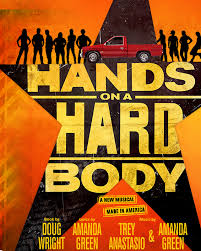 Staged at the nearly 90 year old Brooks Atkinson Theatre in Manhattan, the intimate setting (~1000 seats) brought the stage close up to the audience, guaranteeing a good seat no matter where you were. From the start, the premise of the musical came out clear, particularly the rules, the 15 minutes breaks after 6 hours and the manually rotated truck all set the stage nicely, peppered with a strong Texas vibe best described by John Steinbeck in Travels with Charley. Trey’s influences in the songs are apparent, with the upbeat tempos, quick yet sharp transitions and, rubbing off on Amanda Green, some funny/Phishy lyrics. There is of course, “My Problem Right There,” one of the two songs Phish has performed live. This tune, sung by Jacob Ming-Trent (Ronald McCowan) has a serious soul injection while he raves about his problems of brains, women and sleep. A sexy “Burn That Bridge” is performed by Kathleen Elizabeth Monteleone (Heather Stovall) and Jim Newman (Mike Ferris), giving a twist to the story and burning up the stage in the process.
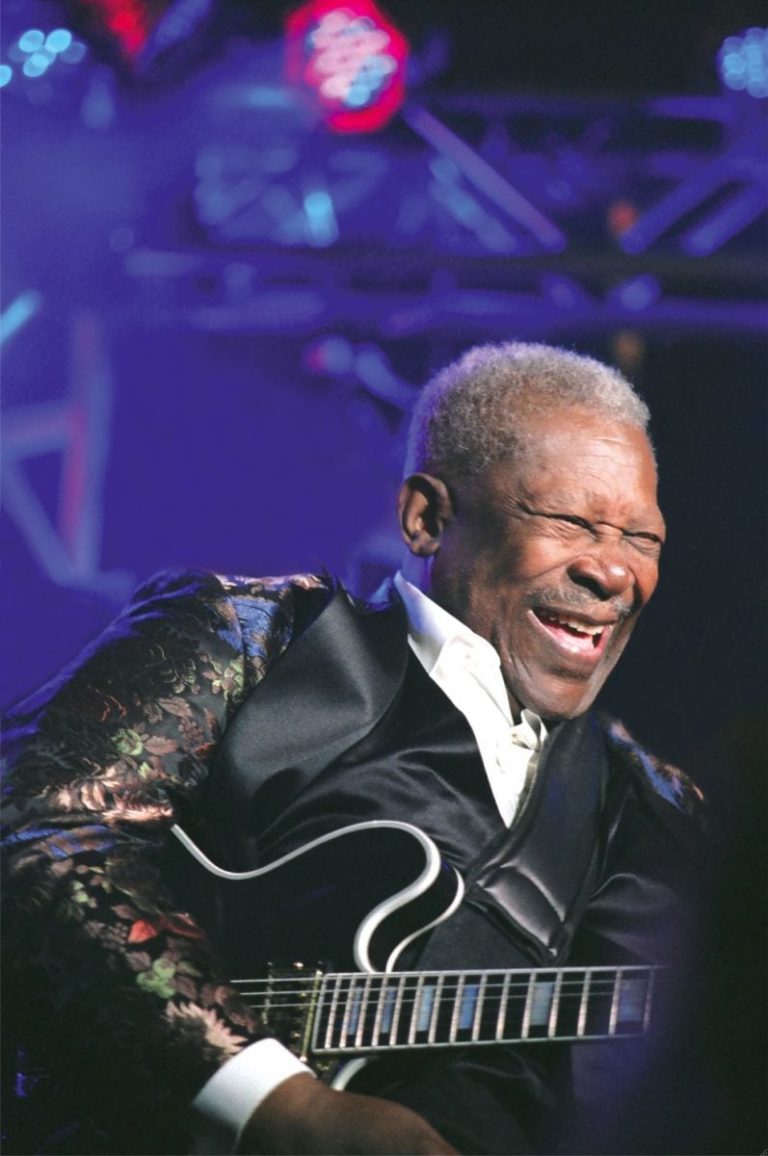 For six decades, there has been only one King of the Blues: Riley B. King, affectionately known as B.B. King. Since King started recording in the late 1940s, he has released more than 60 albums, many of them considered blues classics. Over the years, King has developed one of the world’s most readily identified guitar styles. He borrowed from Lonnie Johnson, Blind Lemon Jefferson, T-Bone Walker and others, integrating his precise vocal-like string bends and his left hand vibrato, both of which have become indispensable components of a rock guitarist’s vocabulary. His economy, his every-note-counts phrasing, has been a model for thousands of players such as Eric Clapton, Mike Bloomfield, Albert Collins, Buddy Guy, Freddie King,
 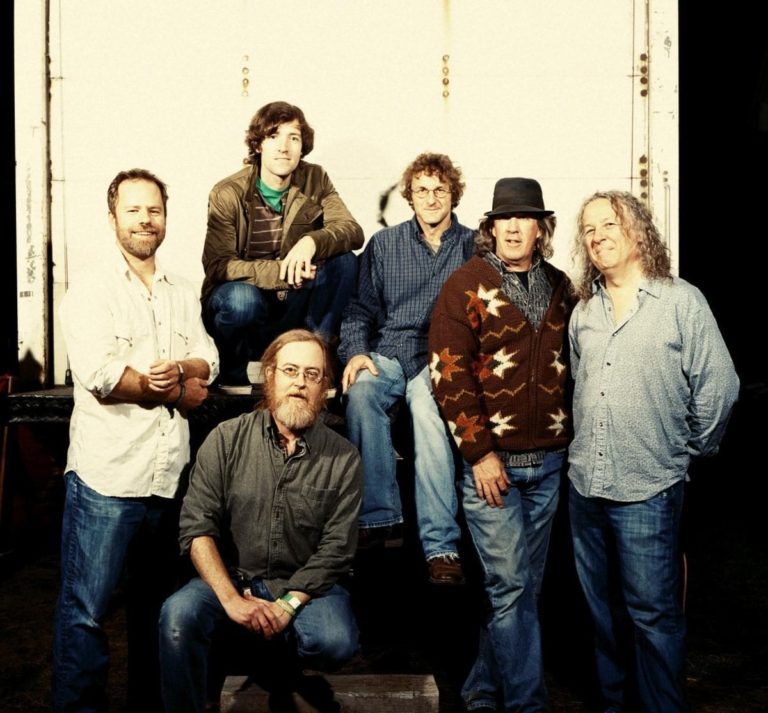 Railroad Earth is Todd Sheaffer on guitar, Tim Carbone on violin, John Skehan on mandolin,
  CashorTrade has taken the liberty to fully integrate their Store and Group features as well. “We are gearing up to better market artists in the community and their products. This is an important part of the year’s plan. Including them in the mobile app was a must,” says Brando. Also, keeping up with the exclusivity of trade groups, the group trade lists are linked right from the mobile homepage, making it now even easier to trade with those in your closest circles.
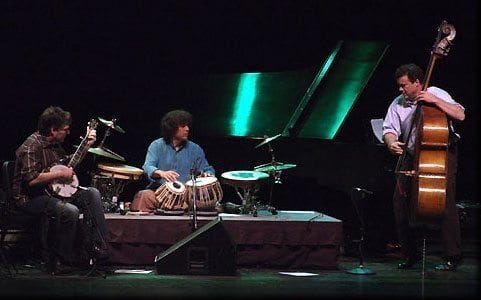 PM: Had you done research on the banjo earlier in your life, or just before you headed to Africa?

 Blotto, best known for their hits “I Wanna be a Lifeguard”, “I Quit” and “Metalhead”, play shows periodically in the Albany area, bringing their new wave/surf rock sound to the masses once again. There were plenty of hits to choose from and the crowd enthusiastically cheered on each song and laughed along with Broadway Blotto’s song exposition and Sarge Blotto’s story telling added a little extra to the songs, building up to “Goodbye, Mr. Bond” and “Lifeguard”.